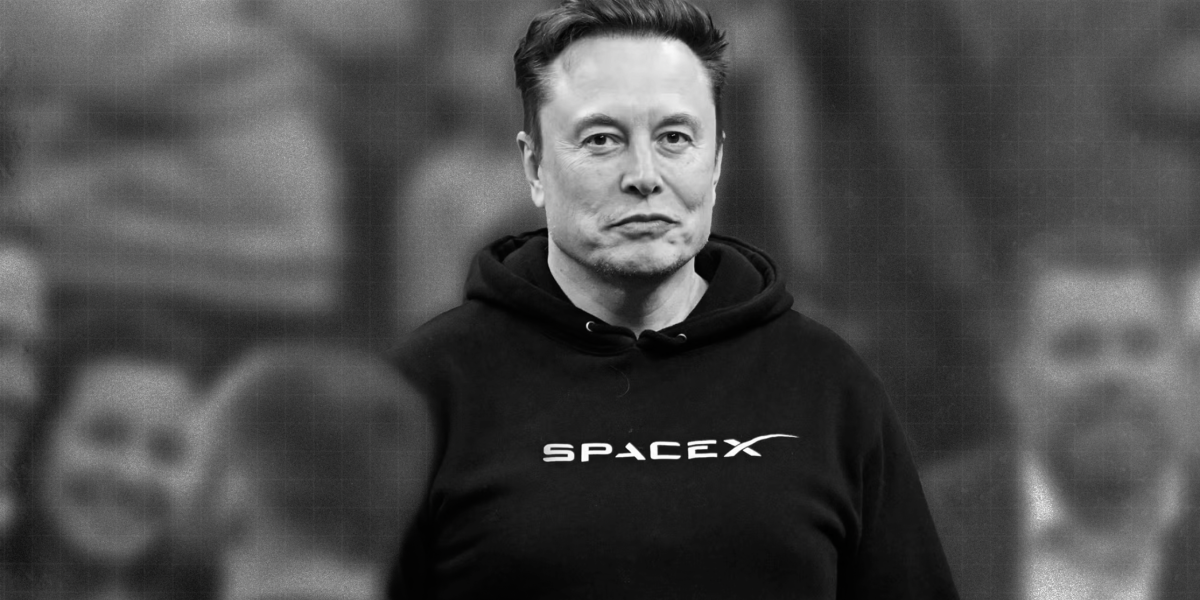
Last Friday, SpaceX went public and began offering shares on the NASDAQ. It was the largest IPO in history, which generated a lot of buzz and attention. But one of the more dramatic angles of SpaceX going public concerned Elon Musk, the company’s chairman, CEO, and chief technical officer.
Musk already had the highest net worth in the world before SpaceX went public. But after the company priced its shares at $135 and the market quickly began trading them at even higher prices, the roughly 5 billion shares that Musk already owned brought his estimated net worth up to roughly $1.1 trillion—making him the world’s first genuine, US dollar-denominated trillionaire.
Predictably, the crossing of this threshold was met with dismay and anger from establishment Democrats, progressives, and leftists of all kinds.
Gavin Newsom pointed to the news as proof that “the system is rigged.” AOC and Zohran Mamdani jumped in to push, yet again, for raising taxes on the rich. And Elizabeth Warren made the same point in a video where she implied that the extreme wealth being “held” by Musk and his peers is the cause of all the economic pain everyday Americans are feeling—or, at the very least, the reason why the pain persists.
This progressive narrative is not new. It has been around for a long time and has already been thoroughly and repeatedly debunked.
The eye-catching dollar amounts reported as the net worths of the richest people in the world, like Elon Musk, are not large piles of cash sitting around in bank accounts gathering dust. They are mostly the present value of the companies they own. It is not even possible to tax or confiscate these assets without destroying most or all of the initial value.
Figures like Warren and Newsom know this. But the implication that the rich are simply “hoarding” trillions of dollars of wealth is useful to them. It feeds the impression that all of our economic problems are, in essence, problems with the distribution of final consumable wealth. That there is already plenty of food, housing, healthcare, sports cars, luxury vacations, and NBA finals tickets for everyone.
But, it’s all being held away by a handful of billionaires, and now one trillionaire, who are simply too greedy to part with money they aren’t even using that would unlock all these goods and services for everyone else. Therefore, the government must come in and move all this wealth from those who have too much to those who have too little.
The problem with this narrative is not merely that it’s egregiously wrong and grounded in a profound misunderstanding or misrepresentation of how economies work. The deeper issue is that these talking points misdirect the public away from the actual culprit behind our economic trouble and, therefore, help preserve the obviously-rigged system we’re forced to live under.
At its core, the problem here is the emphasis on the momentary distribution of previously-generated wealth rather than the more important, and clarifying, factor: the means of acquiring that wealth.
There is an enormous difference between someone who becomes wealthy by discovering a new use of capital goods that consumers value a lot and someone who becomes wealthy by forcibly taking money from people against their will, or getting someone else to take it on their behalf. The former is responsible for making society, as a whole, wealthier. The latter is committing a crime for private gain that makes society as a whole poorer.
Yet, when we focus exclusively on the distribution of wealth, we cannot distinguish between the two.
That is useful for the political class—or, the politicians, government bureaucrats, court intellectuals, and crony business executives who rely on the state’s perceived power to coercively extract wealth to fund their way of life. Not only does it draw attention away from the various ways they are ripping the public off, it makes it seem like the only fix for the increasingly-broken economy is for the political class to intervene even more. And that makes it even easier for them to rip the American people off more than they had been before.
Worse, as government intervention has become a bigger and bigger factor in the economy, it has also warped the path to wealth. As we descend further into interventionism, new and rising entrepreneurs are increasingly incentivized to abandon actual, value-creating production to instead join those using government to expropriate wealth from the shrinking productive sector.
That is why Musk’s critics have somewhat of a point. Most of the wealthiest figures in modern America (in absolute terms) attained at least a sizable portion of their fortunes through political maneuvering rather than production that benefited consumers. They should absolutely be named and shamed for that. But we have to also understand that our interventionist system rewards that behavior. And the big increase in taxing and spending that establishment Democrats and progressives are advocating for would only encourage more of it.
Sure, plenty of politically-connected business executives would probably prefer not to see their taxes go up again. But, as a whole, the political class benefits greatly from the obsession with income and wealth inequality. It is imprecise enough to draw attention away from the specific ways the economy is rigged in their favor, and it implicitly prescribes policies that would help them rig it even more. That is why the establishment’s left wing is so adamant that we look nowhere else when trying to understand our economic problems.
It’s time we stop falling for it.