

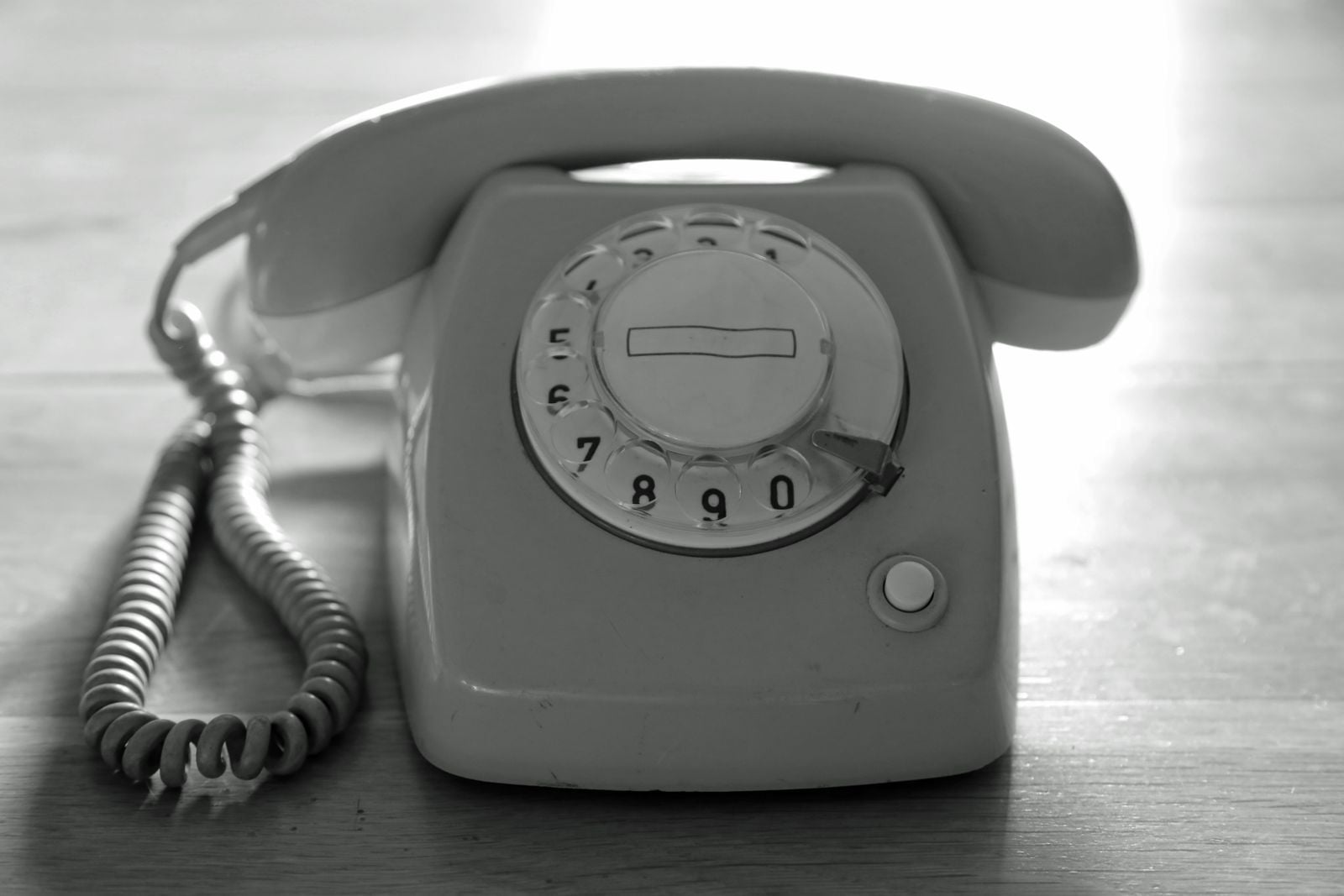
In 1994, an answering machine did not make a household continuously reachable. It stored a message until someone returned home and chose to play it. A message could sit for a day. Two days. The delay usually required no explanation.
Then something shifted. Somewhere between the arrival of the mobile phone and the normalization of read receipts, the social contract around reachability was rewritten without a vote. The people who came of age before that rewrite remember the original terms.
They are not nostalgic for slower technology. They are not asking anyone to give up a smartphone. What they remember is a world in which being unreachable for a Saturday afternoon was an ordinary condition of being alive, not a small crisis requiring advance notice.
The quiet rewriting of a social contract
Most conversations about generational technology differences frame older adults as slower adopters, more cautious, or more resistant. That framing is not entirely wrong, but it misses what many of those adults are reacting to.
A recent Digital Journal analysis of generational differences in AI adoption describes younger users as more accustomed to immediate retrieval and nonlinear exploration, while older users may favour more deliberative and linear ways of processing information. That is an analysis of AI use, not proof of a universal generational divide, but it illustrates how technological environments can shape expectations.
The deeper difference is not simply processing speed or willingness to adopt a device. It is the expectation of presence. Many people now in their fifties and older remember the texture of a life in which the phone rang, or it did not, and if it did not, the conversation waited.
What being unreachable used to mean
Before mobile phones, Slack, WhatsApp, and the little green dot announcing that someone is online, the assumption ran the other way. If a person was not home when the phone rang, the working theory was that they were doing something else. The details could wait.
A person who left the house at ten in the morning and came back at six was unreachable during those eight hours. This was not considered a technical problem to solve. It was an ordinary part of leaving the house.
The phone book sat by the door. Someone looked up a number, dialled it, and either the other person answered or they did not. No expectation of an instant reply could be built into a system that did not permit one.
The shift happened gradually enough that most people did not notice they were agreeing to it. First came pagers, then mobile phones, smartphones, messaging apps with delivery confirmations, read receipts, and location sharing. Each layer introduced the same quiet pressure: if someone can be reached, perhaps they should be reachable.
The cost of constant availability
What used to be a private evening can now become a series of small negotiations. When a message goes unanswered for several hours, someone may follow up. By the next day, the silence might be interpreted as worry, annoyance, or deliberate avoidance.
A small Michigan Medicine study involving 62 parents of young children found that notification-prompted phone pickups were associated with greater daily parenting stress. The study took place during 2020 and 2021 and did not establish that phones caused the stress, but it showed how repeated digital demands can add pressure to an already crowded day.
Laboratory research also supports a narrower point about interruption. A 2024 study published in Scientific Reports found that interruptions reduced performance on a working-memory task, with a more pronounced decline among the older participants.
That does not mean older adults are naturally better suited to an uninterrupted world. It means interruptions have measurable costs, and people who remember life before constant contact are comparing the present with a baseline younger adults never experienced.
Why the memory matters
Nostalgia deserves some suspicion. Memory can soften inconvenience, remove boredom, and make an earlier period feel warmer or simpler than it really was.
So it is reasonable to ask whether older adults are misremembering how uninterrupted life used to be.
Some almost certainly are. Yet the specific memory of being unreachable is partly structural rather than emotional. There was no pocket-sized infrastructure for constant contact, so continuous availability was impossible for most people once they left home.
What is emotional is the sense of loss surrounding that arrangement. That feeling is worth taking seriously rather than dismissing it as resistance to progress.
The intentionality that friction created
When reaching someone required looking up a number, dialling it, waiting for them to be home, and hoping they answered, successful contact often carried more weight. One person had chosen to call at that moment. The other had chosen to pick up.
Now much of the friction is gone. A message costs almost nothing to send, so sending one can feel casual while replying to it feels compulsory. An entire exchange can happen without either person being fully present.
Handwritten letters involved a similar form of friction. Finding paper, writing, addressing an envelope, buying a stamp, and mailing it made the communication deliberate. People still sent ordinary notes, but the process required more intention than tapping out a sentence while doing something else.
What younger generations are inheriting
The generational divide is not that older people cannot handle the technology. Many use it constantly. The difference is that they remember an alternative, while younger adults often do not.
A person who was thirty when the first iPhone launched in 2007 is forty-nine in 2026. Someone now in their early thirties has spent nearly all of adult life inside an increasingly always-on architecture.
That matters because expectations become normal through repetition. A 2026 Forbes interview about the habits associated with constant technological connection describes checking a phone during every idle moment and treating exhaustion as an ordinary part of adult life.
That interview offers cultural commentary rather than causal proof. Its value is recognition: behaviours that once looked unusual can become so familiar that people stop seeing them as choices.
When exhaustion and constant checking become the baseline, unreachability can begin to look less like a neutral condition and more like a disruption.
The small emergency other people manage around
The title of this piece names something specific: being unreachable can now create a small emergency that other people feel required to manage.
This is the part many older adults keep trying to explain. It is not necessarily that they resent their phones. They remember a world in which their temporary unavailability was not a problem for anyone else to solve.
If someone went hiking, they were hiking. Friends were not watching a typing indicator or checking a shared location. Their absence was not being managed in real time by a network of people waiting for them to reappear.
In many social and professional settings, six or eight hours without a reply can now prompt follow-up. Are you all right? Did you see the message? Is everything okay? The person who is unavailable may be imagined to be in trouble, ignoring someone, or deliberately withholding a response.
What the research can and cannot say
A 2025 review of longitudinal studies, summarized by Psychology Today, found that interpretation and memory biases had small but reliable links with later anxiety and depression. The research did not study smartphones, read receipts, unanswered messages, or generational expectations of reachability.
It therefore cannot prove that an unanswered message causes anxiety or that constant communication creates a mental-health disorder. The safer conclusion is ordinary rather than clinical: when silence is repeatedly treated as evidence that something has gone wrong, that interpretation can become a social habit.
The evidence in this article supports a narrower case. Notification-driven phone pickups can be associated with stress, interruptions can impair task performance, and technological culture can make constant checking feel normal. It does not support diagnosing an entire generation.
Reclaiming the ordinary right to be gone
The generation that came of age with answering machines is not lobbying for a return to the pay phone. Many are trying to recover a right that once seemed too ordinary to name: the right to disappear for a few hours without accounting for it.
Some leave the phone in the kitchen during dinner. Some do not answer work messages at the weekend. Others take walks without headphones or tell close friends that an urgent matter deserves a phone call, while everything else can wait.
These are small acts. They are attempts to restore a baseline that disappeared so gradually that few people noticed it going.
What gets lost when nothing is missed
Unreachability was never only about the absence of communication. It was also about the presence of everything else.
When someone was unreachable, they were somewhere. They were at dinner, on a walk, in a cinema, asleep, or talking to the person sitting across from them. Being unreachable often meant being fully in one place instead of partly present in several places at once.
The generation that remembers this does not want its phones taken away. It wants an older understanding restored: being present where a person actually is should not violate a contract they never knowingly signed. It should be allowed to look like an ordinary part of being alive.






















