In This Article
Real estate investors hoping new Federal Reserve chair Kevin Warsh would wave a magic wand and cut interest rates have been in for a rude awakening.
With the Iran war still not concluded and inflation high, Warsh’s demands for rate cuts while his predecessor, Jerome Powell, was in office have come head-to-head with reality. He simply cannot do it in the current economic environment. In fact, Warsh has made a 180-degree turn from his previous proclamations that cast him in a favorable light with the president.
“Persistently high prices are a burden for the American people, but the recent past need not be prologue,” Warsh told reporters as quoted by MarketWatch. He later added, “This committee will deliver price stability.” He could have been reading quotes from his predecessor.
Though Warsh chose to keep rates steady at the most recent Fed meeting, there was also talk of a rate hike at the next meeting—the exact opposite of what many real estate investors were hoping for.
Rate Malaise Meets a Cooling Market
For small landlords looking to get loans to buy more properties, the interest rate malaise is the last thing they want to hear. Most media outlets, including Homes.com and MarketWatch, predict ongoing pain for potential property buyers.
“We’re in a new era, and it’s going to take a while for markets to figure out exactly how to react,” Chen Zhao, head of economics research at real estate platform Redfin, told MarketWatch. “But one thing is clear: The committee as a whole is taking inflation very seriously, which means mortgage rates are unlikely to retreat much in the near future.”
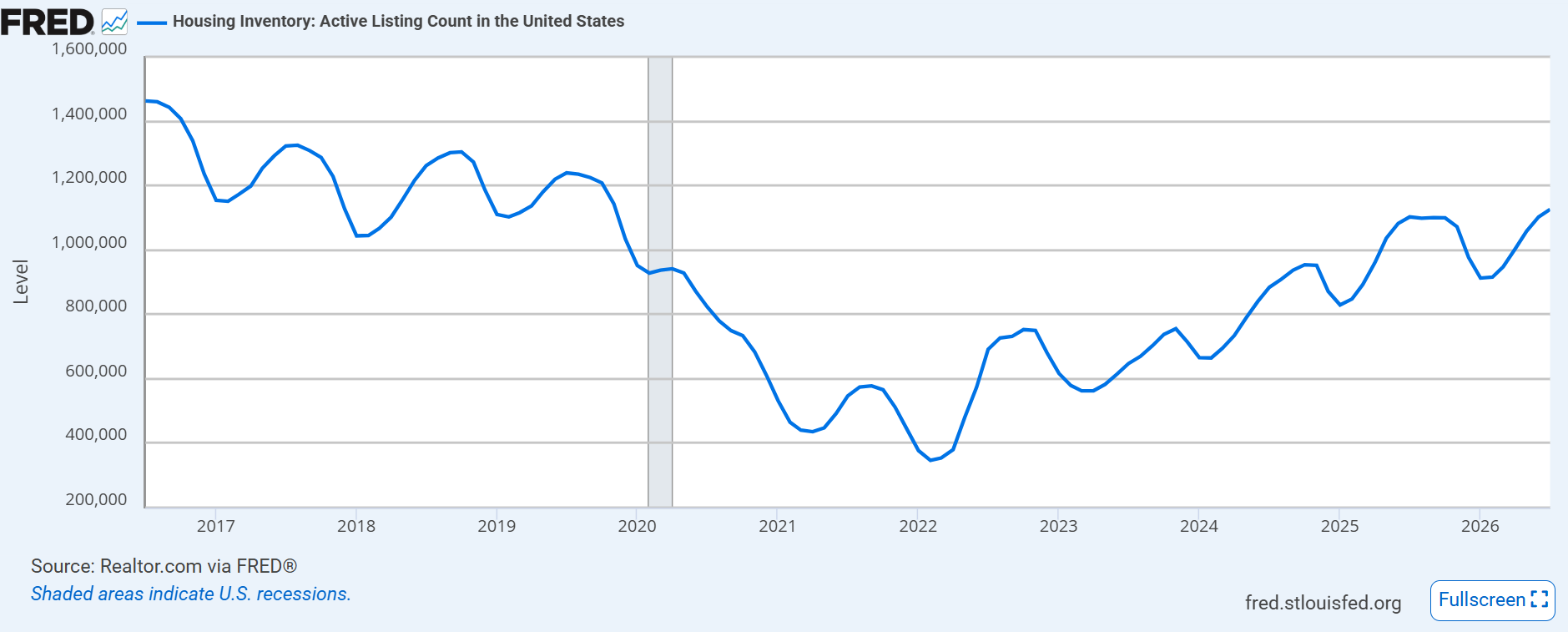
However, the one bright spot for investors is that house prices are falling. According to May’s 2026 housing trends from Realtor.com, the national median listing price has fallen for seven straight months, dropping 2.4% year over year to about $429,500 in May. That was the sharpest annual decline in Realtor.com’s data going back to 2017, as sellers faced a reality check regarding buyers’ affordability.
We are undoubtedly in a buyer’s market, with sellers willing to negotiate. However, finding affordable financing is proving to be a conundrum for investors.
Investors Need to Throw Out the Old Playbook
In the current unpredictable environment, the old playbook of “date the rate and marry the house” needs to be thrown out because you might find yourself in an extended engagement with the interest rate, with no refinance in sight to bail you out.
Things were looking good until the Iran war threw a spanner in the works, hiked up geopolitical tensions, and increased the cost of living even further in the U.S. However, the problematic housing market is affecting all investors, while additional expenses from higher gas prices, materials, insurance, and taxes are further complicating matters.
Falling house prices mean investors can’t even bank on selling at a profit, at least not in the short term. Those able to buy with cash will be the clear winners, which means if you have assets to liquidate, this is the market to snag a deal.
Rate Hikes in September?
With Bank of America and Deutsche Bank expecting the Federal Reserve to raise interest rates sometime this year, possibly by 25 basis points in September and likely in October and December as well, according to Reuters, it would mark the most aggressive rate increase since inflation spiked after the pandemic.
“June Summary ?of Projections and Warsh’s comments indicate that the Fed’s reaction function is much more hawkish than we thought,” analysts at BofA said in a note, quoted by Reuters.
If that proves true, it will bring housing sales to a halt, with sellers growing increasingly desperate and property owners caught in the mesh of high rates and hoping to unload their properties, presenting even more of an opportunity for cash-rich buyers.
Plan for the Long Game, Choose Markets Carefully, and Stick to Fundamentals
Every market is different, and choosing those with the highest rents and the lowest comparable prices—with taxes, insurance, local economies, and salaries also factored in—will yield the best returns for investors. Most of these are currently in the Midwest. However, low-priced real estate can only do so much when rates go up.
The silver lining for investors is that rising rates will affect prospective buyers, too, meaning affordability concerns will keep tenants in your rentals. According to a recent survey from 2-10 Home Buyers Warranty, 44% of current renters view renting as a long-term rather than a short-term situation, with 34% stating that affordability was the main reason they were unable to make the switch from renter to homeowner.
You might also like
For investors, the low levels of competition to buy deals and high demand for rentals mean there’s never been a better time to invest and negotiate your way to a deep discount.
Practical Ways to Buy Rentals in the Current Market
Here is a list of ways to circumnavigate the high-interest-rate era. There is no “one-size-fits-all” approach but rather a combination of many of these strategies to suit your specific market:
Choose affordable markets: Affordable markets (often in the Midwest) with a decent chance of cash flow help minimize risk.
Supersize cash flow: Practical ways to increase cash flow include adding ADUs, converting attics and basements, and renting by the room.
Find a cash partner: Cash is always king, and it is the ideal way to avoid those pesky banks and their interest rates.
House hack: It’s always a good move, whether you’re a newbie or a seasoned investor, because turning your personal residence into an investment helps with taxes and the bottom line.
Make a bigger down payment and boost your credit score: If you’re going to get a loan, make sure you’re in the best financial shape to qualify for the lowest rate by having a sizable down payment and a good credit score.
Look into rate buydowns: These are more prevalent when dealing with builders with new construction. There are different types of buydowns, from permanent to temporary. Each discount point costs 1% of the loan amount and can reduce the rate by 0.25%, which adds up over time.
Final Thoughts
As Charles Dickens once wrote, “It was the best of times, it was the worst of times.” It’s a great time to buy an investment property, but if you plan to get a loan to do it, it could be very risky.
The importance of adopting a conservative approach to investing can’t be emphasized enough if you are going the lender route. That means having ample cash reserves to bail you out of difficult circumstances, buying in markets that make sense, shopping around for lenders and insurance companies, and contesting taxes when appropriate.
It also means implementing every strategy possible to maximize cash flow. If we’ve learned anything over the last few years, it’s that we can’t rely on the Fed to lower rates—so don’t bank on refinancing to get you out of hot water. If you can’t afford to keep the home over the long term, don’t buy it.