No Result
View All Result
  • Login
Monday, August 24, 2026
FeeOnlyNews.com
  • Home
  • Business
  • Financial Planning
  • Personal Finance
  • Investing
  • Money
  • Economy
  • Markets
  • Stocks
  • Trading
  • Home
  • Business
  • Financial Planning
  • Personal Finance
  • Investing
  • Money
  • Economy
  • Markets
  • Stocks
  • Trading
No Result
View All Result
FeeOnlyNews.com
No Result
View All Result
Home Startups

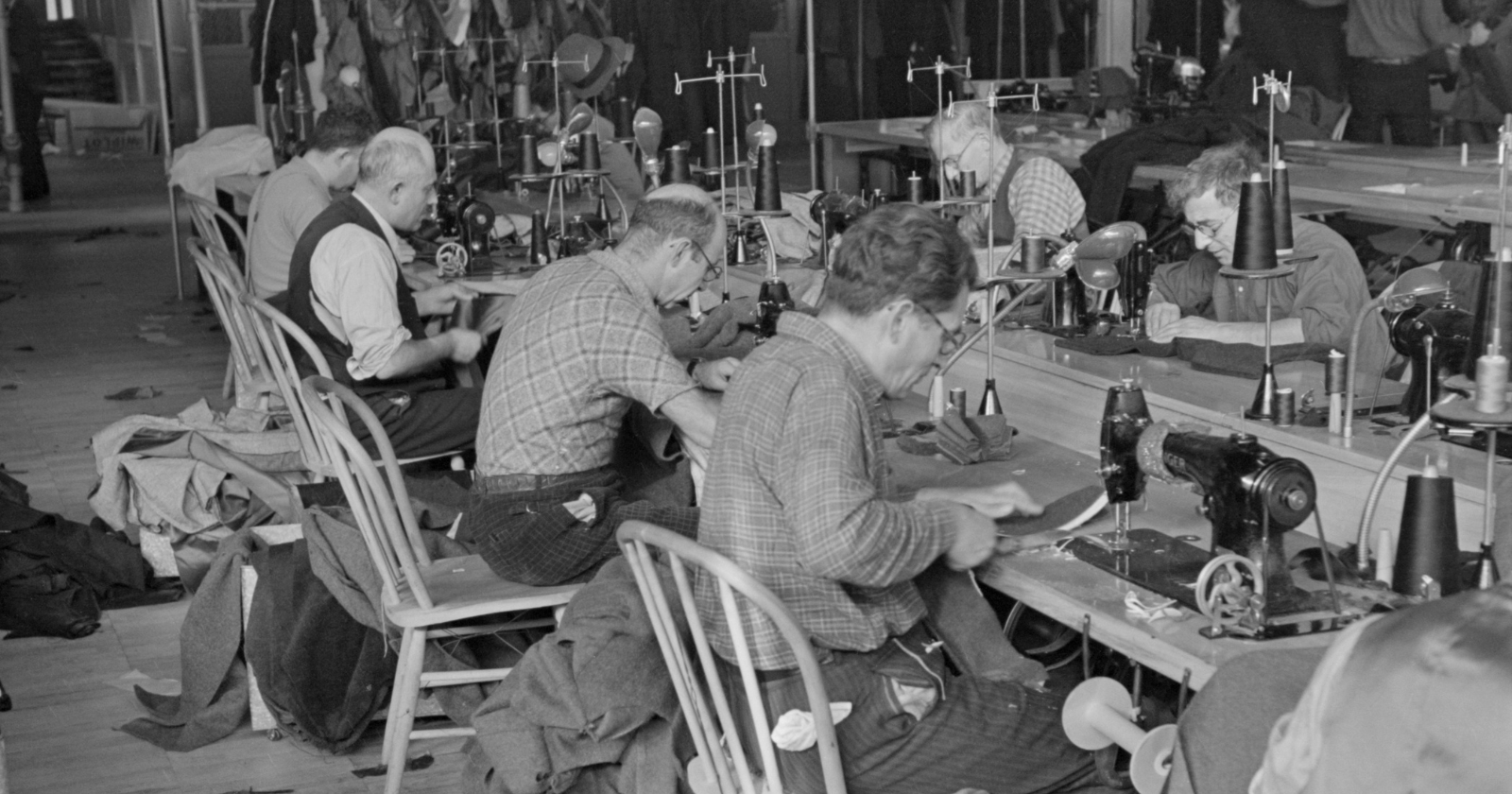
Research suggests the postwar decades produced workers who could delay gratification for years at a time — not because they were wiser than younger generations but because the reward at the end was real and they’d seen it happen with their own eyes

by FeeOnlyNews.com
5 months ago
in Startups
Reading Time: 5 mins read
A A
0
Research suggests the postwar decades produced workers who could delay gratification for years at a time — not because they were wiser than younger generations but because the reward at the end was real and they’d seen it happen with their own eyes
Share on FacebookShare on TwitterShare on LInkedIn


I watched my father leave the house at the same time every morning for close to thirty years. Same briefcase, same route, same company. He worked in sales management, and even on the days I could tell he was frustrated or exhausted, he never questioned whether the grind was worth it. He just kept going.

I thought about him recently while watching a video breaking down the psychology behind why boomers approach work the way they do. It made a point that stuck with me: the postwar generation didn’t just believe in hard work as some abstract value. They believed in it because the system actually delivered on its promises. And that changes everything about how we understand the disconnect between generations today.

Here’s what I took away from it, mixed with a few things I’ve learned the hard way myself.

1) The reward at the end used to be real

This is where the whole conversation should start, and honestly, where most of it falls apart when people skip over it.

Boomers entered the workforce with something that barely exists anymore: a reliable deal. You show up, you stay loyal, you work hard, and in return, the company gives you stability. Pensions were standard. A single income could cover a mortgage. Promotions came to those who waited their turn.

That deal held up for a lot of people. So when someone from that generation says “just work hard and you’ll be fine,” they’re not making it up. They lived it.

The problem is that the deal collapsed. Younger generations watched their parents get laid off after decades of loyalty. I watched it happen to my own father, who got passed over for promotions more than once despite doing everything he was supposed to do. That shaped how I think about meritocracy to this day. It taught me early that playing by the rules doesn’t always mean the rules play fair with you.

So when a twenty-something rolls their eyes at the “just pay your dues” speech, it’s not because they’re lazy. It’s because the dues don’t come with the same guarantees anymore.

2) Endurance became its own kind of currency

Here’s something that’s hard to sit with but important to understand.

A lot of boomers genuinely suffered at work. Long hours, difficult bosses, no flexibility, no mental health days. And instead of anyone questioning whether that was healthy, the suffering itself got rewarded. Promotions came. Stability came. The house, the pension, the retirement plan. All of it validated the pain.

Psychologists have a term for this: effort justification. When you sacrifice a huge amount for something, your brain inflates the value of what you got in return. You almost need to believe it was worth it because the alternative is admitting you endured all of that for nothing.

I recognized a version of this in myself a few years ago. I went through a stretch where I was pulling brutal hours, running on caffeine, convincing myself that pushing through was a strength. It took a while to realize that my “I’m fine, I can handle it” attitude wasn’t resilience. It was burnout culture I’d internalized without noticing.

So when a boomer watches someone set a boundary at work or log off at five, it can feel like an insult to everything they went through. They’re not being cruel on purpose. They’re protecting a narrative their brain built to make sense of decades of sacrifice.

3) The job title became the identity

Have you ever noticed that when you ask someone from an older generation about themselves, the first thing they mention is what they do for a living?

That’s not a coincidence. Boomers grew up in an era where your profession defined your social standing, your worth in the community, and often your sense of self. Psychologists call this work centrality, and for that generation, it runs deep.

If you haven’t seen the video I mentioned earlier, this is where it gets really interesting. It connects this idea of identity being tied to work with something most people don’t talk about: the fear of irrelevance. When your whole sense of self is built around your career, what happens when the world starts moving on without you? The video digs into that with more nuance than I can cover here, and it’s worth the watch if this resonates with you at all.

I dated someone once whose entire personality was his startup. Every conversation circled back to growth metrics and hustle culture. It was that relationship that made me realize how much I’d been doing the same thing in a quieter way. Using deadlines and busyness as a shield against actually figuring out who I was beyond my byline.

4) They weren’t tougher, they were trained differently

“Just push through it.”

If you’ve heard that from an older colleague or family member, it probably felt dismissive. But here’s the thing: for many boomers, that’s genuinely the only coping strategy they were ever given.

They were raised in a psychological culture that treated vulnerability as weakness. Therapy was stigmatized. Complaining about work meant you couldn’t hack it. Emotional suppression wasn’t just common; it was expected.

Research tells us that long-term emotional suppression doesn’t make stress go away. It redirects it into health problems, strained relationships, and quiet resentment. The “toughness” that gets romanticized was often survival, not wisdom.

I think about this when I remember how long it took me to actually seek help for anxiety. I’d been dealing with it since my early twenties but didn’t see a therapist until a panic attack during a deadline crunch forced the issue. I’d absorbed the same message so many of us do: that pushing through is what strong people do. Turns out, strong people also ask for help. It just took me longer than it should have to figure that out.

5) What’s really sitting underneath the lectures

This might be the most important piece of all, and it’s the one that shifted how I hear these conversations now.

When a boomer lectures you about work ethic, part of it is genuine conviction. They truly believe in the values that shaped them. But underneath that, there’s often something quieter and more vulnerable: a fear that the world has moved past them.

Technology reshaped entire industries. Skills that took decades to build are being automated. The rules they followed no longer guarantee the outcomes they once did. When someone from that generation pushes back on how younger workers approach their careers, some of it is values. But some of it is self-protection.

Understanding that doesn’t mean you have to agree with everything they say. But it might change how their words land. And in my experience, when you approach these conversations with a little more curiosity and a little less defensiveness, something opens up on both sides.

Final thoughts

The generational divide around work isn’t really about who’s lazy and who’s tough. It’s about two groups of people shaped by completely different environments trying to communicate using the same words but meaning entirely different things.

Boomers aren’t wrong for valuing hard work. Younger generations aren’t wrong for demanding that work respects their time and wellbeing. The friction comes from assuming the other side just doesn’t get it, when really, both sides are operating from experiences that made perfect sense in their own context.

The smartest move isn’t picking a side. It’s understanding what shaped both.



Source link

Tags: decadesdelayeyesgenerationsGratificationHappenPostwarproducedRealResearchrewardSuggeststheydTIMEwiserWorkersYearsYounger
ShareTweetShare
Previous Post

Macro buffers to help India tide over Gulf crisis: World Bank

Next Post

How to Use Miles to Upgrade a Flight

Related Posts

Most advice on becoming happier assumes it is up to you, but the evidence is humbler: much of the variation is dispositional, the claim that 40 per cent sits within your control does not hold up, and what works best points outward, towards other people

Most advice on becoming happier assumes it is up to you, but the evidence is humbler: much of the variation is dispositional, the claim that 40 per cent sits within your control does not hold up, and what works best points outward, towards other people

by FeeOnlyNews.com
August 7, 2026
0

The advice on how to become happier is endless, confident, and mostly built on the same assumption: that your happiness...

Malachyte Raises M to Solve E-Commerce’s Biggest Blind Spot: the Visitor Who Never Logs In – AlleyWatch

Malachyte Raises $10M to Solve E-Commerce’s Biggest Blind Spot: the Visitor Who Never Logs In – AlleyWatch

by FeeOnlyNews.com
August 7, 2026
0

E-commerce brands now spend roughly 40% more to acquire each new customer than they did in 2023, yet the website...

Attraction behaves less like a fixed physical fact than a running judgement: in one study an unpleasant personality made people rate the same face as less attractive, and feeling understood by a partner is what sustains desire: the actions that destroy attraction mostly reveal character

Attraction behaves less like a fixed physical fact than a running judgement: in one study an unpleasant personality made people rate the same face as less attractive, and feeling understood by a partner is what sustains desire: the actions that destroy attraction mostly reveal character

by FeeOnlyNews.com
August 6, 2026
0

The genre of advice about killing attraction treats it as a fixed asset you can squander: be too keen, too...

How to Scale Finance and Operations Without Adding Overhead in 2026

How to Scale Finance and Operations Without Adding Overhead in 2026

by FeeOnlyNews.com
August 5, 2026
0

Adding revenue is the fun part of scaling. The operational finance work to support  it is not. Every new customer...

Why Transparency Wins Long-Term in Business: The Competitive Advantage Most Companies Ignore

Why Transparency Wins Long-Term in Business: The Competitive Advantage Most Companies Ignore

by FeeOnlyNews.com
August 5, 2026
0

When people talk about business growth, the conversation usually centers around the visible levers that naturally attract attention, such as...

The generation that came of age with answering machines, handwritten letters, and phone books isn’t nostalgic for slower technology, they remember when being unreachable for a few hours was considered normal instead of a small emergency other people had to manage around

The generation that came of age with answering machines, handwritten letters, and phone books isn’t nostalgic for slower technology, they remember when being unreachable for a few hours was considered normal instead of a small emergency other people had to manage around

by FeeOnlyNews.com
August 5, 2026
0

In 1994, an answering machine did not make a household continuously reachable. It stored a message until someone returned home...

Next Post
How to Use Miles to Upgrade a Flight

How to Use Miles to Upgrade a Flight

When Cyber Insurance Meets Cyber War, Coverage Becomes Conditional

When Cyber Insurance Meets Cyber War, Coverage Becomes Conditional

  • Trending
  • Comments
  • Latest
Bitcoin and ethereum prices today, Friday, August 7, 2026: Crypto prices moving higher following July jobs report

Bitcoin and ethereum prices today, Friday, August 7, 2026: Crypto prices moving higher following July jobs report

August 7, 2026
Why did a 4 billion CEO just endorse stripping most Americans of voting rights?

Why did a $154 billion CEO just endorse stripping most Americans of voting rights?

July 27, 2026
Onkure Therapeutics Releases Q2 2026 Financial Results

Onkure Therapeutics Releases Q2 2026 Financial Results

August 4, 2026
Thryv outlines M run-rate savings while revising 2026 SaaS adjusted EBITDA to M-M (NASDAQ:THRY)

Thryv outlines $60M run-rate savings while revising 2026 SaaS adjusted EBITDA to $42M-$44M (NASDAQ:THRY)

August 4, 2026
My Thoughts on Going All In

My Thoughts on Going All In

August 4, 2026
Raiffeisen crosses 55% threshold to secure control of Addiko Bank

Raiffeisen crosses 55% threshold to secure control of Addiko Bank

August 4, 2026
Advanced Micro Devices (AMD) Price Prediction: How Much a ,000 Investment Could Be Worth by 2031

Advanced Micro Devices (AMD) Price Prediction: How Much a $5,000 Investment Could Be Worth by 2031

0
Cities holding up to 3 million people found under Amazon rain forest

Cities holding up to 3 million people found under Amazon rain forest

0
Republican Party Displacement | Mises Institute

Republican Party Displacement | Mises Institute

0
Bybit Uses Tokenised Equities as Underlyings for Structured Yield

Bybit Uses Tokenised Equities as Underlyings for Structured Yield

0
Explained: How BSE traded fewer contracts after CAS but premiums rose 75% in first week

Explained: How BSE traded fewer contracts after CAS but premiums rose 75% in first week

0
Vaxart outlines Phase IIb COVID-19 top line data in first half of 2027 backed by BARDA funding (OTCMKTS:VXRT)

Vaxart outlines Phase IIb COVID-19 top line data in first half of 2027 backed by BARDA funding (OTCMKTS:VXRT)

0
Advanced Micro Devices (AMD) Price Prediction: How Much a ,000 Investment Could Be Worth by 2031

Advanced Micro Devices (AMD) Price Prediction: How Much a $5,000 Investment Could Be Worth by 2031

August 8, 2026
Republican Party Displacement | Mises Institute

Republican Party Displacement | Mises Institute

August 8, 2026
Vanguard Chief Economist: AI and jobs, still in an ATM phase

Vanguard Chief Economist: AI and jobs, still in an ATM phase

August 8, 2026
Explained: How BSE traded fewer contracts after CAS but premiums rose 75% in first week

Explained: How BSE traded fewer contracts after CAS but premiums rose 75% in first week

August 8, 2026
Democrats’ Affordability Message Misses a Key Expense—Student Debt

Democrats’ Affordability Message Misses a Key Expense—Student Debt

August 8, 2026
Banks or NBFCs? DSP’s Preethi R S explains where she sees the best opportunities

Banks or NBFCs? DSP’s Preethi R S explains where she sees the best opportunities

August 8, 2026
FeeOnlyNews.com

Get the latest news and follow the coverage of Business & Financial News, Stock Market Updates, Analysis, and more from the trusted sources.

CATEGORIES

  • Business
  • Cryptocurrency
  • Economy
  • Financial Planning
  • Investing
  • Market Analysis
  • Markets
  • Money
  • Personal Finance
  • Startups
  • Stock Market
  • Trading

LATEST UPDATES

  • Advanced Micro Devices (AMD) Price Prediction: How Much a $5,000 Investment Could Be Worth by 2031
  • Republican Party Displacement | Mises Institute
  • Vanguard Chief Economist: AI and jobs, still in an ATM phase
  • Our Great Privacy Policy
  • Terms of Use, Legal Notices & Disclaimers
  • About Us
  • Contact Us

Copyright © 2022-2024 All Rights Reserved
See articles for original source and related links to external sites.

Welcome Back!

Sign In with Facebook
Sign In with Google
Sign In with Linked In
OR

Login to your account below

Forgotten Password?

Retrieve your password

Please enter your username or email address to reset your password.

Log In
No Result
View All Result
  • Home
  • Business
  • Financial Planning
  • Personal Finance
  • Investing
  • Money
  • Economy
  • Markets
  • Stocks
  • Trading

Copyright © 2022-2024 All Rights Reserved
See articles for original source and related links to external sites.