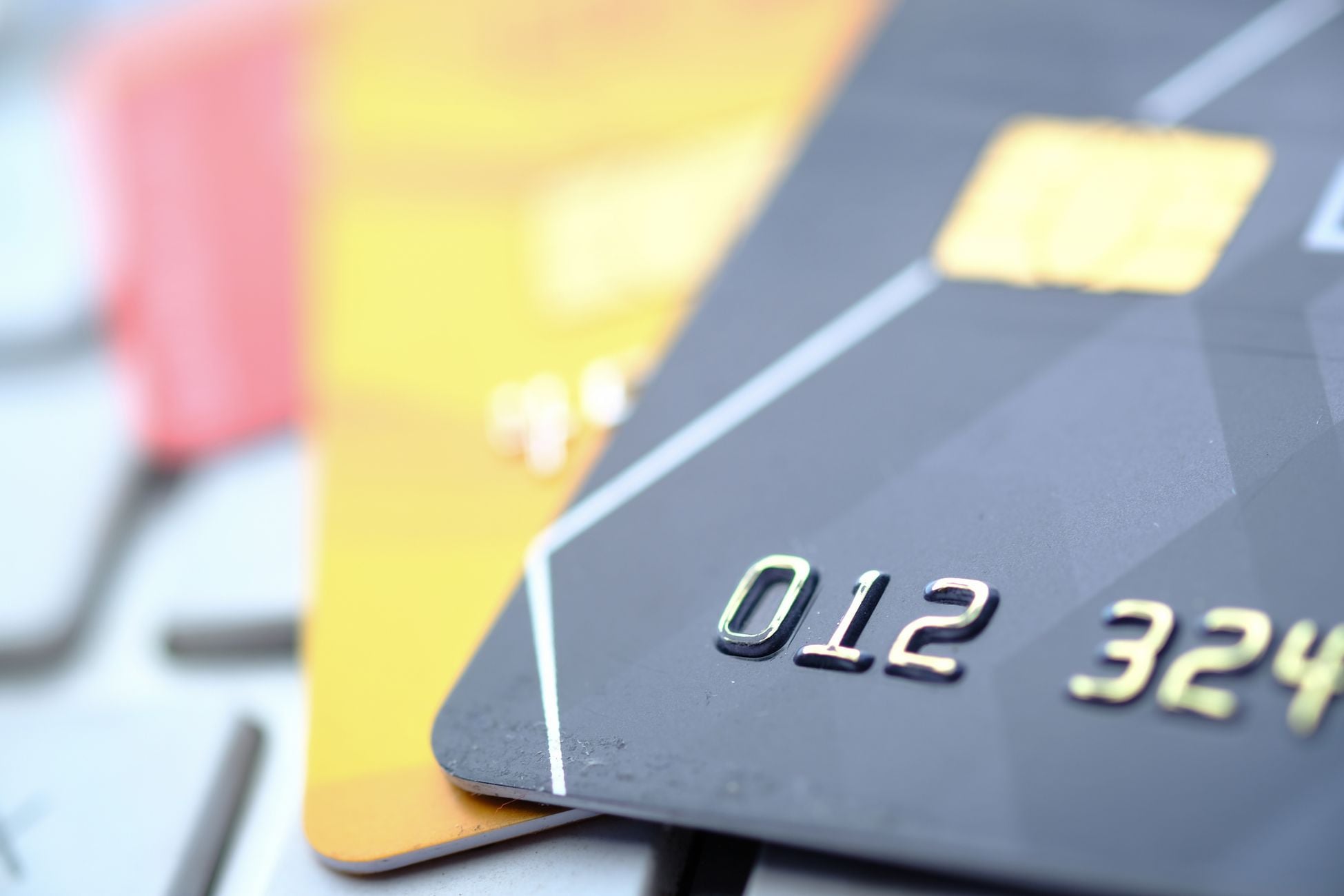
When a Visa-branded card taps a terminal at a Manhattan bodega and the customer walks out with a $4 coffee, roughly 10 cents of the transaction disappears into the payment machinery. The merchant sees Visa’s logo, blames Visa for the fee, and moves on. But Visa keeps only a sliver of that dime. The largest chunk, called interchange, is wired to whichever bank issued the card — Chase, Citi, Capital One, Bank of America — for the privilege of having their plastic in the customer’s wallet. Visa and Mastercard are the billboards. The issuing banks are the landlords collecting the rent.
It is the most misunderstood transfer in the modern economy: a fee everyone attributes to the two logos on the terminal, collected almost entirely by the banks whose names are printed in smaller type on the back of the card. And in much of the world outside the United States, it barely exists at all.
The anatomy of a swipe
A typical U.S. credit-card transaction carries a merchant discount fee of about 2 to 3 per cent of the sale. On that $4 coffee, call it 10 cents on a 2.5 per cent blended rate.
That 10 cents splits three ways. The acquiring bank — the merchant’s payment processor — takes a small cut for handling the transaction on the seller’s side. Visa or Mastercard, the network, takes an even smaller cut, usually around 0.13 to 0.15 per cent of the sale, for routing the authorisation and clearing the funds across their rails. The rest — the fat middle, usually 1.5 to 2.5 per cent of the sale — is interchange, and it flows straight to the bank that issued the card. On premium rewards cards, interchange can climb above 3 per cent.
Visa’s name is on the front of the card. Chase’s balance sheet gets the money.
Why the issuer gets the biggest slice
The logic is old and simple. The issuing bank is the party taking the actual risk. It fronts the money to the merchant at the moment of purchase, waits weeks for the cardholder to pay the statement, absorbs the fraud losses when a card is cloned, and eats the write-off when the cardholder defaults. Visa and Mastercard, by contrast, never touch the credit risk. They run the pipes.
Interchange is the fee structure designed to compensate the risk-taker, and it was written by the risk-takers. It was set up in the 1960s and 1970s when BankAmericard (which became Visa) and Master Charge (which became Mastercard) were still owned by consortiums of banks. The networks were, in effect, cooperatives serving the issuers. The pricing reflected that ownership: the banks that founded the networks wrote themselves the biggest cheque in every transaction.
Then the ownership changed and the pricing didn’t. Mastercard went public in 2006 and Visa in 2008, converting from bank-owned cooperatives into independent, shareholder-owned companies. The banks no longer own the networks. They still collect the interchange the networks set on their behalf — which is the crux of the antitrust complaint merchants have pressed for two decades: the networks fix a rate, and every issuing bank charges it in parallel.
Where the airline miles come from
Every cardholder who has ever wondered how their bank can afford to hand out a free flight to Tokyo, a Peloton statement credit, or a $200 airline fee waiver has already met interchange without knowing its name.
Premium rewards cards — the Chase Sapphire Reserve, the American Express Platinum, the Capital One Venture X — carry higher interchange rates precisely because the issuing banks need the revenue to fund the rewards. A Sapphire Reserve swipe at a restaurant can trigger interchange north of 2.4 per cent. The restaurant pays it. The bank pockets it. The cardholder gets three points per dollar on dining, which the bank then buys from airlines and hotels at a wholesale rate.
The customer thinks the airline is being generous. The merchant is the one funding the miles.
The merchant’s silent tax
Interchange is baked into prices. Merchants don’t itemise “card processing” on the receipt; they raise the coffee from $3.90 to $4.00 and move on.
The effect is regressive. A customer paying cash at that bodega still pays the $4 price, subsidising the rewards-card user standing behind them. Cash-paying households effectively transfer money each year to credit-card-paying households through this mechanism, with the largest transfers flowing from lower-income cash users to higher-income rewards-card users.
The people funding the airline miles are frequently the ones who can’t get approved for the card.
Why Visa and Mastercard don’t mind being blamed
On the transaction itself, the networks are the smallest earners. Their network assessment fee is measured in single-digit basis points. What they collect is volume — trillions of dollars a year moving across their switches, each swipe kicking off a small toll. The World Bank’s payment systems overview tracks how central these rails have become to household spending in developed economies; the network model is a low-margin, high-volume utility that happens to have the two logos everyone recognises.
Being blamed for interchange is, in that light, convenient. The alternative — merchants and shoppers understanding that Chase and Citi collect most of the fee the networks set — would put political pressure on the banks that own the customer relationship, and would raise uncomfortable questions about the network’s role in setting default interchange schedules for issuers who are technically their customers. The networks publish those rate schedules. They just don’t advertise them.
► Watch · Silicon Canals You Pay a Secret Tax Every Time You Tap Your Card Silicon Canals breaks down the hidden mechanics of interchange fees, showing exactly who profits from every card tap and why Americans pay ten times more than Europeans for the same transaction.

The one time it was capped
Interchange has been reined in exactly once in American history, and only on debit cards. The Durbin Amendment inside the 2010 Dodd-Frank Act capped debit interchange for banks with more than $10 billion in assets at roughly 21 cents plus 0.05 per cent per transaction, starting in 2011. Overnight, a swipe on a large bank’s debit card went from generating maybe 44 cents on a $40 purchase to about 24 cents. The affected banks lost billions in annual revenue, and they responded by cutting free checking, adding monthly maintenance fees, and shifting marketing budget from debit rewards to credit rewards — which Durbin left untouched.
Credit interchange remains uncapped in the United States. That single carve-out is the reason the whole rewards economy lives on the credit side of your wallet rather than the debit side. And it is where the American system diverges most sharply from the rest of the world.
Most of the world doesn’t pay this
In the European Union, a 2015 regulation capped consumer credit interchange at 0.3 per cent and debit at 0.2 per cent — a fraction of U.S. levels. European rewards programmes are correspondingly thin. There is no Sapphire Reserve equivalent in Frankfurt, because there is no fat interchange stream to fund one.
The more radical divergence is in the countries that stopped routing everyday payments through card networks at all. Brazil’s Pix system, run by the central bank, settles payments instantly between bank accounts with fees close to zero for consumers. India’s UPI does the same at even larger scale, now processing more daily transactions than Visa and Mastercard combined worldwide.
Neither system has interchange, and the reason is structural, not political. When a payment moves directly from one bank account to another in real time, there is no issuing bank fronting unsecured credit, no weeks-long float to finance, no default risk to price in — and therefore nothing for an interchange fee to compensate. The rails are treated as public infrastructure rather than a private toll road. Merchant acceptance costs collapse toward zero. The wealth transfer from cash-poor to card-rich flattens out.
What disappears along with the fee is the rewards machine it paid for. No interchange means no points, no lounge access, no free flight to Tokyo. Whether that trade-off is worth it is the actual argument buried underneath the fee — and it is one most American cardholders have never been asked to make, because the cost was never printed anywhere they could see it.
What the merchant sees, what the customer doesn’t
Ask any small-business owner what they pay Visa and they will name a number close to their entire merchant discount fee. Ask them how much of that Visa actually keeps and most will guess wrong by an order of magnitude. The two logos on the terminal absorb the blame for a fee structure the logos didn’t set and don’t collect.
The interchange system is not hidden. The rate schedules are public documents. It is simply boring, technical, and buried inside a merchant statement most business owners glance at once a month. Most households can’t accurately describe the cost of the payment methods they use every day — which is precisely why the arrangement has held.
The gap between what people think Visa earns and what Chase earns on the same swipe is where the modern American rewards economy lives. Next time a terminal beeps, the dime that vanishes isn’t going where the logo suggests. It is going to the bank whose name is printed in smaller type, on the back of the card, next to the customer service number nobody ever calls.