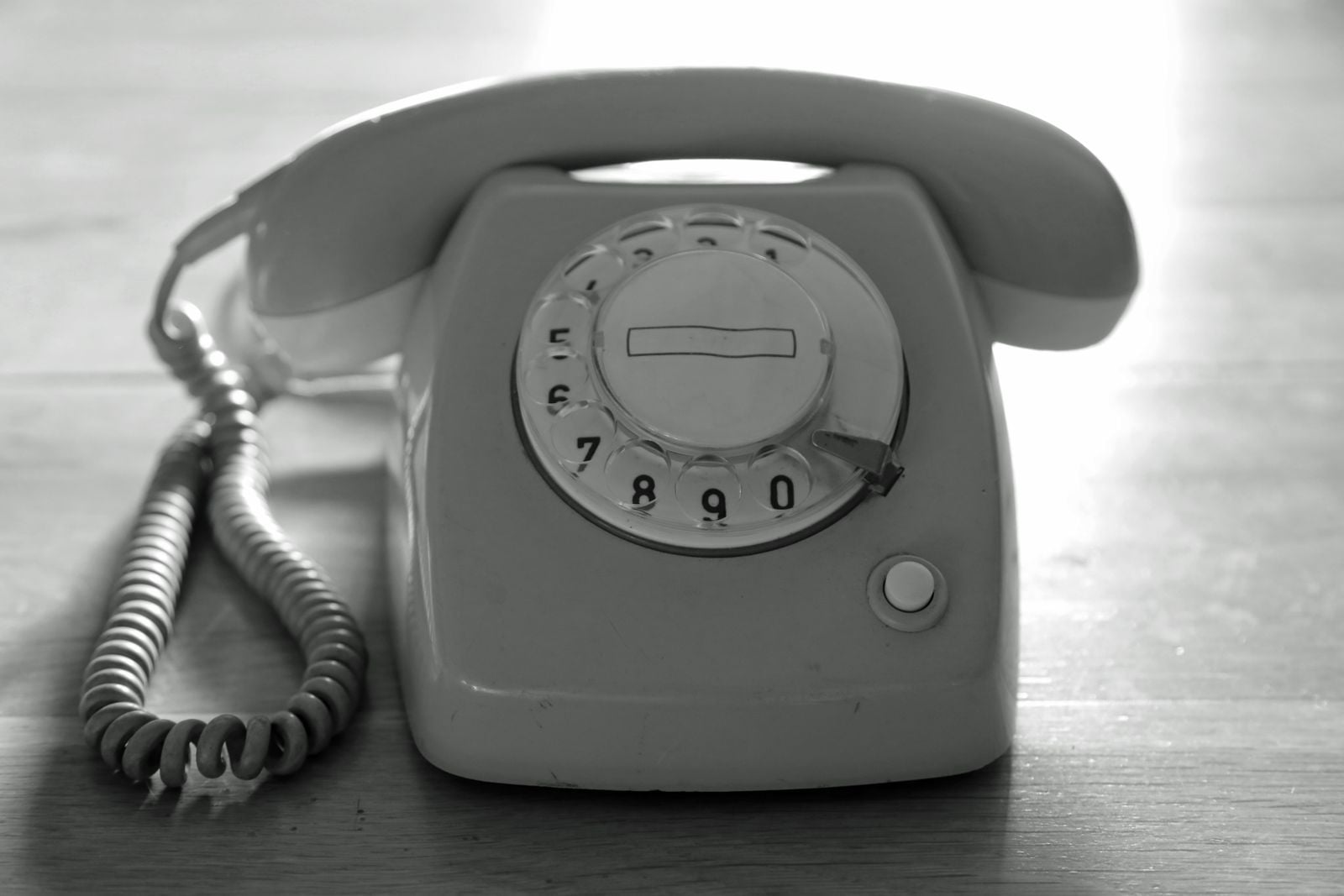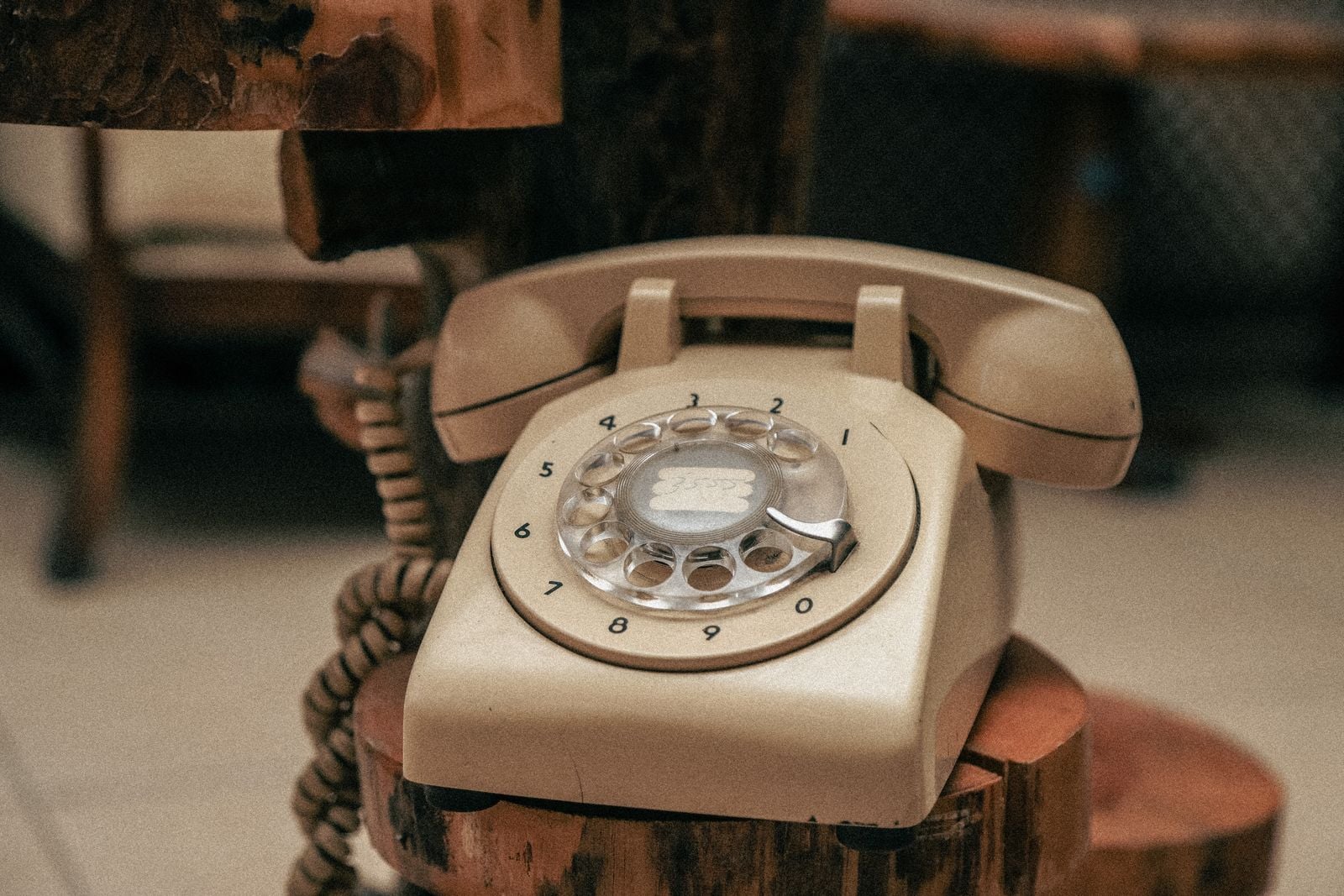
People who grew up dialing rotary phones tend to describe the act the same way: the slow drag of the finger wheel, the small mechanical resistance, the wait between digits. What they remember most isn’t the inconvenience of it. It’s the fact that calling someone was a decision. You didn’t idly reach for a person the way you now idly reach for a screen. You committed to the call before it began.
The reflex is to read this as nostalgia, which is another word for wanting an easier past back. But the people who lived through party lines and knocking on neighbours’ doors mostly aren’t asking for the technology to return. They’re pointing at something subtler: a quality of contact that the friction produced, almost as a by-product. When reaching another person cost something, however small, the reaching itself carried meaning.
The effort was doing quiet work
Consider what actually happened when you called a friend in 1974. You looked up the number, or knew it by memory. You dialed it on a phone tethered to the wall, standing in a hallway where other members of your household could hear every word. If nobody answered, there was no voicemail, no read receipt, no digital trail. You would simply try again later. Reaching a specific person often took two or three attempts spread across a day.
That sequence sounds like pure inconvenience, and in one sense it was. But it also functioned as a natural filter. You didn’t call people you didn’t really want to speak to. You didn’t waste a call on small talk you could have skipped. The bar was set, quietly, by the cost of the attempt.
Contact required a threshold of intent. And the threshold sorted the trivial from the meaningful before you ever picked up the receiver.
What scarcity does to perception
The pattern is consistent: when something is harder to get, the mind assigns it more value. Writing for Psychology Today, researchers have described how the scarcity principle shapes even our closest relationships, with people often perceiving connection as more significant when it is less immediately available.
The rotary-phone generation was, without knowing it, running a lifelong experiment in this principle. Every call was scarce by design. Every visit had to be arranged in advance because you couldn’t confirm on the way. Every letter took days to arrive and days to answer.
The scarcity wasn’t chosen. It was baked into the infrastructure. And it produced a texture of connection that people who grew up inside it can still feel, even if they struggle to name it.
Knocking on the neighbour’s door
The clearest example isn’t the phone. It’s the door. If you wanted to see the child down the street in 1968, you walked over, climbed the front steps, and knocked. Somebody’s mother answered. You asked if the child was home. Sometimes the answer was no, and you walked back. Sometimes the answer was yes, and the child came out. Sometimes you were invited in and offered a glass of something.
The whole exchange took under a minute, but it was full of decisions. You had chosen this house. You had chosen this hour. You had made yourself visible to another family. The visit was witnessed before it began.
Contrast that with the current default, where a text arrives on a phone and can be ignored without either party quite knowing whether ignoring counts as refusal. The friction has been removed. The witnessing has been removed. What remains is a form of contact that can be initiated and abandoned so casually that neither person has to acknowledge it happened.
The unique skills the friction produced
People who grew up in that environment tend to share a cluster of habits that make more sense once you understand what they were practising. As one observer of the pre-digital era noted, growing up with rotary phones and VHS tapes tended to build patience, anticipation, spatial reasoning from paper maps, and a particular respect for physical objects with weight in the hand.
Patience, in particular, is the word that keeps recurring. Dialing a seven-digit number on a rotary took actual seconds. Rewinding a VHS tape to find a specific scene was an act of estimation. You couldn’t skip forward with a timestamp. You watched the counter and hoped.
These weren’t hardships. They were small tuitions the environment charged, and the fee produced a temperament. People who paid it, over years, tend to sit more comfortably in stillness than people who never had to.
What actually got lost
The point isn’t that the old way was better. Long-distance calls really were expensive enough that families rationed them for special occasions. Missing a call meant potentially missing important news for hours. Getting hold of someone in a genuine emergency could be genuinely difficult. Anyone who lived through it can name the frustrations.
What was lost isn’t the inconvenience. What was lost is a certain kind of signal — the signal that this contact, right now, mattered enough to overcome the small obstacles in the way of making it.
When contact is free, that signal disappears. You can’t tell whether someone is texting you because they want to talk or because they’re bored on the train. The message costs them nothing, so it tells you nothing about your place in their day. The rotary generation notices this absence. Younger generations, having never known the signal, don’t miss what they can’t identify.
Intentionality as an ambient quality
There’s a particular thing older adults sometimes try to describe when they talk about phone calls with grandchildren versus phone calls with old friends. The old friend calls at a specific hour that both parties have implicitly agreed on. The call lasts a defined length. Both people know they are choosing to be present with each other.
The grandchild texts intermittently across the day. Some messages get answered in seconds, others hours later. There’s no beginning or end to the conversation. There’s just a rolling low-grade contact that never quite becomes attention.
Neither is wrong. But only one of them feels intentional, and the older person is not confused about which. This isn’t about the medium. It’s about whether the contact required a decision. If it did, it feels chosen. If it didn’t, it feels ambient.
Why this maps onto other habits
The same generation that remembers rotary phones tends to hold other habits that trace to the same underlying value: the belief that a little friction, deliberately preserved, is what makes an experience register. The tendency to keep the thermostat lower than everyone else operates on the same logic. So does the impulse to write a birthday card by hand when a text would technically reach the person faster.
These aren’t performances of hardship. They are quiet insistences that some things ought to cost a little. That comfort earned by tolerating a bit of discomfort first is different from comfort delivered on demand. That the cost is part of the value, not a bug in the design.
People who grew up walking to a neighbour’s door instinctively understand this. The walk was the message. Without the walk, the visit doesn’t quite happen.
The generational misread
Younger observers often assume the older generation’s complaint is about technology, which allows them to dismiss it as fear of change. But a good deal of recent work on generational differences in the workplace and beyond suggests that what looks like resistance is often something else: an accumulated wisdom about which trade-offs produce which outcomes, expressed in language that gets read as grievance.
When an older colleague says they’d rather have a five-minute phone call than a twelve-message text thread, they aren’t struggling with the technology. They’re reporting that one of these formats requires both people to be present at the same time, and the other one lets both parties pretend to be present while doing something else. They’ve lived through both. They know which one produces a real conversation.
What the childhood infrastructure taught
The independence built into a 1970s childhood wasn’t only about safety norms, although those changed too. It was structural. When kids spent long unsupervised hours between school and dinner, they had to plan their own social lives without an intermediary layer of adults coordinating things. If you wanted to find your friends, you went outside and looked. If they weren’t in the usual spots, you knocked on doors.
That daily practice — the small logistics of tracking down another human without a device — trained something specific. It trained people to assume that reaching another person was a task with steps, not a reflex. That assumption is what the digital generation lacks, and it’s not because they’re worse. It’s because their infrastructure never asked them to build it.
The rotary generation is describing a competence that was invisible until it was gone. It looked like nothing. It felt like nothing. And then it turned out to be the substrate under a certain kind of intentional relationship.
Not asking for the old world back
Most people who miss the texture of pre-digital contact are not asking to give up their smartphones. They know what the trade would cost. What they’re asking, when they can articulate it, is whether it’s possible to import some of the old friction into a world that has otherwise removed it.
The answer is usually yes, and usually small. Calling instead of texting. Making plans a week in advance and honouring them without confirming three times. Turning up at someone’s house because you were in the area, and accepting that they might not be home. Writing something down and posting it. These are all ways of paying the small cost that used to be built in, and receiving the small signal that used to come with it.
The generation that grew up dialing rotary phones learned this without being taught. They learned it because there was no other option. The lesson is portable, and it turns out the rest of us can borrow it, if we’re willing to spend the effort the technology no longer demands.
What they’re really saying, when they describe the old ways, is this: the friction wasn’t the problem. The friction was doing something. And a world that removes all friction removes, along with it, some of the quiet work that made contact feel like it counted.