No Result
View All Result
  • Login
Friday, July 17, 2026
FeeOnlyNews.com
  • Home
  • Business
  • Financial Planning
  • Personal Finance
  • Investing
  • Money
  • Economy
  • Markets
  • Stocks
  • Trading
  • Home
  • Business
  • Financial Planning
  • Personal Finance
  • Investing
  • Money
  • Economy
  • Markets
  • Stocks
  • Trading
No Result
View All Result
FeeOnlyNews.com
No Result
View All Result
Home Startups

Not everyone who keeps their personal life private is guarded. Some people tried sharing openly once, watched it become currency in someone else’s conversation, and simply adjusted the distribution list permanently.

by FeeOnlyNews.com
3 months ago
in Startups
Reading Time: 5 mins read
A A
0
Not everyone who keeps their personal life private is guarded. Some people tried sharing openly once, watched it become currency in someone else’s conversation, and simply adjusted the distribution list permanently.
Share on FacebookShare on TwitterShare on LInkedIn


She found out at a dinner party. A woman she barely knew leaned across the table, touched her arm, and said, “I heard about you and James. I’m so sorry.” The sympathetic head-tilt was perfect, clearly practised. The problem was that she’d only told one person about the separation — her closest friend, three days earlier, in a conversation she thought was private. She smiled, changed the subject, and drove home in silence. She never mentioned anything personal to that friend again.

That’s not a story about someone becoming guarded. It’s a story about someone updating a policy based on new information.

We tend to treat private people as though they arrived that way, fully formed, with some personality setting dialled toward secrecy. The cultural assumption runs deep: if someone doesn’t share freely, they must be emotionally unavailable, guarded, perhaps even hiding something. We’ve built an entire vocabulary around this. Avoidant. Closed off. Walled up. But that framing misses something important. Many of the most private people I’ve known didn’t start out that way. They tried openness. They handed someone a piece of themselves, and they watched that piece get passed around a table they never agreed to sit at. The privacy that followed wasn’t a wall. It was a policy update.

Photo by cottonbro studio on Pexels

The moment disclosure becomes someone else’s property

There’s a specific kind of violation that doesn’t show up in most psychology textbooks under “betrayal,” but it functions like one. You tell a friend about a difficult period in your marriage. Two weeks later, a mutual acquaintance asks you about it at a dinner party, wearing a sympathetic expression they clearly rehearsed in the car.

Nothing dramatic happened. No shouting, no confrontation. But something fundamental shifted. The information you shared in a moment of trust was treated as social material, as something interesting to relay. Your vulnerability became a talking point.

Betrayal Trauma Theory explains why violations from people we depend on cut so deep. When the person who harms us is also someone we rely on for connection and safety, the brain is forced to hold two contradictory truths simultaneously: I trusted you, and you used what I gave you. That dissonance doesn’t resolve neatly. It rewires behaviour. Research has found that social betrayal activates brain regions associated with both physical pain and fear. The nervous system doesn’t distinguish between a physical injury and the discovery that your confidence was treated as gossip. Both register as harm.

So when someone becomes private after an experience like this, they’re not being dramatic. Their brain literally encoded the act of sharing as dangerous.

The redistribution, not the withdrawal

Here’s the distinction that matters. People who become private after a breach of trust haven’t necessarily stopped being open. They’ve become selective. The distribution list got shorter.

I think about this in terms of what I wrote about my father and how he withheld affection. He didn’t stop feeling things. He stopped broadcasting them because, in his experience, showing someone how much they mattered handed them a weapon. The mechanism is the same even when the context differs. You learn that disclosure has a cost. You adjust who bears that cost.

The common misread is to assume these people are emotionally shut down. They’re often the opposite. They feel deeply enough that they can’t afford to have their inner life treated carelessly.

A person who doesn’t care wouldn’t bother protecting anything.

There’s a social economy that operates beneath polite conversation, and personal information is one of its most traded commodities. People share other people’s struggles because it makes them feel included, connected, or important. It’s rarely malicious. That’s actually what makes it so hard to confront. When your breakup or your health scare or your family conflict ends up in someone else’s conversation, the person who shared it usually wasn’t trying to hurt you. They were trying to bond with someone else. Your pain was the currency. They spent it without thinking twice.

This is why the resulting privacy is practical, not paranoid. The less someone knows, the less they can distort.

guarded personal boundaries
Photo by ROCKETMANN TEAM on Pexels

The difference between walls and filters

A wall blocks everything. A filter sorts. This is the distinction most people miss when they encounter someone who is selectively private.

Walls are about fear. Filters are about discernment. A person who has been burned by oversharing doesn’t necessarily stop trusting altogether. They develop a more refined system for deciding who gets access to what, and when. They might be completely open with their partner but share almost nothing with colleagues. They might tell their best friend everything but keep their family at arm’s length. This isn’t inconsistency. It’s precision.

I wrote recently about people who inherited the architecture of endurance from watching their parents stay in unhappy relationships. There’s a parallel here. Some people inherited the architecture of privacy from a single formative experience where sharing went wrong. That architecture can be limiting if it cuts off all closeness. But it can also be protective. And the distinction between the two depends entirely on whether the person has at least one relationship where the full, unedited version of themselves is welcome.

Research consistently shows that social connection is one of the most important factors for long-term wellbeing. But the connections that matter are the ones where you feel genuinely known rather than merely recognised. The person with three close friends who know everything is not worse off than the person with thirty acquaintances who know the highlights reel. They might actually be better off. If someone has that one relationship where they can show up unedited, the privacy everywhere else isn’t a problem. It’s resource management.

What to do with this

There’s no moral obligation to be open. I want to be clear about that because the cultural messaging, especially online, pushes hard in the other direction. Vulnerability is celebrated, and showing up authentically is treated as a personality achievement. But prescribing blanket vulnerability to someone who has been burned by it is like telling someone who got food poisoning to go back to the same restaurant. The advice isn’t wrong in principle. The context makes it harmful.

So here’s what I’d actually ask of you.

If you know someone who keeps their personal life private, resist the urge to interpret it. Don’t assume they’re hiding. Don’t assume they’re afraid. Don’t assume they need to be coaxed out of their shell. Consider the possibility that they tried being open. Consider that it went badly. Consider that the quiet they maintain isn’t absence of feeling but a precise allocation of it.

And if you recognise yourself in this piece, if you’re the one who adjusted the distribution list after someone treated your inner life as content for a dinner party, I’d ask you to examine one thing: do you still have at least one person who gets the unedited version? Not thirty people. One. Because the data, and honestly my own experience, suggests that the number doesn’t matter. What matters is that somewhere, with someone, the full version of you is still welcome.

The people who have been most hurt by oversharing are often the ones with the most to offer in close relationships, because they’ve learned what carelessness costs. They don’t give themselves away to just anyone. When they do open up, they mean it.

That kind of trust — earned slowly, given deliberately — tends to outlast the kind that was offered freely and never thought about twice.

Feature image by Xeniya Kovaleva on Pexels



Source link

Tags: adjustedconversationCurrencyDistributionElsesguardedLifeListopenlypeoplePermanentlyPersonalprivateSharingSimplywatched
ShareTweetShare
Previous Post

FIIs cover short bets as markets rebound, but stay wary

Next Post

Goldman Sachs (GS) earnings 1Q 2026

Related Posts

The EU says Instagram and Facebook’s addictive design likely breaks its rules — and it wants autoplay and infinite scroll off by default

The EU says Instagram and Facebook’s addictive design likely breaks its rules — and it wants autoplay and infinite scroll off by default

by FeeOnlyNews.com
July 16, 2026
0

The European Commission said on 10 July that the design of Instagram and Facebook probably breaks European law, in a...

SONATA Raises M to Deliver Physician-Led Preventive Care Built Around Your Whole Biology – AlleyWatch

SONATA Raises $7M to Deliver Physician-Led Preventive Care Built Around Your Whole Biology – AlleyWatch

by FeeOnlyNews.com
July 16, 2026
0

Americans spend nearly $5T annually on healthcare – more than any other nation – yet life expectancy continues to fall...

Whatnot Acquires Shaped to Bolster AI-Powered Discovery Across Its Live Commerce Platform – AlleyWatch

Whatnot Acquires Shaped to Bolster AI-Powered Discovery Across Its Live Commerce Platform – AlleyWatch

by FeeOnlyNews.com
July 15, 2026
0

Whatnot, the live social commerce marketplace, has acquired Shaped, a New York-based AI startup that builds real-time ranking systems for...

Finland, a country long invaded and overshadowed by its neighbors, built the most trusted education system in the world by doing almost the exact opposite of what everyone else believed worked

Finland, a country long invaded and overshadowed by its neighbors, built the most trusted education system in the world by doing almost the exact opposite of what everyone else believed worked

by FeeOnlyNews.com
July 15, 2026
0

Finland did build one of the world’s most admired education systems around trust rather than constant inspection, competition and high-stakes...

Founder-Led Management: When to Stay Involved and When to Step Back.

Founder-Led Management: When to Stay Involved and When to Step Back.

by FeeOnlyNews.com
July 15, 2026
0

Since Paul Graham published “Founder Mode” in September 2024, founders have been handed a tempting new permission slip. Graham, drawing...

Product-Market Fit Expires Every 90 Days. Here’s What to Do About It.

Product-Market Fit Expires Every 90 Days. Here’s What to Do About It.

by FeeOnlyNews.com
July 15, 2026
0

You can build an MVP in a weekend today. AI tools like Lovable and Replit have turned what once required...

Next Post
Goldman Sachs (GS) earnings 1Q 2026

Goldman Sachs (GS) earnings 1Q 2026

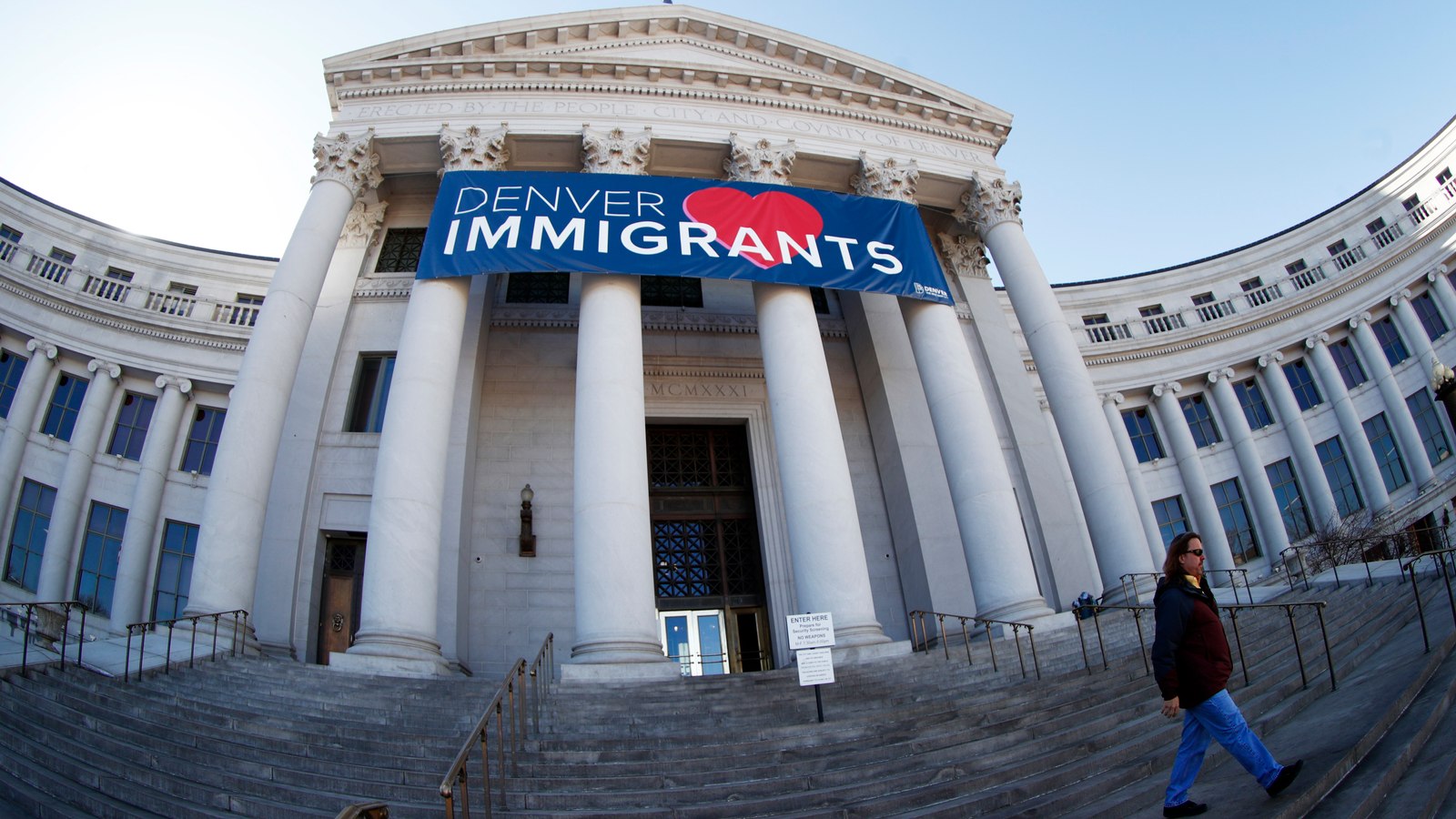
New Homeland Security Secretary Cracks Down On Sanctuary Cities

New Homeland Security Secretary Cracks Down On Sanctuary Cities

  • Trending
  • Comments
  • Latest
House backs an emergency brake on elder fraud

House backs an emergency brake on elder fraud

June 26, 2026
Entry-Level Rentals Are Disappearing—Here’s How Landlords Can Fill the Gap

Entry-Level Rentals Are Disappearing—Here’s How Landlords Can Fill the Gap

June 18, 2026
Bond Vet and Small Door Merge to Form One of the Nation’s Largest Premium Veterinary Networks – AlleyWatch

Bond Vet and Small Door Merge to Form One of the Nation’s Largest Premium Veterinary Networks – AlleyWatch

July 9, 2026
Salesforce, RightCapital, And YCharts Launch Their Own New AI Capabilities (And More Of The Latest In Financial #AdvisorTech – July 2026)

Salesforce, RightCapital, And YCharts Launch Their Own New AI Capabilities (And More Of The Latest In Financial #AdvisorTech – July 2026)

July 6, 2026
Your Next Forever Stamp Purchase Will Soon Cost More. See the New Price

Your Next Forever Stamp Purchase Will Soon Cost More. See the New Price

July 11, 2026
*HOT* Neutrogena Beach Defense Sunscreen as low as .98 shipped!

*HOT* Neutrogena Beach Defense Sunscreen as low as $1.98 shipped!

July 9, 2026
Shapir wins Road 6 northern extension tender

Shapir wins Road 6 northern extension tender

0
Alaska Air Group Q2 2026 Earnings Preview — July 22, Street Expects -alt=

Alaska Air Group Q2 2026 Earnings Preview — July 22, Street Expects -$0.99 EPS

0
Compute Exchange launches secondary GPU marketplace as H100 and A100 demand holds

Compute Exchange launches secondary GPU marketplace as H100 and A100 demand holds

0
Sebi introduces standing instructions for SWP, STP in mutual funds in demat holdings

Sebi introduces standing instructions for SWP, STP in mutual funds in demat holdings

0
Where to Find Shelters, File Claims after Texas Hill Country Floods

Where to Find Shelters, File Claims after Texas Hill Country Floods

0
A World Cup Final Through Austrian Eyes

A World Cup Final Through Austrian Eyes

0
Alaska Air Group Q2 2026 Earnings Preview — July 22, Street Expects -alt=

Alaska Air Group Q2 2026 Earnings Preview — July 22, Street Expects -$0.99 EPS

July 17, 2026
Compute Exchange launches secondary GPU marketplace as H100 and A100 demand holds

Compute Exchange launches secondary GPU marketplace as H100 and A100 demand holds

July 17, 2026
Where to Find Shelters, File Claims after Texas Hill Country Floods

Where to Find Shelters, File Claims after Texas Hill Country Floods

July 17, 2026
Investors Push M Into Bitcoin ETFs as Ether Funds Lose M

Investors Push $79M Into Bitcoin ETFs as Ether Funds Lose $28M

July 17, 2026
Trump is selling millisecond access to his Truth Social blasts — and traders are already lining up

Trump is selling millisecond access to his Truth Social blasts — and traders are already lining up

July 17, 2026
Sebi introduces standing instructions for SWP, STP in mutual funds in demat holdings

Sebi introduces standing instructions for SWP, STP in mutual funds in demat holdings

July 17, 2026
FeeOnlyNews.com

Get the latest news and follow the coverage of Business & Financial News, Stock Market Updates, Analysis, and more from the trusted sources.

CATEGORIES

  • Business
  • Cryptocurrency
  • Economy
  • Financial Planning
  • Investing
  • Market Analysis
  • Markets
  • Money
  • Personal Finance
  • Startups
  • Stock Market
  • Trading

LATEST UPDATES

  • Alaska Air Group Q2 2026 Earnings Preview — July 22, Street Expects -$0.99 EPS
  • Compute Exchange launches secondary GPU marketplace as H100 and A100 demand holds
  • Where to Find Shelters, File Claims after Texas Hill Country Floods
  • Our Great Privacy Policy
  • Terms of Use, Legal Notices & Disclaimers
  • About Us
  • Contact Us

Copyright © 2022-2024 All Rights Reserved
See articles for original source and related links to external sites.

Welcome Back!

Sign In with Facebook
Sign In with Google
Sign In with Linked In
OR

Login to your account below

Forgotten Password?

Retrieve your password

Please enter your username or email address to reset your password.

Log In
No Result
View All Result
  • Home
  • Business
  • Financial Planning
  • Personal Finance
  • Investing
  • Money
  • Economy
  • Markets
  • Stocks
  • Trading

Copyright © 2022-2024 All Rights Reserved
See articles for original source and related links to external sites.