No Result
View All Result
  • Login
Monday, August 24, 2026
FeeOnlyNews.com
  • Home
  • Business
  • Financial Planning
  • Personal Finance
  • Investing
  • Money
  • Economy
  • Markets
  • Stocks
  • Trading
  • Home
  • Business
  • Financial Planning
  • Personal Finance
  • Investing
  • Money
  • Economy
  • Markets
  • Stocks
  • Trading
No Result
View All Result
FeeOnlyNews.com
No Result
View All Result
Home Startups

Children raised in the 1960s and 70s developed their resilience the same way muscle develops under resistance — not by being protected from the load but by being required to carry it, repeatedly, without assistance, until the carrying became the unremarkable default rather than the exceptional achievement

by FeeOnlyNews.com
5 months ago
in Startups
Reading Time: 5 mins read
A A
0
Children raised in the 1960s and 70s developed their resilience the same way muscle develops under resistance — not by being protected from the load but by being required to carry it, repeatedly, without assistance, until the carrying became the unremarkable default rather than the exceptional achievement
Share on FacebookShare on TwitterShare on LInkedIn


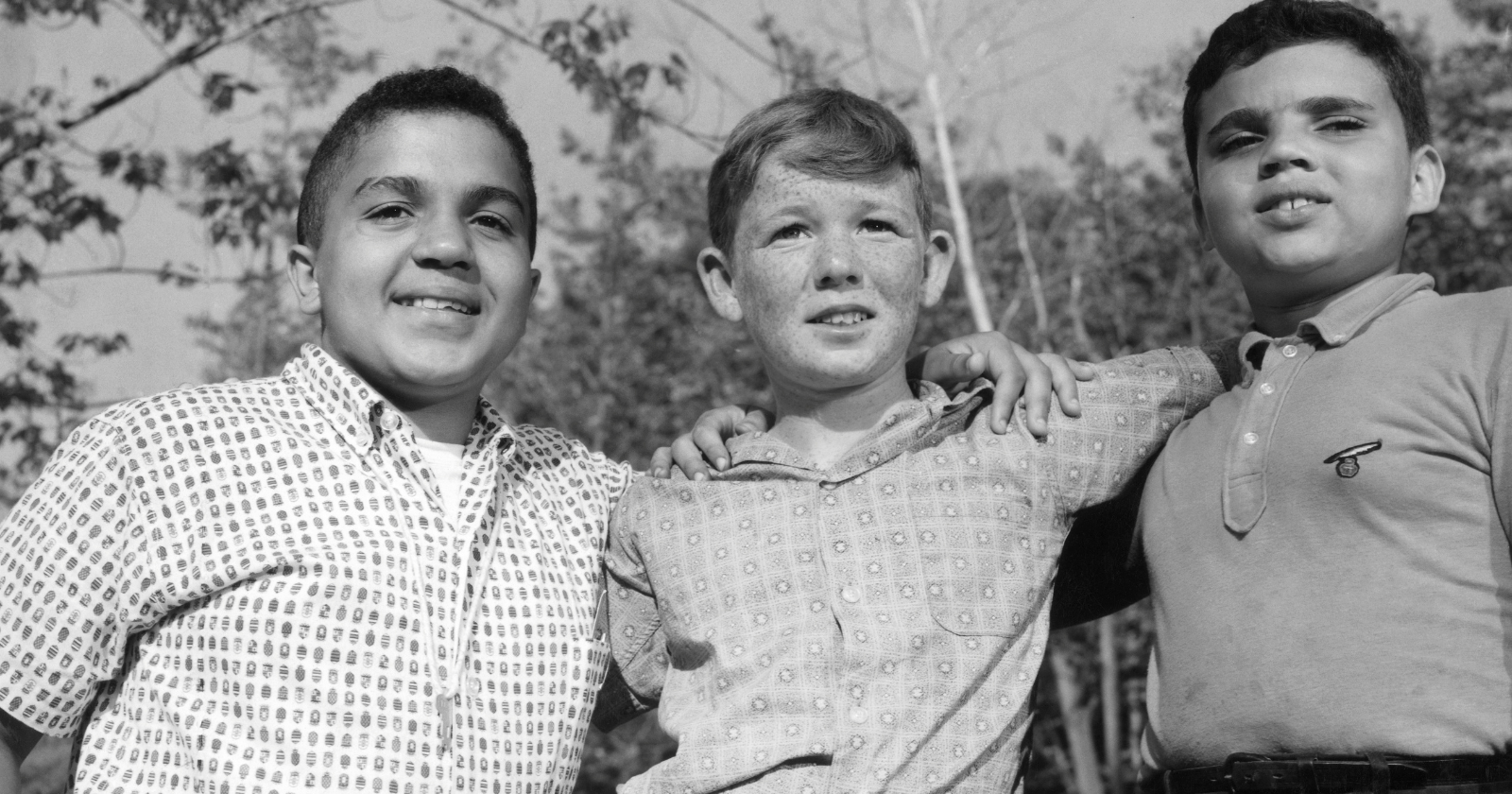
Growing up in the ’60s and ’70s meant nobody was watching you every second. We left the house after breakfast and came back when the streetlights turned on. Today’s kids have GPS trackers and scheduled playdates. We had bikes and a general warning not to do anything stupid.

I’m not saying one way is better. But I know which one taught me how to handle life when it got hard.

We weren’t special. We were just kids who learned early that falling down meant getting back up on your own. Nobody rushed over with band-aids and sympathy. You dusted yourself off and kept going, or you went home crying and got told to toughen up.

That sounds harsh now. Maybe it was. But it also built something in us that I see missing in a lot of younger folks today. Not their fault. Just different times, different rules.

We learned by doing, not by being taught

Nobody sat us down and explained how to handle disappointment. We just got disappointed a lot and figured it out.

Didn’t make the team? Too bad. Deal with it. Teacher was unfair? Life’s unfair. Get used to it. Got in a fight and lost? Learn to duck next time.

My father was a pipefitter. When I was twelve, he brought me to a job site during summer break. First day, he handed me a shovel and pointed at a pile of gravel. “Move it over there,” he said. That was my training.

By the end of the week, my hands were raw, my back was killing me, and I’d learned more about work than any class could teach. Not just the physical stuff. The mental part. Showing up when you don’t want to. Pushing through when everything hurts. Finishing what you start.

These days, there’d be forms to sign, safety meetings, child labor concerns. Back then, it was just a kid learning that work is hard and complaining doesn’t make it easier.

Failure was just part of the deal

We failed all the time. Failed tests, failed at sports, failed at asking girls out. The difference was, nobody treated it like the end of the world.

I remember bombing a math test in eighth grade. Came home, showed my mother. She looked at it, looked at me, said “Better study harder next time,” and went back to making dinner. That was it. No parent-teacher conference. No tutor. No discussion about my feelings.

So I studied harder. Still wasn’t great at math, but I learned something more important: one failure doesn’t define you. You just keep going.

Built a treehouse once with some buddies. Thing collapsed the first time we climbed in it. We all fell about eight feet, one kid sprained his wrist. You know what we did? Built another one. Better this time, because we’d learned what not to do.

Nobody sued anybody. Nobody called it trauma. It was just kids being kids and learning that sometimes things fall apart. When they do, you build them again, but smarter.

Independence wasn’t earned, it was expected

By the time I was ten, I was getting myself to school, making my own lunch, and figuring out my own problems. Not because my parents didn’t care, but because that’s what kids did.

Had a paper route at eleven. Nobody drove me around. I got up at 5 AM, loaded up my bike, and delivered papers in the dark, in the rain, in the snow. Collected payment myself too. Learned real quick which houses to skip if the dog was loose.

If I didn’t feel like doing it, papers didn’t get delivered, I didn’t get paid, and I got fired. Simple as that. No negotiations. No mental health days. No understanding boss making accommodations.

When I turned sixteen, I bought my own car. Piece of junk that barely ran, but I’d saved for it myself. When it broke down, which was often, I figured out how to fix it or found someone who could. YouTube didn’t exist. You learned by trying, failing, and trying again.

Physical challenges taught mental toughness

Everything was more physical back then. No power steering. No automatic anything. Push mowers. Manual labor. If you wanted something done, you did it with your hands and your back.

Helped my father dig out a basement once. Just him, me, and shovels. Took three weeks. Every morning, my whole body screamed when I got out of bed. Every morning, I got up anyway.

You learn something when you push your body past what you thought it could do. You learn the difference between “I can’t” and “I don’t want to.” You learn that your mind usually quits before your body does.

Played football without all the fancy gear they have now. Got my bell rung plenty of times. Coach would ask if you could see straight, and if you said yes, you went back in. Was that smart? Probably not. But it taught us that being uncomfortable wasn’t an emergency.

We walked everywhere. Miles to school, to friends’ houses, to the store. In all weather. Your legs were your transportation, and complaining about it was like complaining about breathing.

Nobody protected us from consequences

You mouthed off to the wrong kid, you got punched. You didn’t do your homework, you failed. You broke something, you paid for it. You made a mess, you cleaned it up.

The world had edges, and we found them by running into them.

Got caught shoplifting candy when I was thirteen. Store owner didn’t call the cops. He called my father. The walk home with my old man was the longest of my life. He didn’t say a word. Didn’t have to. The disappointment was worse than any punishment.

Never stole again. Not because someone explained why stealing was wrong. But because I’d felt the consequences and decided they weren’t worth it.

That’s how we learned right from wrong. Not from lectures or worksheets or therapeutic interventions. From doing wrong and dealing with what came next.

Before I go

I’m not saying we should go back to the old days. Some of that stuff was genuinely dangerous. Some of it was just stupid. And yeah, some kids didn’t make it through okay.

But we lost something when we started protecting kids from every bump and bruise. We lost the chance for them to discover their own strength.

Resilience isn’t built in comfort. It’s built in discomfort. In doing things you don’t want to do. In getting up after you fall. In solving your own problems. In carrying your own weight.

My generation learned that early, not because our parents were wise, but because that’s just how life was. You handled things or you didn’t. Either way, the world kept spinning.

Maybe that’s worth remembering.



Source link

Tags: 1960s70sAchievementassistancecarryCarryingChildrendefaultDevelopeddevelopsExceptionalLoadmuscleprotectedraisedRepeatedlyrequiredResilienceResistanceunremarkable
ShareTweetShare
Previous Post

Forrester’s New Principal Analyst Covering Consumer Behavior

Next Post

Friday File: War, Inflation, Food, Gold, and Uncle Warren

Related Posts

Most advice on becoming happier assumes it is up to you, but the evidence is humbler: much of the variation is dispositional, the claim that 40 per cent sits within your control does not hold up, and what works best points outward, towards other people

Most advice on becoming happier assumes it is up to you, but the evidence is humbler: much of the variation is dispositional, the claim that 40 per cent sits within your control does not hold up, and what works best points outward, towards other people

by FeeOnlyNews.com
August 7, 2026
0

The advice on how to become happier is endless, confident, and mostly built on the same assumption: that your happiness...

Malachyte Raises M to Solve E-Commerce’s Biggest Blind Spot: the Visitor Who Never Logs In – AlleyWatch

Malachyte Raises $10M to Solve E-Commerce’s Biggest Blind Spot: the Visitor Who Never Logs In – AlleyWatch

by FeeOnlyNews.com
August 7, 2026
0

E-commerce brands now spend roughly 40% more to acquire each new customer than they did in 2023, yet the website...

Attraction behaves less like a fixed physical fact than a running judgement: in one study an unpleasant personality made people rate the same face as less attractive, and feeling understood by a partner is what sustains desire: the actions that destroy attraction mostly reveal character

Attraction behaves less like a fixed physical fact than a running judgement: in one study an unpleasant personality made people rate the same face as less attractive, and feeling understood by a partner is what sustains desire: the actions that destroy attraction mostly reveal character

by FeeOnlyNews.com
August 6, 2026
0

The genre of advice about killing attraction treats it as a fixed asset you can squander: be too keen, too...

How to Scale Finance and Operations Without Adding Overhead in 2026

How to Scale Finance and Operations Without Adding Overhead in 2026

by FeeOnlyNews.com
August 5, 2026
0

Adding revenue is the fun part of scaling. The operational finance work to support  it is not. Every new customer...

Why Transparency Wins Long-Term in Business: The Competitive Advantage Most Companies Ignore

Why Transparency Wins Long-Term in Business: The Competitive Advantage Most Companies Ignore

by FeeOnlyNews.com
August 5, 2026
0

When people talk about business growth, the conversation usually centers around the visible levers that naturally attract attention, such as...

The generation that came of age with answering machines, handwritten letters, and phone books isn’t nostalgic for slower technology, they remember when being unreachable for a few hours was considered normal instead of a small emergency other people had to manage around

The generation that came of age with answering machines, handwritten letters, and phone books isn’t nostalgic for slower technology, they remember when being unreachable for a few hours was considered normal instead of a small emergency other people had to manage around

by FeeOnlyNews.com
August 5, 2026
0

In 1994, an answering machine did not make a household continuously reachable. It stored a message until someone returned home...

Next Post
Friday File:  War, Inflation, Food, Gold, and Uncle Warren

Friday File: War, Inflation, Food, Gold, and Uncle Warren

Circle Defends Limited Role in 5 Million Crypto Hack, Citing Legal Boundaries

Circle Defends Limited Role in $285 Million Crypto Hack, Citing Legal Boundaries

  • Trending
  • Comments
  • Latest
Bitcoin and ethereum prices today, Friday, August 7, 2026: Crypto prices moving higher following July jobs report

Bitcoin and ethereum prices today, Friday, August 7, 2026: Crypto prices moving higher following July jobs report

August 7, 2026
Why did a 4 billion CEO just endorse stripping most Americans of voting rights?

Why did a $154 billion CEO just endorse stripping most Americans of voting rights?

July 27, 2026
Onkure Therapeutics Releases Q2 2026 Financial Results

Onkure Therapeutics Releases Q2 2026 Financial Results

August 4, 2026
Thryv outlines M run-rate savings while revising 2026 SaaS adjusted EBITDA to M-M (NASDAQ:THRY)

Thryv outlines $60M run-rate savings while revising 2026 SaaS adjusted EBITDA to $42M-$44M (NASDAQ:THRY)

August 4, 2026
My Thoughts on Going All In

My Thoughts on Going All In

August 4, 2026
Raiffeisen crosses 55% threshold to secure control of Addiko Bank

Raiffeisen crosses 55% threshold to secure control of Addiko Bank

August 4, 2026
Advanced Micro Devices (AMD) Price Prediction: How Much a ,000 Investment Could Be Worth by 2031

Advanced Micro Devices (AMD) Price Prediction: How Much a $5,000 Investment Could Be Worth by 2031

0
Cities holding up to 3 million people found under Amazon rain forest

Cities holding up to 3 million people found under Amazon rain forest

0
Republican Party Displacement | Mises Institute

Republican Party Displacement | Mises Institute

0
Bybit Uses Tokenised Equities as Underlyings for Structured Yield

Bybit Uses Tokenised Equities as Underlyings for Structured Yield

0
Explained: How BSE traded fewer contracts after CAS but premiums rose 75% in first week

Explained: How BSE traded fewer contracts after CAS but premiums rose 75% in first week

0
Vaxart outlines Phase IIb COVID-19 top line data in first half of 2027 backed by BARDA funding (OTCMKTS:VXRT)

Vaxart outlines Phase IIb COVID-19 top line data in first half of 2027 backed by BARDA funding (OTCMKTS:VXRT)

0
Advanced Micro Devices (AMD) Price Prediction: How Much a ,000 Investment Could Be Worth by 2031

Advanced Micro Devices (AMD) Price Prediction: How Much a $5,000 Investment Could Be Worth by 2031

August 8, 2026
Republican Party Displacement | Mises Institute

Republican Party Displacement | Mises Institute

August 8, 2026
Vanguard Chief Economist: AI and jobs, still in an ATM phase

Vanguard Chief Economist: AI and jobs, still in an ATM phase

August 8, 2026
Explained: How BSE traded fewer contracts after CAS but premiums rose 75% in first week

Explained: How BSE traded fewer contracts after CAS but premiums rose 75% in first week

August 8, 2026
Democrats’ Affordability Message Misses a Key Expense—Student Debt

Democrats’ Affordability Message Misses a Key Expense—Student Debt

August 8, 2026
Banks or NBFCs? DSP’s Preethi R S explains where she sees the best opportunities

Banks or NBFCs? DSP’s Preethi R S explains where she sees the best opportunities

August 8, 2026
FeeOnlyNews.com

Get the latest news and follow the coverage of Business & Financial News, Stock Market Updates, Analysis, and more from the trusted sources.

CATEGORIES

  • Business
  • Cryptocurrency
  • Economy
  • Financial Planning
  • Investing
  • Market Analysis
  • Markets
  • Money
  • Personal Finance
  • Startups
  • Stock Market
  • Trading

LATEST UPDATES

  • Advanced Micro Devices (AMD) Price Prediction: How Much a $5,000 Investment Could Be Worth by 2031
  • Republican Party Displacement | Mises Institute
  • Vanguard Chief Economist: AI and jobs, still in an ATM phase
  • Our Great Privacy Policy
  • Terms of Use, Legal Notices & Disclaimers
  • About Us
  • Contact Us

Copyright © 2022-2024 All Rights Reserved
See articles for original source and related links to external sites.

Welcome Back!

Sign In with Facebook
Sign In with Google
Sign In with Linked In
OR

Login to your account below

Forgotten Password?

Retrieve your password

Please enter your username or email address to reset your password.

Log In
No Result
View All Result
  • Home
  • Business
  • Financial Planning
  • Personal Finance
  • Investing
  • Money
  • Economy
  • Markets
  • Stocks
  • Trading

Copyright © 2022-2024 All Rights Reserved
See articles for original source and related links to external sites.