No Result
View All Result
  • Login
Tuesday, April 28, 2026
FeeOnlyNews.com
  • Home
  • Business
  • Financial Planning
  • Personal Finance
  • Investing
  • Money
  • Economy
  • Markets
  • Stocks
  • Trading
  • Home
  • Business
  • Financial Planning
  • Personal Finance
  • Investing
  • Money
  • Economy
  • Markets
  • Stocks
  • Trading
No Result
View All Result
FeeOnlyNews.com
No Result
View All Result
Home Money

Why the Market’s Fear Index Is Rising — And What History Says Happens Next

by FeeOnlyNews.com
2 months ago
in Money
Reading Time: 4 mins read
A A
0
Why the Market’s Fear Index Is Rising — And What History Says Happens Next
Share on FacebookShare on TwitterShare on LInkedIn


Image Source: Pexels

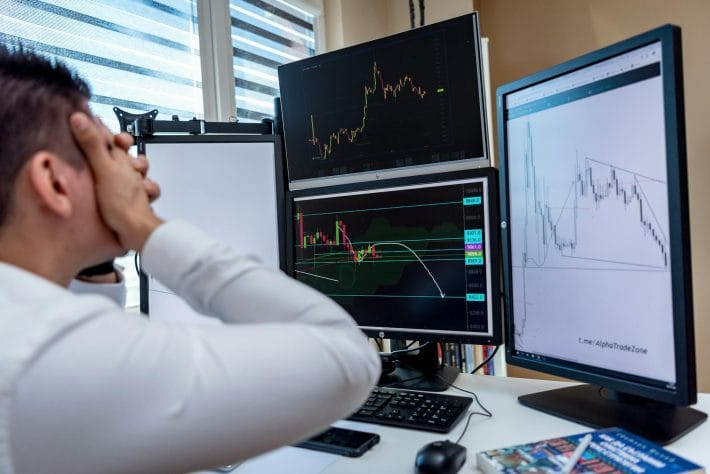
When headlines start mentioning the market’s fear index, many investors immediately assume a crash is coming. The index, known as the CBOE Volatility Index or VIX, tracks expected volatility in the S&P 500 based on options pricing. When investors get nervous about economic news, geopolitical tensions, or interest rates, this indicator tends to spike quickly.

Recently, the fear index has been climbing again, reflecting growing uncertainty in financial markets. But history suggests that these moments of panic can sometimes lead to surprising outcomes for investors who stay calm. So, before you make any drastic moves, here is what you need to know.

The Fear Index Reflects Investor Anxiety

So, what exactly is the so-called “fear index”?

The fear index measures how much volatility investors expect in the stock market over the next 30 days. It’s calculated using options pricing tied to the S&P 500, which means it reacts quickly to investor sentiment. When traders anticipate major price swings, they buy protective options, which pushes the index higher. In short, a rising fear index signals that investors are bracing for turbulence.

Economic and Political Uncertainty Often Trigger Spikes

Several factors can cause the fear index to jump suddenly. Economic slowdown fears, geopolitical conflicts, and interest-rate policy changes are among the most common triggers. For example, volatility surged when trade tensions escalated between major global economies, pushing the VIX to multi-month highs.

When uncertainty spreads, investors seek protection against potential market drops. This increased demand for hedging instruments pushes the fear index higher almost immediately.

The Fear Index Has Spiked During Major Crises

Looking at history, the fear index tends to surge during major financial shocks. During the global financial crisis in 2008, the index climbed to an all-time high near 90 as markets plunged worldwide. It also surged during the COVID-19 market crash in 2020 and during several sharp corrections in the 2010s.

Each spike reflected widespread uncertainty and panic among investors. Yet these dramatic increases often occurred near some of the most intense moments of market fear.

Panic Periods Sometimes Mark Market Bottoms

Interestingly, extreme spikes in the fear index have sometimes appeared near market bottoms. Analysts have found that major volatility surges are often followed by market recoveries once panic subsides. Historical data show that after large VIX spikes, markets frequently rebound in the months that follow.

In fact, the S&P 500 has delivered positive returns about 70% of the time within a year after major volatility surges. That doesn’t guarantee a rally, but it shows how fear-driven sell-offs can create opportunities.

Short-Term Volatility Often Follows Fear Surges

Even though long-term returns may improve after spikes, the way investors are feeling usually signals rough short-term conditions. Markets often remain volatile for weeks or months as investors digest new economic data. Short-term returns immediately following major volatility spikes are frequently negative. This means investors should expect turbulence rather than instant recovery.

Rising Interest Rates and Policy Shifts Add Fuel

Central bank policy changes are another major driver of the fear index. When the Federal Reserve signals fewer interest-rate cuts or tighter financial conditions, markets can react quickly. One recent policy shift caused the VIX to jump more than 70% in a single day as investors reassessed the outlook for borrowing costs. These sudden spikes reflect how sensitive markets are to monetary policy.

A Cooling Fear Index Often Signals Stabilization

Just as quickly as it rises, the fear index can also fall once markets begin to stabilize. For example, a surge above 40 during recent volatility cooled to below 20 within a few weeks after trade tensions eased.

When the index drops sharply after a spike, it often signals that panic is fading. Analysts sometimes interpret this decline as a sign that investors are regaining confidence.

Reading Market Fear Without Panicking

A rising fear index may sound alarming, but it’s simply a reflection of investor expectations about volatility. History shows that spikes often occur during moments of maximum uncertainty, sometimes right before markets stabilize or recover. That doesn’t mean every surge leads to a rally, but it does highlight how emotional reactions can exaggerate short-term market swings. Long-term investors often view these periods as reminders to stay disciplined rather than panic.

When the market’s fear index starts rising, do you see it as a warning sign or a potential buying opportunity? Share your thoughts in the comments.

What to Read Next

8 Money Moves to Secure Your Financial Peace After a Market Dip

7 Investment Scam Promises Older Adults Report Most Often

Here’s How Much Money You’d Have If You’d Invested In Nvidia 5 Years Ago

Senior Investors Are Reworking Tax Strategies After Market Volatility

Why More Retirees Are Choosing IRA Gold Investing


Source link

Tags: fearHistoryindexmarketsRising
ShareTweetShare
Previous Post

10 Ways to Avoid Earnings-Test Surprises When You Work Part-Time in 2026

Next Post

West Asia conflict poses downside risk, India GDP growth seen at 7.1 pc in FY27: Crisil Intelligence

Related Posts

The 30% Rule: Why Seniors Should Keep Housing Costs Below This Proven Affordability Threshold

The 30% Rule: Why Seniors Should Keep Housing Costs Below This Proven Affordability Threshold

by FeeOnlyNews.com
April 27, 2026
0

For many seniors, retirement brings a fixed income, but rising housing costs don’t always get the memo. Whether it’s property...

The “7726” Trick: One Step That Blocks Up to 90% of Scam Texts, According to Carriers

The “7726” Trick: One Step That Blocks Up to 90% of Scam Texts, According to Carriers

by FeeOnlyNews.com
April 27, 2026
0

If your phone feels like it’s constantly buzzing with fake delivery alerts, “urgent” bank warnings, or random prize messages, you’re...

Best places to buy real estate in Edmonton

Best places to buy real estate in Edmonton

by FeeOnlyNews.com
April 27, 2026
0

Where to Buy Real Estate in 2026 The best places to buy real estate in Edmonton Here are the top...

Best places to buy real estate in Calgary

Best places to buy real estate in Calgary

by FeeOnlyNews.com
April 27, 2026
0

The city’s food scene spans everything from Ethiopian and Korean spots to farm‑to‑table restaurants, and neighbourhoods like Inglewood and East...

Love Driving? 9 Ways Putting Your Pedal to the Metal Can Earn an Income

Love Driving? 9 Ways Putting Your Pedal to the Metal Can Earn an Income

by FeeOnlyNews.com
April 27, 2026
0

If you love the open road and have a clean driving record, you are sitting on a highly marketable skill....

7 Warning Signs Your Aging Parent Needs Help Managing Their Bills

7 Warning Signs Your Aging Parent Needs Help Managing Their Bills

by FeeOnlyNews.com
April 26, 2026
0

It often starts small. You might just have a missed payment here, a late notice there. At first, it’s easy...

Next Post
West Asia conflict poses downside risk, India GDP growth seen at 7.1 pc in FY27: Crisil Intelligence

West Asia conflict poses downside risk, India GDP growth seen at 7.1 pc in FY27: Crisil Intelligence

A Beginner-Friendly Investing App Explained

A Beginner-Friendly Investing App Explained

  • Trending
  • Comments
  • Latest
Wells Fargo Transfer Partners: What to Know

Wells Fargo Transfer Partners: What to Know

April 16, 2026
The 16 Largest Global Startup Funding Rounds of March 2026 – AlleyWatch

The 16 Largest Global Startup Funding Rounds of March 2026 – AlleyWatch

April 21, 2026
The 27 Largest US Funding Rounds of March 2024 – AlleyWatch

The 27 Largest US Funding Rounds of March 2024 – AlleyWatch

April 17, 2026
LPL’s Mariner Advisor Network deal fuels already hot year for RIA M&A

LPL’s Mariner Advisor Network deal fuels already hot year for RIA M&A

April 16, 2026
Royal Caribbean, Bank of America Launching New Credit Cards

Royal Caribbean, Bank of America Launching New Credit Cards

March 31, 2026
CVS Deals Under  This Week

CVS Deals Under $1 This Week

March 30, 2026
Human Employees Often Cost Less Than AI

Human Employees Often Cost Less Than AI

0
HSBC Holdings plc (HSBC): One of the Low Risk High Growth Stocks to Buy?

HSBC Holdings plc (HSBC): One of the Low Risk High Growth Stocks to Buy?

0
Wren Kitchens Ceases Operations in the US, Files for Bankruptcy

Wren Kitchens Ceases Operations in the US, Files for Bankruptcy

0
ETMarkets Smart Talk | ‘India at crypto inflection point; investor base could double every 2–3 years’: Vikaas M Sachdeva of BitDelta India

ETMarkets Smart Talk | ‘India at crypto inflection point; investor base could double every 2–3 years’: Vikaas M Sachdeva of BitDelta India

0
Kraken Pulls In 0 Million With App-Based DeFi Yield Bet

Kraken Pulls In $200 Million With App-Based DeFi Yield Bet

0
The 30% Rule: Why Seniors Should Keep Housing Costs Below This Proven Affordability Threshold

The 30% Rule: Why Seniors Should Keep Housing Costs Below This Proven Affordability Threshold

0
Top 10 Advantages of Online Personal Loan Over Traditional Loans

Top 10 Advantages of Online Personal Loan Over Traditional Loans

April 28, 2026
Human Employees Often Cost Less Than AI

Human Employees Often Cost Less Than AI

April 28, 2026
ETMarkets Smart Talk | ‘India at crypto inflection point; investor base could double every 2–3 years’: Vikaas M Sachdeva of BitDelta India

ETMarkets Smart Talk | ‘India at crypto inflection point; investor base could double every 2–3 years’: Vikaas M Sachdeva of BitDelta India

April 27, 2026
Bitcoin Price Turns Lower After Rejection, Downside Pressure Builds

Bitcoin Price Turns Lower After Rejection, Downside Pressure Builds

April 27, 2026
Global Market Today: Asian shares hold near eight-week high

Global Market Today: Asian shares hold near eight-week high

April 27, 2026
A Business Trip to Ohio

A Business Trip to Ohio

April 27, 2026
FeeOnlyNews.com

Get the latest news and follow the coverage of Business & Financial News, Stock Market Updates, Analysis, and more from the trusted sources.

CATEGORIES

  • Business
  • Cryptocurrency
  • Economy
  • Financial Planning
  • Investing
  • Market Analysis
  • Markets
  • Money
  • Personal Finance
  • Startups
  • Stock Market
  • Trading

LATEST UPDATES

  • Top 10 Advantages of Online Personal Loan Over Traditional Loans
  • Human Employees Often Cost Less Than AI
  • ETMarkets Smart Talk | ‘India at crypto inflection point; investor base could double every 2–3 years’: Vikaas M Sachdeva of BitDelta India
  • Our Great Privacy Policy
  • Terms of Use, Legal Notices & Disclaimers
  • About Us
  • Contact Us

Copyright © 2022-2024 All Rights Reserved
See articles for original source and related links to external sites.

Welcome Back!

Sign In with Facebook
Sign In with Google
Sign In with Linked In
OR

Login to your account below

Forgotten Password?

Retrieve your password

Please enter your username or email address to reset your password.

Log In
No Result
View All Result
  • Home
  • Business
  • Financial Planning
  • Personal Finance
  • Investing
  • Money
  • Economy
  • Markets
  • Stocks
  • Trading

Copyright © 2022-2024 All Rights Reserved
See articles for original source and related links to external sites.