
Years of pent-up demand were supposed to be unleashed on the Canadian real estate market in 2025. Economists and real estate experts alike predicted a full rebound in the spring market as interest rates stabilized and housing inventory reached healthier levels. Then, unexpected tariff threats from the U.S., trade risks, and general economic uncertainty eroded those expectations.
Buyer confidence waned, leading to a year-over-year decline in national home sales every month from February to May. Sales began to pick up in the summer, particularly as the Bank of Canada signalled it was reaching the end of its rate-cutting cycle. But by late fall, momentum slowed again, resulting in the year finishing with 1.9% fewer sales than in 2024.
However, not all areas of real estate suffered. National new listings saw a substantial boost in supply, with year-over-year increases recorded every month except for February and November. Improved affordability likely benefited buyers who were active this past summer, as the national benchmark price trended downward every month from May.
For the first time in a long time, both interest rates and housing costs are holding firm. As a result, several housing markets are offering buyers the ideal combination: accessible entry points and growth potential.
For our 2026 edition of Where to Buy Real Estate in Canada, MoneySense partnered with Zoocasa, an award-winning prop-tech company, to reveal the best places to buy property in Canada, including spotlighting the top neighbourhoods in the country’s most in-demand real estate markets.
You’re 2 minutes away from getting the best mortgage rates.
Answer a few quick questions to get a personalized quote, whether you’re buying, renewing or refinancing.
The best places to buy property in Canada in 2026
In the table below, you’ll find our rankings for the top places to buy property in Canada, based on Zoocasa’s analysis of data from 44 different regions. Slide the columns right or left using your fingers or mouse. You can download the data to your device in Excel, CSV, and PDF formats.
Return to menu.
What’s shaping the real estate market in 2026?
Canada has not had a normal real estate cycle for several years. Turbulent shifts in inventory, borrowing costs, remote work trends, trade policies, and inflation have made it challenging for buyers to plan their next moves. But while buyer hesitation persisted in 2025, it did ease after the Bank of Canada lowered interest rates to a three-year low. This relief, combined with softer price growth, points to a more normal 2026 market.
“The market is finally finding its footing after years of unpredictability,” says Brittany Kostov, Zoocasa Industry Relations Officer. “The price points and inventory levels we’re seeing now represent a much-needed reset for the market. It’s a shift toward a more sustainable pace where buyers have the luxury of being selective rather than reactive.”

X
As of January 2026, fixed interest rates remain stable, sitting firmly under 4%. The Bank of Canada has also suggested that it will hold its overnight lending rate at 2.25% for a significant portion, if not all, of the year. Stable economic policy, after four years of fluctuating interest rates, could give some buyers the confidence to make a significant financial commitment.
At the same time, the country’s most expensive markets are seeing some relief from the soaring prices seen during the pandemic. According to the Canadian Real Estate Association (CREA), Vancouver’s benchmark price decreased by 2.3% from December 2021 to December 2025, while Toronto and Hamilton-Burlington experienced drops of 17.2% and 20.3%, respectively. Meanwhile, the Prairies and the East Coast were the big drivers for price increases. Specifically, Regina, Saskatoon, and St. John’s all experienced year-over-year price increases of more than 6% in December.
While national housing supply improved significantly in 2025, inventory remained tightest in Manitoba and Alberta, which ended the year with just 2.1 and 2.9 months of supply, respectively. British Columbia, by contrast, shifted into buyers’ territory, finishing 2025 with a much loftier 6.8 months of inventory. With just over 4 months of inventory each, Ontario, Quebec, and Nova Scotia are all entering 2026 in a relatively balanced market.
“For buyers in these balanced or buyer-favoured regions, they can take their time to find a home that truly fits their needs without the pressure of a ticking clock,” says Kostov. “As the market stabilizes, the premium has shifted from ‘any home’ to the ‘right home’. Even in more competitive regions where supply is low, the goal has moved away from simply securing a property at any cost and toward finding those that offer the best long-term stability for the investment.”
Return to menu.
You’re 2 minutes away from getting the best mortgage rates.
Answer a few quick questions to get a personalized quote, whether you’re buying, renewing or refinancing.
Canada’s top three real estate markets in 2026
1. Fredericton, N.B.
The capital of New Brunswick has claimed our top spot for the second year in a row. With a value score of 3.76 out of 5, Fredericton boasts highly accessible real estate options for buyers looking to build equity on the East Coast.
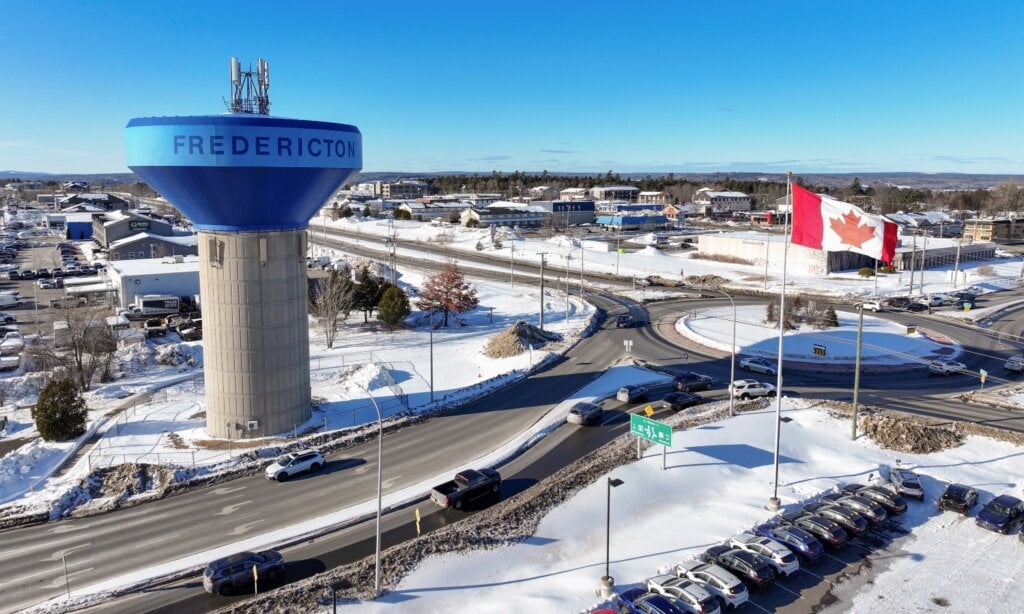
What’s happened in the Fredericton real estate market?
Fredericton finished 2025 with a benchmark price of $344,467—10% higher than in 2024 and 74% higher than in 2020. Despite this impressive appreciation, the Maritime capital retains its reputation as one of the most affordable real estate markets in Canada. Fredericton’s benchmark price sits well below the national benchmark of $683,567, representing a $339,100 discount. Only three other markets analyzed reported a lower benchmark price than Fredericton.
Beyond affordability, it’s the stability that draws people in, says Jessie Yerxa, an eXp real estate agent based in Fredericton. “It’s a resilient, reliable market that avoids the typical boom-and-bust cycle.” The city also appeals to remote workers thanks to its strong tech presence and internet infrastructure, while offering a lifestyle rich with over 120 kilometres of paved walking and biking trails, many of them winding along the scenic St. John River. “Fredericton is big enough to grow in and small enough to belong in,” Yerxa says. (Zoocasa, the author of this study, is wholly owned by eXp World Holdings.)