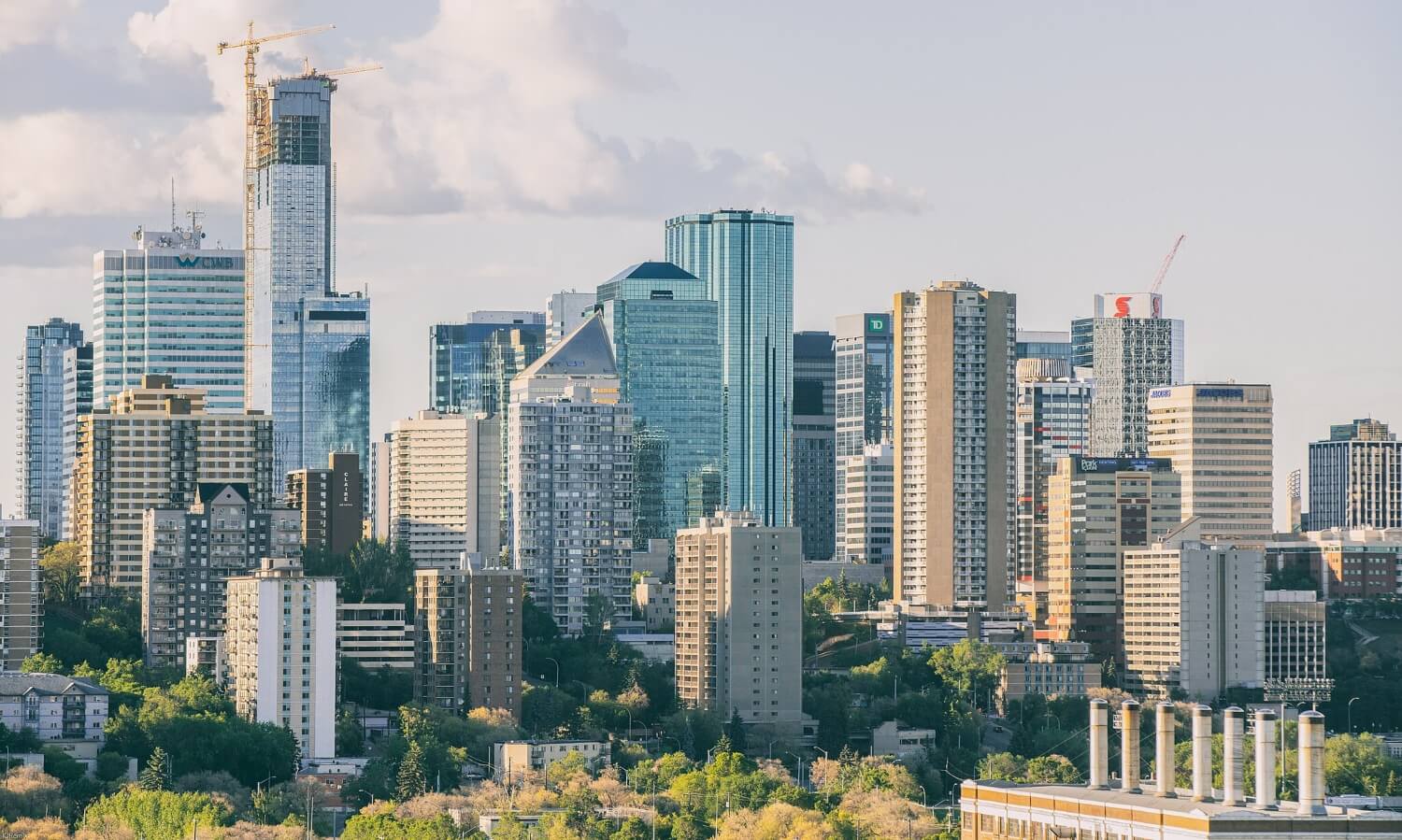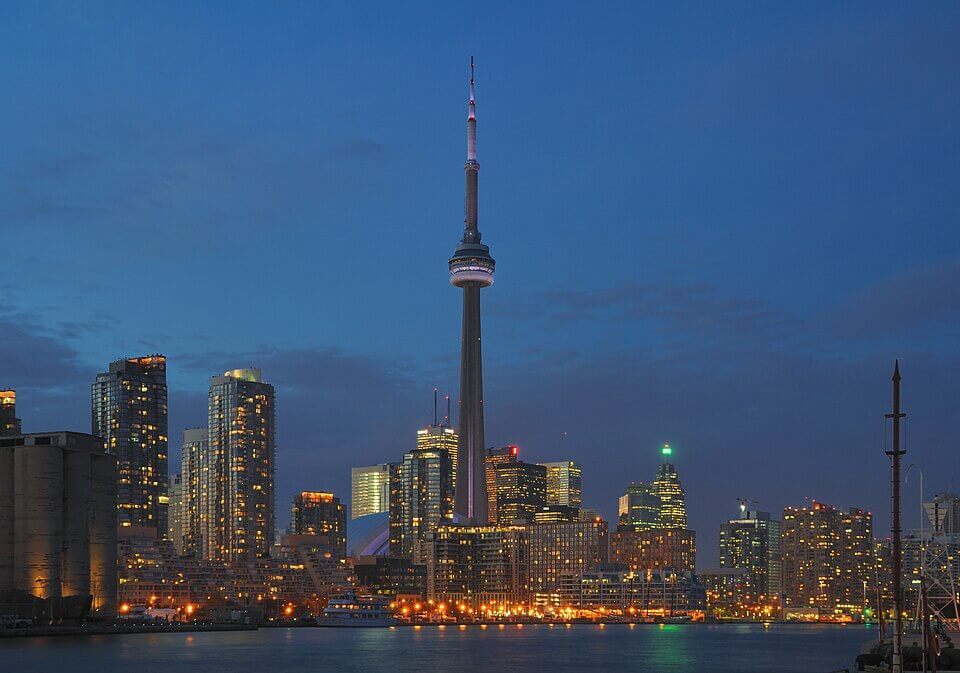
For buyers, the question isn’t whether Toronto is one of Canada’s most desirable cities; it’s how to read this particular moment. Prices have softened even as long-term investments in transit, parks, and new communities accelerate, though timelines are long and carrying costs are real. Buying now may be less about timing the bottom than deciding whether you believe in the city’s next chapter enough to pay for a seat before it’s written.
Where to Buy Real Estate in 2026
The best places to buy real estate in Toronto 2026
Here are the top Toronto neighbourhoods for real estate purchases in 2026. To view all the results, slide the columns right or left using your fingers or mouse, or download the data to your device in Excel, CSV, or PDF format.
Top three neighbourhoods in Toronto
Where Toronto once built aircraft, it’s now assembling an entirely new urban district. Downsview–Roding–CFB sits at the center of one of the largest redevelopment projects in North America, and the numbers already reflect that transformation: a perfect Economics Score of 5.00, a Value Score of 3.79, and 15.34% five-year appreciation, bringing the average home price to $850,322.
The workforce shaping that change is highly skilled and well compensated. Median household incomes reach $222,000, and 70.6% of residents hold post-secondary credentials, supporting the neighbourhood’s expanding mix of healthcare and technical employment. Humber River Hospital and nearby York University act as institutional anchors, while 38.33% of households raising children prioritize parks and sports fields.
Connectivity ties it all together. A 3.34 Accessibility Score and Transit Score of 78 revolve around Downsview Park Station, where the Barrie GO Line and Line 1 Yonge–University intersect. Around that hub, new mid-rise districts and public spaces are gradually filling in the former airfield lands. What once launched aircraft is now launching one of Toronto’s most ambitious urban transformations.
Some Toronto neighbourhoods grow by adding density. Edenbridge–Humber Valley grows by protecting what already makes it rare. Curving streets follow the Humber River’s ravine edge, mature trees stretch above wide front lawns, and homes sit comfortably back from the road—a landscape that helps explain a Value Score of 4.84, 19.73% five-year growth, and an average price of $1,877,000.
Behind those ravine-lined streets lives a professional class that tends to stay put. 78.62% of adults hold post-secondary credentials, many working in management, finance, or technical professions, and 41% of households include children drawn to the area’s respected schools. Architecture tells its own story: Tudor revivals, Georgian estates, and mid-century modern homes remain a defining feature.
Outdoor space anchors the lifestyle. James Gardens serves as a daily gathering place, while nearby courses such as St. George’s Golf and Country Club add another layer of recreational prestige. Though the neighbourhood has an Accessibility Score of 2.51, proximity to Highway 401, Highway 427, and the Gardiner Expressway keeps the downtown core within easy reach for commuting professionals. In a city racing toward density, Edenbridge–Humber Valley remains something rarer: a neighbourhood where landscape still shapes the market.
Momentum often arrives quietly before the market fully notices. In Elms–Old Rexdale, that shift has been building along Finch Avenue, where new transit infrastructure is steadily redefining the neighbourhood’s position within the city. A Value Score of 4.86, 17.11% five-year growth, and an average price of $725,768 now place the area among Toronto’s strongest value-driven markets.
The neighbourhood’s energy starts with its residents; 89.01% of residents hold post-secondary credentials, the highest share among the city’s top-ranked neighbourhoods. Young professionals, immigrant families, and multi-generational households bring an entrepreneurial energy to the community, reflected in its diverse restaurants and small businesses. Owner-occupancy sits at 55.09%, creating a balanced mix of homeowners and new buyers entering the market.
That infrastructure is reshaping daily movement. With an Accessibility Score of 3.34 and Transit Score of 78, the neighbourhood’s once-isolated streets now sit on a rapid transit corridor, where the Finch West LRT delivers fast connections across the northwest quadrant of the city. As the Finch corridor continues to intensify, Elms–Old Rexdale is shifting from an overlooked edge market to one of northwest Toronto’s most connected growth zones.
What’s happened in the Toronto market?
The correction has hit investors hardest. An average Toronto condo that was listed for $525,000 at the 2022 peak is now listed for $399,000. Many bought at the top, expecting rents and appreciation to cover their carrying costs. That math no longer works, resulting in a steady stream of listings from owners looking to exit. But where investors see a reason to leave, end users are finding a reason to arrive.
“This is the opportunity for end-users,” says Kirby Chan, a Toronto-based eXp real estate agent. (Zoocasa, the author of this study, is wholly owned by eXp World Holdings.)
For a first-time buyer ready to act, the entry point into Toronto ownership has never been lower in recent memory. Someone putting 20% down at today’s prices needs a fraction of what the same purchase would have required two years ago, and if values recover even modestly, the upside is significant. Yet the prevailing narrative remains one of caution.
Chan sees it differently. When the headlines mention uncertainty, he reads opportunity. “You can get into Toronto real estate now at a low price,” he says. “Buyers are going to look back and say, ‘Why didn’t I buy in 2026?”
Beyond condos, freehold buyers face an encouraging shift. A turnkey detached home in an average Toronto neighbourhood runs $1.3M to $1.6M, rising above $1.6 million in prime areas. “A lot of my clients go up to $2.2M, and it’s still very average,” he says.
This year may also be the time for move-up buyers. In a rising market, trading up means paying a premium on the next property that dwarfs whatever you gained on the sale. But in a correction, the math flips.
Chan talks about a client who successfully “traded up” from a condo to a house, despite selling during a market dip. “Although she lost $150,000 on the condo, the other guy’s losing maybe $250,000 on the house,” he says. Moving up the ladder gets cheaper in a downturn, not more expensive, and that opportunity disappears the moment the market turns.

X
You’re 2 minutes away from getting the best mortgage rates.
Answer a few quick questions to get a personalized quote, whether you’re buying, renewing or refinancing.
Return to top.
What’s next for real estate in Toronto?
Two structural forces suggest today’s buyer-friendly conditions won’t last indefinitely. Condo starts have fallen sharply, and what isn’t being built now won’t arrive for three to four years. “Usually we’re flooded with new condos, and that keeps the price down,” he says. “But with low starts going forward, that means lower supply.”
Meanwhile, immigration policy has tightened intake for now, but Chan calls it an X factor. If numbers climb again, the pressure will land on exactly the segment that’s currently the most accessible. Both forces point in the same direction: today’s window has an expiry date.
“2026 is more about strategy,” Chan says. Buyers are ordering home inspections again, negotiating 120-day closings, and walking away from properties without fear of them disappearing overnight.
Sellers who price with clarity are being rewarded; most properties still move at roughly 96% of asking. But Chan warns against looking backward. “You have to price ahead of where the market’s going, not where it’s been,” he says. A home that sits for 100 days doesn’t just attract lowball offers: “They might just ignore it.” Sharp pricing from the start is what finds the right buyer fast.
Nobody’s giving homes away in Toronto in 2026, but the market is more accessible than it’s been in years. Accessible price points don’t last forever, and waiting for the perfect bottom is how the last window quietly closed on a generation of would-be buyers. Now might be the time to get a fresh pre-approval in hand, start booking showings, and treat this market for what it is: not a perfect time, but a rare one.
Return to top.
Get free MoneySense financial tips, news & advice in your inbox.
Read more about buying a home:
This article was created by Zoocasa.
This is an unpaid article. It was written by a content partner based on its expertise and edited by MoneySense.
This article is presented by Ratehub.ca.
This is an editorially driven article or content package, presented with financial support from an advertiser. The advertiser has no influence on the creation of the content.