As part of a broader marketing strategy, RIAs might work with “solicitors” or “promoters” (e.g., accountants, online advisor matching platforms, and compensated bloggers) who refer prospective clients in exchange for compensation. While the SEC’s Marketing Rule sets forth rules requiring RIAs to disclose their compensation arrangements with any paid promoters and the potential conflicts they entail, some firms might not realize that, depending on the relationship between the RIA and the promoter and the extent to which the promoter provides ‘advice’ to prospective clients, disclosure alone might not be enough for the RIA to be fully in compliance.
In this guest post, Isaac Mamaysky, Partner of Potomac Law Group and Cofounder and COO of QuantStreet Capital, explains the requirements for paid referrals under the SEC Marketing Rule, why paid promoters may need to register as RIAs (or IARs), and whether the registration burden lies in the hands of the promoter or the RIA that’s compensating them.
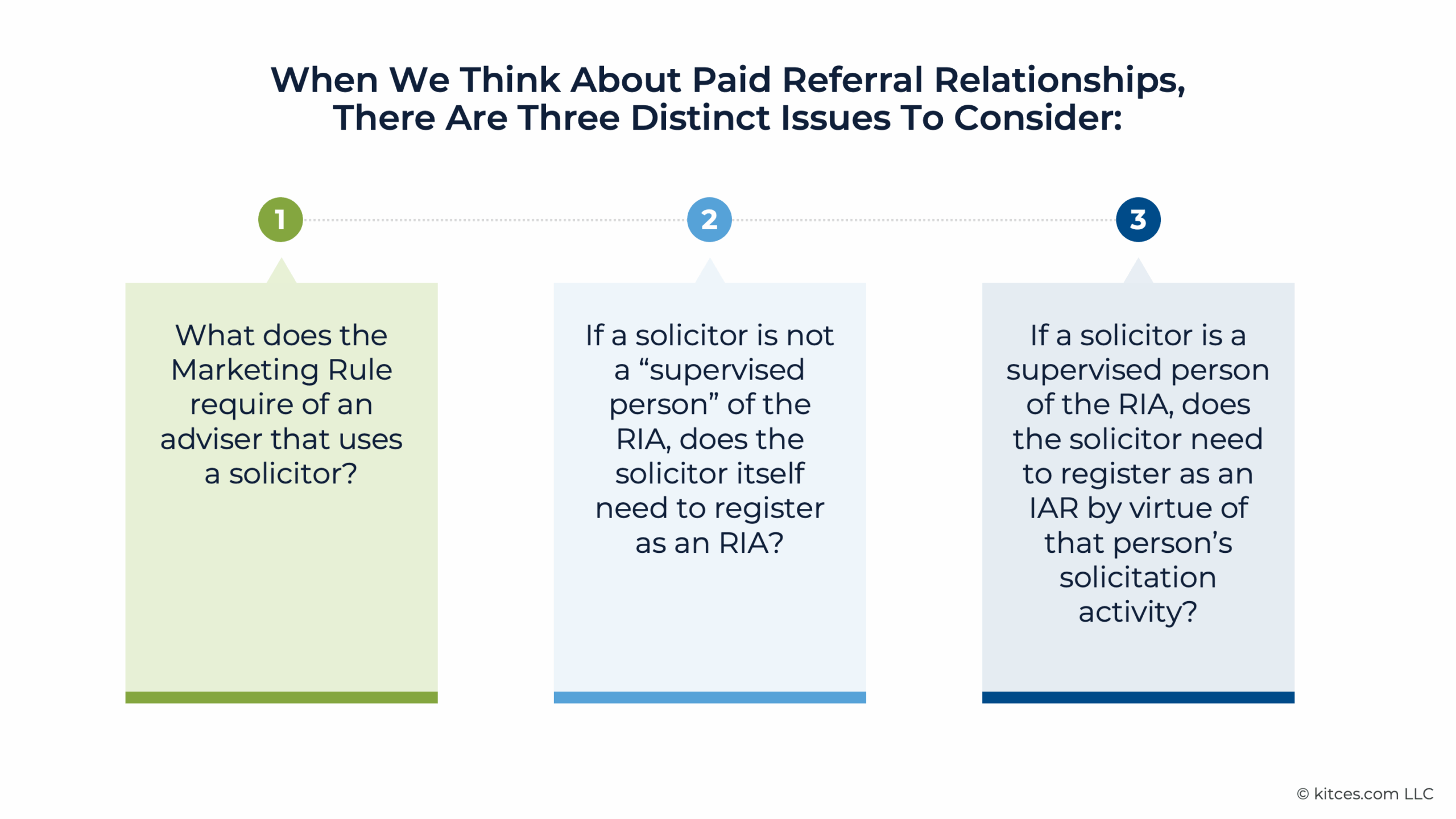
To start, an RIA engaging with a promoter will want to ensure compliance with the Marketing Rule (and provide the required Form ADV disclosures) for the testimonials and endorsements themselves. For example, the Marketing Rule requires that advisers disclose, among other items, whether cash or non-cash compensation was provided for the testimonial or endorsement and any material conflicts of interest arising from the adviser’s relationship with the promoter.
Next, the RIA can determine whether the promoter is a supervised person of the firm, defined by the Investment Advisers Act as “any partner, officer, director (or other person occupying a similar status or performing similar functions), or employee of an investment adviser, or other person who provides investment advice on behalf of the investment adviser and is subject to the supervision and control of the investment adviser”. If a promoter is determined to be a supervised person, the RIA must determine whether the promoter is required to register as an investment adviser representative (IAR) under applicable state law.
If, instead, a promoter is acting independently of the adviser (i.e., not as a supervised person), while there is no explicit requirement for advisory firms to confirm their unaffiliated promoters’ registration status, prudent firms may choose to conduct due diligence into the promoter’s compliance with their standalone registration obligations (if any).
Ultimately, the key point is that while the Marketing Rule made it easier to use both paid and unpaid promoters for business development, there are still compliance obligations regarding their use that could trip up advisors who don’t have a full understanding of their requirements. Nevertheless, by determining whether they have made sufficient disclosures regarding the use of a solicitor, as well as whether a solicitor is a supervised person (and following the relevant Federal and state registration requirements depending on the solicitor’s status), firms can ensure that they comply with not only the requirements of the Marketing Rule itself, but also those under the Advisers Act, SEC, and state regulations that make up the full compliance landscape for testimonials and endorsements.
Read More…