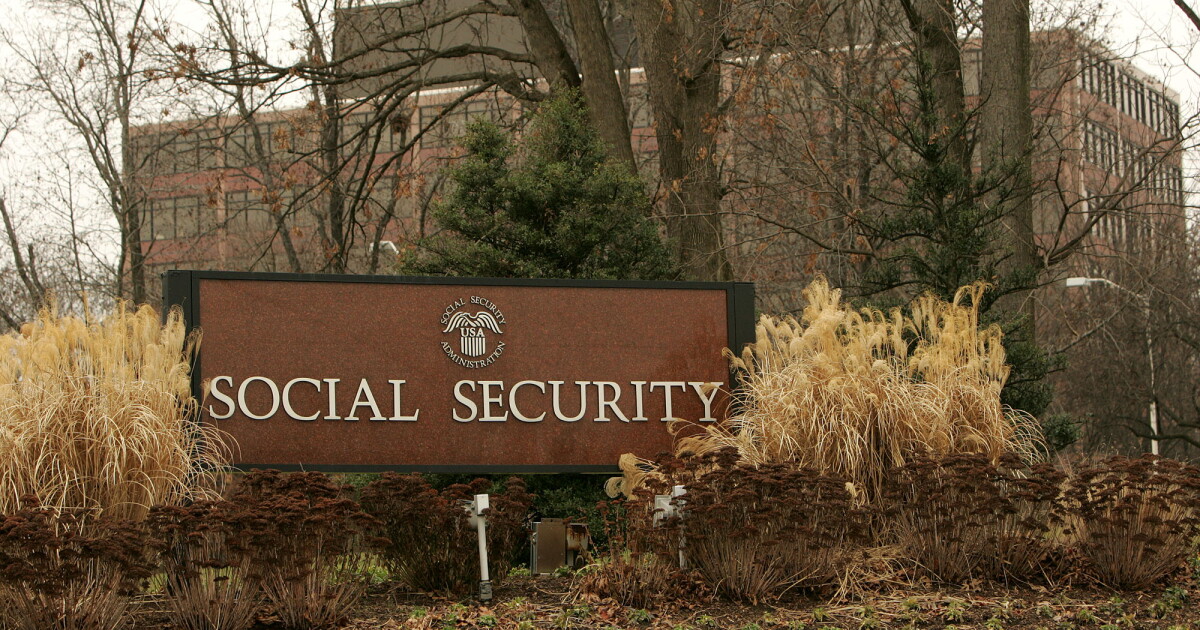
Social Security’s financial outlook worsened again this year, with the program’s projected insolvency date advancing to the fourth quarter of 2032, according to the latest Social Security and Medicare Trustees Reports.
Processing Content
The Old-Age and Survivors Insurance Trust Fund, also known as the main Social Security retirement fund, will stop being able to pay full benefits one quarter earlier than previously estimated. At that point, the fund’s reserves would cover only 78% of scheduled benefits.
With the potential for lower benefits and the overall uncertainty, financial advisors can help clients adjust retirement planning and focus on strategies within their control, such as savings and investments.
READ MORE: How to fix Social Security’s pending shortfall, according to advisors
Pressure mounts for congressional action on Social Security
Meanwhile, projections for the Hospital Insurance Trust Fund, which funds Medicare’s Part A, also declined slightly. The fund is estimated to be able to pay full benefits until the second quarter of 2033, also one quarter sooner than projected last year. After that, reserves would cover about 89% of scheduled benefits.
Factors driving the new estimates included declining fertility rates, lower net immigration and tax law changes enacted in July 2025, including lower ordinary income tax rates, according to the reports.
“Lawmakers have many options for changes that would reduce or eliminate the long-term financing shortfalls,” the trustees wrote. “Taking action sooner rather than later will allow consideration of a broader range of solutions and provide more time to phase in changes so that the public has adequate time to prepare.”
The U.S. Departments of the Treasury, Health and Human Services, and Labor released the reports along with the Centers for Medicare & Medicaid Services and the Social Security Administration.
The reports noted that the Disability Insurance (DI) Trust Fund and the Supplementary Medical Insurance (SMI) Trust Fund are in better shape. The DI program, which funds disability benefits, is projected to pay total benefits through 2100, while the SMI program, which funds Medicare Parts B and D, is “adequately financed into the indefinite future.”
One challenge is that health care costs are outpacing the economy, the Medicare Trustees Report noted. Congress should enact legislation that addresses the financial shortfall “sooner rather than later to minimize the impact on beneficiaries, providers, and taxpayers.”
READ MORE: Bipartisan plan to fund Social Security with stocks has fatal flaw, researchers say
“This crisis is both highly predictable, and fully avoidable, as there are many well-known solutions available,” Michael A. Peterson, CEO of the Peter G. Peterson Foundation, a think tank promoting U.S. fiscal responsibility, said in a statement. “It’s important to recognize that the senators we elect this year will be in office when Social Security becomes unable to pay out full benefits, so this must be a central campaign issue.”
Polling by the nonprofit, nonpartisan Peterson Foundation found 96% of voters “want candidates to have a clear plan to address Social Security’s finances and prevent automatic benefit cuts,” Peterson added.
READ MORE: As Social Security claims surge, young investors brace for its absence
“Today’s Trustees reports are a reminder that the fiscal ground is shifting beneath our feet. What feels like mild rumbles now will become a disastrous earthquake far too soon if policymakers continue to delay,” Bipartisan Policy Center President and CEO Margaret Spellings said in a statement. “The question is no longer whether these challenges demand attention. It is whether Washington will find the will to act.”
Politicians “demagogue each other over the issue, with both sides promising not to touch the programs,” said Maya MacGuineas, president of the nonprofit, nonpartisan Committee for a Responsible Federal Budget, in a statement. “Unfortunately, that promise is a tacit endorsement of the across-the-board cuts that will happen at exhaustion — an unacceptable outcome.”