No Result
View All Result
  • Login
Saturday, July 4, 2026
FeeOnlyNews.com
  • Home
  • Business
  • Financial Planning
  • Personal Finance
  • Investing
  • Money
  • Economy
  • Markets
  • Stocks
  • Trading
  • Home
  • Business
  • Financial Planning
  • Personal Finance
  • Investing
  • Money
  • Economy
  • Markets
  • Stocks
  • Trading
No Result
View All Result
FeeOnlyNews.com
No Result
View All Result
Home Economy

Why Mises’s The Theory of Money and Credit Is Still Important Today

by FeeOnlyNews.com
5 months ago
in Economy
Reading Time: 4 mins read
A A
0
Why Mises’s The Theory of Money and Credit Is Still Important Today
Share on FacebookShare on TwitterShare on LInkedIn


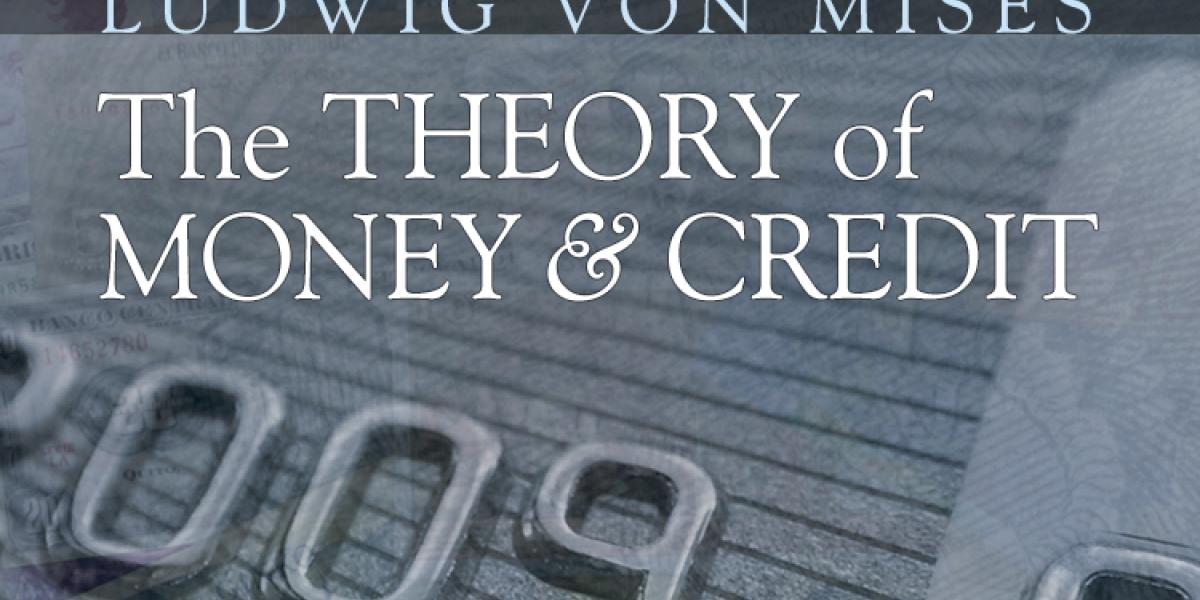
This is a review of Ludwig von Mises’s book The Theory of Money and Credit. All investment strategies, principles, and recommendations discussed are those presented in the book and reflect the author’s views, not my personal advice.

If you’ve ever wondered why money seems simple in everyday life—but maddeningly complicated whenever crises erupt—you’re in good company. More than a century ago, Ludwig von Mises took on the same puzzle. The surprising part is that his answers still address today’s headlines.

What This Book Is Really About

Mises’s The Theory of Money and Credit isn’t an abstract treatise for academics. At its heart, it’s a book about how money actually works—how it gains value, how credit expands, why booms feel great, and why busts seem inevitable.

Mises’s key message is deceptively simple: money and credit aren’t magic. They can’t conjure new wealth. They can only help coordinate real economic activity—or distort it when misused.

Money: A Social Tool, Not a Government Creation

Mises begins by stripping money down to its essential attributes. Money, he argues, emerged, not because kings or governments decreed it should, but because people needed a better way to trade. Over time, certain goods—such as gold and silver—became universally-accepted as a media of exchange.

Mises solved the circularity problem of money by arguing that money gets its value from previously exchanging as a barter good. Such goods, with certain characteristics, became useful, not just as consumable goods, but because they could be exchanged for other goods.

Money’s power comes from trust, not compulsion. That trust is fragile. If a government manipulates money excessively, it risks undermining the very mechanism on which the economy relies.

Credit: A Useful Tool With Built-In Risks

Credit, at first glance, looks like a simple promise: someone lends, someone borrows.

But Mises draws a crucial distinction between commodity credit—lending based on real savings (someone produced more than they consumed)—and circulation credit, which is lending created “out of thin air” by banks expanding their balance sheets.

Circulation credit is what modern banking systems produce when they make loans without increasing real savings in the economy. This type of credit is the source of both booms and busts. When banks expand credit, they lower interest rates. This encourages long-term investment projects that seem profitable only because money is artificially cheap. Eventually, reality reasserts itself: resources are limited, and the investment boom runs out of materials, labor, or consumers.

The correction—a recession or depression—is the economy realigning itself with real resources.

Inflation and the “Short Run Temptation”

Mises’s critique of inflation remains strikingly relevant. Inflation—whether through money printing or credit expansion—may appear to be an easy fix for sluggish growth. Governments and central banks often justify it as a way to “create jobs” or maintain high wages.

Mises strongly disagreed. He wrote that inflation hides the reality of scarcity—you can’t print your way to real prosperity: “Inflation and credit expansion are the means to obfuscate the fact that there prevails a nature-given scarcity of the material things on which the satisfaction of human wants depends.”

This wasn’t an ideological statement so much as a practical one: printing money doesn’t create more goods; it only redistributes purchasing power and distorts investment decisions.

Business Cycles: Why Booms Always Turn to Busts

The heart of the book is Mises’s explanation of the boom-bust cycle or the Austrian theory of business cycles. In simple terms: Artificially-low interest rates (from credit expansion) encourage long-term investments that appear profitable. These projects can’t all be completed because real resources are limited. There is a temporary, expansionary boom, but the boom hits bottlenecks. The bust forces the economy back to reality. Mises summarizes this mechanism succinctly:

Credit expansion initially can produce a boom. But such a boom is bound to end in a slump, in a depression. What bring about the recurrence of periods of economic crises are precisely the reiterated attempts of governments and banks supervised by them to expand credit in order to make business good by cheap interest rates.

This isn’t pessimism. Mises believes normal recessions are a necessary clearing-out of misallocated resources, especially capital goods, like pruning a tree so it can grow back healthier.

Why the Gold Standard Matters to Mises

Mises wasn’t nostalgic for gold; he believed any stable monetary system must be protected from political manipulation. He argued the gold standard’s primary virtue was that it restrained credit expansion:

What all the enemies of the gold standard spurn as its main vice is precisely the same thing that in the eyes of the advocates of the gold standard is its main virtue, namely, its incompatibility with a policy of credit expansion. The nucleus of all the effusions of the antigold authors and politicians is the expansionist fallacy.

In his view, fiat systems tempt governments into believing they can create wealth by decree—a belief he considered one of the most dangerous illusions in economics.

Why This Book Matters Today

Even if you skim the news, you’ll recognize many themes Mises warned about over a century ago: debt-driven growth, interventions to “stimulate demand,” promoting “low interest rates,” asset bubbles fueled by cheap credit, political pressure on central banks for more easy money, and widening inequality produced by inflation.

You don’t need to accept all of his conclusions to benefit from understanding his logic. Mises’s outstanding achievement was to build a coherent explanation of how money and credit shape the entire economic system.

Summary

The Theory of Money and Credit offers one clear lesson: money works best when it’s boring. When money becomes a political tool—managed for short-term advantage rather than long-term stability—the economic system becomes prone to cycles, crises, and inequality.

For everyday readers, the book is a reminder that wealth comes from production, exchange, and saving, not from printing; that easy credit creates challenging problems later; and that monetary stability is a precondition for sustainable growth.

You don’t need to be an economist to appreciate Mises’s message. You only need to look around.


Source link

Tags: CreditImportantMisessMoneyTheorytoday
ShareTweetShare
Previous Post

Learning the Bitter Lesson in 2026

Next Post

Coinbase Global Inc (COIN): Revenue Diversification Efforts Applauded

Related Posts

Coffee Break: Apathetic Americans, Science Agonistes, and Cool Science

Coffee Break: Apathetic Americans, Science Agonistes, and Cool Science

by FeeOnlyNews.com
July 3, 2026
0

Part the First: Jessica Wildfire on Apathetic Americans.  As a paid-up member of the Professional Managerial Class who came from...

Christine Lagarde says early ECB exit ‘possible’ as election looms

Christine Lagarde says early ECB exit ‘possible’ as election looms

by FeeOnlyNews.com
July 3, 2026
0

The European Central Bank's Christine Lagarde has declined to rule out an early end to her term as president, as...

The Moniker Millionaire, Billionaire, and Trillionaire are just a Reflection of Inflation

The Moniker Millionaire, Billionaire, and Trillionaire are just a Reflection of Inflation

by FeeOnlyNews.com
July 3, 2026
0

Investors had their eyes to the skies last Friday riding Elon’s SpaceX rocket, making him the world’s first trillionaire. John...

The Rise and Fall of Rational Control: Mansfield’s “Effectual Truth”

The Rise and Fall of Rational Control: Mansfield’s “Effectual Truth”

by FeeOnlyNews.com
July 3, 2026
0

Harvey C. Mansfield tells us that “this book is based on lectures from the Harvard University course History of Modern...

Freddy the World Cup Tourist and Tocqueville’s Hopes for America

Freddy the World Cup Tourist and Tocqueville’s Hopes for America

by FeeOnlyNews.com
July 3, 2026
0

In the 1830s, a French aristocrat named Alexis de Tocqueville traveled through the United States and returned home with Democracy...

Living in a Ghost Town: The Geography of Depopulation and Aging

Living in a Ghost Town: The Geography of Depopulation and Aging

by FeeOnlyNews.com
July 3, 2026
0

Yves here. Some of the mill towns, or towns in which I lived that had mills as significant employers, have...

Next Post
Coinbase Global Inc (COIN): Revenue Diversification Efforts Applauded

Coinbase Global Inc (COIN): Revenue Diversification Efforts Applauded

Fed rate cuts: Inflation, jobs reports make cuts under Powell unlikely

Fed rate cuts: Inflation, jobs reports make cuts under Powell unlikely

  • Trending
  • Comments
  • Latest
Entry-Level Rentals Are Disappearing—Here’s How Landlords Can Fill the Gap

Entry-Level Rentals Are Disappearing—Here’s How Landlords Can Fill the Gap

June 18, 2026
Trump reportedly pressed FDA chief to authorize mango and blueberry vapes after years of rejection

Trump reportedly pressed FDA chief to authorize mango and blueberry vapes after years of rejection

May 7, 2026
Iran war cost U.S. households ,000 each, top economist says

Iran war cost U.S. households $1,000 each, top economist says

July 1, 2026
House backs an emergency brake on elder fraud

House backs an emergency brake on elder fraud

June 26, 2026
Trump claims Iran deal is ‘unconditional surrender’: Axios

Trump claims Iran deal is ‘unconditional surrender’: Axios

June 18, 2026
Strait Outta Hormuz: Getting the Iran Oil Story Straight

Strait Outta Hormuz: Getting the Iran Oil Story Straight

June 12, 2026
YouTube’s founders split over 0M when they sold to Google in 2006. Now it’s worth 0 billion

YouTube’s founders split over $650M when they sold to Google in 2006. Now it’s worth $550 billion

0
The Moniker Millionaire, Billionaire, and Trillionaire are just a Reflection of Inflation

The Moniker Millionaire, Billionaire, and Trillionaire are just a Reflection of Inflation

0
AI and Crypto Payments Raise New Questions for Autonomous Transactions

AI and Crypto Payments Raise New Questions for Autonomous Transactions

0
The bond risk many investors overlook

The bond risk many investors overlook

0
Received a Text for a Refund at Amazon? Don’t Click It. It’s a Scam.

Received a Text for a Refund at Amazon? Don’t Click It. It’s a Scam.

0
AOC Goes Full Bolshevik With Big Tech Threats

AOC Goes Full Bolshevik With Big Tech Threats

0
AI and Crypto Payments Raise New Questions for Autonomous Transactions

AI and Crypto Payments Raise New Questions for Autonomous Transactions

July 3, 2026
SOL Tops  As Solana Network Activity Surges

SOL Tops $83 As Solana Network Activity Surges

July 3, 2026
Japan taps Cognition’s ‘Devin-kun’ as legacy code, shrinking workforce opens market for AI coding

Japan taps Cognition’s ‘Devin-kun’ as legacy code, shrinking workforce opens market for AI coding

July 3, 2026
Fourth of July 2026 Freebies and Deals

Fourth of July 2026 Freebies and Deals

July 3, 2026
Received a Text for a Refund at Amazon? Don’t Click It. It’s a Scam.

Received a Text for a Refund at Amazon? Don’t Click It. It’s a Scam.

July 3, 2026
How to Prepare a Lawn Soil Sample in 5 Simple Steps for the Best Results

How to Prepare a Lawn Soil Sample in 5 Simple Steps for the Best Results

July 3, 2026
FeeOnlyNews.com

Get the latest news and follow the coverage of Business & Financial News, Stock Market Updates, Analysis, and more from the trusted sources.

CATEGORIES

  • Business
  • Cryptocurrency
  • Economy
  • Financial Planning
  • Investing
  • Market Analysis
  • Markets
  • Money
  • Personal Finance
  • Startups
  • Stock Market
  • Trading

LATEST UPDATES

  • AI and Crypto Payments Raise New Questions for Autonomous Transactions
  • SOL Tops $83 As Solana Network Activity Surges
  • Japan taps Cognition’s ‘Devin-kun’ as legacy code, shrinking workforce opens market for AI coding
  • Our Great Privacy Policy
  • Terms of Use, Legal Notices & Disclaimers
  • About Us
  • Contact Us

Copyright © 2022-2024 All Rights Reserved
See articles for original source and related links to external sites.

Welcome Back!

Sign In with Facebook
Sign In with Google
Sign In with Linked In
OR

Login to your account below

Forgotten Password?

Retrieve your password

Please enter your username or email address to reset your password.

Log In
No Result
View All Result
  • Home
  • Business
  • Financial Planning
  • Personal Finance
  • Investing
  • Money
  • Economy
  • Markets
  • Stocks
  • Trading

Copyright © 2022-2024 All Rights Reserved
See articles for original source and related links to external sites.