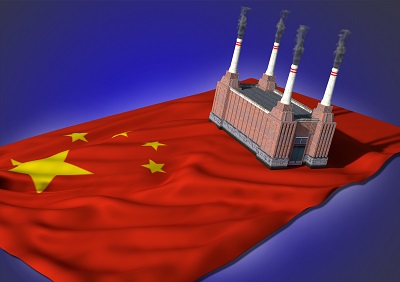
Process knowledge is hard to measure because it exists mostly in people’s heads and the pattern of their relationships to other technical workers. We tend to refer to these intangibles as know-how, institutional memory, or tacit knowledge. They are embodied by an experienced workforce like Shenzhen’s. There, someone might work at an iPhone plant one year, for a rival phone maker the next, and then start a drone company… Shenzhen is a community of engineering practice where factory owners, skilled engineers, entrepreneurs, investors, and researchers mix with the world’s most experienced workforce at producing high-end electronics.
—Dan Wang, Breakneck[1](74)
Dan Wang’s Breakneck warns America about its weaknesses relative to China. An important weakness is the result of outsourcing the manufacturing of smart phones and other electronics. As part of that manufacturing process, Chinese managers and workers acquire the tacit knowledge involved in designing and operating factories. Lacking this knowledge, American workers are at a competitive disadvantage.
The value of tacit knowledge has long been appreciated by economists. Kenneth Arrow wrote about “learning by doing,” and his insights were extended by Paul Romer, Robert Lucas, and others.
In his classic text, Principles of Economics (1890), Alfred Marshall included a chapter on the concentration of specialized industries in particular localities. Marshall wrote,
When an industry has thus chosen a locality for itself, it is likely to stay there long: so great are the advantages which people following the same skilled trade get from near neighbourhood to one another. The mysteries of the trade become no mysteries; but are as it were in the air, and children learn many of them unconsciously. Good work is rightly appreciated, inventions and improvements in machinery, in processes and the general organization of the business have their merits promptly discussed: if one man starts a new idea, it is taken up by others and combined with suggestions of their own; and thus it becomes the source of further new ideas. And presently subsidiary trades grow up in the neighbourhood, supplying it with implements and materials, organizing its traffic, and in many ways conducing to the economy of its material.
Marshall’s observations were formalized by Paul Krugman in his theory of agglomeration economics, for which Krugman was awarded the Nobel Prize.
Wang writes,
Overall, China’s manufacturing workforce employs more than a hundred million people, around eight times that of the United States. That is a big stock of people who are fueling the creation of new process knowledge. (page 80)
“Process knowledge acts like capital in that it generates a return on investment.”
Process knowledge acts like capital in that it generates a return on investment. It is a source of worker productivity and competitive advantage.
Why would China invest more heavily than America in process knowledge? Wang’s thesis is that China is governed by engineers, while America is governed by lawyers who do not appreciate the significance of process knowledge.
China is an engineering state, which can’t stop itself from building, facing off against America’s lawyerly society, which blocks everything it can. (page 2)
He points out that as of 2002, all nine members of the Chinese Politburo’s standing committee had trained as engineers.
What do engineers like to do? Build…. Since 1980… China has built an expanse of highways equal to twice the length of the US systems, a high-speed rail network twenty times more extensive than Japan’s, and almost as much solar and wind power capacity as the rest of the world put together. (page 3)
American leaders, on the other hand, tend to be lawyers.
Five out of the last ten presidents attended law school. In any given year, at least half the US Congress has law degrees, while at best a handful of members have studied science or engineering. From 1984 to 2020, every single Democratic presidential and vice-presidential nominee went to law school, but they make up many Republican Party elites as well as the top ranks of the civil service too…
The United States used to be, like China, an engineering state. But in the 1960s, the priorities of elite lawyers took a sharp turn. As Americans grew alarmed by the unpleasant by-products of growth—environmental destruction, excessive highway construction, corporate interests above public interests—the focus of lawyers turned to litigation and regulation. (pages 4–5)
Until the 1960s, the virtue of America’s legal system was its protection of the rights of individuals against arbitrary intrusion by government. China does not provide such protection. Wang points out that Premier Xi Jinping’s actions since 2021 have had a devastating impact on some of its leading technology companies.
Xi hurled a series of regulatory thunderbolts at China’s high-flying tech companies, including Didi, the country’s largest ride-hailing company, and Ant Financial, the payments company owned by Jack Ma, China’s best-known entrepreneur. Chinese tech founders (and their investors) were astonished to discover that Xi Jinping could erase a trillion dollars from corporate valuations over the course of just a few months. (page 7)
Wang eloquently describes the scale of Chinese construction. He describes the province of Guizhou, which until recently was quite remote and relatively poor.
Guizhou has built forty-five of the world’s one hundred highest bridges. It has eleven airports, with three more under construction. It has five thousand miles of expressways…It has around a thousand miles of high-speed train track…Enormous facilities housing data centers make Guizhou emblematic of the modern infrastructure that powers AI too. (page 27)
Still, he notes
The engineering state is focused mostly on monumentalism. Though there are many public toilets, provision of toilet paper is only a sometime thing. Nowhere in China is it advisable to drink tap water. Not even Shanghai. (page 50)
Wang criticizes China’s engineers for their brute-force approach to cultural issues. He has chapters on the terrible impact of the one-child policy and the zero-covid policy. But he points out that it might be good to be able to confront cultural problems.
What if, say, the US government had responded to the 2008 financial crisis by reshaping Wall Street’s risk management culture rather than engaging in endless negotiations that yielded a 2,300-page statute that nobody understands? (page 183)
Wang criticizes the lawyerly society’s inability to build.
In 2021, Congress allocated $42 billion to expand broadband services to rural communities in a plan known as Internet for All. Four years later, not a single home has been connected to this network. Two years after Congress allocated $7.5 billion to build electric vehicle charging stations across the United States, just seven have become operational. (page 228)
For more on these topics, see
Overall, Wang says,
I like to imagine how much better the world would be if both superpowers could adopt a few of the pathologies of the other…I hope that China learns to value pluralism while embracing substantive legal protections for individuals and the United States recovers the capability to build for its people. (pages 205–206)
In America, Wang would raise the status of engineers relative to lawyers. In China, he would do the opposite.