No Result
View All Result
  • Login
Saturday, September 5, 2026
FeeOnlyNews.com
  • Home
  • Business
  • Financial Planning
  • Personal Finance
  • Investing
  • Money
  • Economy
  • Markets
  • Stocks
  • Trading
  • Home
  • Business
  • Financial Planning
  • Personal Finance
  • Investing
  • Money
  • Economy
  • Markets
  • Stocks
  • Trading
No Result
View All Result
FeeOnlyNews.com
No Result
View All Result
Home Economy

Von Der Leyen And Draghi Plot More Centralization To “Save” Europe

by FeeOnlyNews.com
2 months ago
in Economy
Reading Time: 5 mins read
A A
0
Von Der Leyen And Draghi Plot More Centralization To “Save” Europe
Share on FacebookShare on TwitterShare on LInkedIn


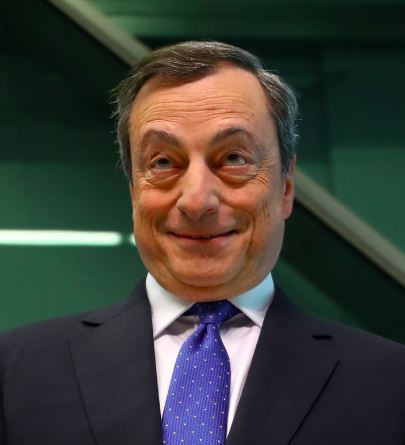
European Commission President Ursula von der Leyen met with Mario Draghi in Brussels to discuss the EU’s competitiveness agenda and the implementation of Draghi’s 2024 report at Draghi’s request. Whenever these two gather behind closed doors to discuss “competitiveness,” the European taxpayer should grab his wallet because Brussels has never encountered a problem it did not believe could be solved with more centralized power, more borrowing, and more government spending.

The Commission claims that it is making “excellent progress” on trade diversification, regulatory simplification, and a new roadmap called “One Europe, One Single Market.” Paula Pinho, von der Leyen’s chief spokesperson, boasted that the Commission, Council, and Parliament are now committed to following a common timetable for implementing many of Draghi’s recommendations.

“One Europe, One Single Market” is another step toward stripping national governments of economic authority and transferring it to Brussels. They call this harmonization because admitting that it is centralization would alarm the public. European nations are expected to surrender more control over taxation, regulation, capital markets, energy, industry, and public spending to unelected officials who helped create the crisis in the first place.

The Draghi report is more than ever valid! Progresses have been made but they are too partial and way too slow when the world is changing fast and furious. Europeans need to


Mario Draghi’s report correctly diagnosed many of Europe’s illnesses. Productivity is stagnant, energy is too expensive, investment is inadequate, markets are fragmented, and innovation is moving to the United States and Asia. Europe is falling behind in artificial intelligence, semiconductors, defense, digital infrastructure, and advanced manufacturing. Yet Draghi will not admit that the European Union’s own policies produced much of this destruction.

Brussels deliberately increased energy costs through Net Zero mandates, carbon taxes, sanctions, and the abandonment of reliable energy. It suffocated industry beneath environmental rules and compliance requirements. It imposed the Digital Services Act, the Digital Markets Act, ESG mandates, supply-chain directives, and endless reporting obligations. It then looked at the wreckage and concluded that Europe suffers from insufficient government management.

Draghi estimates that Europe requires between €750 billion and €800 billion in additional investment every year through 2030. That is approximately 4.4% to 4.7% of the EU’s annual GDP. The proposed spending includes roughly €300 billion for the energy transition, €150 billion for transportation and charging infrastructure, €150 billion for digital technologies, €50 billion for defense and security, and another €100 billion to €150 billion for innovation.

They are not discussing a modest reform program. They are contemplating an economic transformation costing up to €4.8 trillion over six years. Since private capital refuses to invest sufficient amounts under the conditions Brussels created, Draghi wants government to guide, subsidize, guarantee, and de-risk the investment. In other words, the taxpayer absorbs the losses while politically connected corporations collect the profits.

Power requires Europe to move from confederation to federation. At the Katholieke Universiteit Leuven, Mario #Draghi delivered a powerful and timely address that has been widely echoed across European media and political

The European Parliament has estimated that public financing would need to provide approximately €150 billion to €160 billion annually if Europe maintained its traditional 80% private and 20% public investment split. The EU budget cannot provide anything close to that amount. Brussels will therefore demand new “own resources,” expanded EU taxes, financial guarantees, redirected national budgets, or another round of common borrowing.

They always invent a crisis and then use it to push debt that the people never approved. COVID produced NextGenerationEU, which allowed the Commission to borrow hundreds of billions collectively for the first time. What was sold as an exceptional emergency became the blueprint for permanent EU fiscal authority. Those debts must still be repaid, with the repayment burden expected to reach around €30 billion annually beginning in 2028. Now Draghi’s competitiveness agenda provides the excuse for the next debt machine.

Draghi is the same man who promised to do “whatever it takes” to preserve the euro when he headed the European Central Bank. That statement is praised as some act of genius, but it meant that the ECB would suppress bond yields, monetize sovereign risk, and protect the political project regardless of the economic cost. His policies preserved the euro’s institutional structure while encouraging governments to avoid the structural reforms that a genuine market would have forced upon them.

Von der Leyen has operated by the same principle. When her policies fail, she never questions the policy. She demands more authority to enforce it. Europe lost cheap energy, so Brussels proposed massive green subsidies. European companies cannot compete, so Brussels demands a centralized industrial policy. National budgets are drowning in debt, so the Commission wants shared debt. Citizens reject deeper integration, so they rename it “simplification” and “competitiveness.”

In theory, the EU's economic policy is meant to fuse 27 national markets  into one pool of 450m consumers. In practice, it has failed to keep up with  the modern world. Paradoxically,

The Commission points to trade agreements with Mercosur, India, and Switzerland as proof of progress. Trade diversification is sensible, but no collection of agreements will compensate for making production prohibitively expensive inside Europe. A German chemical company cannot compete because von der Leyen signs another document in Brussels while its energy bill remains multiples of what a competitor pays abroad.

The EU’s competitiveness problem is not a shortage of reports. Draghi produced around 380 recommendations, yet a 2025 European Parliament study found that only 11% had been adopted by September of that year. Brussels now celebrates “steady progress” while European businesses continue to close plants, cut employment, and move investment abroad. These people measure success by the number of directives issued and committees formed, not by whether anyone can still afford to manufacture a product.

Europe does not need €800 billion annually in politically directed investment to repair damage caused by politically directed economics. It needs affordable energy, lower taxes, fewer regulations, protection of property rights, and governments willing to allow capital to allocate itself. Innovation cannot be ordered into existence by Ursula von der Leyen. Entrepreneurs do not need another EU fund administered by bureaucrats who have never created a business or met a payroll.

Their “One Europe, One Single Market” roadmap moves Europe closer to fiscal union without democratic consent. Monetary union was created without debt union or political union, producing the structural crisis embedded in the euro from the beginning. Brussels now intends to use every emergency to construct those missing components through the back door.

The productive citizens of Europe will be ordered to finance it all. They will pay through direct taxation, carbon costs, inflation, reduced pensions, financial repression, and the liabilities attached to common EU debt. German workers are already discovering that the state consumes nearly half the economic value of labor. High earners are looking toward Switzerland, Britain, the United States, and the UAE because the reward for productivity inside the EU continues to shrink.

Von der Leyen and Draghi are not rescuing European competitiveness. They are trying to preserve the centralized political structure that destroyed it. Europe was built by its people and its diverse nations. It is being dismantled by bureaucrats who genuinely believe prosperity can be produced through a timetable agreed upon by three EU institutions over lunch in Brussels. These are not economic architects. They are undertakers discussing how to finance the funeral.



Source link

Tags: centralizationDerDraghiEuropeLeyenPlotSaveVon
ShareTweetShare
Previous Post

Wednesday’s Economic Calendar | Seeking Alpha

Next Post

When is it worth buying a U.S.-listed ETF over a Canadian one?

Related Posts

Republican Party Displacement | Mises Institute

Republican Party Displacement | Mises Institute

by FeeOnlyNews.com
August 8, 2026
0

Mark Thornton returns to Rothbard’s idea of major party realignment, arguing that ideology—not interest-group politics alone—drives long-term political change. He...

Democrats’ Affordability Message Misses a Key Expense—Student Debt

Democrats’ Affordability Message Misses a Key Expense—Student Debt

by FeeOnlyNews.com
August 8, 2026
0

Yves here. Although this article on student debt traps does not make these assumptions, many articles I see about student...

The Unwinnable Iran War | Armstrong Economics

The Unwinnable Iran War | Armstrong Economics

by FeeOnlyNews.com
August 8, 2026
0

I have reported that Trump was mislead into this unwinnable war with Iran, which has been planning for it since...

Here are three key takeaways from the disappointing July jobs report

Here are three key takeaways from the disappointing July jobs report

by FeeOnlyNews.com
August 7, 2026
0

Job seekers speak with employer representatives and browse information tables as they attend an Inspire Together job and resource fair...

Coffee Break: Gene Editing Gone Wrong, Plants that Eat Animals, and a Neanderthal Gene that Makes a Difference

Coffee Break: Gene Editing Gone Wrong, Plants that Eat Animals, and a Neanderthal Gene that Makes a Difference

by FeeOnlyNews.com
August 7, 2026
0

Part the First: If You Stretch Biomedical Science Too Far It Breaks, Every Time.  Gene editing using CRISPR technology has...

Netanyahu’s Scorched Earth Tactics | Armstrong Economics

Netanyahu’s Scorched Earth Tactics | Armstrong Economics

by FeeOnlyNews.com
August 7, 2026
0

According to formal complaints lodged by Lebanon with the United Nations, Israel did spray a toxic herbicide over agricultural land...

Next Post
When is it worth buying a U.S.-listed ETF over a Canadian one?

When is it worth buying a U.S.-listed ETF over a Canadian one?

SBI Funds shares fall 3%, but brokerages scream ‘Buy’ with target price up to Rs 750

SBI Funds shares fall 3%, but brokerages scream 'Buy' with target price up to Rs 750

  • Trending
  • Comments
  • Latest
Bitcoin and ethereum prices today, Friday, August 7, 2026: Crypto prices moving higher following July jobs report

Bitcoin and ethereum prices today, Friday, August 7, 2026: Crypto prices moving higher following July jobs report

August 7, 2026
MEXC Lists Ondo Yield Asset As Tokenized Treasury Demand Grows

MEXC Lists Ondo Yield Asset As Tokenized Treasury Demand Grows

July 3, 2026
Delek Logistics Partners Reports alt=

Delek Logistics Partners Reports $0.54 EPS for Q2 FY26

August 5, 2026
Onkure Therapeutics Releases Q2 2026 Financial Results

Onkure Therapeutics Releases Q2 2026 Financial Results

August 4, 2026
Thryv outlines M run-rate savings while revising 2026 SaaS adjusted EBITDA to M-M (NASDAQ:THRY)

Thryv outlines $60M run-rate savings while revising 2026 SaaS adjusted EBITDA to $42M-$44M (NASDAQ:THRY)

August 4, 2026
My Thoughts on Going All In

My Thoughts on Going All In

August 4, 2026
Advanced Micro Devices (AMD) Price Prediction: How Much a ,000 Investment Could Be Worth by 2031

Advanced Micro Devices (AMD) Price Prediction: How Much a $5,000 Investment Could Be Worth by 2031

0
Cities holding up to 3 million people found under Amazon rain forest

Cities holding up to 3 million people found under Amazon rain forest

0
Republican Party Displacement | Mises Institute

Republican Party Displacement | Mises Institute

0
Bybit Uses Tokenised Equities as Underlyings for Structured Yield

Bybit Uses Tokenised Equities as Underlyings for Structured Yield

0
Explained: How BSE traded fewer contracts after CAS but premiums rose 75% in first week

Explained: How BSE traded fewer contracts after CAS but premiums rose 75% in first week

0
Vaxart outlines Phase IIb COVID-19 top line data in first half of 2027 backed by BARDA funding (OTCMKTS:VXRT)

Vaxart outlines Phase IIb COVID-19 top line data in first half of 2027 backed by BARDA funding (OTCMKTS:VXRT)

0
Advanced Micro Devices (AMD) Price Prediction: How Much a ,000 Investment Could Be Worth by 2031

Advanced Micro Devices (AMD) Price Prediction: How Much a $5,000 Investment Could Be Worth by 2031

August 8, 2026
Republican Party Displacement | Mises Institute

Republican Party Displacement | Mises Institute

August 8, 2026
Vanguard Chief Economist: AI and jobs, still in an ATM phase

Vanguard Chief Economist: AI and jobs, still in an ATM phase

August 8, 2026
Explained: How BSE traded fewer contracts after CAS but premiums rose 75% in first week

Explained: How BSE traded fewer contracts after CAS but premiums rose 75% in first week

August 8, 2026
Democrats’ Affordability Message Misses a Key Expense—Student Debt

Democrats’ Affordability Message Misses a Key Expense—Student Debt

August 8, 2026
Banks or NBFCs? DSP’s Preethi R S explains where she sees the best opportunities

Banks or NBFCs? DSP’s Preethi R S explains where she sees the best opportunities

August 8, 2026
FeeOnlyNews.com

Get the latest news and follow the coverage of Business & Financial News, Stock Market Updates, Analysis, and more from the trusted sources.

CATEGORIES

  • Business
  • Cryptocurrency
  • Economy
  • Financial Planning
  • Investing
  • Market Analysis
  • Markets
  • Money
  • Personal Finance
  • Startups
  • Stock Market
  • Trading

LATEST UPDATES

  • Advanced Micro Devices (AMD) Price Prediction: How Much a $5,000 Investment Could Be Worth by 2031
  • Republican Party Displacement | Mises Institute
  • Vanguard Chief Economist: AI and jobs, still in an ATM phase
  • Our Great Privacy Policy
  • Terms of Use, Legal Notices & Disclaimers
  • About Us
  • Contact Us

Copyright © 2022-2024 All Rights Reserved
See articles for original source and related links to external sites.

Welcome Back!

Sign In with Facebook
Sign In with Google
Sign In with Linked In
OR

Login to your account below

Forgotten Password?

Retrieve your password

Please enter your username or email address to reset your password.

Log In
No Result
View All Result
  • Home
  • Business
  • Financial Planning
  • Personal Finance
  • Investing
  • Money
  • Economy
  • Markets
  • Stocks
  • Trading

Copyright © 2022-2024 All Rights Reserved
See articles for original source and related links to external sites.