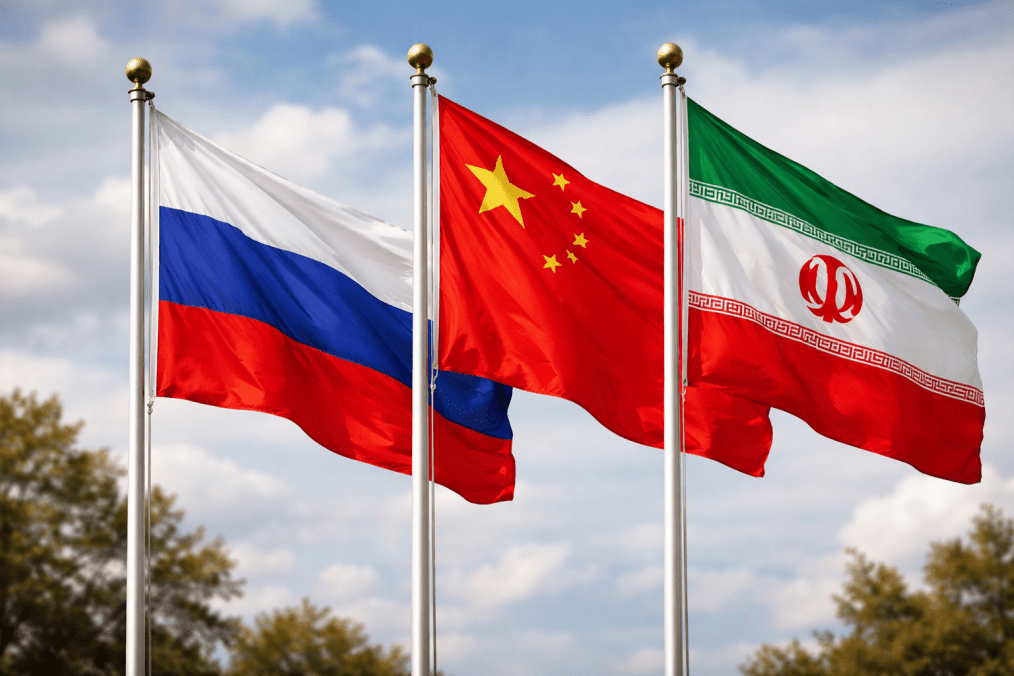
???? This morning: Iran sends the U.S. a peace proposal through Pakistani mediators.
This afternoon: Iranian Foreign Minister Araghchi lands in Moscow for talks with Putin.
Tehran is negotiating with Washington while simultaneously coordinating with Moscow.
Classic… https://t.co/P7NaSzuSQ4 pic.twitter.com/LthEmPGEsd
— Mario Nawfal (@MarioNawfal) April 27, 2026
The meeting between Vladimir Putin and Abbas Araghchi is being presented as a diplomatic gesture, yet the substance reveals something far more significant: Moscow has now openly pledged support for Tehran while negotiations with the United States continue to collapse. Russia reaffirmed its strategic backing and even positioned itself as a mediator, while at the same time strengthening its alliance with Iran through military, economic, and nuclear cooperation, making it clear that this relationship is not temporary but structural.
What matters here is not the language of peace but the alignment of power, because when major players begin coordinating at this level during an active conflict, history shows the situation is already moving beyond negotiation. Russia and Iran have been deepening ties for years through sanctions pressure, energy cooperation, and military exchanges, including intelligence sharing and weapons support, and this latest meeting confirms that the alliance is now being formalized in real time as the geopolitical divide widens.
The breakdown in talks with the United States was inevitable, since both sides are demanding outcomes that neither can accept, particularly on nuclear policy and regional control. Iran has made it clear it will not abandon enrichment, while Washington continues to insist on full concessions, leaving no realistic middle ground. At the same time, tensions around the Strait of Hormuz and ongoing military pressure ensure that even temporary ceasefires remain fragile and largely symbolic.
This is precisely the type of environment the war model has been projecting into 2026, where escalation unfolds through a sequence of failed negotiations, tightening alliances, and economic pressure points rather than a single defining event.
Putin is signaling to the world that the lines are being drawn, and once that process begins, it becomes increasingly difficult to reverse. The fact that both nations are already cooperating across multiple fronts, from energy to military coordination, shows that this is part of a broader realignment rather than a reaction to a single conflict.
The critical mistake is assuming that these events can be managed through continued negotiation, because once alliances harden and economic consequences begin to ripple through energy markets and capital flows, the cycle takes on a momentum of its own. This is why the war model has consistently pointed to this period as one of rising volatility, where events accelerate and policymakers lose the ability to control the outcome.
What we are seeing is not the beginning of a crisis but the continuation of a cycle that has already turned, and once that shift is in motion, history shows it rarely resolves quickly or peacefully.