Also Read: 101-year-old working woman, who lives alone in New York, shares 3 tips to live longer, healthier, and happier, and none is about fitnessThe instinctive explanation is that people are “addicted” to their phones, or simply can’t bear to be apart from a device they love. But when psychologists and sociologists have actually sat down with people and asked why they do it, the answers turn out to be far more layered, and far less about gadget infatuation than most of us assume.
The phone as a night-time companion, not a compulsion
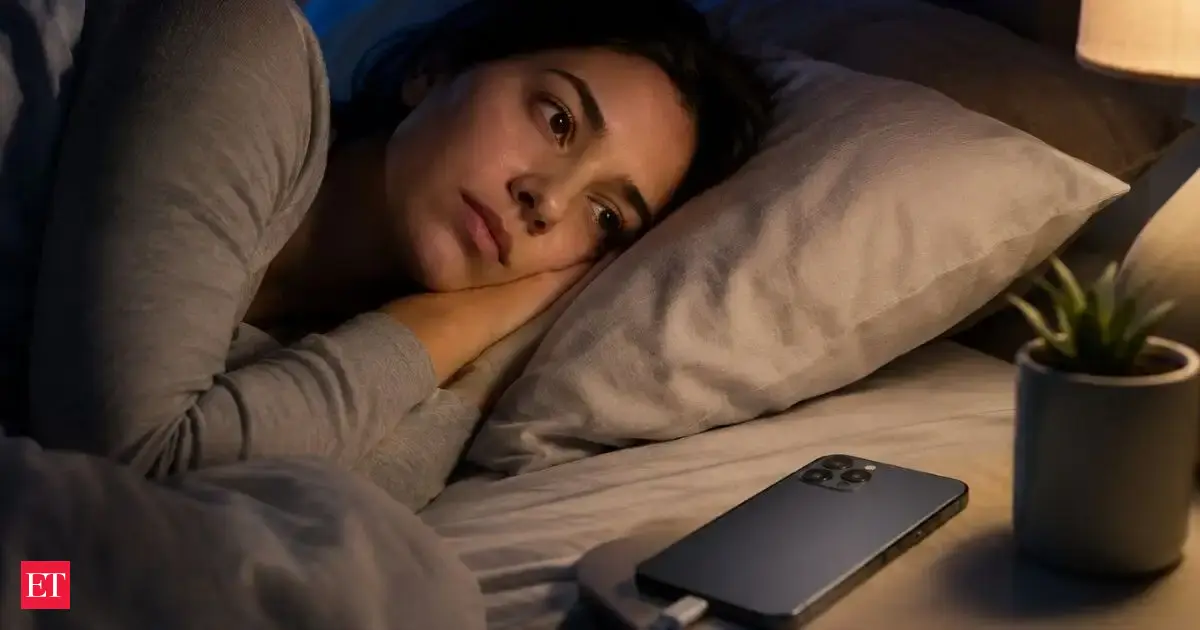
One of the most detailed studies on this subject comes from sociologist Dana Zarhin, who interviewed dozens of adults and analyzed their sleep diaries in depth. She found that people weave their phones into the bedtime routine for reasons that are practical and social rather than compulsive. Many use it as an alarm clock. Others keep it close so they remain reachable for family members, aging parents, or work emergencies through the night. Some check messages one last time to feel that their social obligations for the day are complete before they allow themselves to switch off.
Zarhin coined a term for this pattern: “sleepful sociality”, a way of describing how the phone lets people stay socially connected even as they drift toward sleep, without necessarily disrupting the sleep itself. In many of the accounts she gathered, the phone wasn’t a distraction pulling people away from rest; it was a tool people used to manage the handover between their waking responsibilities and the act of sleeping.
A digital security blanket
There’s also a psychological explanation that has nothing to do with entertainment or scrolling. Researchers studying attachment theory, the same framework used to explain why toddlers cling to a favorite blanket or soft toy, have found that adults form comparable bonds with their smartphones. A widely cited study out of the Wharton School even labeled this the “Adult Pacifier Hypothesis,” showing that people experience genuine comfort and faster recovery from stress simply by having their phone nearby, in much the same way a child is soothed by a familiar object.Also Read: Fatty liver new treatment found: Study discovers a medicine that reverses severe fatty liver by just repairing the gut Later research building on this idea has shown that people who see their smartphone as a kind of “safe base”, something that makes them feel secure rather than merely entertained, are more likely to keep it close during vulnerable moments, and few moments are more vulnerable than the transition into sleep, when the mind is unguarded and thoughts tend to wander. Seen this way, keeping the phone on the pillow isn’t fundamentally different from earlier generations keeping a transistor radio, a landline, or a family photograph within reach at night.
The quiet pull of staying updated
A third strand of research points to something closer to social vigilance than addiction. A study of nearly 500 college students, published in the journal OBM Neurobiology, examined how bedtime smartphone habits related to Fear of Missing Out (FOMO) and general anxiety levels. It found that people with higher trait anxiety and stronger FOMO tended to use their phones more in the sleep environment, not because they were fixated on the device itself, but because the phone offered a way to manage the discomfort of not knowing what they might be missing, whether that was a message, breaking news, or simply what friends were doing. AASM’s own 2025-2026 polling backs this up on a national scale: over a third of U.S. adults say reading the news on their phone before bed, or “doomscrolling,” actively makes their sleep worse, with adults under 35 the most affected. For many, scrolling before sleep functions as a way to quiet racing thoughts, even if it sometimes backfires by keeping the mind more alert than intended.
Where the addiction story does hold some truth
None of this means concern about excessive phone use is misplaced. A large body of research on “nomophobia”, literally, the fear of being without a mobile phone, tells a more cautionary story, particularly among college students. As of 2024, roughly 91% of U.S. adults own a smartphone, a figure that climbs to 98% among those aged 18 to 29, and researchers have found nomophobia to be especially common in this age group, where it’s been linked to anxiety, physical health symptoms, and difficulty tolerating uncertainty.
Separately, a JAMA Network Open study published in March 2025 that tracked screen use among adults across the U.S. found that people who used screens before bed had a 33% higher rate of poor sleep quality and slept roughly 50 minutes less per week than those who avoided screens at night.
So the honest picture sits somewhere in between. For a large number of people, keeping the phone by the bed is a rational, low-stakes habit rooted in convenience, connection, and comfort, not so different from wanting a glass of water within reach. For a smaller but significant group, especially younger users, the pattern shades into something closer to genuine dependency, where the phone’s presence is driven more by anxiety than by choice.
What the research firmly does not support is the blanket assumption that reaching for your phone at bedtime says something troubling about your character, willpower, or mental health. It says more about the roles the phone has come to play, as alarm clock, lifeline to family, stress reliever, and social anchor, all rolled into one small rectangle of glass.
What this means for your own sleep
Understanding the “why” doesn’t erase the “what happens next”, screen light and late-night scrolling are still linked to delayed sleep onset and poorer sleep quality across nearly every study on the subject. But experts suggest the fix isn’t guilt or willpower alone. The AASM’s own recommendations focus on substitution rather than deprivation: leave the phone in another room and rely on a standard alarm clock, start a low-tech wind-down routine like reading or journaling, and turn off notifications so the device stops pulling at your attention even when you’re not reaching for it.
It helps to notice which specific need the phone is meeting for you, the alarm function, the fear of missing an emergency call, or simply the comfort of having something familiar nearby, and to find a substitute for that specific need, rather than trying to quit the habit cold turkey. Small, targeted changes tend to work far better than blanket bans, precisely because the habit was never really about the gadget in the first place.