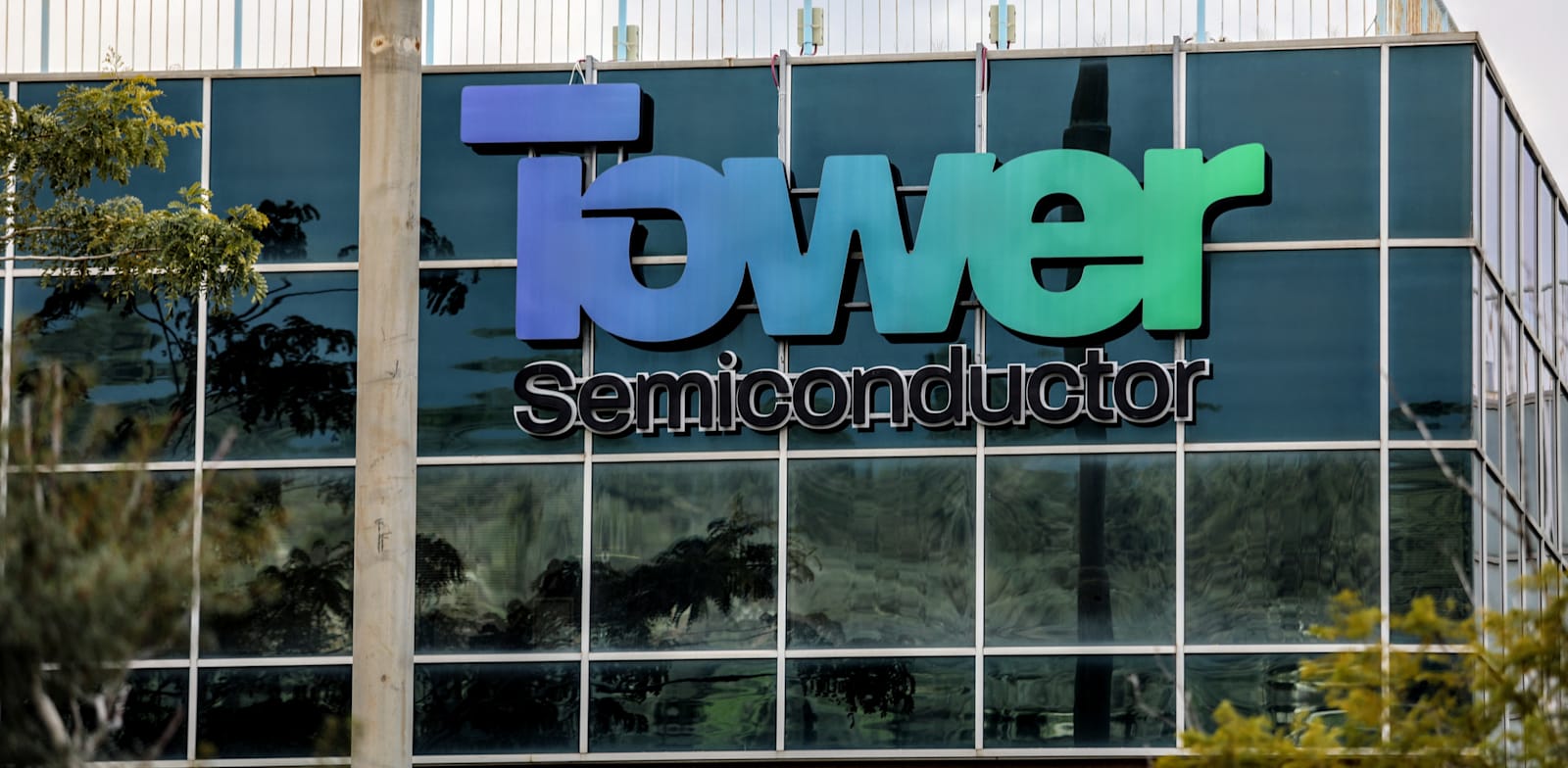
Semiconductor manufacturers Tower Semiconductor (TASE: RSEM; Nasdaq: TSEM) and Intel Corporation (Nasdaq: INTC), which have production facilities in Israel, have announced investments of billions of dollars in expanding their activities outside the country. Tower, which is headquartered in Israel, plans to invest some $3 billion in raising its production capacity in Japan, while Intel has announced a €5 billion investment in expanding its factory in Ireland. In both cases, the moves are designed to answer the growing demand for components used in data centers and artificial intelligence systems, and in both cases the companies benefit from government support in the countries in which the investments are will be carried out.
The announcements do not necessarily point to a retreat from activity in Israel, but they do illustrate where the companies are choosing to allocate their big capital expenditure at present.
A rosy forecast for Tower
At the same time as announcing the expansion of capacity in Japan, Tower also updated its financial model for 2028 and substantially raised its revenue and profit targets. Its share price responded with an 8.41% rise on the Tel Aviv Stock Exchange (it was up by as much as 16% intraday), making it a rise of 620% within eighteen months, to a market cap of over NIS 93 billion.
At the end of 2025, Tower employed about 2,400 people in Japan, representing 45% of its global workforce, and almost double the number of employees in Israel. Last year, the company’s activity in Japan yielded revenue of $204 million, 15% of total revenue. In March this year, Tower announced a restructuring of its activity in Japan, whereby it will obtain full ownership of the factory that manufactures at 300 mm, known as Fab 7, while its partner in Japan, Nuvoton Technology Corporation, will receive the 200 mm factory and will pay Tower $25 million.
Under the new program, Tower has set a revenue target of $3.6 billion for 2028, up from $2.8 billion previously, while the profit target rises from $750 million to $1.2 billion.
Tower CEO Russell Ellwanger said that the expansion of production capacity would enable the company to meet its customers’ timetables for mass production and would be a basis for growth beyond 2028.
Intel’s Irish investment
This week, Intel announced that it would invest €5 billion in its Leixlip campus in Ireland. The investment will raise production capacity at the site and expand research and development activity there for processors used in servers, data centers, and AI systems.
The investment in Ireland stands out against the state of Intel’s production activity in Israel. The fab at Kiryat Gat is considered one of the most efficient in the company and has won praise from Intel global management in the past for meeting schedules and improving output. However, it produces using old seven and ten nanometer technology, whereas in Ireland and Arizona chips are produced with more advanced technologies. Last year, Intel CEO Lip-Bu Tan revealed that the foundries in Israel and in Oregon were not slated for expansion, while those in Ireland, Arizona, and New Mexico would increase their output by up to 150%. All the new generations of Intel’s advanced production technologies, among them 14 and 18A, are designed for production in the US, the company says.
RELATED ARTICLES
Tower Semiconductor set for major expansion in Japan
Intel Kiryat Gat expansion frozen for foreseeable future
The new investment highlights Intel’s decision in 2024 to halt work on the new fab it planned in Kiryat Gat, Fab 38. This was meant to be one of the company’s largest and most advanced production sites in the world, and to reach full output in the next decade, but Intel informed the contractors that work was being halted and that the budget for the project would be reexamined. Since then, no new construction timetable has been announced.
There is no indication that the investment in Ireland has been budgeted directly at the expense of Kiryat Gat, or that Intel has decided to cancel the plan for the new factory in Israel completely. Nevertheless, a series of decisions illustrates the company’s current priorities: investment in sites where advanced infrastructure already exists and production capacity can be expanded rapidly, as opposed to building a new factory, which requires higher investment and involves a longer lead time until production starts.
In Tower’s case too, the decision to expand in Japan is based on existing infrastructure, skilled manpower, and substantial financial support from the local government. Instead of constructing a completely new factory in Israel or elsewhere, Tower is expanding where it is already operational, and where it can receive a subsidy of about $1 billion. For Tower, this is a fairly quick path to higher production capacity to meet the expected demand in the next few years.
The reminder to Israel
Both moves highlight the change that is overtaking the global semiconductor industry. Alongside the technological and business consideration, decisions on where to locate factories are becoming more and more a result of government policy. Japan, Ireland, the US, and other countries, are investing billions of dollars to ensure that the manufacture of advanced processors will take place on their territories. They offer companies grants, financing, infrastructure, and a regulatory environment designed to lower the risk involved in huge investments of this kind.
For Israel, this is a reminder that its historical standing as a production and development center does not guarantee that future investment will come its way as well. Tower and Intel both still have extensive production activity in Israel, but when they have to decide where to invest more money, they look at the size of government support, the level of certainty, the existing infrastructure, and the ability to start production quickly. The investments in Japan and Ireland don’t necessarily signal abandonment of Israel, but they do point to the gap between existing activity and where future growth will be focused.
Intel stated in response: “Our expansion plans in Israel are still under review, and their further implementation will be in accordance with customer demand.”
Published by Globes, Israel business news – en.globes.co.il – on July 15, 2026.
© Copyright of Globes Publisher Itonut (1983) Ltd., 2026.