Updated on February 11th, 2026 by Bob Ciura
At Sure Dividend, we often talk about the merits of the Dividend Aristocrats. We believe this exclusive group of stocks broadly has strong brands, consistent profits even during recessions, and durable competitive advantages.
These qualities allow the Dividend Aristocrats to raise their dividends every year, regardless of the state of the economy.
Of the stocks comprising the S&P 500 Index, just 69 qualify as Dividend Aristocrats.
You can download a copy of the full list of all 69 Dividend Aristocrats, complete with metrics like dividend yields and P/E ratios, by clicking on the link below:
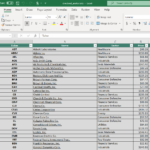
Disclaimer: Sure Dividend is not affiliated with S&P Global in any way. S&P Global owns and maintains The Dividend Aristocrats Index. The information in this article and downloadable spreadsheet is based on Sure Dividend’s own review, summary, and analysis of the S&P 500 Dividend Aristocrats ETF (NOBL) and other sources, and is meant to help individual investors better understand this ETF and the index upon which it is based. None of the information in this article or spreadsheet is official data from S&P Global. Consult S&P Global for official information.
Each year, we individually review all the Dividend Aristocrats. The next in the series is Illinois Tool Works (ITW).
Illinois Tool Works has a long history of dividend growth even through recessions, which is especially impressive given the cyclical nature of its business model.
This article will discuss the major factors for Illinois Tool Works’ long dividend history.
Business Overview
Illinois Tool Works has been in business for more than 100 years. It started out all the way back in 1902. A group of inventors formed with an idea to improve gear grinding, and Illinois Tool Works was born.
Today, Illinois Tool Works generates annual revenue of $16 billion. Illinois Tool Works is composed of seven segments: Automotive, Food Equipment, Test & Measurement, Welding, Polymers & Fluids, Construction Products, and Specialty Products.
These segments have performed well against its peers, which has allowed Illinois Tool Works to achieve “best of breed” status in its industry.
Illinois Tool Works’ portfolio is concentrated in product segments that each hold above-average growth potential in their respective markets.
The overarching strategic growth plan for Illinois Tool Works is to reshape its business model, when necessary continuously. The company frequently utilizes bolt-on acquisitions to expand its reach.
Growth Prospects
On February 3rd, 2026, Illinois Tool Works reported fourth quarter 2025 results for the period ending December 31, 2025. For the quarter, revenue came in at $4.1 billion, rising 4% year-over-year.
Sales increased 5.5% in the Automotive OEM segment, the largest out of the company’s seven segments. Furthermore, its Construction Products segment saw revenue decline 1.5%.
Meanwhile, Welding, Food Equipment, Specialty Products, Test & Measurement and Electronics, and Polymers & Fluids had revenue growth of 3.3%, 3.8%, 4.0%, 5.5% and 6.5%, respectively.
Net income equaled $790 million or $2.72 per share compared to $750 million or $2.54 per share in Q4 2024. In the fourth quarter, ITW repurchased $375 million of its shares.
Illinois Tool Works initiated its 2026 guidance, expecting full-year GAAP EPS to be $11.00 to $11.40. It also expects to repurchase approximately $1.5 billion of its common stock this year.
Moving forward, growth becomes a bit more difficult as the company gets larger. Still, the balance sheet is in good shape, allowing for some flexibility from a capital allocation standpoint.
Moreover, attractive returns can be achieved without venturing outside Illinois Tool Works’ existing core competencies. Illinois Tool Works can continue to invest in its sales networks, R&D, and manufacturing capacity, while cost-cutting measures could continue to boost margins.
We expect 9% annual earnings-per-share growth over the next five years.
Competitive Advantages & Recession Performance
Illinois Tool Works has a significant competitive advantage. It possesses a wide economic “moat,” which refers to its ability to keep competition at bay.
It does this with a massive intellectual property portfolio. Illinois Tool Works holds over 17,000 granted and pending patents.
Separately, another competitive advantage is Illinois Tool Works’ differentiated management strategy. The company has employed a management process called “80/20”.
This is an operating system that is applied to every business line at Illinois Tool Works. The company focuses on its largest and best opportunities (the “80”) and seeks to eliminate costs or divest its less profitable operations (the “20”).
One potential downside of Illinois Tool Works’ business model is that it is vulnerable to recessions. As an industrial manufacturer, Illinois Tool Works is reliant on a healthy global economy for growth.
Earnings-per-share performance during the Great Recession is below:
2007 earnings-per-share of $3.36
2008 earnings-per-share of $3.05 (9% decline)
2009 earnings-per-share of $1.93 (37% decline)
2010 earnings-per-share of $3.03 (57% increase)
That said, the company remained highly profitable during the Great Recession. This allowed it to continue increasing its dividend each year during the recession, even when earnings declined.
The company also recovered quickly. Earnings-per-share soared 57% in 2010. By 2011, earnings-per-share surpassed 2007 levels.
A similar pattern was seen in 2020 as the coronavirus pandemic caused an economic recession. Illinois Tool Works’ earnings-per-share declined in 2020, but the decline was manageable and the company continued to raise its dividend.
Valuation & Expected Returns
Illinois Tool Works trades for a price-to-earnings ratio of 26.3. Given the company’s cyclical nature, we feel that a target price-to-earnings ratio 22.9 is appropriate. This is roughly in line with the company’s 10-year historical average.
As a result, Illinois Tool Works is currently overvalued. Returning to our target price-to-earnings ratio by 2030 would reduce annual returns by approximately 2.7% over this period of time.
Aside from changes in the price-to-earnings multiple, future returns will be driven by earnings growth and dividends.
We expect 9% annual earnings growth over the next five years. In addition, Illinois Tool Works stock has a current dividend yield of 2.2%.
Total returns could consist of the following:
9% earnings growth
-2.7% multiple reversion
2.2% dividend yield
Illinois Tool Works is expected to return around 8.1% per year through 2030. We rate Illinois Tool Works a “hold” today, although the company’s ability to raise dividends through multiple recessions is impressive.
The company now has 62 consecutive years of dividend growth, making ITW a Dividend Aristocrat and a Dividend King.
Final Thoughts
Illinois Tool Works is a high-quality company and an even better dividend growth stock. It has a strategic growth plan that is working well, and shareholders have been rewarded with rising dividends for 62 years.
Shares are not attractively valued at the moment, so we do not deem Illinois Tool Works as a “buy” at current prices.
Illinois Tool Works is a classic example of a great company, but not a stock to buy right now.
Despite its status as a Dividend Aristocrat and Dividend King, we suggest investors wait for a better entry point before purchasing Illinois Tool Works shares.
Additional Reading
Additionally, the following Sure Dividend databases contain the most reliable dividend growers in our investment universe:
The Dividend Champions: Dividend stocks with 25+ years of dividend increases, including those that may not qualify as Dividend Aristocrats.
The Dividend Kings: considered to be the ultimate dividend growth stocks, the Dividend Kings list is comprised of stocks with 50+ years of consecutive dividend increases
If you’re looking for stocks with unique dividend characteristics, consider the following Sure Dividend databases:
The major domestic stock market indices are another solid resource for finding investment ideas. Sure Dividend compiles the following stock market databases and updates them monthly:
Thanks for reading this article. Please send any feedback, corrections, or questions to [email protected].