No Result
View All Result
  • Login
Monday, August 17, 2026
FeeOnlyNews.com
  • Home
  • Business
  • Financial Planning
  • Personal Finance
  • Investing
  • Money
  • Economy
  • Markets
  • Stocks
  • Trading
  • Home
  • Business
  • Financial Planning
  • Personal Finance
  • Investing
  • Money
  • Economy
  • Markets
  • Stocks
  • Trading
No Result
View All Result
FeeOnlyNews.com
No Result
View All Result
Home Startups

What researchers found about prolonged singledom and declining happiness

by FeeOnlyNews.com
7 months ago
in Startups
Reading Time: 4 mins read
A A
0
What researchers found about prolonged singledom and declining happiness
Share on FacebookShare on TwitterShare on LInkedIn


The story that “being single is thriving” has become a familiar cultural script, especially online.

Singlehood is often framed as a confident lifestyle choice—self-partnership, solo living, even “sologamy”—with the implication that opting out of coupledom can be just as fulfilling as opting in. But new research tracking young adults over more than a decade suggests that, for a meaningful subset of people, remaining single for a long stretch during early adulthood is linked to a gradual drop in well-being that becomes most visible in the late twenties.

This isn’t an argument that relationships are a cure-all or that single life is inherently unhappy. It’s a closer look at a specific group—young adults who had never been in a romantic relationship at the start of the study—and what tends to happen to their life satisfaction, loneliness, and depressive symptoms as years pass without a first partnership.

The study behind the headlines

The research drawing attention is a University of Zurich-led analysis published in the Journal of Personality and Social Psychology titled “Life Satisfaction, Loneliness, and Depressivity in Consistently Single Young Adults in Germany and the United Kingdom.”

The team used data from more than 17,000 participants in Germany and the UK who had no prior relationship experience at the beginning of the project. Participants were surveyed annually from ages 16 to 29, allowing researchers to observe not just who stayed single, but how their well-being changed year by year.

That design matters. A lot of debate about singlehood relies on snapshots—how partnered and unpartnered people compare at one moment in time. This study follows people across a developmental arc when social expectations about romance intensify: friends pair up, cohabit, marry, and reorganize their lives around partners.

What changes as singlehood stretches on

The headline finding is a slow divergence in well-being that becomes sharper with time. Young adults who remain single for an extended period tend to experience a stronger decline in life satisfaction and increasing loneliness. Those differences are relatively small in adolescence, but become more pronounced by the late twenties.

Depressive symptoms also rise in that later stage. The late twenties were the period when symptoms of depression rose alongside the widening gaps in life satisfaction and loneliness.

The data do not imply that “being single makes you depressed” in a simple, one-way chain. The researchers describe “moderate risks” and point to a potentially self-reinforcing loop: lower well-being is associated with a higher likelihood of remaining single longer, and longer singlehood is associated with worsening well-being over time.

Who is more likely to remain single for longer

The researchers also looked at which factors predict prolonged singlehood. Men, people with higher levels of education, people whose current well-being is lower, and people who live alone or with a parent are, on average, more likely to remain single for longer stretches.

That “higher education” result has traveled fast because it’s easy to turn into a hot take. Some coverage translated it into claims about intelligence “determining” singlehood. But the underlying description focuses on education and current well-being, not an IQ test. Education is not interchangeable with intelligence, and collapsing the two makes the research seem more provocative than it actually is.

A more grounded interpretation is that the pattern could reflect a stronger educational focus that postpones committed relationships, aligning with sociological work on delayed partnering during longer schooling and career preparation.

What happens when a first relationship finally begins

The researchers examined what changes when long-term single participants enter their first romantic relationship. As soon as participants entered a first partnership, their well-being improved on several dimensions: they reported higher life satisfaction and felt less lonely, both in the short term and in the longer term.

The important caveat is that depressive symptoms did not show the same improvement. Depression is not merely a reaction to one circumstance and often does not lift automatically when circumstances improve.

Why this doesn’t mean “single equals unhappy”

One reason coverage of singlehood research can feel contradictory is that “single” is not one category. There’s a major difference between voluntary and involuntary singlehood—between people who want a partner and people who don’t, at least right now. Research on young adults has found that perceiving singlehood as voluntary is associated with better well-being outcomes than perceiving it as involuntary.

The Zurich study isolates a group defined not just by current status but by relationship history: people who had not yet had any romantic relationship at baseline and were tracked through a period when many of their peers did. That’s a meaningful slice of singlehood, but it’s not all of it.

There’s also evidence that attitudes toward singlehood are changing across cohorts, and mainstream reporting increasingly highlights that many single adults lead satisfying, healthy lives—especially as people reach midlife and build stronger non-romantic support systems.

The most responsible frame is to treat the findings as a study of timing, context, and vulnerability, not a sweeping verdict on single life. The work suggests there may be a late-twenties “pinch point” where the social and emotional costs of never having had a relationship become more salient for some people.

It also offers a cautionary tale about distortion: turning “higher education” into “higher intelligence” is a classic example of how academic language mutates in headline culture. The more accurate—and more interesting—question is how educational pathways, work patterns, housing situations, and mental health trajectories shape relationship formation, and how society can support connection for people who are not partnered.




Source link

Tags: DecliningHappinessprolongedresearcherssingledom
ShareTweetShare
Previous Post

Capital One Venture Sweetens Sign-up Offer for New Cardholders

Next Post

Monthly Dividend Stock In Focus: BTB Real Estate Investment Trust

Related Posts

Most advice on becoming happier assumes it is up to you, but the evidence is humbler: much of the variation is dispositional, the claim that 40 per cent sits within your control does not hold up, and what works best points outward, towards other people

Most advice on becoming happier assumes it is up to you, but the evidence is humbler: much of the variation is dispositional, the claim that 40 per cent sits within your control does not hold up, and what works best points outward, towards other people

by FeeOnlyNews.com
August 7, 2026
0

The advice on how to become happier is endless, confident, and mostly built on the same assumption: that your happiness...

Malachyte Raises M to Solve E-Commerce’s Biggest Blind Spot: the Visitor Who Never Logs In – AlleyWatch

Malachyte Raises $10M to Solve E-Commerce’s Biggest Blind Spot: the Visitor Who Never Logs In – AlleyWatch

by FeeOnlyNews.com
August 7, 2026
0

E-commerce brands now spend roughly 40% more to acquire each new customer than they did in 2023, yet the website...

Attraction behaves less like a fixed physical fact than a running judgement: in one study an unpleasant personality made people rate the same face as less attractive, and feeling understood by a partner is what sustains desire: the actions that destroy attraction mostly reveal character

Attraction behaves less like a fixed physical fact than a running judgement: in one study an unpleasant personality made people rate the same face as less attractive, and feeling understood by a partner is what sustains desire: the actions that destroy attraction mostly reveal character

by FeeOnlyNews.com
August 6, 2026
0

The genre of advice about killing attraction treats it as a fixed asset you can squander: be too keen, too...

How to Scale Finance and Operations Without Adding Overhead in 2026

How to Scale Finance and Operations Without Adding Overhead in 2026

by FeeOnlyNews.com
August 5, 2026
0

Adding revenue is the fun part of scaling. The operational finance work to support  it is not. Every new customer...

Why Transparency Wins Long-Term in Business: The Competitive Advantage Most Companies Ignore

Why Transparency Wins Long-Term in Business: The Competitive Advantage Most Companies Ignore

by FeeOnlyNews.com
August 5, 2026
0

When people talk about business growth, the conversation usually centers around the visible levers that naturally attract attention, such as...

The generation that came of age with answering machines, handwritten letters, and phone books isn’t nostalgic for slower technology, they remember when being unreachable for a few hours was considered normal instead of a small emergency other people had to manage around

The generation that came of age with answering machines, handwritten letters, and phone books isn’t nostalgic for slower technology, they remember when being unreachable for a few hours was considered normal instead of a small emergency other people had to manage around

by FeeOnlyNews.com
August 5, 2026
0

In 1994, an answering machine did not make a household continuously reachable. It stored a message until someone returned home...

Next Post
Monthly Dividend Stock In Focus: BTB Real Estate Investment Trust

Monthly Dividend Stock In Focus: BTB Real Estate Investment Trust

Bitcoin’s Most Recent Moves Are Happening Without Retail Participation

Bitcoin’s Most Recent Moves Are Happening Without Retail Participation

  • Trending
  • Comments
  • Latest
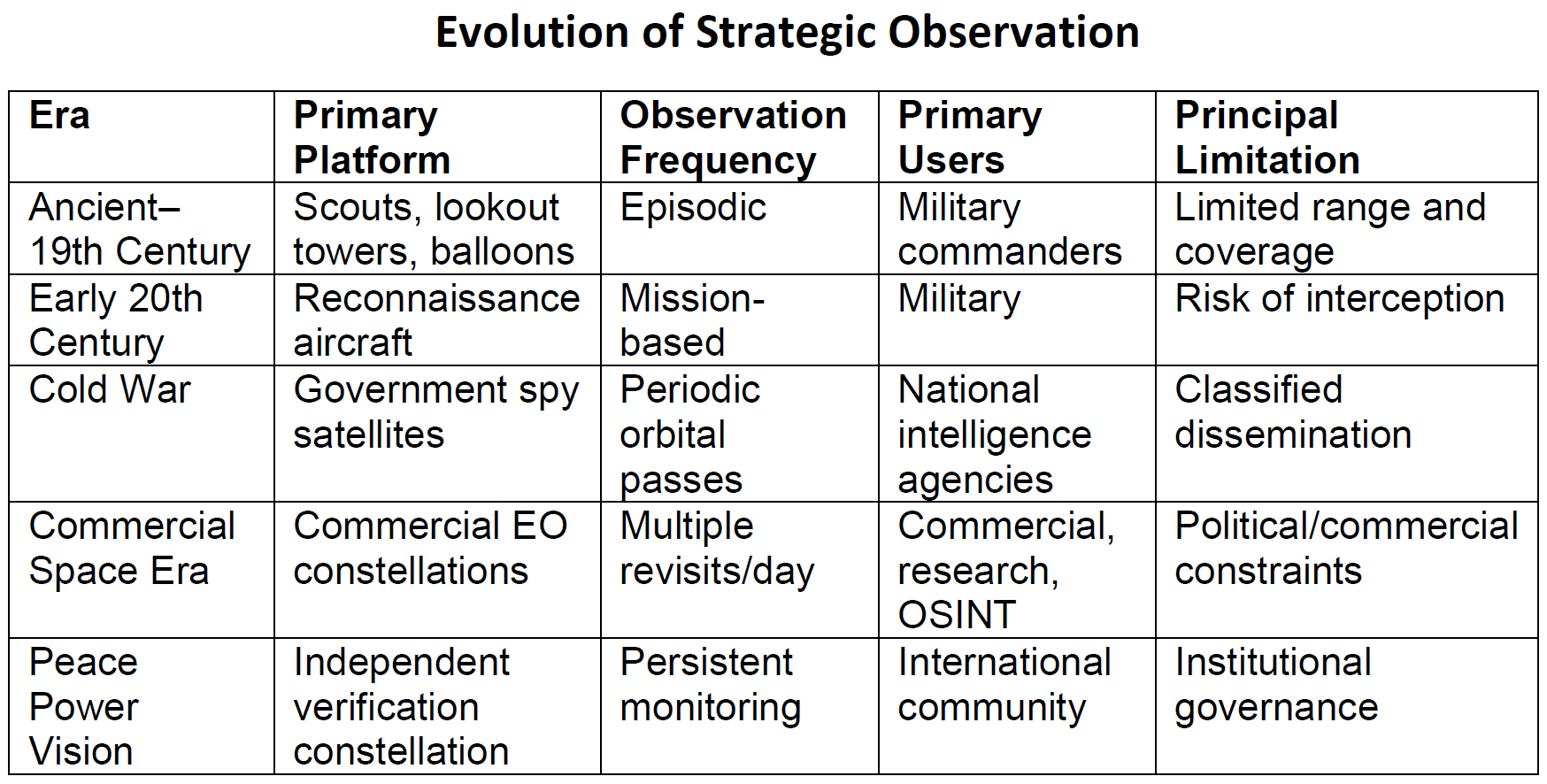
Coffee Break: Armed Madhouse – From Spy Satellites to Peace Satellites

Coffee Break: Armed Madhouse – From Spy Satellites to Peace Satellites

July 7, 2026
US prosecutors examine LA Dodgers owner Mark Walter-linked insurers – report

US prosecutors examine LA Dodgers owner Mark Walter-linked insurers – report

July 21, 2026
Teachers’ Unions Shell Out More Than  Billion on Politics

Teachers’ Unions Shell Out More Than $1 Billion on Politics

May 14, 2026
Why did a 4 billion CEO just endorse stripping most Americans of voting rights?

Why did a $154 billion CEO just endorse stripping most Americans of voting rights?

July 27, 2026
Product-Market Fit Expires Every 90 Days. Here’s What to Do About It.

Product-Market Fit Expires Every 90 Days. Here’s What to Do About It.

July 15, 2026
Bond Vet and Small Door Merge to Form One of the Nation’s Largest Premium Veterinary Networks – AlleyWatch

Bond Vet and Small Door Merge to Form One of the Nation’s Largest Premium Veterinary Networks – AlleyWatch

July 9, 2026
Advanced Micro Devices (AMD) Price Prediction: How Much a ,000 Investment Could Be Worth by 2031

Advanced Micro Devices (AMD) Price Prediction: How Much a $5,000 Investment Could Be Worth by 2031

0
Cities holding up to 3 million people found under Amazon rain forest

Cities holding up to 3 million people found under Amazon rain forest

0
Republican Party Displacement | Mises Institute

Republican Party Displacement | Mises Institute

0
Bybit Uses Tokenised Equities as Underlyings for Structured Yield

Bybit Uses Tokenised Equities as Underlyings for Structured Yield

0
Explained: How BSE traded fewer contracts after CAS but premiums rose 75% in first week

Explained: How BSE traded fewer contracts after CAS but premiums rose 75% in first week

0
Vaxart outlines Phase IIb COVID-19 top line data in first half of 2027 backed by BARDA funding (OTCMKTS:VXRT)

Vaxart outlines Phase IIb COVID-19 top line data in first half of 2027 backed by BARDA funding (OTCMKTS:VXRT)

0
Advanced Micro Devices (AMD) Price Prediction: How Much a ,000 Investment Could Be Worth by 2031

Advanced Micro Devices (AMD) Price Prediction: How Much a $5,000 Investment Could Be Worth by 2031

August 8, 2026
Republican Party Displacement | Mises Institute

Republican Party Displacement | Mises Institute

August 8, 2026
Vanguard Chief Economist: AI and jobs, still in an ATM phase

Vanguard Chief Economist: AI and jobs, still in an ATM phase

August 8, 2026
Explained: How BSE traded fewer contracts after CAS but premiums rose 75% in first week

Explained: How BSE traded fewer contracts after CAS but premiums rose 75% in first week

August 8, 2026
Democrats’ Affordability Message Misses a Key Expense—Student Debt

Democrats’ Affordability Message Misses a Key Expense—Student Debt

August 8, 2026
Banks or NBFCs? DSP’s Preethi R S explains where she sees the best opportunities

Banks or NBFCs? DSP’s Preethi R S explains where she sees the best opportunities

August 8, 2026
FeeOnlyNews.com

Get the latest news and follow the coverage of Business & Financial News, Stock Market Updates, Analysis, and more from the trusted sources.

CATEGORIES

  • Business
  • Cryptocurrency
  • Economy
  • Financial Planning
  • Investing
  • Market Analysis
  • Markets
  • Money
  • Personal Finance
  • Startups
  • Stock Market
  • Trading

LATEST UPDATES

  • Advanced Micro Devices (AMD) Price Prediction: How Much a $5,000 Investment Could Be Worth by 2031
  • Republican Party Displacement | Mises Institute
  • Vanguard Chief Economist: AI and jobs, still in an ATM phase
  • Our Great Privacy Policy
  • Terms of Use, Legal Notices & Disclaimers
  • About Us
  • Contact Us

Copyright © 2022-2024 All Rights Reserved
See articles for original source and related links to external sites.

Welcome Back!

Sign In with Facebook
Sign In with Google
Sign In with Linked In
OR

Login to your account below

Forgotten Password?

Retrieve your password

Please enter your username or email address to reset your password.

Log In
No Result
View All Result
  • Home
  • Business
  • Financial Planning
  • Personal Finance
  • Investing
  • Money
  • Economy
  • Markets
  • Stocks
  • Trading

Copyright © 2022-2024 All Rights Reserved
See articles for original source and related links to external sites.