No Result
View All Result
  • Login
Wednesday, April 1, 2026
FeeOnlyNews.com
  • Home
  • Business
  • Financial Planning
  • Personal Finance
  • Investing
  • Money
  • Economy
  • Markets
  • Stocks
  • Trading
  • Home
  • Business
  • Financial Planning
  • Personal Finance
  • Investing
  • Money
  • Economy
  • Markets
  • Stocks
  • Trading
No Result
View All Result
FeeOnlyNews.com
No Result
View All Result
Home Startups

There’s a specific kind of loneliness that only hits people who are very good at listening. Everyone trusts them with the heavy stuff, everyone seeks them out when things fall apart, and nobody ever thinks to ask them how they’re doing because the role was assigned so early it became invisible.

by FeeOnlyNews.com
47 minutes ago
in Startups
Reading Time: 7 mins read
A A
0
There’s a specific kind of loneliness that only hits people who are very good at listening. Everyone trusts them with the heavy stuff, everyone seeks them out when things fall apart, and nobody ever thinks to ask them how they’re doing because the role was assigned so early it became invisible.
Share on FacebookShare on TwitterShare on LInkedIn


A man I mentored years ago, a young apprentice who could strip and terminate cable faster than anyone I’d seen in twenty years, once sat across from me during a lunch break and told me about his mother’s cancer, his girlfriend leaving, and the debt he was quietly drowning in. He spoke for forty minutes. I listened. When he finished, he looked genuinely lighter, thanked me, packed up his sandwich, and went back to the job. He never once asked how I was doing. And the thing is, I didn’t expect him to.

Most people assume that good listeners are emotionally stable. The logic runs something like: if someone can hold space for other people’s pain, they must have their own house in order. They seem calm. They seem grounded. They seem fine.

That assumption is wrong. And it costs people.

The Invisible Role Assignment

The listener role doesn’t begin in adulthood. It starts in childhood, usually in a home where a kid learns to read the room before anyone teaches them to read a book. The kindest adults in any room were often the most watchful children, scanning faces for signs of trouble, learning that the quickest way to prevent pain was to absorb it.

Psychologists have observed what happens when children take on parental roles in their families, shouldering emotional responsibilities that should never have been theirs. The child becomes the confidant, the mediator, the one who checks in on everyone else. By the time they’re an adult, the role feels as natural as breathing.

And that’s the trap. Something that began as a survival strategy gets rebranded as a personality trait.

People say things like “you’re such a great listener” as if it’s a compliment. And it is, technically. But it also functions as a job description that nobody ever agreed to and nobody ever reviews.

Why Nobody Asks the Listener How They’re Doing

There’s a cognitive shortcut at work here. When someone consistently shows up as the calm, available, emotionally attuned person in a group, the people around them stop checking. Not out of cruelty. Out of pattern recognition.

The brain categorizes people. This person is the funny one. That person is the anxious one. And this person, the listener, is the one who is always okay. The role becomes a fixed label, and once it’s fixed, it becomes invisible to everyone including the person wearing it.

Psychology Today has explored how emotional availability gets mistaken for emotional wellness, and how the people who appear most capable of handling difficult conversations are often the ones least likely to receive care in return. The assumption is simple and devastating: if you’re good at holding pain, you must not have any of your own.

I spent most of my working life in that exact position. On a crew, the younger guys would come to me with their problems. Marriage stuff, money stuff, family stuff. I’d listen. I’d nod. I’d say something useful when I could and stay quiet when I couldn’t. And nobody, not once in four decades of doing that, turned it around and said, “So what’s going on with you?”

They didn’t think to. I didn’t expect them to. The arrangement was invisible to both sides.

Photo by Vitaly Gariev on Pexels

The Reciprocity Gap

Healthy relationships depend on reciprocity. That’s not a theory. That’s the basic architecture of any connection that lasts. Research on relationship reciprocity shows that when both people give and receive support, they report being happier. When one person consistently does the emotional heavy lifting while the other receives, the giver burns out. They feel used. They feel invisible.

But the listener often doesn’t recognize the imbalance until it’s been running for years. Because the listener was trained early: your job is to hold other people’s weight. Their version of normal already includes the gap.

The problem isn’t that their friends or partners are selfish. The problem is that the listener never modeled needing help. They never sent the signal. And people, understandably, responded to the signal they received.

I wrote recently about men in their sixties who express love entirely through logistics: checking tyre pressure, arriving early, topping up the oil. That pattern and the listener pattern share a root. Both involve people who learned to give in a language that doesn’t require vulnerability. And both pay a price for it.

The Loneliness That Doesn’t Look Like Loneliness

The loneliness of the listener is not the loneliness of an empty room. It’s the loneliness of a full one.

You’re surrounded by people who trust you. Who seek you out. Who consider you essential. And you feel completely alone, because none of them know what’s actually happening inside you.

Research on loneliness makes clear that the problem isn’t about how many people are around you. Loneliness is the gap between the social connection you have and the social connection you need. A man with a dozen friends who confide in him can be lonelier than a man with one friend who asks how he’s actually doing.

Studies have found that men are less likely to report feelings of loneliness or speak with others about mental health issues, possibly due to societal stigmas and deeply entrenched gender roles. The listener who is also male faces a compounding problem: the role says “hold other people’s weight,” and the gender norm says “don’t mention that you’re struggling under it.”

I spent most of my life believing real men don’t talk about their feelings. Unlearning that has been the hardest project of my life, harder than any rewire, any panel upgrade, any job I took on in forty years. And the men I’ve known who opened up to each other are the ones who stuck around the longest. The ones who didn’t either drifted away or just got quieter and quieter until the silence felt permanent.

There’s a version of loneliness that hits at 35: the realization that you could disappear for a week and the only people who’d notice are the ones who need something from you. The listener’s loneliness is a close cousin. You won’t disappear, because people need you too much. But you’ll be present and still completely unseen.

What the Listener Stops Doing

Over time, something subtle happens to the chronic listener. They stop trying.

Not in a dramatic way. Not in a way anyone notices. They just gradually stop initiating conversations about themselves. They learn that when they do share, the other person often circles back to their own experience within a few sentences. Or offers a quick fix. Or looks uncomfortable.

People who go quiet when they’re hurt instead of raising their voice often learned early that their anger wasn’t received as information, but as inconvenience. The listener experiences something parallel: their need for connection isn’t received as a legitimate request. It’s received as a glitch in the system. “Wait, you have problems? But you’re the one who handles problems.”

So the listener stops sending the signal. They absorb the damage. And they’ve been doing it so long they sometimes mistake the numbness for calm.

It took me roughly thirty years to learn that my wife Donna doesn’t want problems fixed, she wants them heard. But the flip side of that lesson is one I’m still working on: I also need to be heard, and asking for that doesn’t make me weak. It makes me human.

The Cost of Being Good at Something Nobody Asked You to Be Good At

The listener pays a specific tax. They become expert at a skill that nobody compensates, that nobody audits for fairness, and that slowly becomes their entire identity in every relationship they have.

Colleagues come to them with workplace drama. Friends call them at midnight. Family members treat them as the designated emotional processor at every gathering. And the listener, having been trained since childhood to believe this is simply who they are, rarely questions the arrangement.

solitary person in crowd
Photo by Антон Злобин on Pexels

Research makes clear that relationships without balance leave one partner feeling burned out and taken advantage of. But the listener often doesn’t frame it that way. They frame it as: “I just wish someone would notice.”

Notice what? That the person who holds everyone else together sometimes needs holding. That emotional fluency is not the same as emotional invincibility. That the skill of listening, when it runs in only one direction for decades, becomes a kind of exile.

What Changes This

I’m not going to pretend there’s a clean fix. You don’t unlearn a lifetime of one-directional emotional labour with a weekend workshop or a motivational quote.

But I’ve noticed a few things that help, mostly from watching people who eventually broke the pattern.

The first is naming it. Not to the people around you, necessarily. To yourself. Saying, quietly and clearly: “I am lonely, and the reason nobody knows is that I never ask for anything.” That’s not self-pity. That’s diagnosis.

The second is testing. Pick one person you trust and say something real when they ask how you are. Not the polished answer. Not “I’m fine.” Something with an edge. “Actually, I’ve been struggling” is a sentence that changes rooms. It breaks the pattern because it breaks the expectation.

The third, and this is the hardest one, is grieving the years you didn’t do it. I had to learn that my sons didn’t need a drill sergeant. They needed a dad who asked how they were feeling. That realization came late. I can’t get those years back. But I can stop repeating the pattern, and that turns out to be worth something.

Jennifer Litner, a licensed therapist, has suggested that people, particularly men, may find it easier to talk about loneliness by connecting it to concrete situations rather than abstract feelings. Saying “I miss how we used to hang out” is a door. It doesn’t require you to announce vulnerability. It just opens a crack.

The Listener’s Real Need

The listener doesn’t need to stop listening. The skill is genuine and valuable. The world needs people who can sit with someone else’s pain without flinching.

What the listener needs is someone who notices the asymmetry. Someone who, after the conversation ends and the crisis passes, turns around and says: “So how are you doing?”

And then waits for the actual answer.

That’s the thing about the listener’s loneliness. It doesn’t require a grand intervention. It requires one person breaking the script. One person who says, essentially: “I know you’re good at carrying this, but I want to know what you’re carrying for yourself.”

If you recognize someone in your life who always seems to be the one people call, the one who holds it together, the one who never seems to need anything, consider the possibility that they need something very badly and have simply stopped asking.

The role was assigned so early it became invisible. Making it visible again is the only way to give it back.

Feature image by Matheus Bertelli on Pexels



Source link

Tags: assignedEarlyFallgoodheavyHitsInvisiblekindListeningLonelinesspeopleRoleseeksspecificStufftheyreThinksTrusts
ShareTweetShare
Previous Post

Bitmine Just Locked $340M More In Ethereum – Supply Keeps Shrinking

Related Posts

Psychology says the reason walking away from disrespectful people feels like guilt instead of freedom is because you were raised in an environment where your comfort was never a valid reason to make someone else uncomfortable — and unlearning that equation is the hardest boundary work there is

Psychology says the reason walking away from disrespectful people feels like guilt instead of freedom is because you were raised in an environment where your comfort was never a valid reason to make someone else uncomfortable — and unlearning that equation is the hardest boundary work there is

by FeeOnlyNews.com
March 31, 2026
0

Ever feel like you’re the bad guy for walking away from someone who treats you poorly? Like somehow you’re being...

Psychology suggests if you still write things down on paper instead of your phone you aren’t resisting progress — you’ve found something that works and are practicing the increasingly rare skill of not replacing it simply because something newer arrived, and that skill, applied consistently, turns out to predict a surprising number of other things about how you make decisions

Psychology suggests if you still write things down on paper instead of your phone you aren’t resisting progress — you’ve found something that works and are practicing the increasingly rare skill of not replacing it simply because something newer arrived, and that skill, applied consistently, turns out to predict a surprising number of other things about how you make decisions

by FeeOnlyNews.com
March 31, 2026
0

I keep a physical notebook for first drafts and interview notes. I know it’s inefficient. I know there are apps...

Nobody prepares you for the hardest lesson of your 50s – that some of the people you sacrificed for genuinely don’t remember what you gave up, and it’s not cruelty, it’s just the way memory works when you were never the main character in their story

Nobody prepares you for the hardest lesson of your 50s – that some of the people you sacrificed for genuinely don’t remember what you gave up, and it’s not cruelty, it’s just the way memory works when you were never the main character in their story

by FeeOnlyNews.com
March 31, 2026
0

My brother Eddie needed money in 2004. Not a little. A lot. His wife had left, he was behind on...

I’m 37 and I realized last month that I haven’t had a real conversation with anyone other than my spouse in over a year — not because I’m antisocial but because every friendship I had required me to perform a version of myself I don’t have the energy for anymore

I’m 37 and I realized last month that I haven’t had a real conversation with anyone other than my spouse in over a year — not because I’m antisocial but because every friendship I had required me to perform a version of myself I don’t have the energy for anymore

by FeeOnlyNews.com
March 31, 2026
0

Last month I was sitting on our balcony here in Saigon, watching the motorbikes swarm through the intersection below, and...

My father grew up in the 1960s and he’s the toughest man I know — not because he’s never been broken, but because I have never once seen him stay broken, and the speed with which he gets back up has always looked to me less like strength and more like a man who was simply never taught that staying down was an option

My father grew up in the 1960s and he’s the toughest man I know — not because he’s never been broken, but because I have never once seen him stay broken, and the speed with which he gets back up has always looked to me less like strength and more like a man who was simply never taught that staying down was an option

by FeeOnlyNews.com
March 30, 2026
0

There’s a particular sound a man makes when he’s trying to hold it together in front of his kids. It’s...

Airbase Raises M to Modernize the Invisible Wireless Infrastructure Powering Trillions in GDP – AlleyWatch

Airbase Raises $5M to Modernize the Invisible Wireless Infrastructure Powering Trillions in GDP – AlleyWatch

by FeeOnlyNews.com
March 30, 2026
0

America’s $4.5T wireless infrastructure faces a critical coordination bottleneck. While devices competing for radio spectrum have exploded, from 5G towers...

  • Trending
  • Comments
  • Latest
Judge orders SEC to release data behind B in WhatsApp fines

Judge orders SEC to release data behind $2B in WhatsApp fines

March 10, 2026
8 Cost-Cutting Moves Retirees Are Sharing Online in February

8 Cost-Cutting Moves Retirees Are Sharing Online in February

February 14, 2026
The 23 Largest Global Startup Funding Rounds of February 2026 – AlleyWatch

The 23 Largest Global Startup Funding Rounds of February 2026 – AlleyWatch

March 27, 2026
Easter Basket Ideas for Kids

Easter Basket Ideas for Kids

March 23, 2026
3 Grocery Chains That Give Seniors a “Gas Bonus” for Every  Spent

3 Grocery Chains That Give Seniors a “Gas Bonus” for Every $50 Spent

March 15, 2026
8 Procedures That Can Be Cheaper Without Insurance

8 Procedures That Can Be Cheaper Without Insurance

February 14, 2026
Amazon Spring Sale Ends Tonight: Our Team’s Top Favorite Deals Still Available!

Amazon Spring Sale Ends Tonight: Our Team’s Top Favorite Deals Still Available!

0
There’s a specific kind of loneliness that only hits people who are very good at listening. Everyone trusts them with the heavy stuff, everyone seeks them out when things fall apart, and nobody ever thinks to ask them how they’re doing because the role was assigned so early it became invisible.

There’s a specific kind of loneliness that only hits people who are very good at listening. Everyone trusts them with the heavy stuff, everyone seeks them out when things fall apart, and nobody ever thinks to ask them how they’re doing because the role was assigned so early it became invisible.

0
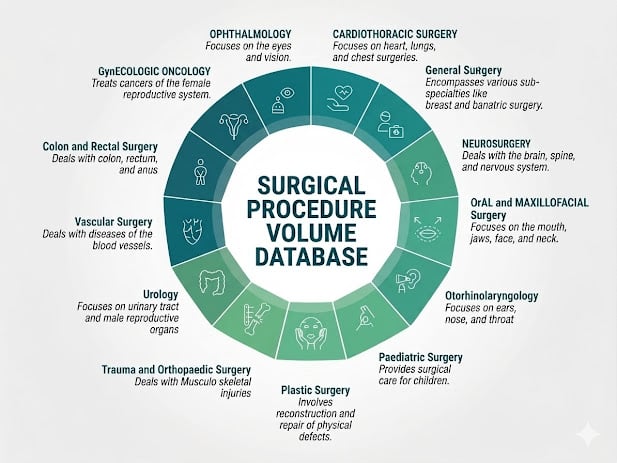
How Can a Surgical Procedure Volume Database Improve GI Market Insights?

How Can a Surgical Procedure Volume Database Improve GI Market Insights?

0
Bitmine Just Locked 0M More In Ethereum – Supply Keeps Shrinking

Bitmine Just Locked $340M More In Ethereum – Supply Keeps Shrinking

0
Block Auto-Enables Bitcoin Payments For U.S. Businesses

Block Auto-Enables Bitcoin Payments For U.S. Businesses

0
5 Ways to Get Disney Merchandise For Half The Price

5 Ways to Get Disney Merchandise For Half The Price

0
There’s a specific kind of loneliness that only hits people who are very good at listening. Everyone trusts them with the heavy stuff, everyone seeks them out when things fall apart, and nobody ever thinks to ask them how they’re doing because the role was assigned so early it became invisible.

There’s a specific kind of loneliness that only hits people who are very good at listening. Everyone trusts them with the heavy stuff, everyone seeks them out when things fall apart, and nobody ever thinks to ask them how they’re doing because the role was assigned so early it became invisible.

April 1, 2026
Bitmine Just Locked 0M More In Ethereum – Supply Keeps Shrinking

Bitmine Just Locked $340M More In Ethereum – Supply Keeps Shrinking

April 1, 2026
Oil Price Today (April 1): Oil jumps 2% despite Iran-US war de-escalation hopes. What lies ahead after 64% March rally

Oil Price Today (April 1): Oil jumps 2% despite Iran-US war de-escalation hopes. What lies ahead after 64% March rally

March 31, 2026
Global Market Today | Asian stocks jump on Iran war offramp, oil steady

Global Market Today | Asian stocks jump on Iran war offramp, oil steady

March 31, 2026
How a former Marine built a veteran niche on LinkedIn

How a former Marine built a veteran niche on LinkedIn

March 31, 2026
Sam’s Club Raising Annual Membership Prices in May. See by How Much.

Sam’s Club Raising Annual Membership Prices in May. See by How Much.

March 31, 2026
FeeOnlyNews.com

Get the latest news and follow the coverage of Business & Financial News, Stock Market Updates, Analysis, and more from the trusted sources.

CATEGORIES

  • Business
  • Cryptocurrency
  • Economy
  • Financial Planning
  • Investing
  • Market Analysis
  • Markets
  • Money
  • Personal Finance
  • Startups
  • Stock Market
  • Trading

LATEST UPDATES

  • There’s a specific kind of loneliness that only hits people who are very good at listening. Everyone trusts them with the heavy stuff, everyone seeks them out when things fall apart, and nobody ever thinks to ask them how they’re doing because the role was assigned so early it became invisible.
  • Bitmine Just Locked $340M More In Ethereum – Supply Keeps Shrinking
  • Oil Price Today (April 1): Oil jumps 2% despite Iran-US war de-escalation hopes. What lies ahead after 64% March rally
  • Our Great Privacy Policy
  • Terms of Use, Legal Notices & Disclaimers
  • About Us
  • Contact Us

Copyright © 2022-2024 All Rights Reserved
See articles for original source and related links to external sites.

Welcome Back!

Sign In with Facebook
Sign In with Google
Sign In with Linked In
OR

Login to your account below

Forgotten Password?

Retrieve your password

Please enter your username or email address to reset your password.

Log In
No Result
View All Result
  • Home
  • Business
  • Financial Planning
  • Personal Finance
  • Investing
  • Money
  • Economy
  • Markets
  • Stocks
  • Trading

Copyright © 2022-2024 All Rights Reserved
See articles for original source and related links to external sites.