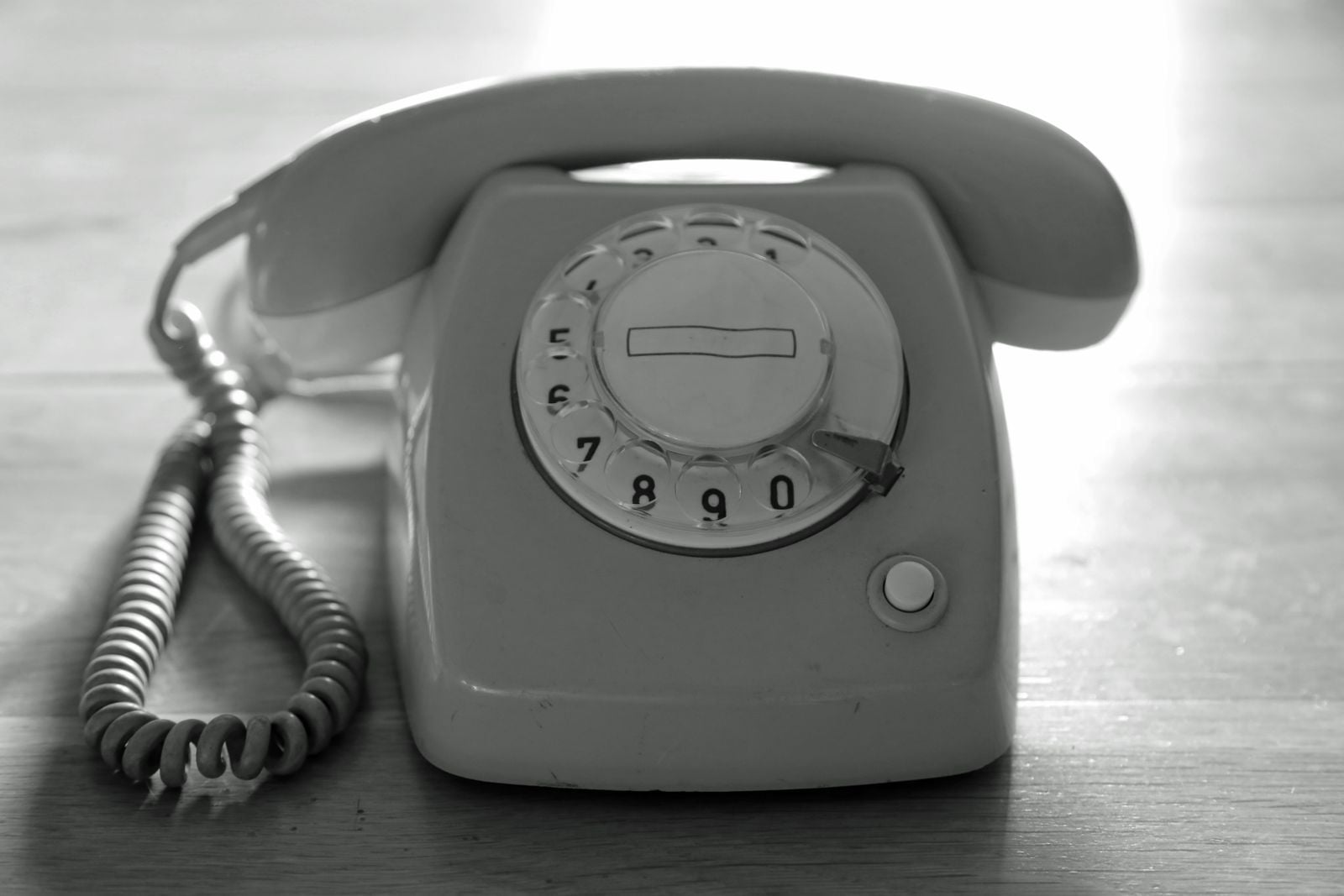
There’s a particular sound a man makes when he’s trying to hold it together in front of his kids. It’s not crying. It’s the absence of crying. A tightness in the throat that turns a normal sentence into something clipped and careful. I heard it exactly once from my father, on the day his own dad died. He was standing in the kitchen of the house I grew up in, outside Manchester, with the phone still in his hand. He cleared his throat, said “Right then,” and went to put the kettle on.
He was back at work the next day.
I didn’t understand that at the time. I was younger and I thought it meant he didn’t care enough, or that he was performing some outdated version of masculinity that didn’t allow for grief. It took me years, and losing him myself, to understand what I’d actually witnessed. It wasn’t the absence of feeling. It was a man who had simply never been given the option of falling apart. And because he’d never been given it, it never occurred to him to take it.
My father grew up in the 1960s. Working-class. Factory floor by the time he was old enough to work. He got involved in the union eventually, which gave him a political education that no classroom ever could. He understood power, leverage, and how decisions made in rooms he’d never enter could reshape the lives of people like him. That knowledge didn’t make him bitter. It made him sharp. And it made him tough in a way that had nothing to do with physical strength.
The toughness I’m talking about is quieter than what most people picture when they hear the word.
A generation that wasn’t asked how it felt
My dad’s generation didn’t have the vocabulary for emotional processing that we throw around so casually now. Nobody sat them down and asked what they were feeling. Nobody suggested therapy after a loss or a setback. The expectation was simple: you get hit, you get up, you carry on. And if you’re lucky, you do it fast enough that nobody has to worry about you.
There’s something worth examining in that. Because on one hand, yes, the lack of emotional language clearly cost that generation. I’ve watched men of my father’s age carry things for decades that a single honest conversation might have lightened. The stiff upper lip isn’t always stoicism. Sometimes it’s just unexpressed pain wearing a good suit.
But on the other hand, something was forged in that expectation that I think we’ve lost sight of. A kind of automatic resilience. Not the self-help kind that gets talked about in podcasts, where you journal your way through adversity and come out the other side with a growth mindset. Something more mechanical than that. More involuntary. Like a reflex that fires before the conscious mind has time to consider whether staying down might be easier.
My father had that reflex. He still has it, in my memory, and I suspect he always will.
The factory and what it teaches
I think about the factory a lot. Not because I romanticise manual labour, but because I think it shaped my dad in ways neither of us fully appreciated at the time.
The factory teaches you that the work doesn’t care how you feel. The shift starts whether you’re ready or not. The machine doesn’t pause because you had a bad night or an argument with your wife or a pain in your knee you’ve been ignoring for six months. You show up, you do the work, you go home. Tomorrow you do it again.
That sounds bleak. And in some ways it is. My mother, who worked in retail for years, had a different version of the same lesson: the customers don’t care what’s going on in your life, so you learn to put it aside and be present for whoever’s standing in front of you. Between the two of them, I absorbed something early about the relationship between duty and identity. You are, at least in part, what you do when you don’t feel like doing it.
Watching my dad come home tired and still ask about my day. Watching him deal with union politics, factory closures in the area, mates losing their jobs, and still show up the next morning. That wasn’t suppression. That was a man whose operating system simply didn’t include the subroutine for giving up.
I’ve mentioned this before but I think one of the things that surprised me most about therapy, after my divorce, was learning how much of my own resilience was inherited rather than chosen. My therapist pointed out that I had a pattern of pushing through difficulty without stopping to feel it first. I thought that was strength. She suggested it was habit. And that the habit, while useful in a crisis, could be destructive when applied to everything.
She was right. But the habit came from somewhere. It came from watching a man in a kitchen put the kettle on when his world had just cracked open.
Getting back up before you’ve finished falling
The thing about my dad’s resilience that took me the longest to understand is that it wasn’t really a decision. That’s what makes it different from the resilience we talk about today, which tends to be framed as a skill you can cultivate. Meditate. Reframe your thinking. Build a support network. All useful advice. But it describes something fundamentally different from what I saw growing up.
What I saw was a man who got back up so fast it almost looked like he hadn’t gone down. When he lost his job during a round of redundancies, he was out looking for the next thing the following morning. When health problems surfaced and scared everyone in the family, he dealt with the appointments, followed the instructions, and never once turned it into a story about himself. When friends and neighbours fell on hard times, he was the first one at their door, not with sympathy, but with a plan.
There was no narrative of struggle. No arc of recovery. Just a kind of relentless forward motion that, from the outside, looked effortless. From the inside, I suspect, it was anything but.
My grandparents lived through the war. Their stories made history feel like something that happened to real people, not textbook abstractions. And I think what got passed down, through them to my dad and through him to me, was less a philosophy and more an instinct. When the ground shakes, you don’t stand still. You move.
What I took and what I’ve had to unlearn
I inherited more from my father than I realised for most of my adult life.
The speed. The forward motion. The tendency to skip the feeling and go straight to the fixing. In my twenties and thirties, those qualities served me well enough. They got me through corporate, through starting my own business, through the terrifying early months of working for myself when the money was uncertain and every instinct told me to go back to the safety of a salary.
But they also cost me. My divorce taught me that being good at pushing through doesn’t make you good at being present. I’d been so focused on work for years that I’d been coasting in my personal life, and when things finally fell apart, I had to confront the fact that I’d been using resilience as a way to avoid vulnerability. Getting back up quickly is useful. But if you never let yourself feel the impact of going down, you miss something important.
I had to learn, slowly and not always gracefully, that strength and honesty aren’t the same thing. That my father’s way of moving through the world, while admirable, had a cost he probably never named. And that I could honour what he gave me while also allowing myself the things he never could: the pause, the conversation, the admission that something hurts.
My partner has been good for me in this respect. She engages with the world in completely different ways to me, and our conversations are one of my favourite parts of life. She once told me that I sometimes use big intellectual discussions to avoid the smaller, more personal ones. She was right about that too.
Why I still admire it
None of what I’ve unlearned has diminished my admiration for my father. If anything, it’s deepened it.
Because now I understand the weight of what he carried. Now I understand that the speed with which he got back up wasn’t the absence of pain. It was the presence of something stronger than pain: a sense of duty so deeply embedded it didn’t need a name. To his family. To his work. To the people around him who were depending on him to be steady when everything else was shaking.
I lost him a few years ago. And in the time since, I’ve thought a lot about what kind of man I actually want to be. Not the kind who never breaks. That’s not realistic, and frankly, I don’t think it’s healthy. But maybe the kind who breaks honestly and still gets up. Who feels it and moves anyway. Who takes the best of what was passed down and leaves the rest behind, not out of disrespect, but out of love for the man who didn’t have the luxury of choosing.
I play five-a-side football on weekday evenings now. I joined in my forties because I needed mates who didn’t want to talk about work or the news. And every now and then, I watch one of the older guys take a knock, get straight back up without a word, and keep running. And I think: I know where you learned that.
We all learned it from the same place.
The bottom line
The toughest man I’ve ever known wasn’t tough because he never felt pain. He was tough because staying down genuinely never presented itself as an option in his mind. It was baked in. Automatic. A product of the time he grew up in, the work he did, and the people who raised him.
That kind of resilience has a cost. It can make a man unreachable when you need him to be soft. It can turn emotional honesty into a foreign language. And it can get passed down to sons who then have to figure out, slowly, which parts to keep and which parts to gently set aside.
But my god, there’s something to it. Something I hope I never fully lose. The ability to stand in a kitchen with the worst news of your life ringing in your ears and say, “Right then,” and put the kettle on.
That’s not performance. That’s a man who was built a certain way. And even as I build myself differently, I carry him with me every day.