
Self-love is not the cure for self-abandonment. I’ve watched too many people prove it. Years of affirmations, journals, mirror work, the whole inventory. They still pre-write a text to their own brother three times before sending it. They still draft a hello.
The conversation about self-abandonment makes the whole thing sound enormous. People talk about it like a single dramatic act, leaving a marriage, quitting a career, finally telling your father what he did. But the version that runs most lives is much smaller. It’s the silent rehearsal before asking the waiter for more water. It’s the forty seconds you stare at “running late” before hitting send.
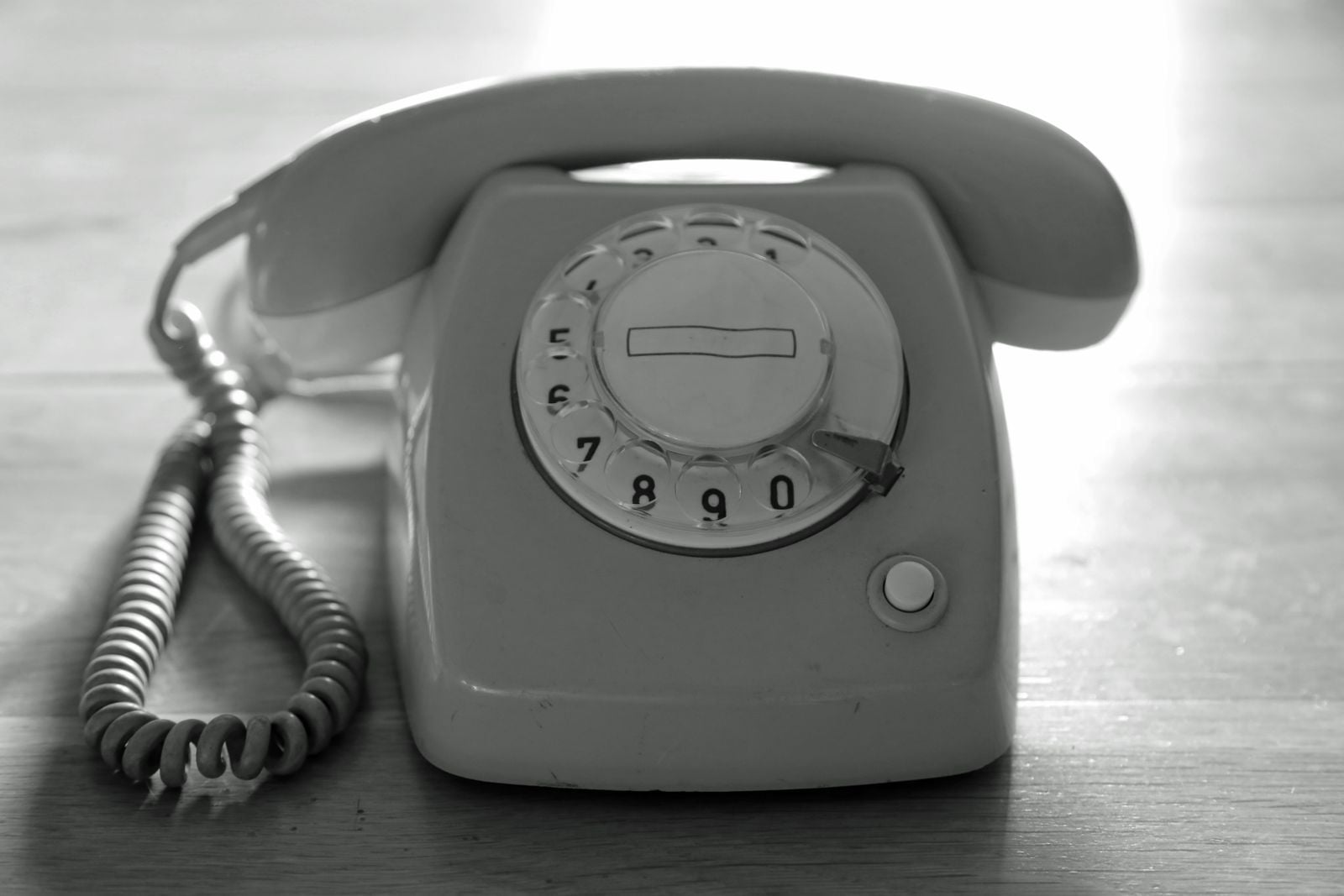
Here’s what tipped me off. Sometime around 2019, I noticed Donna had stopped pausing before answering the phone. She’d just pick up and say what she meant. No throat-clear, no rehearsed opener, no quick mental scan of how the first sentence would land. Forty years of marriage and I’d never paid attention to it before. But once I saw it, I couldn’t unsee what I’d been doing my whole life: mentally drafting and redrafting the simplest things before they came out of my mouth.
The rehearsal nobody mentions
The rehearsal isn’t about big confrontations. Most people can prepare for those. The rehearsal happens before the small stuff. The ordinary stuff. The five-word answer to a coworker. The text to your son saying you’ll be ten minutes late. The hello to a neighbor you’ve known for twelve years.
You catch yourself running the line in your head before it leaves your mouth. Sometimes twice. Sometimes you adjust the punctuation in the imagined version, soften a word, pre-empt a misreading that hasn’t happened yet.
That’s the marker. Not whether you can speak up in a hard moment. Whether you’ve stopped editing yourself before saying nothing of consequence at all.
What the rehearsal actually is
This kind of internal editing is called self-monitoring, and it’s a normal cognitive function. We all do it to some degree. The problem is when it stops being a tool and starts being a permanent setting. Self-monitoring in its healthy form is reviewing the tape after the fact, noticing patterns, adjusting. The unhealthy version is reviewing the tape before you’ve even pressed record.
What’s underneath it isn’t vanity. It’s a learned suspicion that a plain version of you will be misread, and a misread version of you will be punished, even mildly. So you pre-correct. The cost is invisible until you tally it up across thirty years.
I worked four decades pulling wire and reading prints. The trade taught me that hesitation on the floor usually meant somebody was bluffing about what they knew. The same logic applies inside your own head. The rehearsal is a bluff aimed at your own future words.
Why ordinary speech is the real test
Anyone can muster the courage for a hard conversation a few times a year. That’s not the diagnostic. The diagnostic is what happens when nothing is at stake.
If you can’t text your wife “running late” without staring at it for forty seconds, the issue isn’t that one message. The issue is that your nervous system has been trained to treat every outgoing word as a piece of evidence. siliconcanals.com has covered the related pattern of people who keep a tab open for hours before sending a message, and the framing there is right: it’s not procrastination, it’s rehearsal of a version of yourself that won’t be misread.
Where the habit comes from
For most of the people I’ve watched live this way, the habit was installed early. Somebody important to them was unpredictable. A parent who could turn on a dime. A teacher who took everything personally. A spouse, later in life, whose mood you had to forecast before deciding what tone to use at breakfast.
You learn that words go out into a room and come back changed. So you start sending them out pre-armored. After enough years, you don’t notice you’re doing it. The armor feels like the word itself.
Well-being can be understood as the capacity to cope with the stresses of life and contribute to your community. There’s something quiet in that idea. It assumes you can move through ordinary life without bracing for it. A lot of adults can’t.
The men I grew up around
I grew up in a generation of men who thought we were the opposite of rehearsed. We thought we were direct. We thought saying less meant we’d cut all the noise out. What we’d actually done was rehearse a single character, the unbothered guy, and we ran every sentence through that filter before it came out.
It took me until I was in my fifties to realize my version of “shooting straight” was just a different draft. I’d written and approved a Tommy Baker character at nineteen and kept performing him through marriage, fatherhood, and most of my career. Spending most of my life believing real men don’t talk about their feelings was its own kind of rehearsal — a daily edit before any sentence about anything that mattered.
I’ve written before about how emotional maturity shows up as the willingness to say I was wrong without the silent justification. The mechanism is the same. Both habits are about whether you can let a plain sentence stand on its own without dressing it up first.
What changes when you stop
The first thing that changes is speed. Not speed of speech, speed of life. You’d be amazed how many minutes a day you spend in the holding pattern between thinking something and saying it. When that gap closes, days feel longer in a good way.
The second thing is that you stop noticing your own voice. People who rehearse are constantly listening to themselves on a half-second delay, evaluating tone. People who’ve stopped just speak and then move on. The sentence belongs to the room now, not to them.
The third thing is harder to describe. You start to find out what you actually think. Because rehearsal isn’t only editing, it’s pre-deciding what’s safe to mean. When you skip the rehearsal, sometimes you say something and realize you didn’t know you believed it until it was out.
Clinicians who write about authenticity tend to frame it as a kind of internal congruence — saying what you actually mean, in the form you actually mean it, without first running it through a filter. Writing in Psychology Today, therapists have pointed out that authenticity isn’t a personality trait you’re born with, it’s a daily practice of refusing to perform a more palatable version of yourself. The cost of that performance, scaled up, is staggering: depression and anxiety alone cost the global economy around US $1 trillion a year in lost productivity, a number that gets cited in workplace mental-health analyses and HR conversations about psychological safety and the mental-health economy. But I’d argue some of that exhaustion isn’t workload. It’s the cumulative weight of rehearsing every email, every “good morning,” through a filter that asks who’s reading and what they think of you right now. And if you can’t speak unedited to the person across your kitchen table, work isn’t the only place leaking energy.

What it looks like in a marriage
Donna doesn’t rehearse with me anymore. I think she stopped about five years ago, somewhere between when our second son moved out and when I started actually listening at dinner. She’ll say things directly without softening or managing my reaction, expressing her genuine feelings.
I used to flinch at it. Now I understand it as a gift. She’s giving me the unedited sentence, which means she trusts me to handle it. Rehearsal, I’ve come to think, is also a kind of low-grade insult to the listener. It says: I don’t believe you can take what I actually mean.
Learning to say “I’m sorry” without adding “but” was the same lesson in a different room. The “but” is rehearsal happening live, mid-sentence. It’s a tell.
Why this matters more as you age
I’m 66. At my age, the rehearsing crowd starts to look a particular way. Tired in a specific manner. Their faces have a held quality, like they’ve spent a lifetime composing themselves before showing up. Some of them have done very well by every external measure. They’re still drafting their hellos.
The people who’ve stopped — and I know maybe half a dozen of them — look different. Lighter. Not happier necessarily, just less guarded around the edges. There’s a siliconcanals.com piece on how you can tell genuine kindness by how you feel after spending time with someone, and there’s something related happening here. Being around an unrehearsed person makes you stop rehearsing too. It’s contagious in a good way.
How you’d actually start
I won’t pretend there’s a clean technique. The people I know who’ve gotten out of the rehearsal habit didn’t do affirmations. They did something smaller and more annoying: they noticed.
They started catching themselves mid-rehearsal on something dumb. A text to a friend confirming a coffee. A reply to a coworker about lunch. They’d notice the editing happening, decide the message wasn’t worth editing, and send the first version.
And then they survived. Nobody misread them. Nobody punished them. The thing they’d been protecting against didn’t happen. Stack up enough of those small data points and your nervous system slowly updates its threat model.
What I tell my sons
Danny is 40 now. Kevin is 37. They had a father who, for most of their childhood, performed a version of himself at them instead of just being there. I learned late that they didn’t need a drill sergeant; they needed a dad who asked how they were feeling.
What I try to give them now is the unedited sentence. “I miss you.” “That hurt my feelings.” “I don’t know.” Three sentences I couldn’t have said at 35 without rewriting them six times. Now I just say them. They sound ordinary, because they are ordinary. That’s the whole point.
Danny called last Sunday. I picked up the phone the way Donna does now — no pause, no rehearsed opener. Just “hey, bud.” It took me almost seventy years to learn how to answer a phone the way my wife answers a phone.
So here’s the question I’d leave you with, and I don’t have a clean answer for it either. How many sentences did you rehearse today? Not the hard ones. The ordinary ones. The “I’m on my way.” The “sounds good.” The “love you too.” Count them honestly across one Tuesday.
Now multiply that by the years you have left. Is that the arithmetic you wanted? Because nobody’s coming to give you those minutes back, and the person you’re rehearsing for — the one in your head, the one who’s going to misread you — has never actually shown up in the room.
Who exactly are you still drafting your hello for?
Feature image by Ivan S on Pexels





.jpg?prefix=media%2Farticle-covers "Bitcoin Price Action Favors Bears But Profit Taking Overwhelms Each Rally")