Three years ago, when I moved to Singapore for wealth accumulation and business scaling, I was struck by the sheer physical presence of the data infrastructure around me. The island is small, and yet it hosts a substantial number of data centers. You can feel them. They consume a significant portion of the nation’s total electricity, and on humid afternoons in Jurong, you can almost sense the heat they throw off mixing with the tropical air. That experience gave me a visceral understanding of something most people encounter only as abstraction: computing has a physical footprint, and whoever controls that footprint controls an enormous amount of power. I thought about this when I read, a few weeks ago, reports that SpaceX had filed an application with the US Federal Communications Commission related to orbital data infrastructure. The scale is absurd enough to be interesting, but the implications are what matter. When you examine the engineering barriers standing between today’s orbital ambitions and tomorrow’s space-based data centers, a clear pattern emerges: these barriers don’t just slow deployment, they filter who can play. And the companies best positioned to overcome them are the same ones already dominating terrestrial cloud computing. Orbital data centers, if they arrive, won’t democratize AI infrastructure. They’ll concentrate it further, moving the physical machinery of intelligence beyond the reach of national regulators and smaller competitors alike.
Most people think of space-based computing as science fiction, or at best a far-future luxury. The conventional wisdom says the economics don’t work, that the whole idea is a vanity project for billionaires who’ve run out of terrestrial things to disrupt. But what’s happening right now is more grounded and more complicated than that framing allows. Jeff Bezos has said that the tech industry would start building gigawatt-scale data centers in space within the coming decades, powered by 24/7 solar energy that’s basically free once it’s deployed. Reports suggest Google is exploring satellite-based computing infrastructure. The Guardian reported Google’s interest is driven by the staggering energy demands of AI. And reports indicate that Starcloud, a startup based in Washington State, has launched satellite hardware with advanced GPU capabilities, marking an early orbital test of AI-grade chips.
So the ambition is real and funded. The question is whether the engineering can follow. Analysis from MIT Technology Review laid out four specific barriers that stand between the dream and the deployment. As reported, these aren’t abstract concerns. They’re interconnected engineering constraints, and solving one doesn’t necessarily make the others easier. The barriers are worth understanding because they reveal something about the broader trajectory of AI infrastructure, who controls it, and what trade-offs we’re being asked to accept.
1. Thermal management: Heat doesn’t escape the way you think it does
The pitch for space-based data centers often starts with a seductive claim: in space, you can dump waste heat into the vacuum. On Earth, cooling accounts for a substantial portion of a data center’s energy bill. Water consumption is enormous. Data centers are projected to need significant water resources for cooling as AI workloads scale. Space, by contrast, offers an infinite heat sink. Problem solved.
Except it isn’t. This is where the physics gets unforgiving.
On Earth, cooling works primarily through convection and conduction. Air or water carries heat away from the chip. In the vacuum of space, neither mechanism is available. The only way to shed heat is through radiation: infrared photons slowly carrying energy into the void. Radiative cooling is dramatically less efficient than convective cooling. And if you’re placing data centers in sun-synchronous orbits, where they’d have constant solar exposure (the whole point of 24/7 solar power), the equipment temperature remains extremely high, exceeding the safe operating limits for most commercial processors.
Industry experts have noted that thermal management and cooling in space is a significant challenge. The ESA has been working on this for satellite communications, exploring advanced heat-pump systems for managing thermal loads in orbit. But those systems are designed for individual satellites, not racks of GPUs performing trillion-parameter model training.
The proposed solar arrays needed to power a gigawatt-scale orbital data center would need to be massive, potentially stretching hundreds of meters. Those arrays themselves generate heat. The servers generate heat. And the only thing carrying that heat away is the slow bleed of infrared radiation. You’d need massive radiator surfaces, which add weight, which increases launch costs, which erodes the economic advantage you were chasing in the first place.
This is the pattern that makes space infrastructure so tricky: the solution to each problem creates a new constraint. Bezos has argued that space-based solar power could have very low operating costs once infrastructure is in place, though the system costs remain significant. But the system cost of managing what happens downstream of those photons is not free at all.
2. Radiation-hardened chips: Space breaks your processors
The second barrier is the one that gets the least public attention but may be the most fundamental. Space is a radiation environment. Earth’s magnetosphere shields us from most cosmic radiation and solar particle events, but in low Earth orbit, electronics are exposed to constant bombardment.
Electronics in space face three types of radiation damage. Single-event upsets, where a high-energy particle flips a bit in memory, corrupting data. Single-event latchups, where a particle creates a short circuit that can destroy a component. And cumulative degradation, where the constant radiation exposure gradually degrades chip performance over months and years.
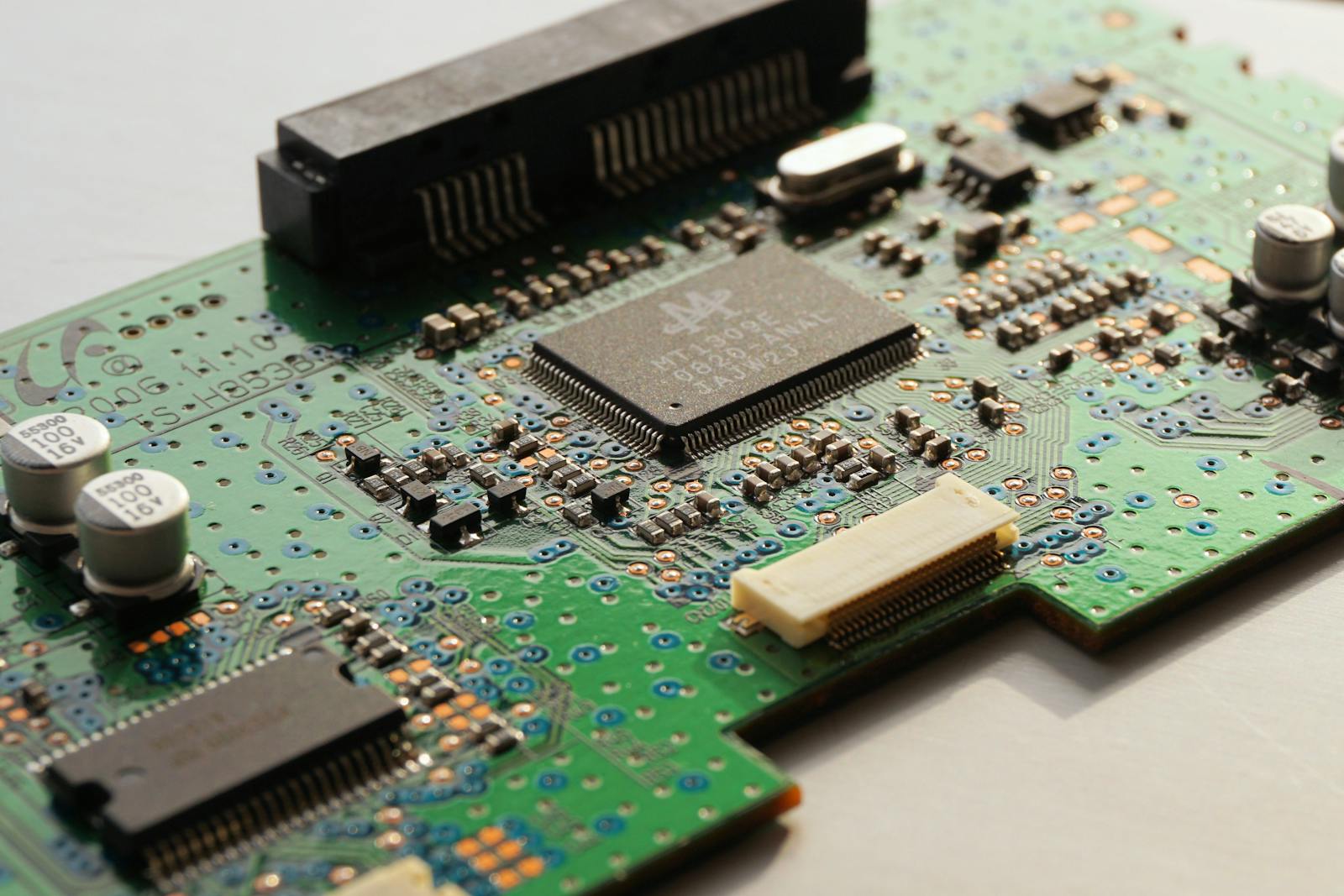
Current commercial AI chips, the Nvidia H100s and their successors, are not designed for this environment. They’re fabricated at nanometer scales where even a single ionizing particle can cause errors. Researchers who study radiation effects on electronics have cautioned that these problems may outweigh the advantages of putting data centers into space.
Radiation-hardened chips exist, of course. Military and space agencies have used them for decades. But they’re generations behind commercial silicon in performance. A radiation-hardened processor suitable for a satellite control system is categorically different from the kind of chip you need to train a frontier AI model. The performance gap is measured in orders of magnitude.
There’s an analogy that helps here. Research has shown that airline crews have a higher risk of developing skin cancer from their frequent exposure to elevated radiation at cruising altitude. And that’s at 35,000 feet, still well within Earth’s atmosphere and magnetosphere. Now imagine the exposure at 500 kilometers, without atmospheric shielding, for hardware that needs to run continuously for years.
This is where I keep coming back to the economics. Nvidia has expressed interest in space computing, and orbital tests of advanced GPUs represent real milestones. But a single GPU surviving a short orbital test is very different from thousands of GPUs running at full load for years. The error rates, the redundancy requirements, the replacement schedules: all of these costs accumulate.
3. Space debris: A million satellites in an already crowded sky
Ambitious satellite deployment plans sound transformative until you consider what massive numbers of additional objects in low Earth orbit would actually mean. Experts have noted significant constraints: orbital shells have finite capacity, and accommodating millions of satellites would face fundamental physical limitations that could only be overcome by monopolistic control of orbital space.
Estimates suggest that the maximum safe capacity of low Earth orbit is limited. Existing constellations already perform significant numbers of collision avoidance maneuvers. Each maneuver costs fuel, disrupts service, and introduces operational risk. And current constellations are a fraction of what these data center proposals envision.
The debris problem compounds over time. Every collision generates fragments. Every fragment becomes a potential collision partner. The cascade scenario, sometimes called Kessler syndrome after NASA scientist Donald Kessler, describes a self-reinforcing chain of collisions that could render certain orbital altitudes unusable for decades.
Safe de-orbiting operations require substantial separation between satellites. With millions of objects, the orbital geometry becomes an optimization problem of extraordinary complexity. And it’s not just your own satellites you need to worry about. Other nations, other companies, existing debris from decades of space activity: the sky is shared infrastructure, even if no one governs it as such.
I’ve been writing lately about how AI infrastructure concentrates power. In my recent piece on smaller AI models built for sovereignty, I explored how the trillion-dollar arms race in AI hardware creates dependency structures that mirror colonial extraction patterns. Orbital data centers intensify this dynamic. If one company controls the orbital shells, the launch vehicles, and the computing infrastructure, you’ve created a vertical monopoly that literally operates above every nation on Earth.
The governance vacuum in space is striking. There is no equivalent of national grid regulators or environmental protection agencies for orbital infrastructure. The Outer Space Treaty of 1967 was written for a world where a handful of governments launched a few dozen satellites. It has almost nothing useful to say about a private company deploying massive data infrastructure in orbit.
4. Maintenance and repair: You can’t send a technician to space
Terrestrial data centers fail constantly. Hard drives die, memory modules corrupt, cooling fans seize. The reason this doesn’t cause catastrophic data loss is that operators can replace components quickly and cheaply. A technician drives to the facility, swaps the part, logs the issue. The round-trip time from diagnosis to repair can be measured in hours.
In orbit, there is no equivalent process. Every repair mission requires a rocket launch. Every component swap requires robotic systems that don’t yet exist at the scale needed. The economics of in-orbit servicing are brutal: it costs thousands of dollars per kilogram to put anything in low Earth orbit, and the kinds of components that fail most often (fans, connectors, drive mechanisms) are exactly the kinds of components that are hardest to design for robotic replacement.
There are early moves in this direction. Axiom Space tested an Amazon Web Services Snowcone cloud-computing device aboard the International Space Station in 2022 and is preparing to send Orbital Data Center nodes into low Earth orbit. But the ISS is a crewed facility with human hands available. Autonomous orbital data centers would need to be either self-healing or disposable.
The disposable model has its own problems. If you design satellites to be replaced rather than repaired, you’re launching vastly more hardware over the lifetime of the system, which means more debris, more launch emissions, and a cost curve that may never achieve the savings that justify the whole enterprise. A 2024 feasibility study by Thales Alenia Space found that some technology forecasts suggest orbital data centers might be feasible by 2050, though experts acknowledge significant operational and safety challenges remain.
That feasibility window of 2036 to 2050 is remarkably wide. It means the people making the most optimistic projections still think we’re at least a decade away, and the more cautious estimates push to mid-century. Bezos estimated 10 to 20 years. The gap between these timelines tells you something about the confidence level. And crucially, it tells you something about the function these projections serve in the meantime: they attract investment, secure orbital spectrum rights, and position the companies making them as inevitable infrastructure providers, long before a single server rack operates reliably above the atmosphere.
The deeper question: Why are we solving for this?
Step back from the engineering for a moment. Why does any of this matter? The answer is that AI’s energy consumption is growing faster than Earth’s energy infrastructure can accommodate it. Data centers already account for a significant portion of global electricity consumption, and that figure is climbing sharply as AI training runs get larger. Water consumption for cooling is straining resources in regions where water scarcity is already a crisis.
The orbital data center concept is, at its root, an attempt to escape these constraints. Free solar power, infinite thermal capacity, no water requirements. It’s elegant as a thought experiment. But it assumes that the problem to be solved is how to keep scaling AI at the current rate rather than whether we should reconsider the rate at which we’re scaling AI.
That’s a political question masquerading as an engineering question. And it connects to something I’ve been thinking about since writing about the Global South building AI on $50 hardware. There are organizations around the world achieving useful AI inference on tiny, efficient devices because they have no choice. Their constraints produce creativity. The constraint that orbital data centers try to escape, the finite energy and water on Earth, might similarly produce more efficient AI architectures if we actually had to live within it.
I’m not a degrowth absolutist. Living in Singapore, where pragmatic ambition is practically a national value, I understand the impulse to build your way out of bottlenecks. But there’s a difference between building smart infrastructure and building infrastructure that creates new categories of systemic risk because you refused to optimize what you already have.
Consider who benefits from orbital data centers. The companies best positioned to build them, SpaceX, Amazon, Google, are the same companies that dominate terrestrial cloud computing. Space-based infrastructure doesn’t democratize computing. It concentrates it further, because the barrier to entry is a launch vehicle and hundreds of billions of dollars in capital.
If AI training eventually migrates to orbit, the power dynamics shift in ways that are hard to reverse. National regulators lose jurisdiction. Terrestrial competitors lose the ability to compete on equal terms. The physical infrastructure of intelligence, the hardware that shapes what questions can be asked and answered, moves beyond the reach of any single government’s authority.
Where this actually leads
The honest assessment is somewhere between the skeptics and the enthusiasts. Some computing will move to space. It’s already started. Orbital GPU tests have happened. Axiom is sending hardware up this year. Google is exploring satellite-based infrastructure. These are real projects with real funding.
But the vision of massive orbital data centers replacing terrestrial infrastructure is closer to corporate positioning than engineering roadmap. Regulatory filings are as much about securing orbital spectrum and positioning rights as they are about concrete deployment plans. Long timelines are conveniently positioned to attract investment without requiring immediate delivery.
The four barriers, thermal management, radiation-hardened chips, space debris, and maintenance, are real. They’re not the kind of barriers that disappear with one breakthrough. They’re systemic, meaning each one constrains the solution space for the others. Making chips radiation-resistant typically means making them less efficient, which means more heat, which makes the thermal problem worse. Adding more satellites worsens the debris problem, which increases collision avoidance fuel consumption, which reduces operational lifetime, which worsens the maintenance problem.
Expert warnings deserve to sit at the center of this discussion: the problems may outweigh the advantages. That’s not a definitive no. It’s a structural caution that the engineering community takes seriously even as the investor class charges ahead.
What I keep coming back to is the pattern. The same companies that built terrestrial data centers without adequately accounting for their water and energy externalities are now proposing to build orbital data centers without adequately accounting for debris, radiation, and maintenance externalities. The impulse is always to scale first, then manage the consequences. Space forgives even less than Earth does.
Who really benefits
The four engineering barriers I’ve outlined aren’t just technical obstacles. They’re filters. Each one raises the capital requirements, the technical complexity, and the operational risk to levels that only a handful of organizations on Earth can absorb. That’s the point. Whether intentionally or not, the difficulty of orbital data centers functions as a moat: it excludes everyone except the companies that already dominate.
SpaceX benefits because it controls the launch vehicles. No orbital data center exists without rockets, and SpaceX has the lowest cost per kilogram to orbit by a wide margin. Every satellite launched, every component replaced, every failed unit de-orbited, that’s revenue for SpaceX regardless of whether the data center business itself ever turns a profit. Amazon benefits because it runs AWS, the world’s largest cloud infrastructure provider, and because Bezos owns Blue Origin, giving it potential vertical integration from launch to compute. Google benefits because it has the AI workloads that would justify the investment, the capital to absorb decades of R&D losses, and the strategic incentive to lock competitors out of the next generation of infrastructure.
Notice who doesn’t benefit. Smaller cloud providers, who can’t afford launch costs. Developing nations, who are already dependent on US-based cloud infrastructure and would become more so if that infrastructure moves to orbit, beyond their regulatory reach entirely. Open-source AI communities, whose ability to train competitive models depends on access to affordable compute, not compute that requires a space program. European and Asian tech companies that might compete on terrestrial infrastructure but cannot compete in a domain where the entry ticket is a launch vehicle and a hundred billion dollars.
The engineering barriers reveal this clearly. Thermal management at scale requires custom-designed radiator systems that only well-funded aerospace programs can develop. Radiation-hardened AI chips don’t exist yet, and the companies most likely to develop them are the same semiconductor giants already partnered with SpaceX, Amazon, and Google. The debris problem favors whoever gets to orbit first and in the largest numbers, creating a first-mover advantage that could effectively claim the most viable orbital shells. And the maintenance problem guarantees ongoing dependency on whoever controls the launch infrastructure.
This is not democratization. This is the construction of a new layer of infrastructure monopoly, one that operates in a jurisdiction-free zone above the planet. And it is being built under the narrative of solving AI’s energy crisis, a crisis created by the same companies now proposing to escape Earth’s constraints rather than operate within them.
The four things we’d need to put data centers in space are not mysteries. They’re known problems with identifiable, if distant, solution paths. The real question, the one no FCC filing or tech keynote answers, is whether solving them creates more value than simply building smarter infrastructure on the ground we’re standing on. The engineering barriers suggest that orbital data centers, if they ever work, will serve the interests of the companies building them far more than the societies those companies claim to be serving.
My suspicion is that the answer depends entirely on who’s doing the accounting. And right now, the accountants work for the same people building the rockets.
Feature image by Jake Heinemann on Pexels