No Result
View All Result
  • Login
Sunday, March 29, 2026
FeeOnlyNews.com
  • Home
  • Business
  • Financial Planning
  • Personal Finance
  • Investing
  • Money
  • Economy
  • Markets
  • Stocks
  • Trading
  • Home
  • Business
  • Financial Planning
  • Personal Finance
  • Investing
  • Money
  • Economy
  • Markets
  • Stocks
  • Trading
No Result
View All Result
FeeOnlyNews.com
No Result
View All Result
Home Startups

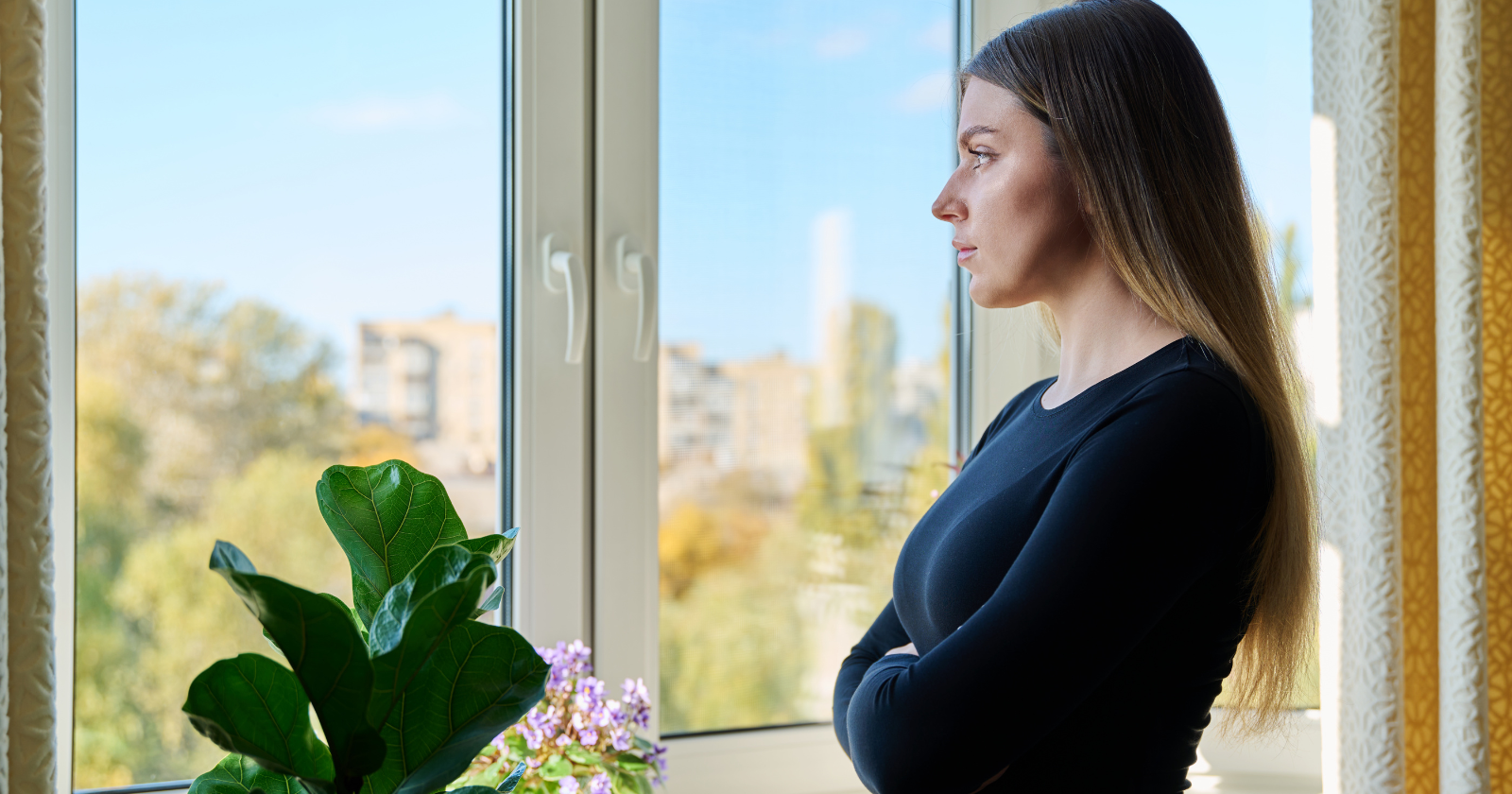
Psychology says the reason some people become wiser as they age while others become more rigid has nothing to do with intelligence. It depends on whether they ever learned to sit with discomfort

by FeeOnlyNews.com
2 hours ago
in Startups
Reading Time: 5 mins read
A A
0
Psychology says the reason some people become wiser as they age while others become more rigid has nothing to do with intelligence. It depends on whether they ever learned to sit with discomfort
Share on FacebookShare on TwitterShare on LInkedIn


One has this quiet depth to them. They’ve softened around the edges. They hold space for complexity, for other people’s contradictions, for the fact that life rarely gives you clean answers. They’re still curious. You leave a conversation with them feeling like you’ve actually learned something.

The other has calcified. Every opinion they had at 45, they still have at 70 — just louder. They’ve stopped asking questions because they already know the answers. They get defensive when challenged, dismissive of anything unfamiliar, and oddly angry at a world that keeps changing without their permission.

Same generation. Roughly similar circumstances. Wildly different outcomes.

What’s going on here?

Intelligence doesn’t explain it. Some of the most intellectually sharp people I know have also become the most rigid. Education doesn’t explain it either. This isn’t about how many books you’ve read or degrees you’ve earned.

According to psychology, the real split comes down to something much more basic — and much harder to develop. It comes down to whether a person ever learned to sit with discomfort.

What psychologists actually mean by “sitting with discomfort”

Psychologists have a technical term for this capacity: distress tolerance. It refers to a person’s perceived ability to withstand negative emotional or physical states — not to like them, not to pretend they’re fine, but to stay present with them without immediately fleeing.

Distress tolerance isn’t just about pain or sadness. It includes the ability to tolerate uncertainty (“I don’t know how this is going to turn out”), ambiguity (“I’m not sure who’s right here”), and the discomfort of having your existing beliefs challenged.

What research consistently shows is that people with low distress tolerance tend to default to avoidance. When something feels uncertain or uncomfortable — emotionally or cognitively — they move away from it, fast. They change the subject, get angry, shut down, or double down on whatever belief makes them feel safe again.

This avoidance feels protective in the short term. But over decades, it does something quietly devastating: it stops the very process through which wisdom develops.

Why rigidity isn’t what most people think it is

Most of us assume that people become more rigid as they age because of neurological changes — slower processing, declining memory, a brain that just doesn’t bend as easily anymore. And yes, research does show that older adults can have more difficulty adapting when situational demands change.

But here’s what that research also shows: there’s enormous variation. The data is not uniform. Some older adults are genuinely more flexible and open than many younger people. The decline isn’t inevitable or universal. It depends heavily on the individual — and on habits built up over a lifetime.

One long-running study from the Canadian Journal on Aging found that rigidity in old age — particularly social rigidity, meaning the inability to adapt how you engage with other people — was significantly linked to poorer adjustment overall. And crucially, it responded to intervention. People could get better at it.

That means rigidity isn’t a locked fate. It’s a pattern.

The link between discomfort tolerance and wisdom

So what does it take to keep growing psychologically as you age? What separates the person who deepens from the one who hardens?

A 2025 study published in Personality and Individual Differences found that ambiguity tolerance positively predicted wisdom — even after controlling for other variables. People who could sit with unclear, uncertain, or contradictory information were more likely to develop the kind of judgment and perspective that researchers associate with genuine wisdom.

This makes intuitive sense when you think about it. Wisdom isn’t just knowing a lot. It’s knowing how to navigate situations where there are no clean answers. Where reasonable people disagree. Where you have to hold multiple truths at the same time and still make a call. That capacity only develops if you’ve spent time in the discomfort zone — rather than reflexively escaping it.

A major review on aging and wisdom published in Frontiers in Aging Neuroscience identified several core components of wisdom, including emotional homeostasis, self-reflection, and the ability to deal effectively with uncertainty. Notice what all three of those have in common: they require tolerating discomfort without running from it. You can’t self-reflect if you can’t sit with what you find. You can’t develop emotional stability if you’ve spent decades avoiding hard feelings.

The escape hatch that keeps people stuck

The cruel irony is that the behaviors that protect someone from short-term discomfort are exactly the behaviors that prevent long-term growth.

Research on distress tolerance shows that low tolerance consistently predicts maladaptive coping — avoidance, suppression, rumination. People who can’t sit with uncomfortable feelings don’t process them. They bury them, or they deflect outward through anger, blame, and dismissal, or they run toward certainty as fast as they can.

The problem is that certainty — real certainty, the kind that never has to be questioned — is mostly an illusion. And the older you get, the more energy it takes to maintain that illusion as life keeps throwing you curveballs. The person who has built their psychological identity around never being wrong, never being uncertain, never having to tolerate not-knowing… they have to work harder and harder to defend that as they age.

Meanwhile, the person who has spent years practicing the art of staying with discomfort — of noticing that the feeling of uncertainty is survivable, that having your views challenged isn’t a threat to your identity — doesn’t need to keep that wall up. They can afford to be curious. They can afford to change their mind. They can afford to not know.

This isn’t about being calm or easygoing

It’s worth being clear about what this isn’t. The ability to tolerate discomfort doesn’t mean you’re emotionally flat, or endlessly patient, or never rattled. Deeply wise people can be fierce. They can be sharp-tongued, emotionally intense, and quite sure of themselves on certain things.

What they don’t do is flee. When something hard comes up — a piece of information that contradicts their worldview, an emotion they’d rather not feel, a situation with no good options — they stay in the room with it. They let it register.

As one clinical psychologist writing about uncertainty and ambiguity has noted, simply noticing discomfort nonjudgmentally — rather than reflexively jumping to action — is what expands emotional tolerance and leads to more deliberate, grounded responses. It sounds almost too simple. But it’s genuinely difficult, and most people never practice it systematically.

You can actually build this capacity

The good news — backed by research — is that distress tolerance isn’t fixed. It can be developed. A systematic review of 106 studies found that various interventions consistently reduced distress intolerance — and that reductions in intolerance predicted greater psychological flexibility.

Approaches grounded in mindfulness, Acceptance and Commitment Therapy, and Dialectical Behavior Therapy all show real effects. The common thread is the same: learning to stay present with what’s uncomfortable, without immediately trying to escape or fix it.

None of this requires therapy or formal practice, though both help. It can be as simple as sitting with a strong opinion you hold and genuinely asking: what would I need to see to change my mind? Or staying in a conversation that’s making you uncomfortable instead of shutting it down. Or resisting the urge to reach for certainty when what’s actually true is that you don’t know yet.

These are small moments. But over years, they compound.

The people who get wiser as they age aren’t the ones with the highest IQs. They’re the ones who never stopped being willing to feel uncomfortable.




Source link

Tags: AgeDependsDiscomfortIntelligenceLearnedpeoplePsychologyReasonrigidSitwiser
ShareTweetShare
Previous Post

Bitcoin Spot ETFs Break 4-Week Positive Streak With $296M Outflow

Next Post

Sai Parenteral’s IPO allotment likely today: Check status, GMP, other details

Related Posts

The real story behind 45,000 tech layoffs: where the money actually goes

The real story behind 45,000 tech layoffs: where the money actually goes

by FeeOnlyNews.com
March 29, 2026
0

The tech sector continues to experience significant workforce reductions, and the framing war over why is arguably more revealing than...

I’ve noticed that the moment I stop trying to impress someone is the exact moment they start leaning in and asking real questions — like people can smell performance from a mile away even if they can’t name what feels off

I’ve noticed that the moment I stop trying to impress someone is the exact moment they start leaning in and asking real questions — like people can smell performance from a mile away even if they can’t name what feels off

by FeeOnlyNews.com
March 29, 2026
0

I’ve noticed this for years but only recently had language for it. The moment I stop trying to impress someone...

Psychology says people who seem genuinely happy aren’t people who have more – they’re people who stopped measuring what they have against what they imagined they should have by now

Psychology says people who seem genuinely happy aren’t people who have more – they’re people who stopped measuring what they have against what they imagined they should have by now

by FeeOnlyNews.com
March 29, 2026
0

There is a version of your life that exists only in your head. You didn’t consciously design it — it...

I’m 37 and I just caught myself apologizing to a waiter for sending back the wrong order – and I realized I’ve been managing other people’s discomfort my entire adult life and calling it good manners

I’m 37 and I just caught myself apologizing to a waiter for sending back the wrong order – and I realized I’ve been managing other people’s discomfort my entire adult life and calling it good manners

by FeeOnlyNews.com
March 28, 2026
0

I was at a restaurant in Saigon last week, and the waiter brought me the wrong dish. It happens. He...

People who turned out genuinely kind despite a tough childhood didn’t learn kindness — they absorbed its absence so completely that its presence became the one thing they couldn’t withhold from anyone who needed it, not as a decision, but as the only response available to a person formed the way they were formed

People who turned out genuinely kind despite a tough childhood didn’t learn kindness — they absorbed its absence so completely that its presence became the one thing they couldn’t withhold from anyone who needed it, not as a decision, but as the only response available to a person formed the way they were formed

by FeeOnlyNews.com
March 28, 2026
0

I’ve noticed something about the kindest people I know. Almost none of them had it easy growing up. That might...

Psychology says people who have no close friends aren’t usually socially incompetent — they have a pattern-recognition ability that makes small talk feel like cognitive torture

Psychology says people who have no close friends aren’t usually socially incompetent — they have a pattern-recognition ability that makes small talk feel like cognitive torture

by FeeOnlyNews.com
March 28, 2026
0

I noticed something at a work event a few years back. A colleague of mine spent the entire evening hovering...

Next Post
Sai Parenteral’s IPO allotment likely today: Check status, GMP, other details

Sai Parenteral’s IPO allotment likely today: Check status, GMP, other details

  • Trending
  • Comments
  • Latest
Judge orders SEC to release data behind B in WhatsApp fines

Judge orders SEC to release data behind $2B in WhatsApp fines

March 10, 2026
8 Cost-Cutting Moves Retirees Are Sharing Online in February

8 Cost-Cutting Moves Retirees Are Sharing Online in February

February 14, 2026
Easter Basket Ideas for Kids

Easter Basket Ideas for Kids

March 23, 2026
3 Grocery Chains That Give Seniors a “Gas Bonus” for Every  Spent

3 Grocery Chains That Give Seniors a “Gas Bonus” for Every $50 Spent

March 15, 2026
8 Procedures That Can Be Cheaper Without Insurance

8 Procedures That Can Be Cheaper Without Insurance

February 14, 2026
The 23 Largest Global Startup Funding Rounds of February 2026 – AlleyWatch

The 23 Largest Global Startup Funding Rounds of February 2026 – AlleyWatch

March 27, 2026
Sai Parenteral’s IPO allotment likely today: Check status, GMP, other details

Sai Parenteral’s IPO allotment likely today: Check status, GMP, other details

0
Stratus Properties Inc. (STRS) Reports FY2025 Earnings

Stratus Properties Inc. (STRS) Reports FY2025 Earnings

0
ICE agents called in to help ease airport security lines may not be leaving anytime soon

ICE agents called in to help ease airport security lines may not be leaving anytime soon

0
Ninja Blast 18-oz Portable Blender only .49 shipped (Reg. !)

Ninja Blast 18-oz Portable Blender only $40.49 shipped (Reg. $70!)

0
Psychology says the reason some people become wiser as they age while others become more rigid has nothing to do with intelligence. It depends on whether they ever learned to sit with discomfort

Psychology says the reason some people become wiser as they age while others become more rigid has nothing to do with intelligence. It depends on whether they ever learned to sit with discomfort

0
Why Businesses Are Investing in Cleaner Indoor Air

Why Businesses Are Investing in Cleaner Indoor Air

0
Sai Parenteral’s IPO allotment likely today: Check status, GMP, other details

Sai Parenteral’s IPO allotment likely today: Check status, GMP, other details

March 29, 2026
Psychology says the reason some people become wiser as they age while others become more rigid has nothing to do with intelligence. It depends on whether they ever learned to sit with discomfort

Psychology says the reason some people become wiser as they age while others become more rigid has nothing to do with intelligence. It depends on whether they ever learned to sit with discomfort

March 29, 2026
Bitcoin Spot ETFs Break 4-Week Positive Streak With 6M Outflow

Bitcoin Spot ETFs Break 4-Week Positive Streak With $296M Outflow

March 29, 2026
ICE agents called in to help ease airport security lines may not be leaving anytime soon

ICE agents called in to help ease airport security lines may not be leaving anytime soon

March 29, 2026
The  Phone Charger That Can Burn Down a Bedroom — What Shoppers Don’t Know About Knockoff Cables

The $10 Phone Charger That Can Burn Down a Bedroom — What Shoppers Don’t Know About Knockoff Cables

March 29, 2026
Private equity is eying Asia’s healthcare funding gap as countries get wealthier and older

Private equity is eying Asia’s healthcare funding gap as countries get wealthier and older

March 29, 2026
FeeOnlyNews.com

Get the latest news and follow the coverage of Business & Financial News, Stock Market Updates, Analysis, and more from the trusted sources.

CATEGORIES

  • Business
  • Cryptocurrency
  • Economy
  • Financial Planning
  • Investing
  • Market Analysis
  • Markets
  • Money
  • Personal Finance
  • Startups
  • Stock Market
  • Trading

LATEST UPDATES

  • Sai Parenteral’s IPO allotment likely today: Check status, GMP, other details
  • Psychology says the reason some people become wiser as they age while others become more rigid has nothing to do with intelligence. It depends on whether they ever learned to sit with discomfort
  • Bitcoin Spot ETFs Break 4-Week Positive Streak With $296M Outflow
  • Our Great Privacy Policy
  • Terms of Use, Legal Notices & Disclaimers
  • About Us
  • Contact Us

Copyright © 2022-2024 All Rights Reserved
See articles for original source and related links to external sites.

Welcome Back!

Sign In with Facebook
Sign In with Google
Sign In with Linked In
OR

Login to your account below

Forgotten Password?

Retrieve your password

Please enter your username or email address to reset your password.

Log In
No Result
View All Result
  • Home
  • Business
  • Financial Planning
  • Personal Finance
  • Investing
  • Money
  • Economy
  • Markets
  • Stocks
  • Trading

Copyright © 2022-2024 All Rights Reserved
See articles for original source and related links to external sites.