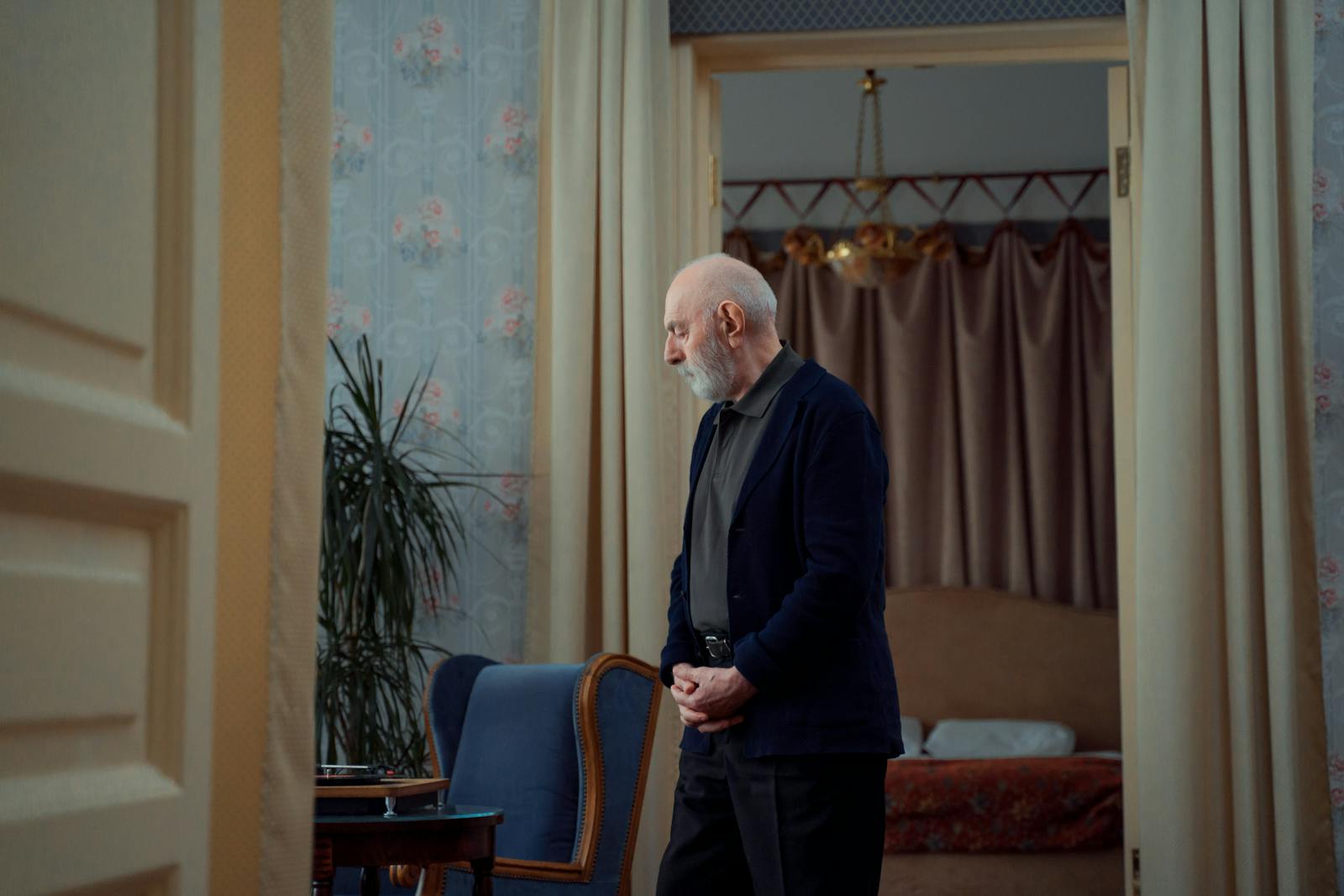
I noticed a couple weeks ago that a woman I know, she’s sixty-three, just launched a small publishing imprint out of her living room. Nothing flashy. But the books she’s putting out are genuinely beautiful, and she’s doing it with this calm focus that I don’t think I’ve ever seen in anyone my age. I kept thinking about it, honestly, because when I asked her how she had the energy, she kind of laughed and said she didn’t have more energy. She just stopped wasting it.
That stuck with me. Because the people I’ve met who are doing their most meaningful work in their sixties aren’t grinding harder than they did at forty. They’re grinding less. Way less. What changed isn’t the intensity. It’s the selectivity. They stopped carrying things that were never theirs to begin with, and suddenly had energy for the things that were.
The research explains why.
The psychology of selective focus
Paul and Margret Baltes, two of the most influential developmental psychologists of the twentieth century, developed a model called Selective Optimization with Compensation, or SOC. It’s one of the most important frameworks in the study of successful aging, and it flips the productivity narrative on its head.
The model says that as people age and their total pool of resources (time, energy, cognitive bandwidth, physical capacity) inevitably shrinks, the ones who thrive are the ones who do three things. They select: they narrow their focus to the goals and activities that matter most. They optimise: they invest deeply in improving their performance in those chosen areas. And they compensate: they find alternative strategies to work around limitations.
Research on SOC involving 224 working adults aged 40 to 69 found that the relationship between selection and self-reported ability increased with age. In other words, the older people got, the more their performance depended on their ability to choose what to focus on rather than trying to do everything. And I think that’s the part most of us miss in our thirties and forties, because we’re still operating under this delusion that we can do it all if we just try hard enough, manage our calendars better, drink the right supplements, whatever. But the data doesn’t support that. What it supports is that focus becomes the skill, not endurance.
That’s not a decline story. That’s a strategy story.
What you stop carrying matters more than what you start doing
Here’s what I think the SOC model captures that most productivity advice misses. The biggest gains don’t come from adding something new. They come from subtracting something old.
In your forties, you’re carrying everything. The career obligations that no longer fit. The social commitments you maintain out of guilt. The grudges you haven’t released. The need to prove yourself to people who stopped paying attention years ago. The comparison with peers who are playing a completely different game. The assumption that you should care about things just because you used to care about them.
All of that consumes bandwidth. And bandwidth, as the research on scarcity has shown, is finite. When your mental bandwidth is consumed by things that don’t serve your actual goals, you have less capacity for the things that do. Not because you’re lazy. Because cognitive resources are a zero-sum game.
Laura Carstensen’s work at Stanford adds another layer. Her socioemotional selectivity theory shows that as people age and become more aware of limited time, they naturally shift their priorities toward what’s emotionally meaningful and away from what’s merely expected. They stop networking and start connecting. They stop performing and start producing. They stop managing impressions and start doing the work.
Look, it’s sort of like that scene in Fight Club where everything gets stripped away and what’s left is the only thing that was ever real. Except less dramatic and with more grandchildren.
Research from USC found that stress levels drop dramatically from midlife onward. About half of people in their twenties through their forties reported significant stress. By 70, that figure was down to roughly 17 percent. And the researchers couldn’t explain the drop through income, marriage, or having kids at home. Something internal was shifting.
I think what’s shifting is the weight. People are finally putting down burdens they picked up decades ago and never questioned.
The pianist who stopped playing all the notes
Paul Baltes used to tell a story about the pianist Arthur Rubinstein, who continued performing at a high level well into his eighties. When asked how he managed it, Rubinstein described exactly the SOC process. He played fewer pieces (selection). He practised those pieces more intensively (optimisation). And he slowed down before fast passages so the contrast made the fast parts seem faster (compensation).
Rubinstein didn’t try to play like a thirty-year-old. He played like an eighty-year-old who knew what mattered. And the result was some of the most emotionally powerful performances of his career.
That’s what I see in the people around me who are thriving in their sixties. They’re not trying to do everything they did at forty, faster. They’re doing less, better, with more intention.
The things that were never yours to carry
In Buddhism, there’s a concept called paṭicca samuppāda, dependent origination, the idea that nothing arises in isolation. Everything we carry has a cause, a condition, an origin. And many of the burdens we haul through midlife didn’t originate with us at all.
The obligation to stay in a career path that was chosen at twenty-two and never revisited. The need to maintain a social status that was designed by someone else’s expectations. The guilt about not being enough, productive enough, successful enough, present enough, that was inherited from parents, culture, or a version of yourself that no longer exists.
These aren’t your burdens. They’re artefacts. And putting them down isn’t failure. It’s clarity.
The Harvard Study of Adult Development, the longest-running study of adult life, found that the happiest adults in midlife were those who shifted from asking “What can I do for myself?” to “What can I do for the world beyond me?” That shift isn’t about working harder. It’s about working differently, from a place of meaning rather than obligation.
Robert Waldinger, the study’s director, has noted that beyond basic financial security, wealth doesn’t meaningfully increase wellbeing. The relentless pursuit of more, more money, more status, more achievement, doesn’t deliver what it promises. What delivers is depth. Purpose. Connection.
The people accomplishing meaningful things in their sixties figured that out. Not because they read about it. Because they lived long enough to feel the difference between performing productivity and actually producing something that matters.
The energy equation
Honestly, think about your average day in your forties. How much of your energy goes toward things that genuinely matter to you? And how much goes toward managing other people’s expectations, maintaining a professional image, worrying about what colleagues think, checking metrics that don’t measure anything real, attending meetings that could have been emails, and carrying anxiety about outcomes you can’t control?
The research on emotional aging is clear on this point. Older adults are better at avoiding situations and people that drain them. They disengage from heated conversations instead of escalating. They leave social situations that aren’t working. They’ve become, as one researcher put it, experts at not sweating the small stuff.
That’s not apathy. That’s energy management. And when you stop spending energy on things that were never truly productive, you suddenly have energy for things that are.
I notice this in my own life. I’m in my late thirties, and I still spend an embarrassing amount of cognitive bandwidth on things that don’t move anything forward. Checking traffic numbers compulsively. Worrying about what competitors are doing. Drafting responses to emails that don’t require responses. Running mental simulations of conflicts that will never happen.
None of that is work. It’s noise dressed up as work. And the people who’ve figured out how to stop doing it aren’t working less. They’re working on what matters.
The practical shift
If the research tells us anything, it’s this: the productivity gains of later life come not from doing more but from doing less of what doesn’t matter. Here’s what that looks like in practice, based on both the research and my own observation of people who’ve made the shift.
They stopped saying yes by default. Every yes that isn’t a genuine yes is borrowed energy. Carstensen’s research on selective narrowing of social networks shows that people who prune their commitments to focus on emotionally meaningful ones report better daily emotional experience. The principle applies to work, social obligations, and everything else that competes for your time.
They stopped carrying other people’s opinions. Research on emotional well-being in aging shows that the positivity effect, the tendency to focus on positive information and filter out the negative, is strongest in cognitively sharp older adults. They’re not ignoring reality. They’ve gotten skilled at not wasting attention on things that don’t deserve it.
They stopped competing with ghosts. The version of yourself you thought you’d become by now. The peer who took the other path. The imaginary audience keeping score. Putting those down frees up more energy than any productivity hack ever invented.
The quiet accomplishment
The most productive people I know in their sixties share a quality that’s hard to name but easy to feel. They’re unhurried. Not slow. Unhurried. There’s a difference. Slow is about pace. Unhurried is about the absence of unnecessary urgency.
They write the book they’ve been meaning to write. They start the project that has no business case but has deep personal meaning. They mentor without expecting credit. They show up for the relationships that matter and quietly excuse themselves from the ones that don’t.
In the Pali texts, there’s a word for this quality: appamāda. It’s usually translated as diligence or heedfulness, but what it really means is non-negligence. Not wasting this life. Not squandering the time you have on things that don’t matter.
I keep coming back to that woman with her little publishing imprint. Last time I saw her, she was sitting at her kitchen table with a cup of tea, going through a manuscript with a red pen. No rush. No performance. Just the work, and the quiet look on her face of someone who finally knows what’s hers to carry and what isn’t.