The creator economy has matured into a $100B+ global market, but the terms of participation have shifted quietly against the people doing the creating: platforms built around algorithmic feeds have trained millions of users to optimize content for engagement rather than enjoyment, turning self-expression into a form of unpaid labor measured in likes, reach, and follower counts. The psychological toll of chasing virality has left a growing share of internet users disenchanted with modern social apps, while the proliferation of AI tools has simultaneously raised the technical barrier for anyone who wants to create without learning prompt engineering. Brooklyn-based MOTHER.Tech enters this moment with its new app Degen, a one-tap AI creative platform built on a different premise entirely: that making things on the internet should feel like play, not production. Degen replaces prompt engineering with “gens” – artist-designed modular tools covering images, video, memes, carousels, and audio – so users produce professional-grade content by picking a generator, adding a photo or line of text, and tapping once, with new generators dropping daily to track what’s emerging and culturally live across the internet. Where mainstream social platforms organize content around algorithmic feeds and follower counts, Degen structures its experience around taste-based channels, a remixable personal library, and a usage-based creator economy in which artists earn revenue each time someone runs their generator, decoupling compensation from reach for the first time. Available now on iOS and Android via invite, the app arrives backed by a founding team with over a decade of experience inside major platforms, building with the conviction that the next era of consumer apps will compete on creative freedom, not attention capture.
AlleyWatch sat down with MOTHER.Tech CEO and Founder Kelsey Falter to learn more about the business, the launch of Degen, its future plans, recent funding round, and much, much more…
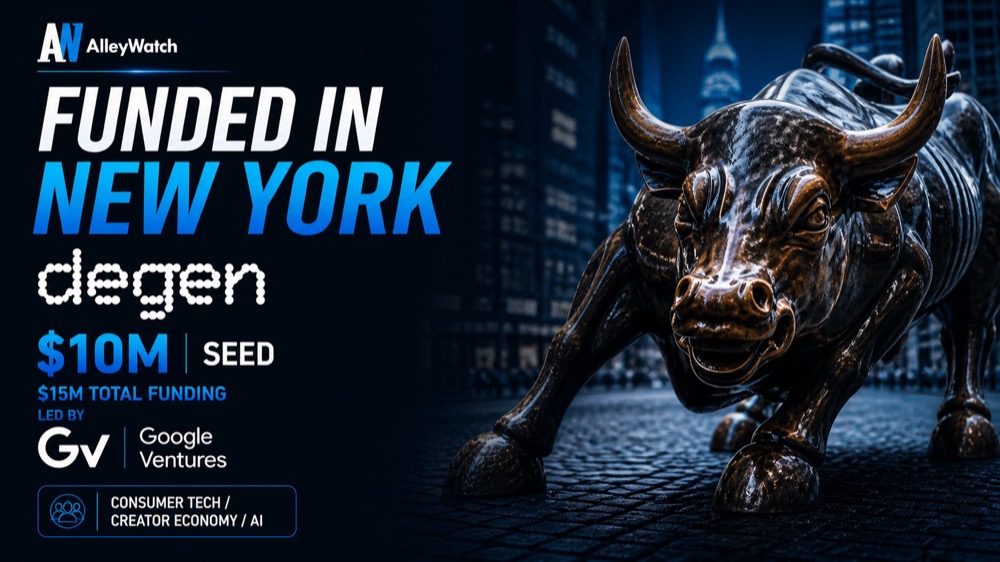
Who were your investors and how much did you raise?Mother.Tech raised $15M in pre-seed/seed funding led by Google Ventures (GV), with participation from Lerer Hippeau Ventures, Box Group, and Shine Capital.
Tell us about the product or service that Degen offers.
Degen is a one-tap AI creative engine that turns your taste into publish-ready content in seconds. The app replaces prompt engineering with “gens”—modular creative tools built by artists and designers. Users pick a generator, customize it with their own photos or text, and get professional-grade images, videos, memes, and carousels instantly. New generators drop daily, tracking what’s emerging and culturally live across the internet.
What inspired the start of Degen?The founding team and I have spent over a decade on major platforms and have seen how users were doing free labor—editing, optimizing, chasing virality—while the platforms extracted value. We left these platforms asking: what if we stopped optimizing for engagement and started building for play and creation? Degen is the app we wanted to exist. Growing up, the internet felt like a creative playground with less pressure to appear a certain way. This app opens that experience again.
How is Degen different?Degen rejects the viral content model entirely. There are no algorithmic feeds, no pressure to perform. Instead, it’s built around channels (small clusters organized by taste and aesthetics) and a usage-based creator economy where artists earn revenue every time their generator is used, so creator compensation is not based on followers, reach, or attention harvesting. Users also control their data completely and can delete everything and leave no trace.
What market does Degen target and how big is it?We’re targeting creators, artists, and internet-native users who want an easy way to create generative art and content with the latest tools – prompt free. This includes Gen Z and millennial content creators who want professional-grade AI tools without learning prompt engineering, as well as people who want to create for themselves rather than for an audience. The broader creator economy market is estimated at over $100B globally.
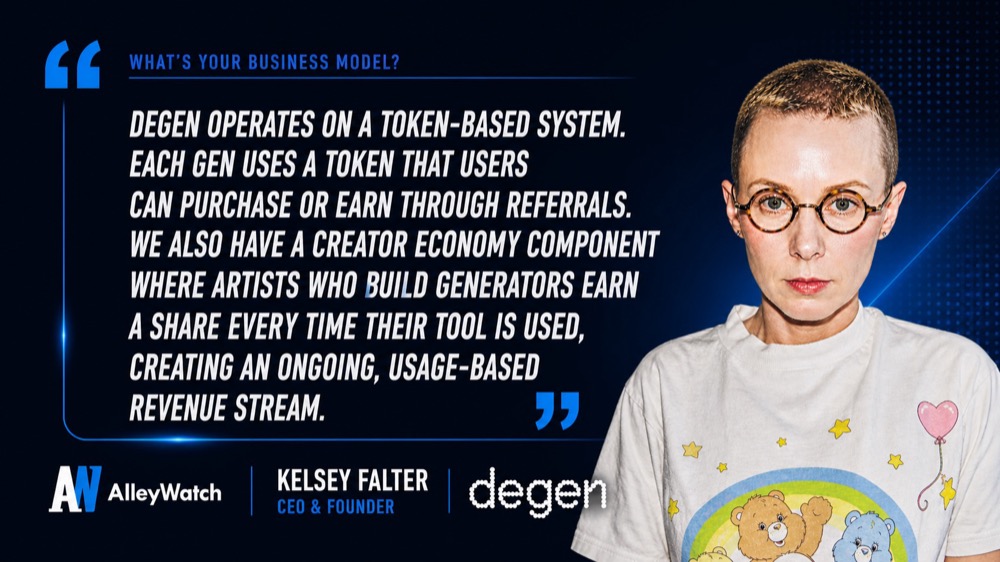
What’s your business model?Degen operates on a token-based system. Each gen uses a token that users can purchase or earn through referrals. We also have a creator economy component where artists who build generators earn a share every time their tool is used, creating an ongoing, usage-based revenue stream.
What was the funding process like?It was largely inbound. We raised from investors we’d either worked with earlier in the company’s lifespan or from my previous ventures as well as a couple inbound relationships that formed over time like with our lead Sangeen Zeb from Google Ventures. Having those existing relationships made the process much more streamlined—they already understood our vision and how we operate.
What are the biggest challenges that you faced while raising capital?It can be difficult to distill vision into something as simple as “be like water.” Sharing what you’re building externally while the product is still so nascent is an art; you have to communicate the broader thesis without over-indexing on features that will inevitably evolve. Also – when you’re pre-launch, sharing traction is something you have to figure out how to demonstrate.
What factors about your business led your investors to write the check?
Our investors saw the opportunity in our founding team’s deep platform experience and our thesis that AI doesn’t need to replicate the attention economy. We believe the next era of consumer technology should be empowering, not extractive. We aren’t outsiders guessing at what’s broken – we’ve seen the machinery from the inside and are building toward an open internet where no single entity owns the environment. That combination of insider knowledge and a clear alternative vision resonated.
What are the milestones you plan to achieve in the next six months?
We’re launching Degen publicly on May 5th after an invite-only beta. Over the next six months, we’ll expand our creator program (currently in pilot), scale our daily generator drops, and grow our community of artists building generators. We’re also continuing development of our broader product portfolio as we build MOTHER into a vertically integrated creative studio.
Where do you see the company going now over the near term?In the near term, we’re focused on the Degen launch. We want to demonstrate that people care about being on apps that prioritize play over performance. Longer term, MOTHER is building a vertically integrated studio with multiple apps, tools, and games, all built on the principle that people – not platforms – should own their data and their creative output.
What’s your favorite spring destination in and around the city?I really enjoy hanging out in this artist loft building in Bushwick, where a few good friends have their studios. There’s something special about that creative energy in the spring, especially with open studios.

You are seconds away from signing up for the hottest list in NYC Tech!
Sign up today