No Result
View All Result
  • Login
Saturday, September 5, 2026
FeeOnlyNews.com
  • Home
  • Business
  • Financial Planning
  • Personal Finance
  • Investing
  • Money
  • Economy
  • Markets
  • Stocks
  • Trading
  • Home
  • Business
  • Financial Planning
  • Personal Finance
  • Investing
  • Money
  • Economy
  • Markets
  • Stocks
  • Trading
No Result
View All Result
FeeOnlyNews.com
No Result
View All Result
Home Startups

EU’s new AI Act enforcement begins today and most startups say they aren’t ready

by FeeOnlyNews.com
6 months ago
in Startups
Reading Time: 4 mins read
A A
0
EU’s new AI Act enforcement begins today and most startups say they aren’t ready
Share on FacebookShare on TwitterShare on LInkedIn


Add Silicon Canals to your Google News feed.

February 2, 2025 was circled on every European tech founder’s calendar. Today, the first enforcement provisions of the EU’s sweeping AI Act officially go into force — and the mood across the continent’s startup ecosystem is less celebration, more scramble.

The initial phase targets what the regulation classifies as “unacceptable risk” AI systems — including social scoring, real-time biometric surveillance in public spaces, and manipulative AI designed to exploit vulnerabilities. Penalties for violations can reach €35 million or 7% of global annual turnover, whichever is higher. For a seed-stage startup, that’s not a fine. That’s an extinction event.

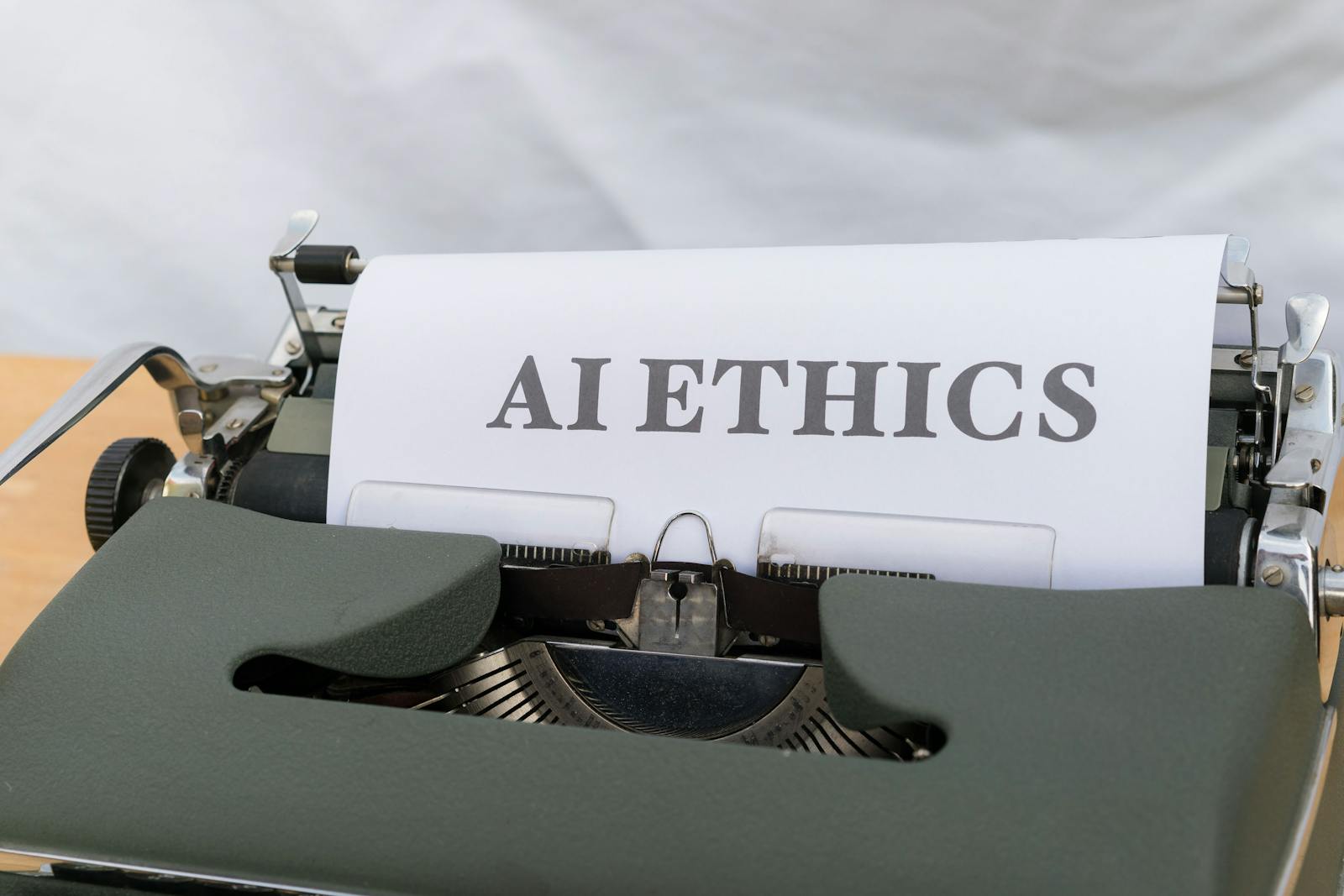
EU AI regulation startups
Photo by RDNE Stock project on Pexels

What actually changes today

The AI Act uses a tiered risk framework. Today’s enforcement covers only the top tier — prohibited practices. The heavier obligations around “high-risk” AI systems (think hiring tools, credit scoring, medical diagnostics) won’t kick in until August 2026. General-purpose AI model rules land in August 2025.

But the psychological weight of today’s date extends far beyond the banned categories. According to a survey from the European Digital SME Alliance, more than 60% of small and medium-sized tech companies say they are not adequately prepared for compliance with any phase of the AI Act. Nearly half reported that they hadn’t yet conducted a risk classification of their own AI systems — a foundational first step.

The numbers suggest a gap that isn’t just technical. It’s cognitive. Many founders built their companies in an environment where European AI regulation was theoretical. Today, it’s operational.

Why most startups say they aren’t ready

The readiness problem has three roots, and none of them are simple.

1. Regulatory ambiguity

Despite years of legislative debate, critical details remain unclear. The EU’s AI Office is still developing guidelines, codes of practice, and technical standards that will define what compliance actually looks like in practice. Startups building AI-powered products are, in many cases, trying to hit a target that’s still being drawn.

“We know what’s prohibited in theory,” one Amsterdam-based AI founder told me. “But the grey areas are enormous. Is our recommendation engine ‘manipulative’? Depends who you ask.”

2. Resource constraints

Large enterprises like SAP and Siemens have already stood up dedicated AI compliance teams. Early-stage startups don’t have that luxury. Legal counsel specialising in AI regulation is expensive and scarce. For a team of twelve burning through runway, hiring a compliance officer feels like a contradiction — you need revenue to survive, but you need compliance to operate.

3. A misaligned timeline

Startup development cycles and regulatory timelines operate on fundamentally different clocks. Products pivot quarterly. Regulations take years to draft and then arrive all at once. Several founders I spoke with described a kind of regulatory whiplash — building fast to meet market demand while simultaneously trying to decipher 144 pages of legislation that references dozens of yet-to-be-published standards.

The broader competitive anxiety

This enforcement moment arrives amid growing unease about Europe’s position in the global AI race. While EU regulators have been finalising compliance frameworks, Chinese AI companies have been shipping products at a staggering pace — the recent launch of DeepSeek’s R1 model rattled markets and prompted fresh debate about whether Europe is regulating itself into irrelevance.

That anxiety is real, but it can also be overstated. Regulation and innovation aren’t necessarily zero-sum. GDPR was predicted to cripple European tech; instead, it created a global standard and a cottage industry of privacy-tech companies. The AI Act could follow a similar trajectory — painful in the short term, strategically advantageous over time.

Still, the timing matters. With stock markets jittery amid trade tensions and geopolitical uncertainty, European AI startups face a fundraising environment where investors are already cautious. Adding regulatory uncertainty on top doesn’t help the pitch deck.

What founders can actually do right now

The situation isn’t hopeless. In fact, founders who act decisively in the next six months — before the general-purpose AI rules land in August — could turn compliance into a genuine competitive advantage. Here’s where to start.

Classify your risk tier

Before anything else, determine where your product sits in the AI Act’s risk framework. If you’re nowhere near the prohibited categories, today’s enforcement date is mostly symbolic for you — but August 2025 and August 2026 are not. The AI Act Explorer maintained by the Future of Life Institute is a practical starting point.

Document everything

The AI Act places heavy emphasis on transparency, documentation, and human oversight. Start building audit trails now — training data provenance, model decision logs, risk assessments. This isn’t just about compliance. Investors increasingly want to see governance maturity.

Join a code of practice

The EU’s AI Office is actively developing codes of practice with industry input. Participating in these consultations — or at minimum tracking their output — gives startups early visibility into what “good” looks like before the rules are finalised.

Talk to your investors

Smart VCs are already factoring regulatory readiness into due diligence. Frame compliance work not as overhead, but as de-risking. In a tightening market, that narrative matters.

The road ahead

Today’s enforcement is the beginning, not the climax. The most consequential provisions — governing high-risk systems, foundation models, and general-purpose AI — are still months away. The startups that treat this moment as a wake-up call rather than a crisis will be the ones best positioned when the full regulatory weight lands.

Europe chose to regulate AI early and comprehensively. Whether that proves to be visionary or self-defeating depends less on the law itself and more on whether the ecosystem — founders, investors, and regulators — can build the infrastructure of trust that makes the whole framework functional.

The clock started today. For most of Europe’s AI startups, the real work starts tomorrow morning.

Feature image by Markus Winkler on Pexels



Source link

Tags: ActarentbeginsenforcementEUsReadyStartupstoday
ShareTweetShare
Previous Post

Trump makes little mention of China in the longest State of the Union speech

Next Post

Lightweight Rooftop Solar PV Market: Competitive Landscape & Insights

Related Posts

Most advice on becoming happier assumes it is up to you, but the evidence is humbler: much of the variation is dispositional, the claim that 40 per cent sits within your control does not hold up, and what works best points outward, towards other people

Most advice on becoming happier assumes it is up to you, but the evidence is humbler: much of the variation is dispositional, the claim that 40 per cent sits within your control does not hold up, and what works best points outward, towards other people

by FeeOnlyNews.com
August 7, 2026
0

The advice on how to become happier is endless, confident, and mostly built on the same assumption: that your happiness...

Malachyte Raises M to Solve E-Commerce’s Biggest Blind Spot: the Visitor Who Never Logs In – AlleyWatch

Malachyte Raises $10M to Solve E-Commerce’s Biggest Blind Spot: the Visitor Who Never Logs In – AlleyWatch

by FeeOnlyNews.com
August 7, 2026
0

E-commerce brands now spend roughly 40% more to acquire each new customer than they did in 2023, yet the website...

Attraction behaves less like a fixed physical fact than a running judgement: in one study an unpleasant personality made people rate the same face as less attractive, and feeling understood by a partner is what sustains desire: the actions that destroy attraction mostly reveal character

Attraction behaves less like a fixed physical fact than a running judgement: in one study an unpleasant personality made people rate the same face as less attractive, and feeling understood by a partner is what sustains desire: the actions that destroy attraction mostly reveal character

by FeeOnlyNews.com
August 6, 2026
0

The genre of advice about killing attraction treats it as a fixed asset you can squander: be too keen, too...

How to Scale Finance and Operations Without Adding Overhead in 2026

How to Scale Finance and Operations Without Adding Overhead in 2026

by FeeOnlyNews.com
August 5, 2026
0

Adding revenue is the fun part of scaling. The operational finance work to support  it is not. Every new customer...

Why Transparency Wins Long-Term in Business: The Competitive Advantage Most Companies Ignore

Why Transparency Wins Long-Term in Business: The Competitive Advantage Most Companies Ignore

by FeeOnlyNews.com
August 5, 2026
0

When people talk about business growth, the conversation usually centers around the visible levers that naturally attract attention, such as...

The generation that came of age with answering machines, handwritten letters, and phone books isn’t nostalgic for slower technology, they remember when being unreachable for a few hours was considered normal instead of a small emergency other people had to manage around

The generation that came of age with answering machines, handwritten letters, and phone books isn’t nostalgic for slower technology, they remember when being unreachable for a few hours was considered normal instead of a small emergency other people had to manage around

by FeeOnlyNews.com
August 5, 2026
0

In 1994, an answering machine did not make a household continuously reachable. It stored a message until someone returned home...

Next Post
Lightweight Rooftop Solar PV Market: Competitive Landscape & Insights

Lightweight Rooftop Solar PV Market: Competitive Landscape & Insights

Inside Miami’s billionaire bunker, the island home of Jeff Bezos, Mark Zuckerberg, and the .01%

Inside Miami’s billionaire bunker, the island home of Jeff Bezos, Mark Zuckerberg, and the .01%

  • Trending
  • Comments
  • Latest
Bitcoin and ethereum prices today, Friday, August 7, 2026: Crypto prices moving higher following July jobs report

Bitcoin and ethereum prices today, Friday, August 7, 2026: Crypto prices moving higher following July jobs report

August 7, 2026
MEXC Lists Ondo Yield Asset As Tokenized Treasury Demand Grows

MEXC Lists Ondo Yield Asset As Tokenized Treasury Demand Grows

July 3, 2026
Delek Logistics Partners Reports alt=

Delek Logistics Partners Reports $0.54 EPS for Q2 FY26

August 5, 2026
Onkure Therapeutics Releases Q2 2026 Financial Results

Onkure Therapeutics Releases Q2 2026 Financial Results

August 4, 2026
Thryv outlines M run-rate savings while revising 2026 SaaS adjusted EBITDA to M-M (NASDAQ:THRY)

Thryv outlines $60M run-rate savings while revising 2026 SaaS adjusted EBITDA to $42M-$44M (NASDAQ:THRY)

August 4, 2026
My Thoughts on Going All In

My Thoughts on Going All In

August 4, 2026
Advanced Micro Devices (AMD) Price Prediction: How Much a ,000 Investment Could Be Worth by 2031

Advanced Micro Devices (AMD) Price Prediction: How Much a $5,000 Investment Could Be Worth by 2031

0
Cities holding up to 3 million people found under Amazon rain forest

Cities holding up to 3 million people found under Amazon rain forest

0
Republican Party Displacement | Mises Institute

Republican Party Displacement | Mises Institute

0
Bybit Uses Tokenised Equities as Underlyings for Structured Yield

Bybit Uses Tokenised Equities as Underlyings for Structured Yield

0
Explained: How BSE traded fewer contracts after CAS but premiums rose 75% in first week

Explained: How BSE traded fewer contracts after CAS but premiums rose 75% in first week

0
Vaxart outlines Phase IIb COVID-19 top line data in first half of 2027 backed by BARDA funding (OTCMKTS:VXRT)

Vaxart outlines Phase IIb COVID-19 top line data in first half of 2027 backed by BARDA funding (OTCMKTS:VXRT)

0
Advanced Micro Devices (AMD) Price Prediction: How Much a ,000 Investment Could Be Worth by 2031

Advanced Micro Devices (AMD) Price Prediction: How Much a $5,000 Investment Could Be Worth by 2031

August 8, 2026
Republican Party Displacement | Mises Institute

Republican Party Displacement | Mises Institute

August 8, 2026
Vanguard Chief Economist: AI and jobs, still in an ATM phase

Vanguard Chief Economist: AI and jobs, still in an ATM phase

August 8, 2026
Explained: How BSE traded fewer contracts after CAS but premiums rose 75% in first week

Explained: How BSE traded fewer contracts after CAS but premiums rose 75% in first week

August 8, 2026
Democrats’ Affordability Message Misses a Key Expense—Student Debt

Democrats’ Affordability Message Misses a Key Expense—Student Debt

August 8, 2026
Banks or NBFCs? DSP’s Preethi R S explains where she sees the best opportunities

Banks or NBFCs? DSP’s Preethi R S explains where she sees the best opportunities

August 8, 2026
FeeOnlyNews.com

Get the latest news and follow the coverage of Business & Financial News, Stock Market Updates, Analysis, and more from the trusted sources.

CATEGORIES

  • Business
  • Cryptocurrency
  • Economy
  • Financial Planning
  • Investing
  • Market Analysis
  • Markets
  • Money
  • Personal Finance
  • Startups
  • Stock Market
  • Trading

LATEST UPDATES

  • Advanced Micro Devices (AMD) Price Prediction: How Much a $5,000 Investment Could Be Worth by 2031
  • Republican Party Displacement | Mises Institute
  • Vanguard Chief Economist: AI and jobs, still in an ATM phase
  • Our Great Privacy Policy
  • Terms of Use, Legal Notices & Disclaimers
  • About Us
  • Contact Us

Copyright © 2022-2024 All Rights Reserved
See articles for original source and related links to external sites.

Welcome Back!

Sign In with Facebook
Sign In with Google
Sign In with Linked In
OR

Login to your account below

Forgotten Password?

Retrieve your password

Please enter your username or email address to reset your password.

Log In
No Result
View All Result
  • Home
  • Business
  • Financial Planning
  • Personal Finance
  • Investing
  • Money
  • Economy
  • Markets
  • Stocks
  • Trading

Copyright © 2022-2024 All Rights Reserved
See articles for original source and related links to external sites.