No Result
View All Result
  • Login
Monday, August 17, 2026
FeeOnlyNews.com
  • Home
  • Business
  • Financial Planning
  • Personal Finance
  • Investing
  • Money
  • Economy
  • Markets
  • Stocks
  • Trading
  • Home
  • Business
  • Financial Planning
  • Personal Finance
  • Investing
  • Money
  • Economy
  • Markets
  • Stocks
  • Trading
No Result
View All Result
FeeOnlyNews.com
No Result
View All Result
Home Personal Finance

Student loan guide: How to pay for college with federal or private loans

by FeeOnlyNews.com
3 months ago
in Personal Finance
Reading Time: 9 mins read
A A
0
Student loan guide: How to pay for college with federal or private loans
Share on FacebookShare on TwitterShare on LInkedIn


SOME CARD INFO MAY BE OUTDATED

This page includes information about these cards, currently unavailable on
NerdWallet. The information has been collected by NerdWallet and has not
been provided or reviewed by the card issuer.

Just under half of the class of 2026 high school graduates will go to a four-year college, and of those graduates over a third will take out student loan debt, according to a 2026 NerdWallet analysis of federal data. Those high school graduates entering college in fall 2026 could end up taking out an estimated $43,500 in student loans.
While prospective students can save up, apply for scholarships or choose a more affordable school, many students will end up using student loans to pay for their education.
However, the Trump administration has made changes to what loans are available for what programs, and how much students can borrow. This means that students will need to be even more aware of the fixed amount of federal loans they can take out over their lifetime, and may find they’ll increasingly need to consider private loans.

What’s important to understand about student loans?

Student loans are a type of financial aid where money is loaned to students to cover tuition, fees, living expenses and class materials. The money must be paid back with interest, usually after the borrower graduates or decides to leave school.

When borrowing student loans, students should consider exhausting the available federal loans before turning to private loans. Federal loans tend to have better interest rates and borrower protections — such as forgiveness and income-based repayment plans.

When picking a student loan, you may want to consider the following factors:

The interest rate: This determines how much you will pay on top of what you borrow, and even a small difference in rates can end up costing you thousands. The federal government sets the interest rate for federal loans, and interest rates for private loans are determined by your lender, based on your credit history and other financial factors.
The repayment length and terms: This will affect your monthly payment and overall cost of your loan. A longer repayment term can mean more interest paid overall, while a shorter term can mean higher monthly payments. 

Whether there are borrower protections in place: Borrower protections are like safety nets when life throws you a curveball: They can include income-driven repayment, deferment, forbearance and forgiveness programs. Federal loans typically have more borrower protections, including forgiveness programs, but some private loans can have deferment options.

The customer service support available to borrowers: A responsive customer service team can help you understand your repayment options and manage your loan much easier. This will likely be the team you work with for the entire repayment term of your loan.

If your program is very expensive, you may not have the luxury of choosing how much to borrow. Even so, consider capping your total borrowing at a level that keeps your payments below 10% of your projected monthly salary after graduation.

Federal vs. private loans

Federal loans are loans through the federal government, whereas private loans come from private lenders, banks or other financial institutions. To receive any federal loans, students must fill out the Free Application for Federal Student Aid (FAFSA).

Federal loans are generally better choices than most private loans because they offer:

Fixed interest rates (typically lower than private loans).

More than one repayment plan (including one that considers your income).

Loans without a specific credit score requirement.

Generally more borrower protections than private loans.

There is a maximum amount of federal loans you can borrow over your lifetime. Private loans can help you bridge the potential gap between the cost of your degree and how much federal loans will give you.

The total amount of subsidized and unsubsidized loans a dependent student (one whose family’s income is considered) can receive as an undergraduate is $31,000. For an independent student (a student who only reports their or their spouse’s income on the FAFSA) the number is $57,500. For both dependent and independent students, subsidized loans are capped at $23,000. We’ll explain the differences between subsidized and unsubsidized loans more below. In short, subsidized loans don’t accrue interest while you’re enrolled in school at least half-time or during the six months after you leave school, while unsubsidized loans do.

If you still owe more money for school after federal loans, private loans can fill the gap. For example, you can take out Direct Unsubsidized Loans for graduate school, but the amount you can borrow is limited and may not cover the cost of your graduate program. That’s where private lenders come in.

Whether or not you are approved for a private loan, and what interest rate you can get, will depend on your creditworthiness, income and debt levels. A private loan application will typically involve a credit check.

Types of student loans side-by-side

Compare the types of student loans below.

Direct Subsidized Loans

Direct Unsubsidized Loans

Parent PLUS Loans

Private student loans

Federal loan.

Federal loan.

Federal loan.

Private lender.

For undergraduate students with financial need.

For undergraduate and graduate students.

For biological or adoptive parents of dependent undergraduate students.

All students eligible, credit check usually involved in application.

Maximum borrowing of $23,000.

Borrow up to $31,000 for dependent students and $57,500 for independent students.

$20,000 annual borrowing cap and a $65,000 lifetime borrowing cap per dependent student.

Check with the lender, but usually a private student loan is up to the cost of attendance.

No credit check required.

No credit check required.

Credit check required, endorser option available.

Credit-dependent, co-signer option available.

Access to income-drive repayment, deferment, forbearance and forgiveness programs.

Access to income-driven repayment, deferment, forbearance and forgiveness programs.

Some access to income-driven plans, some federal protections.

Repayment flexibility and protections vary by lender.

Borrower doesn’t have to pay interest while in school.

Interest accrues immediately.

Interest accrues immediately and parent borrower responsible.

Usually interest accrues immediately.

Subsidized vs. unsubsidized loans

The two main types of federal loans available to students are Direct Subsidized Loans and Direct Unsubsidized Loans. Your college will determine how much you will receive of these loans based on the cost of attendance, other financial aid you might have received, and your FAFSA. With both unsubsidized and subsidized federal loans, payments won’t begin until six months after you graduate or leave college.

Direct Subsidized Loans are available to students with financial need: the difference between what you or your family can pay for college and the cost of college, as determined by your FAFSA. Interest on these loans won’t be charged while you are in school or during deferment periods (a temporary period of no or lower payments due to illness, additional education like graduate school, military service or unemployment).

It is best to maximize the amount of subsidized loans you take out before you consider other loans, because these loans usually accrue the least amount of interest.

If you are borrowing federal student loans for a graduate degree program, you are not eligible for subsidized loans.

With Direct Unsubsidized Loans, interest is charged and added to the principal even when you are in school. This means that interest starts accruing — and your loan debt starts growing — as soon as the loan reaches your college. If you pay the interest while you’re in school, then your loan amount won’t increase.

You may have also seen the term Stafford Loan thrown around. Stafford Loan is the former name of what is now known as Direct Subsidized and Direct Unsubsidized Loans.

What are parent PLUS loans?

Parent PLUS loans are offered through the federal government, have fixed interest rates, are eligible for forgiveness and have an income-driven repayment option.

They are an option for parents of undergraduate students to pay for their dependent child’s education. Students must be enrolled at least part time.

As a general rule of thumb, Parent PLUS loans should be considered after all other federal loan options are exhausted. They can be a good option for parents who:

Want a loan that will have a death and disability discharge for the parent borrower.

Can’t qualify for a private loan with a lower interest rate.

Parents looking to borrow a PLUS loan will face restrictions. Loans borrowed on or after July 1, 2026, will have a $20,000 annual cap and a $65,000 lifetime cap per dependent student.
If you’re a parent who has a PLUS loan and you default on the loan, the government can withhold part of your paycheck, social security check or tax refund. You will need to complete a credit check as part of your PLUS loan application.

How to apply for federal student loans

To apply for a federal student loan, you will need to complete the FAFSA. The federal government will send a copy of your FAFSA to each of the schools you apply to, and the financial aid office at the school will then determine your financial aid package. The details of your package will come to you in the form of a financial aid letter that will explain all the aid you are eligible for — including federal loans, grants and scholarships — and how much aid you’ll receive in each.

🤓 Nerdy Tip

You will need to complete the FAFSA every year you’re in school if you want to receive federal and state grants, scholarships and loans. You will never be asked to pay to complete the FAFSA.

It’s recommended you accept all grants and scholarships before accepting loans because you won’t have to pay back the free aid. If you want to accept federal loans, you will then sign a master promissory note outlining the terms of the loan and your agreement to repay it. You will also likely need to complete an online loan counseling session.

You can accept or reject any part of your financial aid package. It’s entirely up to you and what best meets your needs. When it comes to loans, it’s smart to only accept what you need to pay for college.

Student loans for nontraditional students or programs

There are loans available for students who are attending part time, community college or trade school. However, you may have more limited options depending on the program you enroll in.

If your program is accredited and eligible for federal aid, you could be able to use federal student loans to pay for trade school or community college. You can search for accredited programs on the U.S. Department of Education’s Office of Postsecondary Education (OPE) website.

You must be enrolled at least part time in your program to be eligible for federal loans. If you are enrolled less than part time, you will only be eligible for private loans.

Private lenders like Sallie Mae and Ascent offer loans for trade school or community college. Loans can cover the cost of the program and related expenses.

If you are an international student, you also are only eligible for private loans, which may require you to have an American co-signer with good credit. Deferred Action for Childhood Arrivals, or DACA, students are not eligible for federal student loans, but can be eligible for private, state and institutional loans.

Reach out to your program’s financial aid office if you have any questions about what loans you might be eligible for. No matter your program, if you want access to any federal financial aid you will need to complete the FAFSA.


About the author



Source link

Tags: collegefederalGuideloanloansPayprivatestudent
ShareTweetShare
Previous Post

May’s Big Money Questions: Emergency Savings, Bonuses and More

Next Post

America’s productivity boom predates AI and work from home is the reason why says Stanford economist

Related Posts

Hanes Kids’ Sock 20-Packs and Underwear 12-Packs only .50 each, plus more!

Hanes Kids’ Sock 20-Packs and Underwear 12-Packs only $7.50 each, plus more!

by FeeOnlyNews.com
August 7, 2026
0

Published: by Sarah on August 7, 2026  |  This post may contain affiliate links. Read my disclosure policy here. Score great prices...

Comforter 8-Piece Sets with Sheets as low as .93 at Macy’s! {All Sizes}

Comforter 8-Piece Sets with Sheets as low as $29.93 at Macy’s! {All Sizes}

by FeeOnlyNews.com
August 7, 2026
0

Home » Deals » Comforter 8-Piece Sets with Sheets as low as $29.93 at Macy’s! {All Sizes} Published: by Sarah...

Mortgage Rates Today, Friday, August 7: Higher for Now

Mortgage Rates Today, Friday, August 7: Higher for Now

by FeeOnlyNews.com
August 7, 2026
0

Mortgage rates are a little higher this morning, but are likely to soften on the heels of a lackluster jobs...

What You Can Learn From the Nerds’ Home Improvement Projects

What You Can Learn From the Nerds’ Home Improvement Projects

by FeeOnlyNews.com
August 6, 2026
0

Do you have a home improvement project on your to-do list? You might have a deck to build or a...

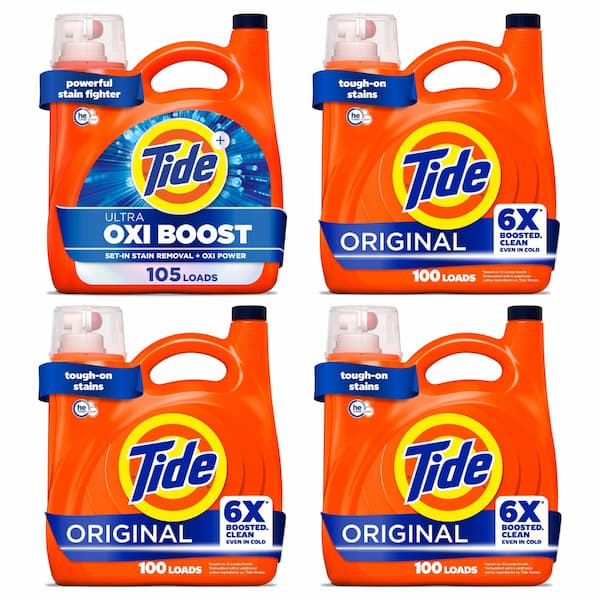
FOUR Big Tide Laundry Detergents for only .72 each, shipped (Plus, Tide Pods deal)!

FOUR Big Tide Laundry Detergents for only $10.72 each, shipped (Plus, Tide Pods deal)!

by FeeOnlyNews.com
August 6, 2026
0

Home » Deals » FOUR Big Tide Laundry Detergents for only $10.72 each, shipped (Plus, Tide Pods deal)! Published: by...

Mortgage Rates Flatten, but They’re Already Higher Than July’s Average

Mortgage Rates Flatten, but They’re Already Higher Than July’s Average

by FeeOnlyNews.com
August 6, 2026
0

In the first week of August, the average 30-year mortgage rate stayed mostly flat at 6.63% APR. This is three...

Next Post
America’s productivity boom predates AI and work from home is the reason why says Stanford economist

America's productivity boom predates AI and work from home is the reason why says Stanford economist

Berkshire Hathaway returns to airlines with .6 billion stake in Delta Air Lines

Berkshire Hathaway returns to airlines with $2.6 billion stake in Delta Air Lines

  • Trending
  • Comments
  • Latest
Coffee Break: Armed Madhouse – From Spy Satellites to Peace Satellites

Coffee Break: Armed Madhouse – From Spy Satellites to Peace Satellites

July 7, 2026
US prosecutors examine LA Dodgers owner Mark Walter-linked insurers – report

US prosecutors examine LA Dodgers owner Mark Walter-linked insurers – report

July 21, 2026
Teachers’ Unions Shell Out More Than  Billion on Politics

Teachers’ Unions Shell Out More Than $1 Billion on Politics

May 14, 2026
Why did a 4 billion CEO just endorse stripping most Americans of voting rights?

Why did a $154 billion CEO just endorse stripping most Americans of voting rights?

July 27, 2026
Product-Market Fit Expires Every 90 Days. Here’s What to Do About It.

Product-Market Fit Expires Every 90 Days. Here’s What to Do About It.

July 15, 2026
Bond Vet and Small Door Merge to Form One of the Nation’s Largest Premium Veterinary Networks – AlleyWatch

Bond Vet and Small Door Merge to Form One of the Nation’s Largest Premium Veterinary Networks – AlleyWatch

July 9, 2026
Advanced Micro Devices (AMD) Price Prediction: How Much a ,000 Investment Could Be Worth by 2031

Advanced Micro Devices (AMD) Price Prediction: How Much a $5,000 Investment Could Be Worth by 2031

0
Cities holding up to 3 million people found under Amazon rain forest

Cities holding up to 3 million people found under Amazon rain forest

0
Republican Party Displacement | Mises Institute

Republican Party Displacement | Mises Institute

0
Bybit Uses Tokenised Equities as Underlyings for Structured Yield

Bybit Uses Tokenised Equities as Underlyings for Structured Yield

0
Explained: How BSE traded fewer contracts after CAS but premiums rose 75% in first week

Explained: How BSE traded fewer contracts after CAS but premiums rose 75% in first week

0
Vaxart outlines Phase IIb COVID-19 top line data in first half of 2027 backed by BARDA funding (OTCMKTS:VXRT)

Vaxart outlines Phase IIb COVID-19 top line data in first half of 2027 backed by BARDA funding (OTCMKTS:VXRT)

0
Advanced Micro Devices (AMD) Price Prediction: How Much a ,000 Investment Could Be Worth by 2031

Advanced Micro Devices (AMD) Price Prediction: How Much a $5,000 Investment Could Be Worth by 2031

August 8, 2026
Republican Party Displacement | Mises Institute

Republican Party Displacement | Mises Institute

August 8, 2026
Vanguard Chief Economist: AI and jobs, still in an ATM phase

Vanguard Chief Economist: AI and jobs, still in an ATM phase

August 8, 2026
Explained: How BSE traded fewer contracts after CAS but premiums rose 75% in first week

Explained: How BSE traded fewer contracts after CAS but premiums rose 75% in first week

August 8, 2026
Democrats’ Affordability Message Misses a Key Expense—Student Debt

Democrats’ Affordability Message Misses a Key Expense—Student Debt

August 8, 2026
Banks or NBFCs? DSP’s Preethi R S explains where she sees the best opportunities

Banks or NBFCs? DSP’s Preethi R S explains where she sees the best opportunities

August 8, 2026
FeeOnlyNews.com

Get the latest news and follow the coverage of Business & Financial News, Stock Market Updates, Analysis, and more from the trusted sources.

CATEGORIES

  • Business
  • Cryptocurrency
  • Economy
  • Financial Planning
  • Investing
  • Market Analysis
  • Markets
  • Money
  • Personal Finance
  • Startups
  • Stock Market
  • Trading

LATEST UPDATES

  • Advanced Micro Devices (AMD) Price Prediction: How Much a $5,000 Investment Could Be Worth by 2031
  • Republican Party Displacement | Mises Institute
  • Vanguard Chief Economist: AI and jobs, still in an ATM phase
  • Our Great Privacy Policy
  • Terms of Use, Legal Notices & Disclaimers
  • About Us
  • Contact Us

Copyright © 2022-2024 All Rights Reserved
See articles for original source and related links to external sites.

Welcome Back!

Sign In with Facebook
Sign In with Google
Sign In with Linked In
OR

Login to your account below

Forgotten Password?

Retrieve your password

Please enter your username or email address to reset your password.

Log In
No Result
View All Result
  • Home
  • Business
  • Financial Planning
  • Personal Finance
  • Investing
  • Money
  • Economy
  • Markets
  • Stocks
  • Trading

Copyright © 2022-2024 All Rights Reserved
See articles for original source and related links to external sites.