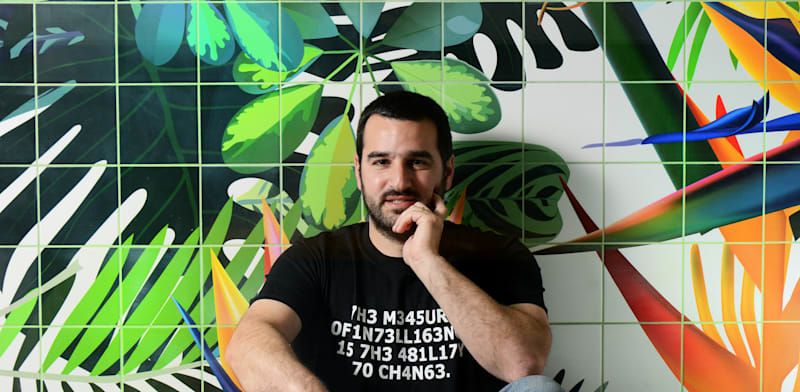
Before building an entire real estate portfolio, Matthew Garland was laid off from the TSA. He went from searching for contraband in your suitcase to searching for jobs ASAP. He had no degree, no office job experience, but he was good at connecting with people.
He got a job as a loan officer and was making money hand over fist. Then the market crashed, his savings dwindled, his credit score plummeted, and he even got foreclosed on. It was time to build something real. That’s when a rich client of his introduced him to the “wealth hack” that helped him rebuild his life through rental properties.
Now, you probably know Matthew as MG the Mortgage Guy, sharing as many insider lending secrets as possible so you can buy your next property. In this episode, he’s doing the same, telling YOU how to get preapproved now, what you need to get a lender to take you seriously on your first deal, and how he rebuilt his life, one property at a time.
If you think you can’t build a real estate portfolio because you’re starting from zero, MG will show you how to get ahead and into your first deal, even if you feel way behind the starting line.
Henry (00:00):If you want to buy rental property but think you can’t, you need to hear this episode. Before building an entire real estate portfolio, Matthew Garland was laid off from the TSA. He went from looking for contraband in your suitcase to looking for a job real quick. He didn’t have a degree, he didn’t have office experience, but what he did have was he was great at connecting with people. So he got a job as a loan officer and he was making money handover fist, but then the 2008 market crash happened and his savings dwindled. His credit fell off a cliff and he even had to deal with the foreclosure. It was time to build something real and that’s when a wealthy client of his introduced him to a wealth hack that allowed him to rebuild his life with rental properties. Now you probably know Matt as MG the mortgage guy who’s been sharing many insider lending secrets as possible so that you can buy your next property.
Henry (00:56):In this episode, he’s doing the exact same thing telling you how you can get pre-approved now what you need to do to get a lender to take you seriously on your first deal and how he rebuilt his life one property at a time. Ready to get in the property game as MG says, slow motion beats no motion. So what are you waiting for?
Henry (01:21):What’s going on everybody? I am Henry Washington, co-host of the BiggerPockets Real Estate Podcast. And today I am excited because we have Matthew Garland, a. K.a. MG the mortgage guy ready to share some amazing information with you. So let’s bring him on. Matthew Garland, welcome to the show.
Matthew (01:40):My brother Henry Washington, what’s going on, bro? How you feeling today?
Henry (01:43):I’m feeling fantastic, man. So good to have you. Look, I want to jump in and talk about your story because I know a lot of people know who you are, but not everybody on our side of the fence in this audience might not know who we’re talking to here. But before you jump into that, I need a good old MG the mortgage guy video introduction.
Matthew (02:05):So this is Matt Garland, NMLS number 58700. I’m better known as MG, the mortgage guy. We are live, we are blessed. Thank God for another day. Let’s grow. I
Henry (02:16):Appreciate that. All right, MG. So tell everybody what your background was and how you got into real estate in the first place.
Matthew (02:24):So I like to say nothing happens by accident. I think everything happens in God’s divine timing. So my best friend who’s now a pastor, a shout out to my brother Philip Anthony Mitchell, this was back in 2003. I just got laid off of TSA. I was probably one of the first people that were hired, probably the first couple classes that was hired for TSA right after nine eleven.
Henry (02:51):Wow. Wow.
Matthew (02:51):And I did that for like a year and I got laid off because of quote unquote budget cuts. We’ll leave that there. And I was home. I was in Queens. I was feeling a little down and I was speaking to my brother like, “Yo, man, I got a new girl. I need some money, man. I need to figure this out. ” And I’m not trying to hit the block or nothing like that. I’m not trying to take this to the streets or nothing. I need to figure this out. I’m a college dropout. So one day I was speaking to him and he was like, “Yo, you should get into the mortgage business.” I said, “What’s a mortgage?” He was like, “When people want to buy a house, they go see a loan officer.” I said, “A loan officer.” I said, “Bro, we from Queensland. I’m not trying to be a cop.” He’s like, “No, bro.
Matthew (03:41):No.” He was like, “The loan officer is the one at the bank who gives the people the mortgage or the loan so they could buy a house.” So I said, “You know what? Let me just start calling people, sending my resume.” And I sent it to 10 companies, three of them called me back right away for interviews. I went on interviews with all three and immediately I started negotiating comp plans and I didn’t even know what a comp plan was. I know I could get more. Because I know the first offer’s never the best offer. I knew that back then, you know what I’m saying? And that’s kind of like how I got into the business. I got into the business just because of what my best friend had told me and I never looked back. And it was just one of these things as when I got into the business.
Matthew (04:25):Now mind you, this was the Wild Cowboy days, right? This is pre-08. So I’m not new to this. I’m true to this. Oh,
Henry (04:30):So y’all was slanging mortgages
Matthew (04:31):Back then. I’m probably probably one of the reasons why the market crashed. I ain’t going to hold you,
Henry (04:37):Bro.
Matthew (04:38):Yo, I’m not even going to lie to you. Throwing money at people. Bro, if you had a post and a heartbeat, you could get a loan. That’s just how it was. And you got to understand, I’m from Queens, New York. I was working in Long Island. Anybody from New York could tell you that Long Island is where there was a lot of financial firms, a lot of Wall Streeters who didn’t make it on Wall Street. They opened up shops in Long Island because it was a little bit cheaper rent wise and you didn’t have the top talent like Wall Street in Manhattan had, but you still had good salespeople. I was trained like a killer in this business. We had the smile and dial. There was really no technology at this time. There was no social media. There was no such thing as content. It was either you smiling or dialing or you out
Henry (05:26):There. Yeah. This was pre-dialer. So there wasn’t no calling 13 numbers at a time and you take the
Matthew (05:31):Money. No, this was no predictive, bro. There was no predictive dollars. There was no power dollars. There was literally pick up the phone that had a cord to it, you know what I’m saying? Plugged in the wall and everybody had their own phone. And then when you really got some money, you bought the headphones. That’s when you knew you was making money. You could buy the headphones with the mouthpiece and you could talk and you could stand up at your desk and talk a little bit. That’s who you knew was making money because those headphones used to cost like a thousand dollars. So that was my era. Literally smiling and dialing. If you ain’t making calls, you ain’t making no money. That phone is your cash register. And we were just crushing it, bro. It was good times.
Henry (06:14):Yeah, I can imagine it was. But I’d imagine too, you also probably learned a lot about the real estate business in general. Did you start to buy properties back then or was that post crash?
Matthew (06:27):No, it was before the crash. So when I got into everything, started dibbling, dabbling and buying because it just was so easy. I’m in my 20s now, you start buying properties and you don’t really know what you’re doing in all honesty, because it’s not like how it is today, guys. How we have it today, I think the market today is so much better, especially starting off new because there’s so much education that you can learn from. Whereas let’s face it, Henry, people who look like me and you wasn’t really in real estate. And the people who were in the business at that time, from my experience, they wasn’t trying to teach me anything about real estate. They just saw a young, hungry kid. Let me see if I can get this kid to work under my team or be a part of what I’m doing so he can make me some money.
Matthew (07:12):So when I started buying real estate, it wasn’t like I’m out here. I’m going to be a super investor. I didn’t even really even understood what that really meant. It was just like, okay, I could go buy a property. Fun. I could get 100% financing. And it was not a no doc, but it was like a light dock type of loan. So I didn’t even really need the pay stubs and all that stuff like we needed now. It was all subprime lending. So that’s how I brought my first house is using like 80, 20 strategies and then just did that a couple times, but I didn’t know what I was doing. I partnered up with a couple people and it was just like, all right, this is pretty easy. People paying rent, but I was so focused on the mortgage side because I saw I can make so much more money, not just buying the properties, but just lending the money, just being the loan officer.
Matthew (08:09):So by the time I looked up before the crash, I’m at a couple properties. I’m making two, three, $400,000 a year. I’m in my 20s. I don’t know what the hell is going on. I’m just like, yo, money’s falling off trees in my opinion.This is great. This is America. Holy smokes. This is amazing. And then I’ll never forget this. This guy in my company, he told me, he’s like, “Yo, you’re moving too fast. You need to start saving your money.” And I was like, “What? Save money for what? When I can go spend 20 and I make 20 in the next two weeks.” 20,000 back then may not sound like a lot, but 20,000 back then was probably like 50, $60,000 now. So for me, I didn’t understand the economics of the mortgage business because again, no one taught me. They just taught me how to go out here and close and make more money.
Matthew (09:06):You lose a deal, replace it with two more. So when the market crashed, I had a couple properties and the overhead was just the money was going out, but the money wasn’t coming in.
Henry (09:19):I got caught in it too. I bought my very first … I had never bought anything before. I bought my very first condo in late 2006. I was so worried about this whole process of buying a house. I couldn’t believe how fast they approved me to buy a house. I bought that house, brand new condominium complex. They were building them. I bought it in the second building, but the whole complex had like nine buildings planned to be built.
Matthew (09:44):Wow.
Henry (09:45):So the crash happened in 2008. I tried to sell my unit, but they were now selling brand new units
Matthew (09:51):For
Henry (09:51):20, 30 grand less than what I
Matthew (09:53):Bought mine
Henry (09:54):For. So I ended up getting … I was holding the bag on my first property all through. I had no idea what was happening, but the ball dropped quickly.
Matthew (10:01):It was like overnight almost. On every news channel, there was nothing but doom and gloom. So now I’m going through my own depression. I went through foreclosures myself, short sales. It was like, wait a minute, no one prepares you for this side of the thing. I mean, it got really bad for me, but I think that was the greatest thing that ever happened to me in my career because one, it showed me when I’m in an industry that damn near bankrupt the whole world. That’s when I knew this is the industry that I need to be in because if this industry has that much power, it’s not just about you buying a house. You got to look at how many businesses and corporations are tied into just one person buying a house. Man,
Henry (10:49):Man, I say this all the time. I love
Matthew (10:50):It. Think about that. It’s so many different businesses. The economics behind home buying is beyond what we thought 20 years ago. I had no clue that the mortgages people foreclosing could bankrupt the world and this many banks could go out of business. So one, it taught me that this business, I need to really learn and study this business because if I do, I can be well off. Number two, what I learned is because of this business, I can’t go get a regular job. Those days are done. Henry, I tried.
Henry (11:27):You got
Matthew (11:27):Spoiled. I know, but I tried because look, I’m losing everything. I have two small kids at this time and I’m like, “Yo, my ex is telling me, yo, you got to do something.” Riding around in a 750 LI with barely gas money in your pocket with a $2,000 customer suit ain’t keeping food in this house. So you got to do something. And I tried, bro. I tried to go to these companies, sales companies, but when they was trying to offer me minimum wage, barely above minimum wage, I’m like, “Yo, I’m just coming off of making 20, 30,000 a month. I can’t work for minimum wage. I got to stick this out. ” So it taught me you got to just no matter good, bad or ugly, if you’re doing something that you feel passionate about and you know you can make money, it’s not about the short term, you got to ride through the season of it.
Matthew (12:21):And to me, that crash was a season. It was maybe two years that the whole economy was kind of messed up. But then when President Obama got elected and they came in and they had all of these bailouts and all these different things that they started doing to stabilize the economy, I said, “Okay, I got to just survive.” And the third best thing that I learned for this, sometimes you got to take two steps backwards to move 10 steps forward. So what I did was I took a pay cut and I wound up getting a job, but I stayed in the industry and I got a job for JPMorgan Chase and I became a loan officer for them because they started recruiting heavy during this time. And that also showed me too, when there’s crisis, there’s opportunities, right? If you’re positioned well, you can take advantage in the crisis.
Matthew (13:12):JP Morgan was positioned well at that time and they still was hiring loan officers while people were still laying off. And then when I got with JPMorgan Chase, that was probably one of the best things that happened to me in my career because they taught me how to deepen the relationship with the customer. They taught me about customer service. They taught me about how to work with referral partners. So working for them, honestly, I tell people this all the time and this is why I have no problem shouting them out and when I have these conversations about my past is that that was like me getting my MBA in mortgage banking. It’s like that four years that I spent there really, really reshaped my whole entire way of thinking of working and how to be a real professional in this business, but also it taught me a lot of wealth hacks.
Matthew (14:00):See, two of my years of working at JP Morgan I spent on Wall Street and that’s when I learned house hacking because one of my clients there, they were buying a multifamily house and I’ve done plenty of multifamily loans at this time, but when I looked at his income, I’m like, “This guy’s making six, 700,000. Why is he buying a multifamily when he could just go buy the big house with the picket fence and all this other stuff?” And he told me, “Well, I’m going to live here for a year or two, have rental cover it and then I’m going to move out and keep renting it and keep repeating the process.” He was like, “Yeah, I’m hacking it. ” And I said, “Oh, house hacking.” I said, “I’ve never heard that before.” And I said, “Wait a minute. The way they’re doing it is completely different than how our people are doing it.
Matthew (14:45):”
Henry (14:45):When I first learned about house hacking, what really sold me on it, because I did a house hack for one of my first rental properties, but the thing that sells me on it is what people don’t understand is if your goal is to buy an investment property anyway, you’re spending so much more money if you buy the personal house first and then go buy the duplex.
Matthew (15:07):But
Henry (15:07):Just by switching it around and buying the duplex first with the low down payment loan, you live in it and then you go buy the personal home, you save anywhere between … I mean, it depends on the market you’re in, but you literally save tens of thousands of dollars because if you do it the original way, the way we’re all taught, go buy your personal house and then if you want to invest, you go buy something, but now you’re putting 20, 25% down,
Matthew (15:29):Do
Henry (15:29):It the other way around, you’re putting 3.5% down to 5% down each time that keeps so much more money in your pocket for the exact same two houses and
Matthew (15:40):That’s just
Henry (15:40):Not something that’s taught to people. You have to go seek that information out. MG, I want to hear more about your house hacking journey and how that led you into A, building more of a real estate portfolio post crash via the lessons that you’ve learned and B, how that helped shape who you are as a content creator and why you create the content that you do, but we’ll get into that right after this break. All right. We are back on the BiggerPockets podcast. I’m here with my friend MG the mortgage eye. We’re talking about his history, talking about lessons learned through the real estate crash and how that helped shaped who he is as his investor and who he is as a teacher and essentially what his investment career looks like now. So MG, we’re talking about you learning about house hacking. It sounds like you put that strategy to use.
Henry (16:33):What’d that look like?
Matthew (16:34):At this time, there wasn’t like a lot of the strategies where you have where you can do like, oh, no money down, you could do sub two finance. And there wasn’t a lot of that stuff. So once I decided to get back into it, it was more from a partnership perspective because then I started looking at, and what I’ve learned with working on Wall Street and then after that is like you don’t have to be a hundred percent owner of anything. When you grow up, when you have siblings, you’re in the hood, you just want to get out the hood. You just want to have everything on your own. So what I really leaned on was, you know what, let me create more of a buffer for myself so that way I’m not putting myself in harm’s way 100%. Now I have people that I trust that are doing this so I can learn and let me just see if they need more capital because now as I’m rebuilding my credit and rebuilding my business, now I have a couple dollars.
Matthew (17:31):Can I get on this deal for 25%? Can I get on this deal for 35%? And some of the properties that I own still to this day, I have 35, 40%, 25% ownership, but we purchased them 10 years ago and now the equity and those properties are absolutely out of this world. And you’re talking about buying multifamilies in New York for 500, 550,000 and in those same neighborhoods these properties are now selling for 1.2, 1.3, 1.4 million, but I don’t own 100% of them. I have good partners that were experienced partners that just needed more capital at the time and I had the capital but didn’t necessarily have the credit. So that’s how I got back in the game of investing was to partner up while I rebuild myself my credit and got the confidence to why I felt like, you know what? I can do some deals on my own and be 100%.
Matthew (18:30):And then also at the same time, now I can help more people because now I don’t feel like I have the stress of me doing something on my own.
Henry (18:38):I think that that’s important to share too because yes, we’re talking about, I’m sure some of that played, you got some PTSD from the 2008. Absolutely. 100%. You learn some lessons, you don’t want to repeat those lessons, but there’s a lot of people sitting at home listening to this right now who didn’t go through 2008, but they may be sitting in a situation where their credit’s not where they want it to be. Their finances aren’t where they want it to be and that doesn’t have to stop you from actively investing. I think this is the best time I’ve seen in a long time to get into the real estate market. You said it earlier, right? There’s opportunity in chaos. There’s opportunity when problems come. And a lot of people right now would tell you that there’s chaos and some problems and some opportunity out there to make money.
Henry (19:24):And if you feel like, ma, I don’t have what it takes, listen to MG story because there are other people, other investors who you can partner with who can help you get in the game while you rebuild yourself. This doesn’t have to be a all me or all nothing. And don’t be surprised. A lot of these people that you see out here on social media talking about all these doors they got, they only own percentages of them anyway. There is nothing wrong with partnering. You just have to be smart about who you partner with and about what it is that you each bring to the table.
Matthew (19:56):100%, bro. Even there’s deals that I was able to be a part of, bro, where I didn’t have no money in the deal, but I still had equity in the percentage of the business because I understood the mechanics of financing and funding and finding those deals and that was my role in the company. So what I try to tell people all the time, you don’t need to be the person with the cash. If you know how to operate, right sometimes you can put yourself in a position to still get equity a part of a company because you know how to operate a certain thing better than the other partners can. And that’s your superpower, that’s your skillset. And that’s why even for me, MG the mortgage guys, my name on all social platforms. I focus on the financing aspect because that is my superpower. That is my gift.
Matthew (20:41):And now even to this day, bro, I’m able to get into partnerships and to deals just because I operate at the highest level possible in my space. So my message to everybody watching this, like Henry said, if you don’t have the capital, you don’t have the money, you don’t have this, learn how to operate, learn the game. That’s why BiggerPockets is around. This channel has been around for years teaching, showing you so many different strategies, this, that, and third. Go to the conferences, go to the meetups, join the programs, right? Really learn because if you learn how to operate, you can get yourself in deals and still make a lot of money. You don’t need to be 100% owner of anything.
Henry (21:21):Absolutely. So I want to jump into how or why you started creating content as it relates to helping people learn how to buy houses, but also just education and real estate space in general. But I want to wrap up about your portfolio. So is the majority of your portfolio now partnership deals and are you still acquiring assets or are you just kind of sitting on what you have?
Matthew (21:41):I’m sitting right now. I’m waiting for a couple things to finish on my end that I’m working on in from the rehabs and stuff like that because I got a couple of things going, including my new primary residence that’s just been a pain in my ass. I saw when
Henry (21:54):You started that a few years
Matthew (21:55):Back, you’re
Henry (21:56):Still going, huh?
Matthew (21:57):Yeah, it’s still going. It’s a pain in my ass. It’s a pain in eyes, but God willing, it’s going to be up. It’s going to be finished this year so I can really move on to other things. But yeah, so a majority of what I have is partnerships. A couple of the properties that I have is I’m majority owner in them, but a lot of them, I’m anywhere, like I said, between 25 and 40% and it works out perfectly for me and I’m fine. Acquiring over the past couple years, I’ve invested into flips. I don’t have time to be the guy who’s on the boots on the ground. So with the content, it’s a great thing because when you speak into the algorithm, I tell people all the time, the algorithm is your number one referral partner. Whatever I put in the algorithm, she’s going to bring it back to me.
Matthew (22:40):So there’s deals that come across my desk all the time where I see investors out here doing fix and flips and I like, yo, I like these numbers on the deal. I got this amount of money to be 25, 30% owner on this flip. And then I start joint ventures. That’s how I keep my money flowing too. I’m still involved in the deal, but I don’t have to do the everyday grunt work. I’m either your bank because I’m lending you money or I’m being JV partner and I’m bringing certain resources and everything like that that I have access to, to the game. So still investing, but just doing it a little bit smarter with limiting my exposure so that way I can keep myself free for when I see something that comes up that I really want for me that I’m going to do. But the reason why I put out content, Henry, just to get to that is I’m a loan originator.
Matthew (23:29):That’s my bread and butter. I like to close deals. I like to help people achieve their real estate goals. So social media for me was a way for me to get leads and to get business and it grew into something far greater than I didn’t even think it would grow into, where now it brings me so much other things, but that was why I got into the business of social media and creating content was to feed my mortgage business. But then I’ll tell you guys, it flipped quickly because I realized putting out content as a salesperson is not going to get you nowhere. I think that’s the biggest problem that salespeople have is that they want to result today. They want to sell today or it’s not worth it. I used to be that person. If I put out a video and I’m selling a sales year, I’m expecting results.
Matthew (24:16):And that was not the thing. When I got into just becoming an educator and becoming professor MG and now teaching you about this business and teaching you- There
Henry (24:26):We
Matthew (24:27):Go. … about real estate financing and giving you the ABCs and the one, two, threes, that’s when my page started blowing up is because now I’ve realized with the content that how many people don’t know this stuff and I’m thinking people know this and they really don’t. Even to this day when I put out content, I remember like, I’m surprised people still don’t know this even with all this information that’s out here, but that’s what really got me into it and now I’m more of an educator than anything and I love it.
Henry (24:56):What I love about MG’s content, y’all, if you’ve never listened to him, go listen to him because when he speaks, he speaks from a place of I am trying to help you. That’s the vibe you get when you’re on his page. You don’t get a vibe of I’m trying to sell you, you don’t get a vibe of I’m trying to make a buck. You get a vibe of, this is information that I need you to know and understand so that you can go out and better yourself in your life. And I started producing ContentMG because I had a panic attack 90 days before I bought my first rental property. I didn’t know how I was going to take care of my family financially and then 90 days later I owned a rental property. I had bad credit. I didn’t have any money. I bought it with none of my own money out of my pocket.
Henry (25:41):It was cash flowing, it was paying for itself and it was paying me. And then the bank called me and told me to take out a line of credit on the equity so they could help me do more deals in the future. And after they had to explain to me what a line of credit meant, I realized I was staring at $30,000 in the face and to go from panic attack about money to realizing that I now have access to $30,000 plus a cash flow rental property was so mind blown to me that I didn’t feel like God led me down this path of learning about real estate so I could be wealthy. I knew I was led down this path because there’s got to be other people who are in a worse financial position than me who have no idea how close they are to changing their life.
Henry (26:23):And what you said that I love is that you started to see more growth and things start to shift for you when you realized that you were giving people education where you were helping people and that’s first and foremost, that’s the way of the world, right? Nothing we do is for us. Everything we do is for somebody else. God didn’t put us here to do anything for us. We’re on this planet to improve the lives of people around us. When you put out content and you do it from a place of I am trying to help people, so much is going to come your way. And I feel like you probably get this too. People ask you, I’m sure, “Hey man, I want to put out content. What do I do? How do I do it? How do I get people to follow my page?” And the first thing I always tell people is I’m like, “If you’re doing it for money, if you’re doing it for likes or if you’re doing it for views, don’t do it.
Henry (27:11):You’re wasting your time. But if you’re doing it because you just want to help people, I think you’re going to be okay.” And that’s actually a perfect transition because while I got you here and while I got all these people listed in who probably either have gotten loans in the past or are going to get loans in the future for investment properties or for personal properties, I want to talk about what makes people lendable, what makes people like you notice the applications or the people who are prepared and ready to get deals financed. But before we do that, we got to take a quick break. All right are back on the BiggerPockets podcast. I’m here with my man, MG, the mortgage guy.
Matthew (27:54):We’ve
Henry (27:54):Talked about his history as a loan officer and investor. We’ve talked about his ability to produce outstanding educational content and how that’s played into both helping to grow his business and grow him as an investor. But now I want to talk about the lending side, but not the lending side from the bank’s perspective. I want to talk about the lending side from the borrower’s perspective. People everywhere seem to have two issues when they think about real estate investing. Their problem is either I don’t know where or how to find a deal or I don’t know where or how to find the money. And then when they find somebody like you who’s like, “All right, we have some money,” I feel oftentimes they come to the table unprepared. So how should somebody come to a loan officer or come to a lender? What kinds of things do they need to have prepared?
Henry (28:45):What questions do they need to be asking? How do they best prepare themselves to be able to get that yes, you’re approved versus the no, thank you, we don’t want to work with you.
Matthew (28:55):First things first, your mindset. You have to come to the lender, the bank, whoever you’re going to get money with a mindset of, “I know what I’m doing.” I don’t care if you buying your first house or your 10th house, you need to have the mindset of a CEO real estate investor because you need to be able to guide and dictate the people that you hire on your team. A CEO in the business can’t go as far if they don’t have a good team, but the CEO needs to be able to lead the team to the promised land. There’s reasons why Tom Brady is Tom Brady, why Michael Jordan is Michael Jordan because they were able to lead. And if you don’t have that right mindset, you’re not going to be able to lead properly. That’s number one. Number two, you need to understand real estate financing.
Matthew (29:43):You don’t need to know as much as I know as a loan officer, but you need to know enough to have an intelligent conversation to know if I’m bullshitting you or not because a lot of salespeople out here will BS you and put you in the wrong type of products and deals that will mess you up from getting deal number two Two and number three because deal number one was not structured properly. But if you don’t know enough to have an intelligent conversation with me about these loan products, then guess what? I’m going to put you in the product that’s going to be more of a high margin. It’s like when you go buy a car. That finance manager job is not only to get you financing, but we got to make the finance manager at the car dealership got to make money for the car dealership.
Matthew (30:22):They’re not making money by selling the car. They’re making money on the financing. It’s the same thing in the mortgage business. We can do a loan. We can either make a good margin or a very low margin. Pick your poison. And some loan officers, if you working with a client … If I got a client that comes up to me, Henry, and they kind of know everything they’re doing, I know I have to be very thin because I know they’re going to shop me. But if I don’t feel like they’re going to shop me, then that gives me an opportunity to make more money. So you got to know, and I’m telling you guys all of this, just I’m keeping it real. Just inside. Insider
Henry (30:57):Information
Matthew (30:58):Really. This is just some real talk right here because everybody is … When you’re in sales, you have to make money, you have to meet quotas, period point blank. So those two things. Number three, I would say you got to have a vision for your business. You got to be able to tell me as the leader of your business, I want to buy this type of property, this is what I’m looking doing, and then I want to buy this next. You can’t come to me and say, “Well, maybe I want to buy four properties this year, maybe, or I don’t have all the money for it. I’m trying to figure…” You’re just confused. You just don’t really know what you want to do. Again, again, back to the leadership part and the mindset. If you don’t really know what you’re doing, then how do you expect me to work with you?
Matthew (31:46):Because remember, I’m a part of your team. I need to know what’s my directive so I know how to really structure this the right way to make sure I’m making you money. Number four thing I think people need to come to the table is you need to have a full team. You need to come to the table when you go into the lender, you need to say, “Look, I have my contractor. I’m trying to do a rehab loan.” Not many people I speak to say, “Hey, I want to do a birth strategy or I want to do a rehab loan.” You got a contractor? No. How are you trying to do a rehab loan or a birth strategy? You don’t even have a contractor or even have an idea of who you might want to work with as a contractor.That doesn’t make sense to me.
Matthew (32:25):So having your team together is very important because when you come to the bank, if you have all these things together, to me, I’m looking at, okay, you’re serious. You’re trying to execute and close. So I need to work harder with you than I do the other person who’s coming right behind you who might just be at the starting point. So I think if you come to the table with your knowledge, your expertise, your mindset, have a vision, have some sort of a team together, then it makes it a little bit easier for you to get yourself financed and have a person that you can work with not just on one transaction, but multiple transactions and grow it.
Henry (33:07):Absolutely. You need to know enough to be able to speak intelligently about what it is that you want to buy, why you want to buy it and your plan for the future. The more you’re able to communicate with your loan officer about who you are, what your business is, what you’re looking to buy, why you’re looking to buy it and how you want to buy it,
Matthew (33:28):The
Henry (33:28):Better rates, terms and experience that you’re going to have. Because A, if you don’t know what you want, how do I know how to help you?
Henry (33:39):I think one of the things that people don’t understand is how many different types of loan products are out there. People just have no clue there are so many types of loan products out there and there are experts like you who can take someone who knows what they’re looking to buy and who knows why they want to buy it and who even has some idea of how they want to buy it. And you can then now look at that deal and then you can go to your arsenal of loan products and you can say, “Hey, I think this one might be better for you and here is why.” And they can’t pull that out of thin air though. So you have to be able to articulate enough so that A, they understand that you know what you’re doing and also when you talk like you know what you’re doing, it gives lenders what?
Henry (34:23):It gives them peace and confidence because they’re lending you a big chunk of money and no one wants to lend out money with the expectation that they’re going to have to go take that property back. They want to lend out money to people that they feel like are going to be able to service that loan. And so if you don’t speak with confidence, right, wrong or indifferent, some lenders are going to look at you and say, “I don’t know if you’re the kind of person I want to give money to. ” All right. I think that that’s excellent advice, especially for new investors getting into this business. Secondly, when should an investor engage a loan officer in their real estate investment process? Should they do it right away from the beginning so that they understand what they can afford to buy or should they wait until they get a little further down the road in there looking for a deal throughout process?
Matthew (35:14):I think you should engage any loan officer and any team member when you have these three things, credit, capital, and capacity. Let me repeat that. Credit, capital, capacity, okay? Credit, number one, if you got a 550 credit score, 520 credit score, look, fix your credit. There’s a reason you got a 520 or 550, right? Even if somebody can give you a loan at a 525.50, look, fix your credit.
Henry (35:47):The rate’s going to
Matthew (35:47):Be
Henry (35:47):Astronomical. You don’t want that.
Matthew (35:49):Your deal’s going to be terrible and you’re not going to probably cash flow. And if somebody’s lending you at that type of low credit score, there’s something wrong. So my first thing is fix your credit, fix your utilization. I mean, get it together. Get over 620 at least before you want to start doing that. Because if you can’t pay your Verizon cell phone bill, what makes you think a bank want to give you $100,000 if you can’t handle a $200 cell phone bill. That’s number one. So get your credit right. Capital. Capital is extremely important in my opinion. Whether it’s your capital or somebody else’s capital, right? You need to have some sort of capital or access to capital because if you have no money, I don’t care what no one tells you. Yes, there’s plenty of content out there that will tell you how to buy real estate with no money, no money out of pocket.
Matthew (36:41):Hell, you even got loans like VA, NACA, where you can do 100% financing and stuff like that. But nobody should be buying real estate with no money because anything can happen. Tenants are not guaranteed to pay you. Things break. And if you live in a cold climate state like tri-state, no matter where you live this winter, this winter everywhere was cold. It doesn’t matter. Global warming is real. Things break. And I don’t care if the house is 100,000 or a million dollars. The pipes and the plumbing and electrical cost the same on a $100,000 house as it does on a million dollar house. The mechanics are crazy.
Henry (37:17):MG, I tell people all the time. You can absolutely absolutely purchase real estate with little to none of your own money, but you cannot own real estate with no money.
Matthew (37:31):Exactly. It’s a difference.
Henry (37:33):It’s a difference because even if you buy a deal 100% financed 30 days after you close, they’re going to want that mortgage payment. If something breaks-
Matthew (37:43):They want that mortgage payment. And you got to fix it. Absolutely. Especially if you got a tenant. The tenant don’t want to hear, “Oh, I got to wait a week till you get paid again.” No, I’m calling the talent on you, I’m reporting you, and I want this fixed and I’m not going to pay you no rent. You be
Henry (37:58):On the news when they send the mayor a letter.
Matthew (38:00):That’s what I’m saying, bro. So the capital is extremely important. And too many people buy real estate without having no money, no reserves, they’re not planning for CapEx. It’s so many mistakes that people are making and that goes to the third thing is the capacity, right? You got to have a mental capacity for this. The capacity to me is the number one most important thing, right? Because you can have credit, you could have capital, but if you don’t have the capacity, meaning you’re not mature enough to handle real estate, you’re not disciplined enough to handle real estate. You don’t have the resources that are in place to make certain things happen for you within this real estate space. That capacity, that mindset, if you don’t have that, all these other things can fail. How many times we see businesses fail? People got money, right? They got credit, but businesses still fail because some along the leadership might have failed and ran that business.
Matthew (38:59):We seen too many stories of leadership failures, and this is why businesses fail too. And it’s the same thing in real estate. So the triple C to me, credit capital capacity are the three most important things that you need to have in place before you trying to buy some real estate.
Henry (39:14):So do not call him until you’ve got the three
Matthew (39:17):Cs.
Matthew (39:18):No. If the Triple Cs ain’t in order, right? If you got capacity, your credit might be 600 and you got a couple dollars, but you might have access to some capital, meaning retirement funds, or you got a partner or something like that. Okay, we can work together. But that capacity is there because you’ve been studying, right? You been building … So too many people want to build a house and start with the roof, Henry. You got to start with the foundation. The foundation, you got to excavate, bro. Excavate your life, right? You got to put the footings in. Then you got to pull the concrete.
Henry (39:56):Absolutely. If you start with the roof first and your foundation is a roof and that is not a solid thing to build on.
Matthew (40:00):That’s not a solid thing, brother. It’s going to come crumbling down.
Henry (40:03):I haven’t heard it put that way before in terms of capacity. I think people say mindset all the time and that plays into this too. But I love the term capacity because real estate is not a get rich quick, but it is a get rich for sure. As long as you stay in this business and you’re not forced out, forced out because the market shifts and you weren’t prepared, forced out because you bought a terrible deal and you can’t afford to keep the mortgage payment and you got to give it back. But if you’re not forced out and you can stay in the game because you bought decent deals, because you had cash reserves to cover you when times are bad, because you’re able to pivot a strategy and keep a property when things shift, right? All of that is what capacity means. You got to have the capacity to endure through these ups and downs because 2008 was bad and what do we know about real estate?
Henry (40:56):At some point it’s going to get bad again. Some people think it’s bad now and they’re right. It’s not great right now, but what that tells me is greats around the corner. Real estate’s a cycle. And so if you’ve got the capacity to stay in the game, you’re pretty much guaranteeing at some point you’re going to be able to build wealth for yourself and for your family. That’s a pretty good thing to have, but you got to be able to stay in the game. And people don’t realize real estate is great.People see the big paydays. I flipped the house, I made 50, I made 60, I made 70 grand. I bought a rental property. I got $100,000 of equity and I cash flow $500 a month. Yeah, all of that’s great. You don’t hear how much pain they had to endure before they got to that win.
Henry (41:40):How many deals fell apart? How many lenders told them to kick rocks, how many times they had to fix something that might’ve seemed catastrophic and they killed all their cashflow for the year. You don’t hear it. There’s so many downs in this business. The ups are great. They’re big. They’re awesome. But you got to get there and it’s going to take that capacity, man. I like the way you put that.
Matthew (42:00):You know what I tell everybody, Henry? Welcome to the dark side. Because real estate is the dark side, baby. And I love it here. The good, the bad, and the ugly of this business, it’s incredible. You got to understand there’s going to be good, there’s going to be bad and there’s going to be ugly, but it’s always going to go back to good. And then it might go back to bad, then it might be ugly, but then they’ll go back to good. So this is the dark side. Any way you slice the bread, like you can make millions of dollars or you can lose your shirt. This is the dark side and you have to be prepared to understand and set your expectations right. You have to set the expectations that you have for yourself, what your capacity is. And my God, please don’t bite off more you can chew.
Matthew (42:50):And I’m going to say this and I’m going to be honest with everybody. To me, it is not that important to sit here and stress your life out having so much debt, stressing out over paying this bill and paying that bill. Nothing in life is worth the stress in my opinion. I don’t care how much money you can make for it. I want to live a long, healthy life, stress free. And if that means you don’t buy seven properties a year, then don’t do it. You don’t need to buy, you don’t need a hundred doors. You don’t need $200. You don’t need a thousand doors. And I think many people, especially the younger kids, they go and say, “Oh, I want to do what this person’s doing.” No, you don’t need that. You need to put yourself into a point to where you can handle what you can handle.
Matthew (43:37):You can live a good life and you can have great balance. You hear a lot of people, successful people say it’s not a lot of good balance. They don’t have balance. It’s because they chose that life. They’re
Henry (43:47):Choosing that. Yes.
Matthew (43:48):I don’t choose that for me. And I used to think, oh, I can’t have it all. No, I can’t have it all because it’s on how I’m designing my life. So if I want to have great family time and great time with my fiance and still have great business time, then I’m going to find a way to do everything because you know what? I lived a life where I was just so focused on, I got to get money, I got to get this, I got to get that. But my quality of life with my family was terrible. And honestly, that ain’t rich.
Henry (44:16):I
Matthew (44:16):Don’t care how much money in your bank account. That ain’t rich. So if you’re getting into this business, just understand you don’t have to go balls to the wall. I love real estate and I’m always going to be involved in the real estate deal, whether I’m 100% owner, 50% owner, 25% owner. But I do also understand I can make money in other things too. I don’t necessarily need to go out here and buy a thousand properties. I can buy two properties a year and invest into the market and still make a lot of money. I can invest into this business and still make a lot of money and still be happy to where I’m not sitting here having to micromanage every single thing and now I have no time for myself, right? Self-preservation and taking care of myself. And that’s probably the … In my 23 years in this business, Henry, that’s probably the most important thing I’ve learned over the past year is self-preservation is the number one rule of nature.
Matthew (45:08):If you are not happy within yourself, if you don’t feel happy just waking up, just forget how much money you have or how many properties you have or what business is going on. If you’re just not genuinely happy, because a lot of these people are miserable out here. I don’t care what the luxury stuff they showing you guys. I don’t care what it is. I speak to people on a personal level that are miserable right now. When you look at their socials, they look like they’re the happiest people in the world, but behind the scenes they are miserable, they’re hurting. They don’t got no family. They got bad relationships with their kids, with their significant others. They’re going through divorces. There’s a lot of people that are unhappy because they chose to prioritize making millions of dollars before taking care of themselves first. And to me, being rich is not just about financial success.
Matthew (45:58):It’s about being rich within, being rich within your family and then everything will fall into place. So that’s just me, person. I had to learn that. I’m 47. I’ll be 48 this year, bro. And I have to learn that I’m happy that I’m learning it now in my 40s than in my 70s when it’s over. You know what I’m saying? In my 80s when it’s over. So if it’s one thing that anybody from the Biger Pocket audience can learn from me during this episode is you got to be happy within yourself, bro. And I want to say this too, I’m sorry, I’m kind of going on a rant, but I have to say this, Henry.
Henry (46:30):You say what you got to say, my man.
Matthew (46:32):Enjoy your progress.
Henry (46:34):Amen.
Matthew (46:34):Enjoy your progress. You might not be where you want to be, but you’re not where you just came from. We all have to stop looking at, damn, this wasn’t good enough. Oh, I didn’t make this much money. But two years ago, five years ago, you wasn’t even in this game. If you look back just 10 years, if I go back to 2016, bro, I’ll just try to figure it all out You know what I’m saying? I’m trying to get realtors to give me business at a third. Now sometimes you get to a point like, “Man, I only closed this many deals this month, or I only spoke at this many events, or I only made this amount of money.” And you looking down at that when people pray for the problems that we have today.
Henry (47:14):Yes, absolutely.
Matthew (47:15):People literally pray for the problems that we have and we look down on that sometimes and we’re not taking the time to smell our own roses. I had to learn that the hard way, but I had to learn and I’m glad I learned these lessons because now it doesn’t matter where I’m at right now. I’m enjoying all the blessings that are coming my way and when I see things are not moving where I think they should, I just look back where I came from and I say, “You know what? I’m still further. Slow motion is better than no motion.” I’m in great position. So I hope they learned something from that more than anything we spoke about because I think too many times, especially the younger generation, we looking at these phones, we comparing ourselves to this person, that person, this person and me, I have a 21 year old, a 19 year old, I try to tell them this all the time too, focus on your own growth, walking your own greatness.
Matthew (48:07):Don’t worry about the world. Your time is going to be your time when God says it’s your time and I want everybody to understand the same thing. It’s your time when it’s your time, but if you continue to move forward, understand slow motion is better than no motion and that consistency will build up and you’ll look back two years because time goes like that two years, three years, five years, you’ll look back like, damn, I got a million dollars. I got five properties. Whoa, I’m actually pretty good. So understand that man. Enjoy your progress.
Henry (48:38):MG, man, this has been a blessing, man. It’s been great for me. I’ve learned a lot just sitting here listening to you and talking with you. So I know it’s of great value to our audience. We appreciate you coming on the show and sharing your experience.
Matthew (48:51):Look, Henry, man, thank you, man. I’m super proud of you, man. Your growth has been incredible to watch over the past couple years as well. Thank you. Shout out to you, man. You’re doing an amazing job on the platform and well deserved, man. Thank you, man. Well deserved, man. So give it up for you, Henry. You know what I’m saying? Y’all throw some gyms in the comment for my brother, Henry Washington. There we go. He’s definitely the real deal. But again, I appreciate the opportunity just to be able to be on this platform and being able to share some words with the audience. Thank you. All
Henry (49:19):Right, MG, one last thing before we get down here, where can people connect with you?
Matthew (49:23):Yeah, man. You guys can reach me on all platforms. MG the Mortgage Guy. I spend a lot of time over there on YouTube, catch me on MG the Mortgage Guy, Instagram, TikTok, YouTube, Facebook, all platforms. And if you want to apply for a loan or anything like that, just link is in my bio or you can send me a DM and let’s close some deals together. Let’s grow. All
Henry (49:45):Right, my man. Thank you so much everybody for listening. I hope you got great value from this episode and we’ll see you on the next episode at the BiggerPockets Podcast.
Matthew (49:54):Pace.
Help us reach new listeners on iTunes by leaving us a rating and review! It takes just 30 seconds and instructions can be found here. Thanks! We really appreciate it!
Interested in learning more about today’s sponsors or becoming a BiggerPockets partner yourself? Email [email protected].