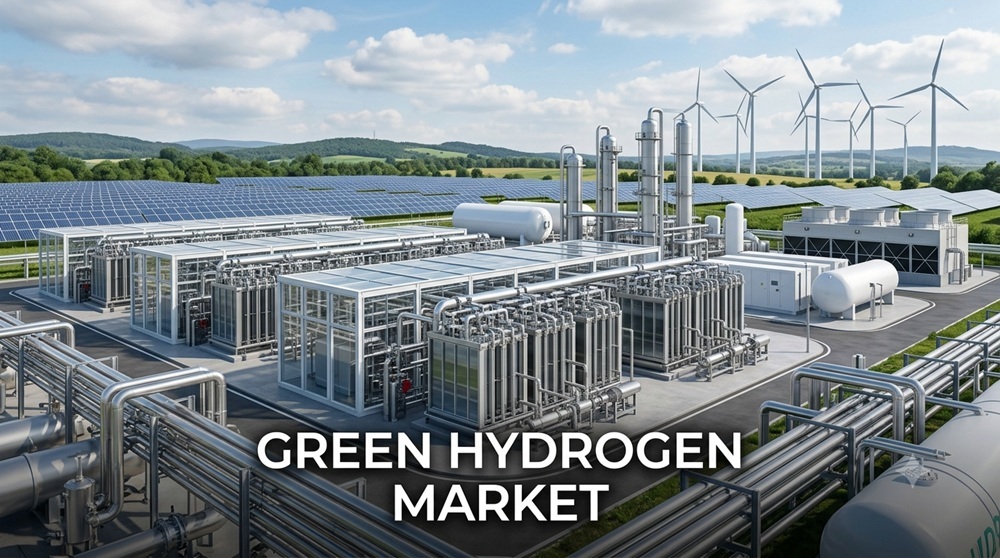
The Green Hydrogen Market is emerging as a cornerstone of the global energy transition, supporting decarbonization across industries that are difficult to electrify. Produced using renewable electricity through water electrolysis, green hydrogen offers a low-carbon alternative to conventional hydrogen. Increasing investments in renewable energy, supportive government policies, and growing industrial demand are accelerating market development and strengthening its role in achieving long-term climate goals.
According to BIS Research, the green hydrogen market is projected to reach $141.29 billion by 2033 from $828.2 million in 2023, growing at a CAGR of 67.19% during the forecast period 2023-2032.
Why is the Green Hydrogen Market Growing?
Rising global commitments to carbon neutrality and net-zero emissions are driving investments in green hydrogen production.
Government funding, policy incentives, and national hydrogen strategies are encouraging large-scale project development.
Expanding renewable energy capacity is improving the feasibility and cost competitiveness of green hydrogen.
Growing demand from hard-to-abate sectors, including steel, chemicals, and heavy transportation, is creating new growth opportunities.
What are the Key Trends Shaping the Green Hydrogen Market?
Rapid deployment of large-scale electrolyzer projects supported by renewable power generation.
Increasing strategic partnerships among energy companies, technology providers, and industrial manufacturers.
Growing investments in hydrogen storage, transportation, and export infrastructure.
Continued innovation in electrolysis technologies to improve efficiency and reduce production costs.
Request An Updated Sample for Green Hydrogen Market – Focus on Application, Technology, Renewable Energy Source, and Region – Analysis and Forecast, 2023-2033
How is Green Hydrogen used Across Different Applications?
Green hydrogen is widely used as a clean energy carrier across multiple industries. It supports low-carbon steel production, ammonia and chemical manufacturing, oil refining, power generation, and heavy-duty transportation. It also enables long-duration renewable energy storage and helps balance electricity grids with high renewable energy penetration, making it an important component of future sustainable energy systems.
Which Regions are Leading the Green Hydrogen Market?
Europe remains a major market due to ambitious climate policies, hydrogen roadmaps, and strong investments in renewable energy infrastructure. Asia-Pacific is witnessing rapid growth, led by countries expanding clean energy capacity and industrial decarbonization initiatives. North America is strengthening its position through supportive incentives and large-scale hydrogen projects, while the Middle East and Australia are investing heavily to become key exporters of green hydrogen.
What Challenges and Opportunities Exist in the Green Hydrogen Market?
The market continues to face challenges, including high production costs, limited hydrogen infrastructure, electrolyzer supply constraints, and evolving regulatory standards. However, ongoing technological advancements, declining renewable electricity costs, and expanding public-private investments present significant opportunities. As global hydrogen ecosystems mature, improved infrastructure and international collaboration are expected to accelerate commercial adoption and market expansion.
Get More Insights for Advanced Materials & Chemicals Market
Conclusion
The Green Hydrogen Market is positioned for substantial long-term growth as governments and industries accelerate the transition toward cleaner energy systems. Strong policy support, expanding renewable energy capacity, and increasing industrial demand are creating favorable conditions for market development. As production technologies advance and infrastructure investments continue, green hydrogen is expected to play a critical role in achieving global decarbonization and sustainable energy objectives.