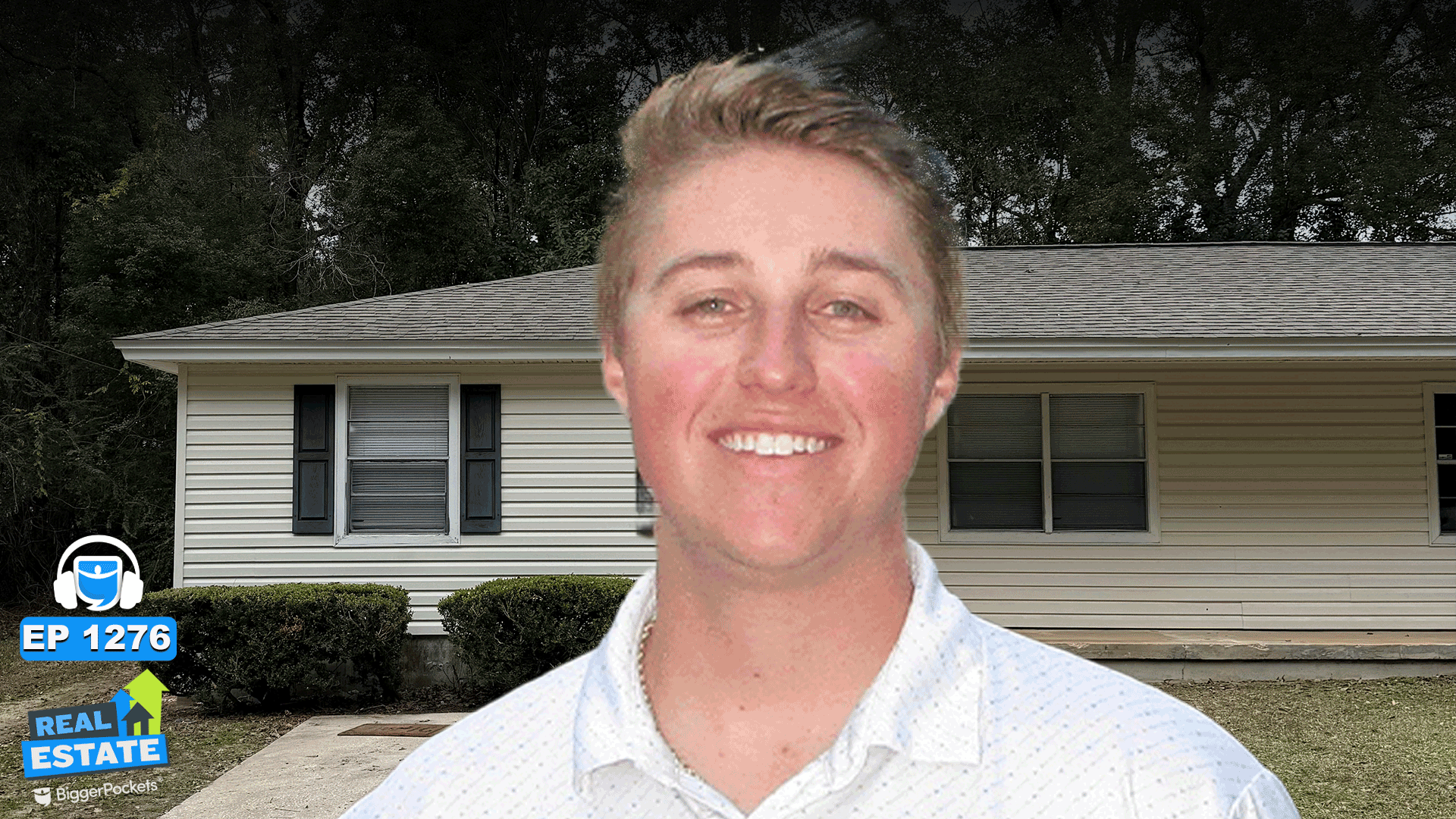
Logan George was just 18 years old when his father gave him the crazy idea to invest in real estate. The problem? He couldn’t afford to rent a $1,000 apartment, let alone buy a rental property—or so he thought.
After sending 200 handwritten letters to local homeowners, someone finally called him back. It was for a townhome at a price point he could stomach, and get this—they even offered seller financing, which was just what Logan needed to get his foot in the door.
Fast forward to today, and Logan owns 14 rental units that make him nearly $8,000 in monthly cash flow. He generates enough rental income to turn real estate investing into his full-time job, but Logan has no interest in slowing down. By keeping his W-2, he’s able to save more money and buy the next rental property much faster.
Want to do exactly what Logan does—find off-market properties, make minor improvements, raise rents, and make plenty of cash flow? He’s not doing anything extraordinary—just the things many investors are too afraid to do: send direct mail, cold call homeowners, and push through hundreds of “no’s” just to land one “yes.”
Henry:Why not buy a house instead? Logan was just 18 years old with no credit and only $15,000 to his name. So could he really buy rental property? After mailing over 200 handwritten letters, he landed a four bedroom townhome in his dream neighborhood and then he rented out three of the rooms to his friends. Now all of a sudden he wasn’t just living for free, but he was also saving a little extra money each month that he could put towards his next deal. From there, he snowballed from one property to the next and today he owns a 14 unit rental portfolio that cash flows nearly $8,000 a month. And Logan’s not doing anything that the average person can’t do. He’s just doing the things they usually won’t do, like pulling lists of sellers, sending direct mail and picking up the phone and talking to people. He’s doing all this while he’s still working his day job.You two can build a cash flowing rental portfolio much faster than you think if you use the simple proven strategies Logan’s about to share. What’s going on everybody? I’m Henry Washington and today we’ve got a great story with investor Logan George from Tallahassee, Florida. So let’s bring him on. Mr. Logan George, welcome to the podcast.
Logan:How’s it going, Henry? It’s
Henry:Going fantastic, man. I’m glad you’re here.
Logan:Man, I’m excited to be here, man. I’m one of your biggest fans.
Henry:Oh, I’ll take that. I love compliments. I appreciate it. But it seems like you’ve got some pretty decent experience early on in your investing career. So why don’t you start at the beginning and tell us about how you first got into real estate?
Logan:Yeah, man. So my name’s Logan. Grew up around real estate. My family’s been in it. My dad had some rental properties back in the day.
Henry:What’s back in the day mean to a guy like you? What year was that? Back in the day to
Logan:Me means probably 2006, 2008.
Henry:Dude, that was in my prime then. That was prime time.
Logan:So I was probably like 12 years old then. I remember going around. My dad had a little lunchbox he kept in his truck and it was cash back then and he’d say, “All right, we’re going to collect rent.” But anyway, long story short, he sold all those and it was time for me to move away for college. I was looking at what rent was going to cost me and I was like, okay, so for a one bedroom, one bathroom apartment that I probably don’t want to live in, I’m going to pay $1,000 a month in rent at the time. This was about six years ago. And my dad was like, “You ought to look at trying to buy something.” I didn’t have any credit. I was 18. I was working a $15 an hour job at a gym saving every penny I made. And he gave me these are three neighborhoods close to Florida State, which is where I go to school.And I got down, started writing handwritten notes, wrote like 200 handwritten notes. One guy got back to me and was like, “Hey man, you wrote me a note about a month ago and I want to sell my townhouse.”
Henry:What
Logan:Do you want to give me for it? So from there we worked out a deal. I couldn’t go get a loan. I had 15 grand in my name, no credit. So we worked out an owner financing deal on that. I gave him 10 grand down, paid 110 for the townhouse. So this was a four bedroom townhouse. I rented out the other three bedrooms to some of my buddies. So I was living for free, making a little bit off of it and it snowballed from there.
Henry:Heck of a first deal. You did several things here that I think almost anyone can do. First and foremost, you selected or your dad helped you select some areas of town that would be close to the school. And I assume those were chosen for obviously proximity for you to get to school, but also future value I’m assuming?
Logan:Correct. These were actually communities that were built when he was in school here. So these were built in the late 80s, early 90s, the community that I actually ended up buying in. So they had some age on them, but they’re not a hundred years old. There’s still some appreciation to be had. So that’s how we kind of chose that. And I wrote a note to every single person in there.
Henry:So essentially what you did was an off-market deal finding strategy called direct mail marketing. And that strategy usually involves you building a list of people who you would like to offer to buy their house and then you send them a piece of direct mail. Most of the time people have some sort of generic messaging or they use some print house to send mail. You actually wrote the letters yourself because you were doing it to a smaller list of people it sounds like. So you hand wrote 200 letters, first of all. That’s an effort in itself because that takes time and effort. Yep. What did you actually say in the letter?
Logan:It was very basic and I did want to make it somewhat personal. So it was like, “Hey, I’m Logan, young guy moving to Florida State for school, really just looking for something in the neighborhood. Would love to chat with you if you’re at all interested in selling.”
Henry:I love that. I love that because it adds some personality to it. A lot of these direct mail pieces people get, like I said, they’re typically generic. They all say the same thing or a very similar thing. So if you’re going to send direct mail, you do have control over the messaging. I think that young people investing in real estate have such an advantage because there’s a lot of older people looking to get out of the game and they see themselves in a lot of these younger folks who are getting into it. And so it’s a great way to not just buy property but build relationship with seasoned investors. So you sent 200 letters and then you got one response, but you mentioned that you own or finance this because you didn’t have credit built up yet. So talk about the loan structure. What did that look like?
Logan:Basically how it worked was whatever I ended up paying him, he had a $6,000 deficit on his loan, but he had the cash to cover it.
Henry:So he just essentially paid the six grand and then took the monthly income from you just as cashflow in his pocket.
Logan:Correct.
Henry:And what were you paying him per month?
Logan:I want to say it was like 500 bucks at the time.
Henry:Oh man.
Logan:It was like nothing.
Henry:You put 10 grand down though, so you did put some skin in the game.
Logan:Right, right. So I put some skin in the game. The property didn’t need anything. I was able to refi it and luckily it was late 2020 at the time and I still have that loan. It’s a 3.15, I want to say. So with taxes and insurance and everything at this point, I think my payment’s right around 750 bucks.
Henry:What were you charging your buddies to live with you?
Logan:So I think we started at $335 a room. So they were getting a good deal. They were my boys and then we split the power bill. So I was happy because at the end of the day, 18 in college or 21 in college, paid for the beer on the weekends and all my bills were paid.
Henry:So you went from thinking you’re going to pay $1,000 a month for a two bedroom to getting paid about $500 a month to live in this townhome, which is amazing. And I’ve spoken to colleges before, real estate groups and colleges and they’ve always asked like, “What should we do? What should we be thinking about? How do we get into this space?” And I tell them all the same thing. “You should be looking for something that you can buy right now that you can live in and house hack and rent to your friends because you’re paying something to live now. You might as well use that money, buy something in a college area that’s going to have appreciation and then rent to your friends and you can live for free. Eliminating your largest living expense that early on allows you to start to save a lot of money.So I think that was a really, really cool strategy that you pulled off for your first deal.
Logan:Yeah, absolutely. And then I lived there for four years, but two years later I looked at it and I’m like, ” Okay, this place is worth 160 now. “And that kind of snowballed and I’m like, ” Okay, if I can repeat this, how many times does it take before … I don’t need to worry about anything else at that point. “Yeah,
Henry:Cool. Great interest rate, cash flowing great. What is that place rent
Logan:For now? 2,000 a month.
Henry:2,000 a month, you’re paying about 700 in a mortgage. I would say you’re making some decent cashflow. That’s amazing. We’ve got to take a quick break, but we’ll be right back with more from investor Logan George right after the break. All right, we are back on the BiggerPockets podcast with Logan learning about his portfolio. Let’s jump back into it. Awesome first deal. You did a lot of strategies that took some work, but maybe didn’t have systems built behind them. So how did you move from that to your second
Logan:Deal? So after that, I started selling cars when I got into college. I was making a good income. I’m a hustler.
Henry:You seem like the kind of guy who could sell cars.
Logan:Yeah. So I was seeing these big checks coming in and I wasn’t spending any money. I mean, if anybody here knows about the car business, you go to work, you eat and sleep and that’s it. But this is about three years after my first deal, 2023. Another townhouse popped up in the same community and this one was a three bed, three bath. They listed it for 160. It was immaculate on the inside. They just got done redoing it and I was like, ” You know what? I think I can get $1,700 a month out of this thing. That beats the 1% rule. I have some money to spend. I’m going to go buy it. “So that was on the MLS. This was at peak of everybody going and buying everything without
Henry:Negotiating. No inspections. Yeah.
Logan:So I actually was second in line and they told me they had a full price deal and I was like, ” No big deal. “They called me back two days later, buyer backed out. So I actually bought that with an FHA loan and moved into it.
Henry:So
Logan:That’s when I originally rented that first four bedroom, took two of my buddies with me, lived there for about a year. And then in that timeframe, I ended up buying two more duplexes later that year.
Henry:So where the heck does that come from?
Logan:So later in the year I knew that I was looking to get out of the car business. I was just driving myself nuts, working 60 hours a week and I had all this cash saved and I had not spent any time looking at the market or finding deals or anything. So kind of sat down one night and I was like, ” I’ve been listening to the BiggerPockets podcast. “So I was like, ” You know what? I need to move into some sort of small multifamily and maybe get a little more bang for my buck. “So I pulled a list this time. I put in there two to four units was what I
Henry:Was
Logan:Looking for. I wanted the ugly duckling on the streetIdeally. And sure enough, after making probably 250 phone calls, I spoke with this older lady who lived in a duplex. Her son lived in the unit next door, wasn’t paying her any rent and she’s like, ” I just want to move. This place needs some repairs that I can’t afford to make. I’d love to chat with you about it. “And literally I was like, ” Cool. Well, hold on one second. “Pulled out my phone, address was 15 minutes away from where I was. I was like, ” Can I come see it in 15 minutes? “She’s like, ” Sure. “So I swung by, met her, walked through it. We chatted about everything about her life and we became good friends very quickly and I was like, ” Look, I have no clue what this is worth. I just kind of started looking. Let me figure out what I can give you for it and let’s meet up on Monday.“And this was like a Friday. So over the weekend I pulled some comps and go to sit with her and she’s like, ” Look, I kind of had tentatively in my mind between 180 and 200 was what it was worth as it sat. She’s like, “You know what? Give me 170 for it.
Henry:”
Logan:I was kind of surprised, right? And she’s like, “But I’m going to need to talk to my son and we’re going to have to really contemplate really pulling the trigger on this. ” And I was like, “You know what? I’m going to give you 180 for it, but you just got to do the contract with me now. Let’s just go ahead and make it happen and we’ll go from there. Are you comfortable doing that? ” And sure enough, she was happy doing that. I actually went and got a conventional loan on that property,
Henry:So I
Logan:Had to put 20% down and I put about 20 grand into it after they moved out. That was in 2023 and I still have the same folks living there, but I get 2,300 in rent out of that property every month.
Henry:You pulled your list from PopStream. I’m sure you had to go and skip trace and get phone numbers. So you got your list, you’ve got your phone numbers, you know the areas you want to market to. So you start dialing. What do you say to these people when they answer the phone?
Logan:So coming from sales, it’s another sales call. “Hey, Henry, real quick, my name’s Logan. Is this you over here off of Capstone Drive with that duplex? Is that you? “They’d say,” Yeah, that’s me. I own it. “Well, awesome. Hey, I’m a young guy in the area getting into investing. And one thing that I do put out there, I’m not a realtor and some realtors get their business. I got a little more traction by adding in there,” Hey, I’m not a realtor. I don’t want to sell your property. I’m actually interested personally. Have you ever thought about selling it if the money was right? “And after 200 times of getting told no, the next phone call hurts a little bit, but all of a sudden, boom, you get that one yes and you feel like you hit the lottery.
Henry:It’s
Logan:A good feeling.
Henry:Cold calling is an excellent way to get a deal because not many people do it. The harder it is to find a deal, the more profitable that deal can eventually be because there’s not a lot of competition when you’re marketing that way. There wasn’t a lot of investors just picking up the phone calling people and there’s still not today, but back then there was even less.
Logan:Best part of the whole deal is we sit down at her table and I actually brought a paper contract with me and she pulls out this stack of mail this thick and she’s like, ” Logan, you wouldn’t believe I get these letters weekly and I’ve been saving them because I’ve been thinking about selling and you just happened to call me and nobody’s ever called me before. “And it was literally letters of people, ” Hey, I want to buy your property. “You
Henry:Know what’s cool about that is all those people warmed up that lead for you and then you called at the right time. Look, marketing for deals is just a function of you getting on the phone with somebody in the exact moment they’re considering selling. Sometimes we manufacture that moment. Sometimes you sending the mail manufacturers the moment that they’re thinking about selling and then you send another piece of mail and they answer. One of the things that I did when I started to mix up my off-market deal finding strategies, I started to get better results. In other words, I would pull a list and I had been sending mail to it. Instead of me pulling a new list and calling it, I used a cold calling company. I just started having them call the same list I was mailing. The first time I did that, I bought two deals from people I had been mailing for months.They had just never responded to my mail, but they responded to the phone calls. And so you’re just going to find that people connect differently. Some people will answer mail, some people will answer the phone. So if you can reach out in more than one way, that’s a good way to increase response rates. So awesome. You cold called, the lady said,” Yeah, I’d like to sell you the house. “And then the other thing you did that was very smart was you set the appointment immediately. I think a lot of people when they’re making calls or when they’re answering calls from direct mail, there’s some fear, there’s some uncomfortability. I got to go get in these people’s face and look at their house. And so they do one of two things. Either they delay the meeting to give themselves time to mentally get in the right head space or they let the seller dictate when they meet and the seller isn’t thinking,” I want to make a deal right now most of the time.What they’re thinking about is, I don’t want to be embarrassed. So how do I get my house cleaned up? How do I get prepared for this meeting? “And speed to lead is so hugely important when you’re doing off market deal finding. And so I like that you pulled up the address and said,” I can be there in 15 minutes. Can I come look at it? “I do the same thing. If I can get there within the hour, I am there. And I always tell them,” Look, don’t clean for me. Don’t pick up nothing. I’ve seen crazy houses. I’ve seen houses with no roof. I don’t care about your stuff. I just want to see the house. I’ll be in and out of there in five minutes. Don’t waste time picking up for me. “Kind of releases some of that tension that sellers have. But if they’re ready to sell, the sooner you can get there, the better.I love that you had speed to lead. And then the other quality that I think was very good was that you went and you were personable. So you showed up and you started to be human with her, chat with her. I always tell people when you’re in somebody’s home, when you’re in their space and you’re evaluating that property, yes, you should be looking at the property, but you should also be looking around at the stuff. What can I use to relate to you on? Do you have something that I can show you that I’m a human being about? I was in a house one time and the guy was a painter and my dad was a painter. So we started talking about painting and it really humanized me and that humanizing starts to build that trust and helps people see you as just another human being and not some Yahoo trying to come in and low ball offer on a house.
Logan:100%.
Henry:And you said you guys became friends and that helps me.
Logan:Actually, she was an older lady stressing about moving too. So I actually had a buddy who worked for a moving company at the time and I was like, ” No worries. Don’t stress about the moving. I’m going to send my boy over here on whatever day you decide to move and you don’t have to worry about that. “So I actually paid for her moving too.
Henry:That’s it, man. Look, solving problems. This is exactly what deal finding is about. It’s about solving people’s problems. Her problem was, ” I want to sell. I’d like to sell fairly quickly with less hassle and I don’t want to move. “Cool. Got it. I can handle all of those things, right? Super great. So I love that you did that. You bought the property conventional loan 20% down and then you spent 20 grand on the rehab. Sounds like a pretty cosmetic rehab. It’s a duplex. So you rented both sides out and you were getting a total rent of how much?
Logan:2,300 starting
Henry:Out. And about what were you paying per month on that mortgage?
Logan:About 1,300 bucks.
Henry:At a boy. Man, what a cool story, Logan. You’ve employed a lot of strategies that people think are challenging or difficult and you just did them by being yourself being trustworthy and genuinely just trying to be a good dude building a portfolio. And it’s turned out to help you get some awesome deals. And I just want to say to anybody who’s thinking about making phone calls, don’t think about it from the perspective about how scary it is, but it took you 250 calls to get a deal. So everybody is listening. If you knew that you had to make 250 cold calls, but on the 250th one, you were going to get a deal that you were going to be able to cash flow over $1,000 a month and start to build true wealth, what would you do? You’d start calling immediately.
Logan:Two phones, one in each hand.
Henry:That’s right. That’s the game. People don’t want to do these things because they’re worried about what if it doesn’t work. It does work. There’s proof that it does work. So every no is one no closer to your yes. The more calls you make, the closer you are to getting that deal. So did you do it again for your next one or did you try something new?
Logan:Yeah. So within a month after we wrapped up that first deal, got right back on the phone. I was like, duplexes seemed to be working. There was a good cashflow there. Started making my calls and this time it was like 15, 20 calls in. Talked to a gentleman named Curtis and he had a duplex, big, huge duplex actually with a giant garage attached to it, which I thought
Henry:Was kind
Logan:Of cool, about five minutes away from my house. So we actually met up same way with the first lady. I was like, ” Curtis, how far away are you? You’re five minutes from me. “And we met over there about 20 minutes after we got off the phone and Curtis is a more seasoned investor. He’s in his late 60s at this time. He’s like, ” Look, man, I got this portfolio. I’m at the point I’m tired of screwing with it. I’ve had this since 1999 is when I bought it. It’s been great to me. You offer me something fair. “He’s like, ” I get these calls all the time. I get mail all the time. “He’s like, ” Today’s your day, so tell me what you think. “And we walked through, we agreed on a number and at the end of it, he’s like, ” Hey, I’m going to have a lot of taxes to pay here.I might even be willing to finance some of it for you with a decent down payment. “My ears kind of lit up. I’m
Henry:Like,
Logan:” Okay. Well, maybe we can move a little quicker than we could otherwise. “Anyway, Curtis and I met up two more times after that. We’ve become good friends since, but we worked out an owner finance deal on that. We settled on a purchase price of 230 for one duplex and a garage attached, a vacant 1,200 square foot garage. So one unit was vacant, one unit he was getting 900 a month out of. The place didn’t need any work, had a brand new roof on it. So I was able to put a tenant in there for 1,200 bucks in the vacant unit. Shortly after that, I put someone else in the other unit that the tenant paying 900 had moved out. We bumped that rent to 1250 and then I actually rented out the garage for $250 a month for storage.
Henry:200 on the garage, 1200 per unit, 1250 in one of the units. So you’re at 2,650 and you paid 230, no money into it. It was all in good shape already.
Logan:No money into it. I did have to put a big chunk down. I put roughly 25% down, which allowed it to cashflow.
Henry:What kind of interest rate did he give you?
Logan:He gave me six and three quarters.
Henry:Okay.
Logan:This was the very end of 2023, I would’ve been staring at a 7.5% otherwise.
Henry:Man, how cool. Awesome. He did it again, folks. Hopped on the phone, made a phone call, speed the lead, went and saw the property, made an offer, landed yourself a deal. I love that. And the other thing I want to highlight about this is you just did a strategy that I tell people to do all the time. Look, if you’re listening, you need to be taking notes because I’m going to go through this quick. Pull a list of people who own small multifamily. You put on any list building tool you want, small multifamily in whatever parts of town you want, but you want to make sure that A, these people have equity, 60 to 80% or more. And if you don’t have an equity filter, then use some sort of length of ownership filter. So you want 15, 20, 25 years plus of ownership. And then the real key is you want these properties owned in a personal name or a trust, no LLCs because what you’re looking for is the mom and pop senior owner who’s looking to get out of the game.I like that list for three reasons. One, small multifamily deals, great list for. Two, great list for owner finance because exactly what you said, this guy said,” I’m going to have a big tax bill. I’d be willing to finance this. “It is a great list to pitch owner financing for for that reason, because a lot of these landlords are already savvy to the idea of owner finance because they’re in this space and if they’re not savvy about it, it’s easy to educate them because they will understand that they’re going to have to pay some capital gains taxes. And the third reason I really like this list is because of the relationships that you get to build with these seasoned real estate investors. Even if you don’t buy a property from the people who reach out to you, there’s an opportunity for you to build a relationship with these folks because if they don’t have a property to sell you, mom and pop owners know all the other mom and pop owners in town.So they may say,” Hey, Logan, I think you’re awesome. This is cool. You’re so cool doing this at a young age. I want to help you. I’m not selling my property, but old Bob down the street’s looking to get out of the game. Let me connect you with Bob. “This is just a great list all the way around. Great properties, great financing, great list for mentors. You nailed it on all three fronts, it sounds like, because it sounds like this guy became somewhat of a mentor to you.
Logan:Yeah. So Curtis and I are buddies now. We go fishing on the weekends, go to lunch once a week. We’re tight. And about a year after that we did that deal together, I found a townhouse on Facebook. And at the time I had just spent a bunch of cash, wasn’t really looking, wasn’t really ready. And I was like, ” Curtis, man, check out this townhouse. “I started texting the guy back and forth about, he’s like, ” Get in the car. Let’s go look at it. “And we’re underneath this place, we’re in the crawl space. We’ve got
Henry:Dirt
Logan:And crawling in the mud. And he’s like, ” Man, this is good construction. I think this could be a really good deal for you. “We had a conversation about what I could put into it and I was able to put about 20% down. And since our financing had gone smoothly on the first deal, he’s like, ” You know what? How about I write you a private note on it for the remainder? “Oh
Henry:Man, love it.
Logan:So totally made it happen there and the property didn’t need too much. I paid 100,000 for a two bed, two bath town home. I had to put a roof on it that was seven grand and I had to put a kitchen in it, which cost me about five. So I actually moved into that property shortly thereafter from the place I was living in, that second townhouse I bought, I sold that property because with the cashflow I was getting and the equity I had, I felt like it was time to use that cash for something different.
Henry:Man, that’s really cool. A, having the mentor who you built a relationship with, who you borrowed money from, who you made sure that you maintained the relationship, made sure you had good standing with the loan that you borrowed from him and boom, what did that do? Opened up an opportunity for him to want to lend more money to you.
Logan:Absolutely.
Henry:Sounds like you sold that second town home that you bought on the MLS so that you could free up some cash to go buy something bigger. I’d love to learn more about that, but we’re going to take a quick break first. All right. We’re back on the BiggerPockets podcast with investor Logan George, who is now telling us about how he sold one of his properties to purchase a bigger real estate deal. So what was that deal?
Logan:Sold this property. I figured that with the equity that I had in it, it had appreciated a good bit. I was going to be able to better deploy that money. So ended up making about 40,000 on that townhouse from what I had originally paid. 1031 that. I had it in a 1031 for, shoot, three months. I was looking, I was looking, I was looking, couldn’t find anything, was starting to kind of lose steam from … And I was like, all right, might just have to pull this cash out.And a listing popped up on the MLS for a duplex at 225 across town, an area I’m familiar with. And I was like, okay, I probably wouldn’t pay 225 for it, but that’s pretty close to what I’d pay for it, so I’m going to go check it out. Well, I did some more digging. The realtor that had listed it, I got in touch with him and he was like, “Yeah, the guy owns the whole street.” Seller lived in California, had some management headaches, bad tenants. The properties were not very well maintained, but there were four duplexes right next to each other that the seller owned and I was kind of just throwing a shot in the dark. I said, “Well, what would he do if we just bought them all? ” The realtor, he’s like, “Let me call them. I’ll call you right back.” Calls me back.He’s like, “Look, if you buy them all and you move fast, he’ll sell them to you for 185 a piece.”
Henry:Ooh, that a boy.
Logan:So I was pretty excited at that. I knew the numbers were going to work. So that comes out to 750 for four duplexes, eight units. I mentioned, I said, “Hey, I do have a large amount of cash that I can put down if your seller’s at all interested in keeping some income from this property over the next couple years, I’d be happy to discuss that with him.” And sure enough, he decided to finance about 500 of that 750.
Henry:Nice.
Logan:So 6% interest only. On day one, the rents were four grand, $4,100. Two tenants weren’t paying, on unit was vacant, so got the tenants out that weren’t paying, immediately went into the first unit. And my biggest thing is I’m not ripping down walls. I am not adding rooms. That is not my forte. I’m putting paint on the walls, new appliances, new countertops, and in some cases floors. So we went through, did that. I kept three of the existing tenants that were there that were taking care of their places, bumped their rent a little bit and we actually just rented the fifth unit that we remodeled. So we’re at 100% occupancy and now the total rent is at $8,700 between these eight units. So my monthly cash flow out of that’s 4,600 bucks.
Henry:This is really cool. I think you have an amazing story. I think you’ve done a lot of things that people are maybe fearful of doing and you did them on a small scale, a scale that made sense for you, but you did it with a lot of determination and consistency, which is what it takes to be successful in this business. Can you break down just overall what your portfolio looks like today?
Logan:Yeah. So as of today, I’m at 14 units. I collect about 17,000 a month in rent and 7,900 of that is cashflow after I pay all my bills and put some away for expenses.
Henry:That’s awesome, man. Congratulations, both on the effort it took to get where you are, but on the results you’re getting on the efforts that you put in, you’ve shown a way that just a regular person can use off-market deal finding strategies. You don’t have to operate like some Some giant wholesaling company in order to generate off-market leads. You don’t have to do what I do and spend the kind of money that I spend to generate leads. You can just be a guy who picks up a phone and calls 200 people until somebody says yes. You can just be a person that finds a community that you like and writes a letter to every house in that community. That is absolutely still things that work even today in 2026. So one, you should be proud of what you’ve done. But the other thing I’d like to hear from you is kind of what’s going on with the job or the personal life.Are you still working a full-time gig? What’s that look like in your life now?
Logan:Yeah, so I left the car dealership kind of right in between those two first duplexes that I bought. The hours were just too crazy, but I’ve always been a salesman. I’m a hustler and I did not want to let go of that income because all that does is slow down your real estate growth.
Henry:Yes, sir. I
Logan:Actually started an insurance agency. So when I’m not dealing with maintenance or remodeling a property, I am 40 hours a week or more selling insurance, working for myself. But as my clients need me, whether I got a paintbrush in my hand or I’m installing a dishwasher, my phone’s always on. I might step to the side and write a policy or help one of
Henry:My clients
Logan:With something. But got to hang on to that W2 until I don’t know when I’ll stop working, but my real estate portfolio will have to be way bigger than what it is now to get me to do that.
Henry:You don’t strike me as the kind of guy who wants to sit still for very long. So I’d imagine that’ll be some time. But one thing you said that I want to point out is you said that it’s harder to grow when you don’t have the job. And I think that that’s an important distinction because a lot of people want to get into real estate investing to generate income so that they don’t have to work. And I understand it. But once you leave that W2, you leave that security of that W2, it makes it harder for you to grow A, because you don’t have an income stream anymore that’s consistent. B, banks look at you a little riskier now because you don’t have the W2 income. Even if your real estate portfolio pays you more than your W2 did, banks will still not like it as much and you become less bankable, which also makes it harder to scale.And then real estate just becomes a different game when you’ve got to feed your family from what your real estate business produces. When it’s just additional income and you know you’ve got that job where you’re going to be able to pay your bills and eat off of, there’s a level of security and comfort with that. It helps you be more strategic about the deals that you buy. But when you’ve got to now feed your family, feed your kids, pay your mortgage with your real estate business, it makes it harder to do the things that we know we need to do to be successful investors, which is to not buy based on emotion or to not buy because we know we need that money coming in, but to buy because we’re truly buying a good deal. And so I love that you highlighted that, “Hey, I like having a job because it helps me build my business.” And I think that that’s a perspective that people need to understand sooner than later.
Logan:And everybody out there needs to find a mentor.
Henry:I’ve
Logan:Got Curtis and then I’ve also got another mentor of my name, Bill. We met in Home Depot and literally anytime I ever want a second opinion on a deal, either one of them are right there to look at it. And it’s good to get advice from somebody who has nothing to gain off of any decision you make. So that’s a little word of advice I’ve got for anybody that might be younger trying to start
Henry:Out. I love that. Logan, thank you so much for joining us on the BiggerPockets Podcast. Again, you should be proud of the progress that you’ve made in your business at such a young age. I look forward to hearing more about what you continue to build in the future. I love seeing people who are starting to build wealth at a young age. One thing I just like to share with people who are young is remember that this is a business that is, it’s not a get rich quick, but it’s a get rich for sure. As long as you don’t quit, the sooner you start, the more wealth you’re able to build, but wealth is a responsibility. And that responsibility is to take the wealth that we build and use it to improve the lives of the people around us, improve the lives of the people in our community.So I just encourage you and I wish you the best and I hope that you take the wealth that you build and you use it to make the lives of people around you better because doing this at such a young age is going to offer you so much time and ability to be a blessing to others. We’re proud of you,
Logan:Man. Awesome. Thanks, Henry. I appreciate it.
Henry:Thank you so much everybody for listening and we’ll see you all on the next episode of the BiggerPockets Podcast.
Help us reach new listeners on iTunes by leaving us a rating and review! It takes just 30 seconds and instructions can be found here. Thanks! We really appreciate it!
Interested in learning more about today’s sponsors or becoming a BiggerPockets partner yourself? Email [email protected].