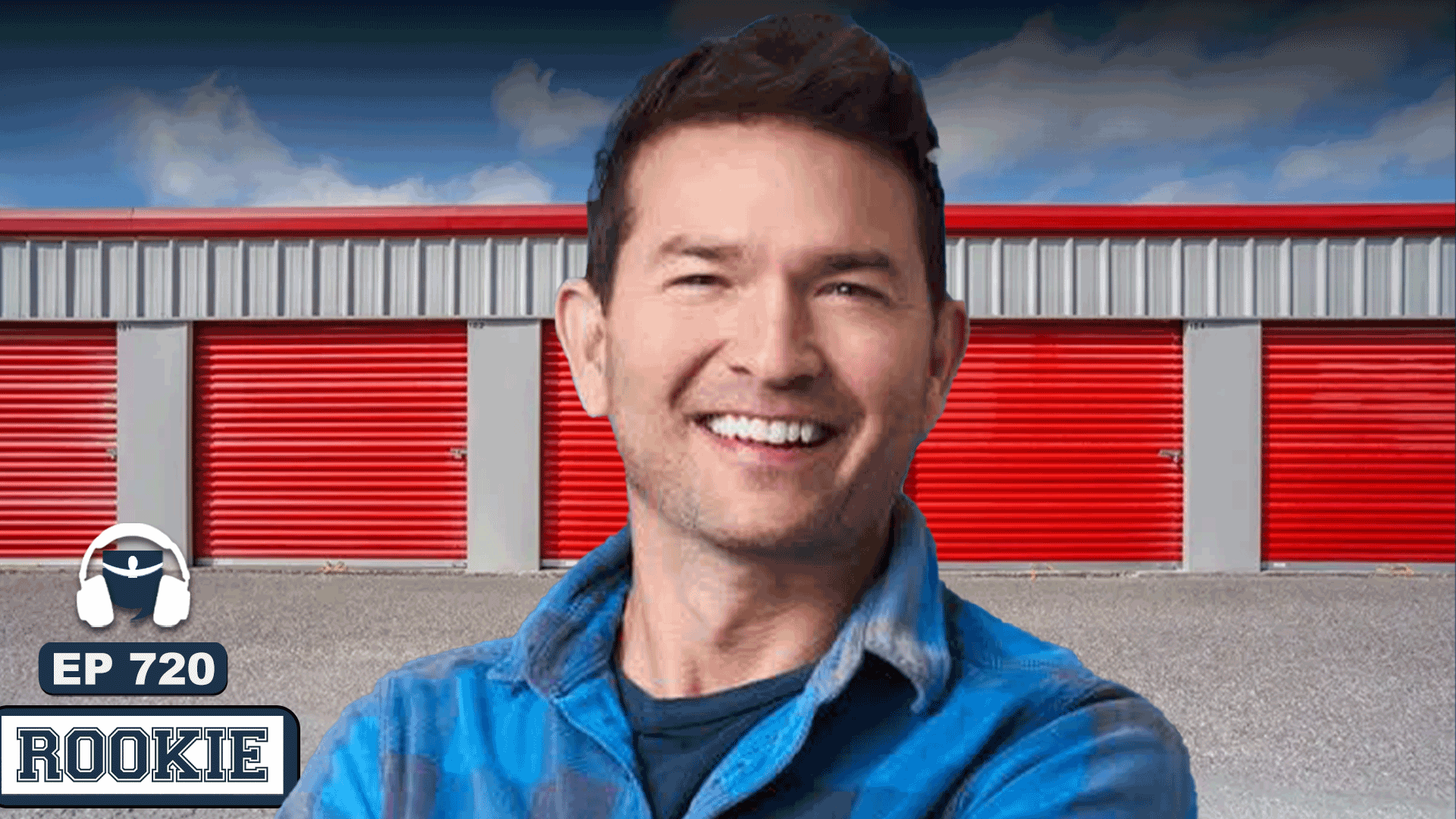
Rookies think they need millions to invest in commercial real estate, but that’s only a myth, and today’s guest is about to show you why. In this episode, we’re talking all about an asset that might sound big and scary but is actually much easier to buy than you probably think: self storage!
Welcome back to the Real Estate Rookie podcast! Cameron Barsanti has owned single-family homes, multifamily properties, and other assets. But his favorite? Self storage. These large metal boxes have no toilets, no tenants living on the property, and less maintenance than residential real estate. Since zeroing in on self storage just five years ago, Cameron has scaled to a $70+ million portfolio spanning nine states!
Today, he’s giving you a complete crash course on the asset—how it works, how it makes money, and everything you need to know to get started. We get into analyzing markets, the ideal tech “stack” for new investors, and much more. So, if you’ve ever wanted to know how to get into self storage, without a ton of money, this episode is for you!
Ashley:Most rookies here self-storage and immediately assume it’s out of reach, too commercial, too expensive, too institutional. So they crossed it off the list and never look back. That assumption is costing them.
Tony:Today’s guest has built a 70 million self-storage portfolio across 17 facilities in nine states and in Guam in less than five years. He’s also coached hundreds of first-time investors into their own facilities. And by the end of this episode, you’ll know exactly what a rookie-sized self-storage deal actually looks like, how to find one, how to pay for it, and how to actually run the business once you own it.
Ashley:This is The Real Estate Rookie Podcast. I’m Ashley Kehr.
Tony:And I’m Tony J. Robinson. Let’s give a big warm welcome to Cameron. Cameron, thanks for joining us on the Rookie Podcast today, brother.
Cameron:Hey guys, thank you. I really appreciate it. It’s an honor to be here and just big fans of your guys and your show and all that you’re doing and all the value you’re adding. So again, it’s my pleasure. Thanks so much for having me.
Ashley:So Cameron, let’s get started with a myth that there is in the self storage industry that this is a big commercial play. You need multimillions of dollars to actually get into this asset class. But what’s the actual truth? Can you kind of dismantle this myth for us and how could a rookie actually get into this asset without millions and millions of dollars?
Cameron:Yeah, great question. Definitely let’s debunk it. So my first deal actually, we had zero money. And what I found that’s great about all the real estate games all of us play, including you guys, is a lot of times really we don’t know what’s going to happen next, but when we have a deal in front of us, that deal all of a sudden not only inspires us and brings new motivation, but also insight. And so I had a deal locked up and when we started looking at the numbers and the opportunity, then my wife and I started doing stuff you couldn’t imagine to find money to make that happen because we actually had an opportunity in front of us. And so our first deal, even though we didn’t have any money in order to buy this with a fifty fifty partner, we had to come up with about 60 grand and we managed to do that whether it’s borrowing from friends or family.In our case, I think there was a Schwab account or some kind of retirement that we could just nix and use. And so we got into our first deal for about 60K. That deal we still own today, it’s worth about two and a half million dollars, but it was our first of now 20 deals. I’m a big believer that you can’t get tied up into capital because you’re never going to have enough. You’re always going to be spending, you’re always going to be buying, but if you can work deal first, opportunity first and the opportunities your frontline, the opportunity is going to help and tell you where you need to go find capital and how much capital you need to find.
Tony:Cameron, how did you find that fifty fifty partner? Because I know for a lot of rookies that are listening, and this was me when I first started as well, I didn’t have a network of people who were doing this. So once you did all the work to kind source this deal, what was your first steps to actually go present this to someone who might be able to partner with you?
Cameron:I’m so excited you asked this question because it’s going to sound like a plug to bigger pockets, but it’s the truth. So my wife and I, when we first started, we started in multifamily, then wholesale, single family, and then self-storage, but we always had coaches. And I today have two mentors, but we’ve always had coaches. And so what was happening is we started expediting our processes by going to masterminds, meet up these coaching programs. And we started meeting people that wanted to partner and we couldn’t believe it actually. We couldn’t believe, wow, we can invest time and money into these groups. And there were people out there that had capital that all we had to do was find the deal. So it was very bullish that I felt I don’t need money. I just have to find opportunity. Now while I was doing that, we were trying to wholesale in Albuquerque, New Mexico.So I literally on the BiggerPockets forum was pretending, not pretending, but like, “Hey, I’m a wholesaler looking for cash buyers.” And I found a gentleman that we started talking and every time I talked to him, he knew so much. It turned out he had been investing for like 26 years, et cetera, et cetera. And so I kept talking to him. I kept reaching out to him. I couldn’t believe that this veteran would even talk to a newbie like me. We bought a deal together on Craigslist. We had never met each other. And then under contract on the self-storage facility, I drove from California to New Mexico. I called up Todd. I’m like, “Meet me there.” And I met my partner for the first time that we had already done one deal together and we met him on BiggerPockets for him, which is just nuts. And so again, just all the information is out there, internet and the podcasts and the books and these groups, everything’s out there that you need.You got to reach out. You got to leverage every resource you can.
Tony:Cameron, I love that answer because I think for so many rookies, we just kind of not fall into despair, but it’s just like this woe is me where it’s like, “Well, I don’t know anyone. I don’t have anyone. I don’t have these connections.” But you just proved how somewhat straightforward of a process it is to just go start building that network. And for every single person that’s listening, you have access to all the same resources that Cameron did. You can go join BiggerPockets, become a pro member, post in the forums. You can go into local Facebook groups and just start providing value to people that are in there. Or in Cameron’s case, post about deals that you’re finding. You can go to your local meetups and just be the person that’s there every single time. So there are so many low cost, low effort ways to go out there and start building that network even if you don’t have it today.
Cameron:100%.
Ashley:Now, Cameron, what about buying your first deal today in 2026 with the current market conditions? What should a rookie be looking for and is it possible to do a deal like you did for your first deal?
Cameron:Yeah, absolutely. So I’m going to reiterate the idea of opportunity first, because we know there’s capital everywhere. We know there’s potential partners everywhere, but your lifeline in my opinion is your ability to find opportunity and your next opportunity. So for me, any of my students or anybody I’m helping out or anybody that asks me for advice, I say, get good at knowing what a deal looks like. What are you looking for? You’re looking for mom and pops. Where do you look for mom and pops? How do you find those target facilities? You’re looking for value add and then how do you go about actually starting to find these owners and potentially find these opportunities? Because if you do, if you’re talking to a seller or you have a broker that knows somebody and it’s a local broker, maybe it’s not blasted out on a national brokerage company’s website or Crexi or LoopNet and there’s an opportunity where you can find people like myself like hundreds or thousands of other people on, maybe it’s a Facebook group, maybe it’s a BiggerPockets forum and have them help you evaluate the deal, have them help you analyze the deal.If you can find opportunity, I promise everything else will follow because people want to partner, they want a good deal, they want to bring capital, they want to help you. So it’s really about understanding what you’re looking for and starting to pound the payment.
Tony:Cameron, when I think about self-storage, a lot of times I think about like I live in the suburbs of Los Angeles and my town has like 100,000 people. I think I live in the biggest county geographically in the United States. When I think of self-storage, I think about these big massive facilities and these kind of larger urban and suburban areas. Have you found that to be the only way to really find success or are there maybe other, maybe smaller markets where folks can still have success with self-storage as well?
Cameron:Great question. Yeah, quite the opposite. So I’m not a read or I’m not a big operator. I’m buying stuff with a lot of my own capital and maybe students capital or friends or partners. We’re JV. We’re all putting in some skin in the game, we’re working, we’re doing it together. So we’re looking for actually not the shiny A- class properties. Those are great, especially long-term and if you have a lot of capital to play with, but we’re looking for a lot of the tertiary markets. A lot of the smaller markets tend to have more cashflow, less competition. If I were to rattle off the 20 cities that I’ve bought in, you guys have probably heard of three of them. And the other 17 areas you’ve never heard of and they’re not flashy and they’re not … A lot of them even don’t have population growth or economic explosion.They just have a huge storage demand with limiting supply. So we’re looking for the offbeat. Yeah, a lot of times tertiary markets, cities you may have never heard of, but we know the demand is really strong and that the storage market’s going to be a great business.
Ashley:Now what about the operational piece to purchasing and owning a self-storage facility? How does that compare to residential and the property management that comes along with that? So you don’t have a tenant in place that’s living there so you’re not getting phone calls about a broken AC, but where does the operational piece kind of differ from your traditional residential
Cameron:Unit? So I’m going to expose self-storage because I think people love to say that it’s more hands off than multifamily or single family. And I think it’s not black and white because I have a few fourplexes that we have a property manager and we rarely ever hear from the property manager ever unless it’s a, “Hey, we need a dishwasher place, thumbs up.” So to me, that’s way more hands off. But with self-storage, it’s multidimensional. So some of our facilities were running remotely, the majority of them. I have managers underneath me, but when I first started, I actually was doing everything. I was answering the phones. It was crazy hands-on. It was the epitome of hands-on. But here’s the cool thing. As we started to scale, we were able to start taking ourselves out of those positions by building a team. Now, I don’t want to be completely hands-off because I want to help and empower and be with my team, especially with more of the high level, bigger decisions, but we started delegating what we didn’t have to do.The other thing that’s interesting is learning how to operate storage has given me the confidence to operate and buy a business. I feel like a lot of what we’ve learned in storage, we could actually rinse and repeat and go buy a mobile home park or a boring business or something else. So it is more of a business and a real estate asset. And so I think in a way it’s more hands-on until you get to a point where you can then hire a team.
Tony:Yeah. We interviewed Heather Blinkenship who’s built a relatively large RV park portfolio and she told us a story of how she just had to really, really grind on that first one. I think she had two young kids at the time and she was living on the park full-time and she was the front desk and she was the maintenance and she was this and she was that. But obviously now she’s built a much larger portfolio, but sometimes maybe that initial phase, there is a little bit more work that goes into it.
Cameron:Sorry. And I was just going to say, and I don’t think that that’s a bad thing. I know there’s some people that are like, “No, I want hands off and I can’t do anything about it. I want hands off.” Cool. Partner with somebody like myself or a sooner or somebody that is going to be able to take control of that deal and you can be more passive, right? That’s fine, but it’s almost like you’re forced to do something for a year or so that, yeah, it’s going to be hard and you’re going to have to grind hard, but you’re going to learn a ton, right? That’s the silver lining.
Tony:And what about the folks who are actually selling? If you’re in these kind of tertiary markets, secondary markets, why are those owners going to Cameron instead of going to the big public REITs who can maybe pay them more and can close faster and look like maybe they have some more advantages in their offer. Why are they choosing you over them?
Cameron:Yeah, a couple of reasons. One, a lot of the markets we’re looking in REITs may not be looking at or looking at as closely. And then I’ll try not to repeat it again, but the lifeline of my career in my opinion is the opportunity to continue to find … Let me back up. The lifeline of my career is my ability to keep finding opportunities. So we’re just meaning we’re so acquisitions heavy. Most of our efforts are acquisitions, looking for deals, looking for deals, looking for deals. So even if we’re in markets that where maybe there’s REITs or other people looking for a deal, we’ve found that, and I found this in single family and multifamily, getting really good at finding deals, you can always scale even if it’s slow or fast, however you want to scale, you can continue to move the needle forward. So to answer your question, I think we’re good at acquisitions and then we’re also looking in markets that potentially doesn’t have as much competition because they’re not as sexy.
Tony:What’s your acquisition channel, Cameron? Because we just interviewed Janelle Carlson who runs a wholesaling business. She’s based in California, but runs it virtually and he bigger focus was direct mail and that’s how she kind of gained a lot of her off market deal flow. We’ve interviewed other actual self-storage investors in the past and their entire strategy was basically like driving for dollars in some of these markets where they’re in and just seeing some of these older self-storage facilities that needed love. So what channel have you found to be best for your acquisition machine?
Cameron:We have leaned more into cold calling than anything. We also send mailers. We’ve dabbled in text. Obviously you got to be really careful because of the compliance issues and the ever-changing landscape of that. We’ve done emails. I know it all works, even driving for dollars. I have people I know that I’m like, “Hey, if you find something or friends that say they want to get into the business,” I’m like, “Cool. All you have to do is drive by a mom and pop, send me a picture of that sign and I promise we will do the rest and we’ll partner, I promise.” So it all works. So without getting too in the weeds, if you’re tracking KPIs, your key performance indicators or anything like that where you know what you’re spending and what’s working the most, we do that. We pay attention to what works the most.Mailers are the most expensive, but they also work. But yeah, mailers and phone calls is our two primary marketing sources.
Ashley:Now what about the people that are selling these properties? Are you going after and looking at REITs that are selling them and mom and pop owners? Who’s more motivated to be selling right now that you’re actually marketing to?
Cameron:Definitely the mom and pops. And the neat thing is a mom and pop doesn’t have to be … They don’t have to be like it sounds, meaning a mom and pop, yes, everybody wants to get ahold of the 70 or 80 year old owner who’s they’re done, they’re tired, they’re ready to retire. They don’t care. They want their price and it works out and there’s tons of value add and maybe they’re not even online, right? That’s beautiful.That’s what we’re all looking for. But it can also be a broker who is a residential broker that has been in the market for 20 years. They own a car wash, maybe they owned a piece of land, they decided to build a facility and then all of a sudden years later they’ve done well, but they have not operationally done that well. They’ve ran it more like a residential broker would run it.So we can go in and be like, “Oh cool, this facility, it’s not your 80-year-old mom and pop, but it’s somebody who is not a storage operator and there’s plenty of value add.” And so there’s a lot of times everything in between that. We just bought a 60,000 square feet in Shreveport, Louisiana, and it was a shiny deal on market. We rarely buy on market, but this was some investors that were, I think, primarily in multifamily.
Ashley:Tony, I think you really missed out on that market, Cameron. I don’t know if you know, but Tony actually owned rental properties there.
Tony:My very first long-term rental was in Shreveport, Louisiana.
Cameron:Oh, wow. Yeah, it’s rough.
Tony:Yeah. That’s small world, man. Well, I guess I’m curious, Cameron, on that note, you say you just bought one in Shriefport or maybe even looking at the first one that you purchased, what are the actual kinds of returns that a rookie investor can expect as they start shopping for their first self-storage? Is it more of a long-term appreciation play where maybe the cashflow isn’t as strong early on, which is the case for a lot of the larger multifamily and they make more of their money on the backend when they sell? Or is there an actual cashflow component here? And if so, what should someone expect?
Cameron:This is such a tough question for me because every deal has been different. We all know that cashflow is more challenging when rates are up, unless there’s some huge, crazy dip and rates still are up. So right now, a lot of the deals we’re looking at aren’t on the front end cash flowing quite as much as they were five years ago, but it doesn’t mean that every deal’s not like that. Shreveport is turnkey cashflow like day one. We do a little bit of everything primarily looking focused on value add. Yeah, I like to see a 10% cash on cash roughly year one, I also know that that’s going to fluctuate maybe down, but maybe a lot more. A lot of times the way I’m looking at it is more like, “Hey, look, there’s a deal. It’s a million dollar deal. It’s going to take us three to 400 grand to buy it.I think there’s half million to a million of upside on that deal just in equity in the next one or two years. I also think there’s going to be some cash flow. We’re looking to double, triple our money on an equity from an equity standpoint and obviously cash flow is great and it really just depends. It also depends on the market. It’s a tricky question to answer. I will say, and maybe this is unfair, but my returns on self-storage have been extraordinarily higher than any other asset that I’ve done. And I think my stories are better than my friend’s stories that are in the other asset classes, but it doesn’t mean that that’s the asset class where you get rich quick. It’s all part of the game.
Ashley:Yeah. And it depends on your why. It depends on what you have time for, what you have capital for. There’s all these factors as to what actually determines if a deal is profitable compared to just cash flow because you could put in a huge down payment and that means you’re cash flowing great because your mortgage payment is lower. So there’s all these other elements when you are comparing other strategies and things like that. So as a rookie listener, it’s always important to understand what your why is, what you want out of real estate and the strategy and also don’t always compare yourself to somebody else that it couldn’t be really comparable. There could be different things in your situation compared to them. Okay.Cameron, you’ve showed us that this asset class is actually way more rookie accessible than people really think, but knowing it’s possible doesn’t help that much unless you can actually find the deal, run the numbers and then pay for it. So that’s exactly what we’re going to have Cameron break down for us right after a quick word from today’s show sponsor. All right, Cameron, thank you so much for giving us a great breakdown so far how a rookie investor can get started in self-storage and it’s actually possible and it’s in your opinion, one of the best strategies right now to do in real estate. So let’s give them actual playbook for finding one of these deals. So knowing if it’s a deal worth pursuing or if they should pass on it. So where do storage deals actually come from for a rookie that has no team, no list and no track record?Which of these channels are actually realistic for them to get started with? Some kind of deal sourcing channel,
Cameron:Good one. Okay. I’m going to really try my best to make this simple. I’m not the king of short answers. Okay. Google Maps, looking for facilities, distressed property, that’s where we look. We look on Google Maps. We use a tool called GoFish that scrapes Google Maps instantly. You can see the mom and pops and we start calling those owners. There’s a skip trac aspect to that. There’s other tools out there that skip trace owner information and then we start reaching out.
Ashley:Real quick, can you explain what skip tracing is?
Cameron:Yeah, of course. Skip tracing basically meaning whether you’re using Google Maps, GoFish, any other tool, you find a mom and pop you like, you’re like, okay, it’s ugly. They have a bad sign. They have no website. There’s definitely some value add there. And then we’re going to skip trace, meaning we’re going to find the owner information. We’re going to find out who owns that property and then we’re going to get their contact information and we’re going to reach out. Like we talked about earlier, various marketing channels. Are we going to send them a letter, postcard, a turkey, whatever you want, right? I’ve heard that’s been done before a phone call and then we’re going to get ahold of those owners and we’re going to then basically figure out what those owners want, what problem they have, and we’re going to solve it with an offer, a different creative finance offers, a scenario that we could afford to buy it and they could afford to sell it.It’s like a win-win offer. It’s the negotiation. And so if you have people around you, I’m going to drop in here the three most important elements of really my wife and my success. It was always mentorship, partnership, and deal flow. So if you have the deal flow, you’re creating it yourself, you’re looking for deals, you have partners or potential partners and you have somebody who’s already done what you’re trying to do. If you can just get ahold of that owner and you have a lead and then you bring the other people in to potentially help you analyze the opportunity, you don’t have to be so overwhelmed and stuck in an analysis paralysis like, “I can start doing this six months later after I have this massive education.” No, literally start finding facilities, get their information and start building rapport with sellers.
Tony:Cameron, you said you pass on 90% of deals that come across your desk in a minute or less. Walk us through that filter. What kills a deal fast and how can we save rookies from drowning in underwriting on deals that aren’t even worth starting?
Cameron:So as you know, any asset class you’re in, any business you’re buying, the underwriting is crucial. So you have to get good at it or you have to be comfortable enough with it and you have to have a partner or two that are really good at it. We know that. That’s really important. But before we’re going into an underwrite, we’re looking at what the property’s making versus occupancy versus comparison to the other operators in the area, the other facilities. So what are they making now and then what can they make in the future? Is their revenue going to go up because they’re 60% occupied and they’re doing a bad job running units or are they 90% occupied but their rates are 40% below market? What is the value add? How does that look? And then what are they asking is the purchase price they want reflective of their current value and what is that upside?We can come up with that pretty quickly. We’ve even developed a range offer calculator that we sometimes even on the phone will take a seller their gross revenue monthly or yearly and we’ll basically plug in a 35% expense operating expense ratio and offer them a rough seven to nine cap rate offer based on their gross revenue knowing it’s in with striking distance of what we can pay, but it’s on the front side, what is the value add? Where can we get that revenue to? What does the market look like? And number one, most importantly that takes a little bit more time is what does the supply of substorage look like versus the demand? That is literally the most important part. I’d say almost anything supply, demand, supply, demand. Is there limited supply of storage, but ton of demand? That’s a good market.
Tony:Cameron, how do you track demand? I think the supply side is easier to see because you can just open up Google Maps and see how many facilities there are and how big they are. But the demand side, like in short-term rentals, I can go look at something like inair DNA and that’s going to give me how many nights you’re getting booked. In the long-term rental industry, we can look at population and population growth and job industries and all those things, but how do you gauge that on the self-storage side?
Cameron:So it’s called the Supply Index and that’s really telling you the amount of self-storage in a market per person. So that’s your square foot per capita. It’s one metric. And thankfully there’s some great websites, plenty and more and more every day you could probably build one in an hour with AI, but it’s going to tell you the existing amount of square footage per person in that area. Just a quick example is like, if in that area there’s seven square foot per person of existing storage or less, we’re really excited. And that metric’s going to shift all the way up to 30, 40 square feet per person in crazy saturated markets. That’s one, step one. Step two is how full are your competitors? So we’re going to get online. We’re going to make calls. We’re going to see, do people have units available? You go onto a website and everybody has a waiting list.What does it look like? Every facility we call has plenty of availability or does everybody say they got one to two units left? What does that look like? So that’s a little bit of digging. And then three, going back to the same websites, how much, if any, new supply is being currently permitted or built?
Ashley:Now, Cameron, what about when you’re doing the actual underwriting on the deal? What about the numbers and mostly the expenses? What are some of the common expenses that are maybe different in self-storage than other strategies and that you see are the most common missed expenses when people are underwriting a deal?
Cameron:A lot of similarities to single and multifamily, less utilities a lot of the time, depends because a lot of times, again, there may not be a bathroom there. There may not be an office or an apartment there, but the two big ones that will catch people off guard the most is property tax and insurance. You got to be really careful. And the property tax nowadays, certain states, it’s pretty wild. And taking it a step further, I’ve even learned really when you think you know where property tax is going to go because you talk to the local assessor, I would also probably call a company that actually does property tax like that consulting and they have potentially an even better understanding of that, but that will blindside you. And so will insurance, especially if you’re in an area that loves tornadoes or hurricanes or anything like that, those are the two biggest ones.A fun kind of random one would be like if you are so excited to buy your first facility in Montana because it’s beautiful and you love to ski there, but you didn’t underwrite how much snow you’re going to have to remove in the winter That’d be one that trick you. Or if you have climate control that’s taking on an absorbent, it’s expending an exorbitant amount of electricity or something.
Tony:I’m laughing when you said snow removal because Ash always jokes that like on one of her first properties living in Buffalo, New York, she forgot that it actually snows out there.
Cameron:It adds up quickly.
Tony:On the insurance side, Cameron, and this is just for me trying to understand the model, is your insurance just like traditional insurance where there’s the structural insurance for the walls of your self-storage facility and then the liability, or are you also to some extent insuring the contents inside of that, like the owners or I guess your tenants things inside of yourself storage, or is that solely their responsibility through their own insurance for their own personal contents?
Cameron:For the most part, their own responsibility. So going back to what you said, structural liability insurance, there’s some overlap sometimes if say a tenant loses something in a fire or something, that could be different, but self-storage specifically at our facilities we offer tenant protection and that’s something that’s a third party, it’s a different insurer and they’re going to cover the tenant’s belongings and that’s something that they pay monthly for.
Tony:Yeah. And it’s good to know. I just wasn’t sure if the insurance providers maybe force you to keep a certain level of like Additional coverage for the stuff inside, because obviously that could get expensive.
Cameron:No, thankfully not. Yeah.
Tony:But now what about for the financing piece, Cameron? You mentioned that a lot of times you’re having these conversations directly with the sellers, with the owners, which definitely gives you more flexibility in how you structure these deals. So what kind of financing have you used across your acquisitions? Is it mostly traditional bank financing? Are you going all creative, some blend of both? What financing stacks have you used to take these deals down?
Cameron:Yeah, definitely a little bit of everything. We love to get creative, love seller carries. Right now, if I go to a bank, it’s probably going to be about 6.75% interest. I have a couple of deals locked up right now. One is looking like it’s going to be five and a half percent interest. The other one’s going to be 20% down. Those are not amazing terms, but they’re better than the bank terms. So I’ll always go that route if we can. You can get even more creative and do a master lease, like a lease to own. If a property, they want too much, but you know the value’s going to be there. You can give them a very low amount of money down to lease it up or you’re going to lease that and then eventually buy it. And then bank as well, SBA doesn’t mean you have to go to or a Live Oak has SBA loan or they also have a non SBA product.We’ve gone that way. What’s neat is the more you play the game, the more lender connections. You have maybe a mortgage broker that knows a bunch of lenders you don’t even have access to. All of the above. The more you know, the better. And then also we’ve bought that first deal I mentioned that we bought for about 60,000 each, me and my partner, we expanded on a few times. We have about $2 million of equity in that deal. So we’ve on numerous occasions taken second notes off that deal and gone and bought another deal with no money just because of the equity.
Tony:Now, when you’re getting some of these financing options in place, how closely are they looking at you as the individual to say like, Cameron, like, hey, what’s your credit score? What’s your DTI? What’s your job history? Versus just looking at the asset?
Cameron:It depends. It’s funny. And in smaller, more odd markets, so Guam for being one of them, they really cared more about their performance. They obviously did care about our financials too. I have something under contract in Alaska. I’m flying out there on Monday. They care more about the performance than us, but they’re looking at both. And it’s a great question because that was the one thing we’re talking about getting started here. The beginning of our journey, sometimes it’s intimidating because we’re like, “Well, we don’t look great on paper. We don’t have a lot of money. How in the world are you going to afford a deal?” You find the partner that’s wealthy and they’re all over the place, I promise you. Todd, who I met on the BiggerPockets Forum that we already talked about, when I started buying stuff with him, my wife and I are like, “Holy cow, we’ve hit the jackpot.We will qualify for any loan because we have a partner that can do it for us.”
Tony:So you found the deal, you’ve underwritten it and you’ve got financing lined up. Most Rickies think that’s the finish line, but Cameron will tell you that’s actually the starting line because storage isn’t just the real estate. It’s also the small business sitting on top of the real estate. And we’ll get into exactly what that means after this quick break. All right, welcome back. So we just walked through everything that gets a rookie to closing day on their first storage facility. But Cameron, you’ve made the point that closing is actually when the real work begins because storage is a business, not just a property. So let’s talk about what that means. So maybe frame this for someone who’s never thought about it this way. Why do you tell Ricky’s that storage is maybe fundamentally a small business layered on top of real estate? And what does that mean for how they actually need to show up as an owner?
Cameron:So our job is to take a business, a storage business that’s not operating to its full potential. So we need to take over operations. We need to have a manager that cares that can rent units and answer phones. We need to have a facility that’s clean. It’s really fun CapEx of storage, rubbing it in the faces of multifamily investors. A lot of times our CapEx is like, “All right, paint it, fix the lights, maybe some aspect, maybe a chip seal and let’s call it a day.” It’s pretty sweet. So we do need to fix it up. We have to have it clean and tidy, but we have to run the business better than it was being ran. So streamline everything. There’s so many great now storage softwares out there that do kind of everything for you where you’re running everything from a self-storage software. It’s awesome.And you’re renting units automatically online. Those software already have a templated website so you don’t even have to make a website. They do it for you and people can go onto your URL, they can click rent now, it takes their credit card information so you’re automating processes, you’re answering phones seven days a week, not five.You’re knowing how to sell people a good product online and you’re showing up on a phone and a computer because nowadays if you show up on the phone, if my facility shows up on the phone or computer before anybody else’s, I win. You pop up first, you win. I think you guys probably find that in Airbnb and everything else too. If you pop up first, you win. So it’s a little bit of everything. You operate better than the previous owner.
Ashley:Cameron, what is the tech stack that a rookie investor should have? What are some of these tools to actually operate the software that you would recommend for just getting started that you would need?
Cameron:I would have a skip tracer or two that’s going to find owner information if you’re going to really start pounding the pavement. Again, we like GoFish leads just because it’s easy to use and quick. You can also just use Google Maps to find deals, but then you’re going to have to, again, skip trace them. You’re going to really, I don’t know, I think that’s it. A place to keep your leads, right? An Excel sheet. GoFhish as a CRM, but you could find other CRMs, ODO, whatever you want to use. You got to organize your leads because you’re going to get more leads and then you’re going to lose the good leads that you forgot about six months ago. It’s a game of follow-up and consistency and outreach. So organization, getting those together, but it’s kind of neat. You don’t have to have a lot. That’s where you start.Now as you get your first deal, then we’ll go into operations and you’re going to need a management software and really that’s about it. As you progress and you evolve your acquisitions in any asset class you do, it’s going to be more robust. You’re going to use more tools. You’re going to use different tools. You’re going to experiment. Some tools used to work that don’t work now, but you can get started with very limited resources.
Tony:Now the business muscle that most rookies don’t know they need is like the marketing and the revenue management. Maybe break down, how does a rookie actually fill a half empty facility and raise rates without maybe losing a bunch of tenants in the process?
Cameron:I am fortunate that my ops manager worked for the REITs for 16 years, so some of the best of the best facilities. So I’ve learned stuff that I thought I knew that I didn’t know or that I thought I was doing right that I wasn’t. But before that, I still had a lot of time in, because again, I was running stuff myself. And going back to what we said earlier, you have to pop up first. So what does that mean? You have to hire somebody or to help your SEO, your SEO, your online presence. You have to get Google reviews. Probably the most important thing you do. You have to get Google reviews. You have to show up on the websites on Google Maps before anybody else. You have to look more established. Now the algorithm, everything’s going to start pushing you to the top.So now maybe you run ads, local ads, Google business ads, whatever it is. Maybe you use third party websites like the kayak of airline tickets is like the sparefoot. Sparefoot to self-storage is like kayak to travel. You use something like that that’s going to bring you leads and then physically you’re going to make the place look better. You’re going to put first month free banners on, turn the lights on, have nightlights, make it look good, maybe promotions. So it’s a little bit of a physical presence and you got to learn to pop up first on, again, the phone or the computer.
Ashley:You have the ribbon cutting ceremony for under new management and all that.
Cameron:Absolutely. 100%.
Ashley:Favorite commerce to come to photo op, all that. Yeah.
Cameron:It’s pretty amazing. Going back to Shreveport, just because now I know that Tony and I have yet another connection, but this property’s rough and yet I’m so excited because it’s like the traffic count is nuts. We’re on such a busy street and I looked at it, I’m like, okay, this thing’s rough, but we are going to get bombed with calls. And so on something like that, especially turning the lights on and making people feel welcome. And we put a couple flags up because we had a big sign. It’s pretty wild. So every facility’s a little bit different. Location, location, location, true. But I have a few facilities that have a horrible location physically that you would never drive by unless you’re lost. But on the Google Maps, it actually looks like we’re right in town. So it’s kind of ironic. But anyway.
Ashley:Well, Cameron, thank you so much for joining us today on Real Estate Rookie. Where can somebody reach out to you to find out more information about investing in self-storage?
Cameron:Yeah, we love to help people. So really when I say reach out, I enjoy talking to young, new or seasoned entrepreneurs always. Best way to find me is really probably just Instagram. It’s just Cameron Barsanti is my handle. I’m quickest there. Shoot me a DM. You can also check out my company, which is just storagelife.com. And there’s plenty of info there. And yeah, I’m just happy to help. I love the business. It’s been very good to us. I’ve met a lot of really neat, phenomenal people in the industry, very supportive. I’m very passionate about the industry, kind of kind of a geek, a storage geek, and proud of it and yeah, happy to help. So thank you guys for having me. I really, really enjoyed it. Always great to see you guys.
Ashley:Yeah, Cameron, always great chatting with you. Thanks so much for taking the time to share all your knowledge and your experience with our rookie listeners.
Cameron:Anytime.
Ashley:I’m Ashley. He’s Tony. And thank you guys so much for listening to Real Estate Rookie. We’ll see you guys next time.
Help us reach new listeners on iTunes by leaving us a rating and review! It takes just 30 seconds and instructions can be found here. Thanks! We really appreciate it!
Interested in learning more about today’s sponsors or becoming a BiggerPockets partner yourself? Email [email protected].