No Result
View All Result
  • Login
Monday, August 17, 2026
FeeOnlyNews.com
  • Home
  • Business
  • Financial Planning
  • Personal Finance
  • Investing
  • Money
  • Economy
  • Markets
  • Stocks
  • Trading
  • Home
  • Business
  • Financial Planning
  • Personal Finance
  • Investing
  • Money
  • Economy
  • Markets
  • Stocks
  • Trading
No Result
View All Result
FeeOnlyNews.com
No Result
View All Result
Home Economy

With His “Unconditional Surrender” Goal, Trump Signals a Long War

by FeeOnlyNews.com
5 months ago
in Economy
Reading Time: 5 mins read
A A
0
With His “Unconditional Surrender” Goal, Trump Signals a Long War
Share on FacebookShare on TwitterShare on LInkedIn


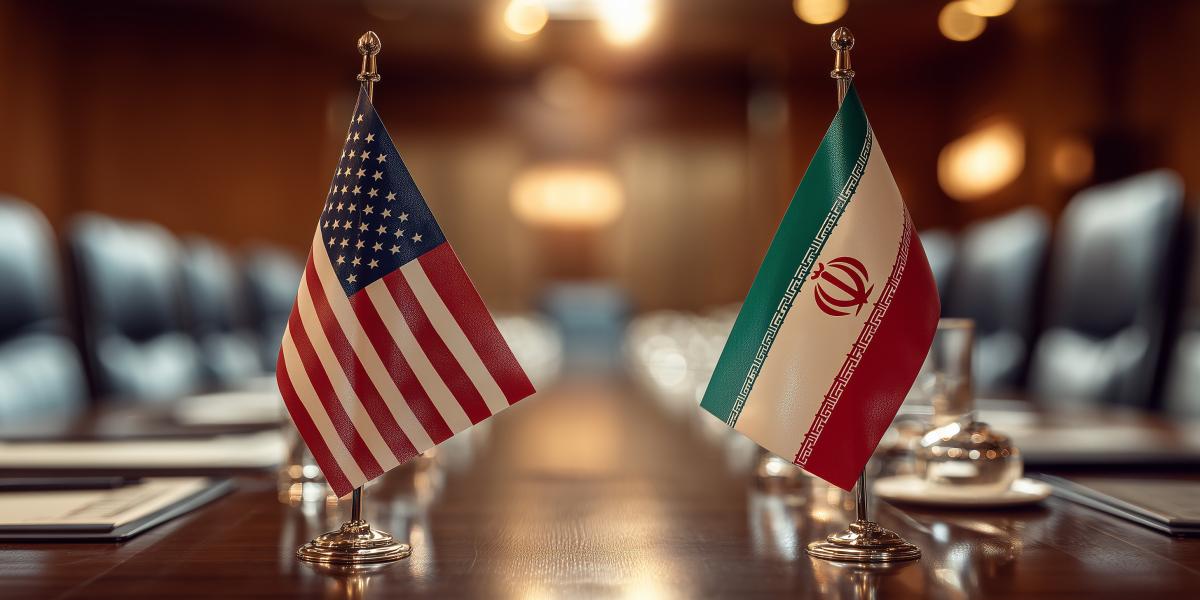
Donald Trump today, in a post on his social media platform Truth Social, stated that his goal for the current war with Iran is unconditional surrender. Specifically, he wrote: “There will be no deal with Iran except UNCONDITIONAL SURRENDER!” 

Moreover, Trump specified that the US will have final say on “the selection of a GREAT & ACCEPTABLE Leader(s).”

In stating all this, however, Trump is essentially announcing that the US will be at war for an extended period. 

Historians have long noted that demands for unconditional surrender have worked to prolong conflicts rather than shorten them, leading to needless death on both sides. After all, Trump is essentially saying that the Iranians should put themselves in a position of accepting whatever terms the United States seeks to unilaterally impose, including the total dissolution of the Iranian state, plus sanctions, punishments, occupations and other humiliations. What government would accede to this? Very few would, which is why only very weak, small, and relatively unarmed regimes can be forced into accepting unconditional surrender after anything less than a protracted war. 

Iran, however, is not weak, small, or relatively unarmed. And, geography is in its favor. Indeed, in an interview earlier this week, international-relations expert John Mearsheimer spoke at length about the likely outcomes of the US. “It is almost impossible for me to see how Israel and the US win this war,” Mearsheimer concluded, largely because the prospects for regime change—i.e., unconditional surrender—are extremely small. Moreover, in order to get the kind of regime change that Trump is talking about, any new regime would also have to be permanently aligned with the United States. That is, a new regime isn’t enough. It has to also be a regime that takes orders from the United States. Given the reality on the ground in Iran, Mearsheimer continued, any new regime will be hostile to the United States. This fact is hinted at in the fact the the new Ayatollah, who has now replaced the 86-year old Ayatollah Khamenei, is far more radical than the old one. For example, the older Ayatollah, assassinated by the US this week, was against nuclear enrichment and was a moderate. The new leadership is not.  

Thus, Mearsheimer concludes that, in order to win this conflict, “All the Iranians have to do is survive.” The Iranians know that “unconditional surrender” means turning Iran into a perennial puppet state of the US regime. This is not something that governments—or even their subject populations—tend to accept without first engaging in a long war of self-preservation. 

Not that the current administration will trouble itself with these sorts of details. Nonetheless, the reality of the situation means that so long as Trump actually sticks to a goal of unconditional surrender, it is very likely he is committing the United States to a lengthy war. 

It’s Time to End the American Obsession with “Unconditional Surrender”

The American maximalist approach of “unconditional surrender” has its origins in the Second World War during which the United States sought to follow the lead of the British and French allies who had imposed near-unilateral terms of surrender on the Germans at the end of the First World War. This had been done with very limited concession to German negotiators. The lopsided nature of the “negotiations” can be seen in the way the Germans were forced to accept the “war guilt” clause. Explicitly assigning total guilt to one side in a war was unheard of in modern international law up to that time. 

Yet, the idea of forcing total capitulation on one side, without any negotiation, became a hallmark of the Second World War, when both the Germans and the Japanese were said to be subject to unconditional surrender. The basic operating procedure in these cases is simply to keep bombing the enemy country until its regime gives the victor everything it wants without any conditions. 

Yet, historians have long pointed out that this policy tends to prolong wars needlessly. For example, B.H. Liddell Hart, in his History of the Second World War, concluded that the demand for unconditional surrender stiffened German resolve and was exploited by Nazi Propagandist Joseph Goebbels to maintain support for the National Socialists among the general population. Liddell Hart maintained that German resistance during the last two years of the war was far stronger than it would have been in the absence of demands for unconditional surrender. Eventual surrender only came after the deaths of 104,000 Americans killed in action during the last year of the war in Europe. 

In practice, however, unconditional surrender is such an extreme position that it rarely materializes in actual practice. For example, as international relations scholar Paul Poast has noted, the Americans were ultimately unable to impose total “unconditional surrender” demands in the case in the US-Japanese conflict. The Japanese refused to surrender unless the US pledged to not attempt to abolish the Japanese monarchy. The Americans eventually agreed. 

The capitulation of the National Socialists and Imperial Japan, and the Treaty of Versailles, are all extreme cases. The fact is that very few wars are ended along the lines of anything we would call “unconditional surrender.” This has been known for a long time, and was explored in detail by Coleman Phillipson in his 1916 book Termination of War and Treaties of Peace. Phillipson notes that in cases where total “subjugation” of another state occurs, there was no reason for concluding a negotiated settlement, as the imposition of the conqueror’s will on the conquered nation involved merely a unilateral arrangement.” The normal, far more common mode of bringing about peace in international conflicts, however, is a “compromise ad hoc, involving an agreement as to demands made on both sides, and settling all the matters in dispute.”

Indeed, many military personnel in World War II were alarmed by the administration’s adoption of the new doctrine with General Dwight Eisenhower’s naval aide Captain Harry Butcher stating privately that “any military person knows that there are conditions to every surrender.”

Berenice Carroll concludes (in “How Wars End: An Analysis of Some Current Hypotheses”) that it is not actually all that easy to determine the “victor” from the “loser” in an international conflict once all of the costs have actually been analyzed. Or, as Lewis Coser has put it, because of this, “most conflicts end in compromises in which it is often quite hard to specify which side has gained relative advantage.” 

For all these reasons, it’s important to think long and hard about doubling down on a “strategy” that’s guaranteed to prolong a conflict. 

Yet, from the point of view of the current warhawks, it may be that no “sacrifice” is too great for ordinary Americans to bear in the name of fighting the Iranians at the behest of the Israel lobby in the United States. After all, the administration refuses to rule out a ground invasion into Iran, a mountainous country armed with tens of thousands of missiles.  

Fortunately, though, we’ve already seen the Americans abandon earlier calls for unconditional surrender in recent years. In 2022, in the wake of the Russian invasion of eastern Ukraine, President Biden called for regime change in Russia, which, in the Russian context, would likely have required the imposition of unconditional surrender.  This, however, was conveniently forgotten when it became clear that a war of that nature would require a long, bloody war for the Americans, and risk nuclear war.  

So, if good sense prevails, the American regime will “forget” that Trump called for unconditional surrender, and instead pursue a more sane, negotiated resolution. 


Source link

Tags: goalLongSignalssurrenderTrumpUnconditionalWar
ShareTweetShare
Previous Post

The unexpected 92,000 drop in payrolls is a clue we might be reading the AI jobs narrative all wrong

Next Post

I used to start every day by opening my laptop before I had finished my coffee and by 9am I had already responded to eleven other people’s priorities and had not spent a single minute on my own — and I did that for six years and called it work ethic before I understood it was the most effective way I had ever found to avoid the discomfort of deciding what I actually wanted

Related Posts

Republican Party Displacement | Mises Institute

Republican Party Displacement | Mises Institute

by FeeOnlyNews.com
August 8, 2026
0

Mark Thornton returns to Rothbard’s idea of major party realignment, arguing that ideology—not interest-group politics alone—drives long-term political change. He...

Democrats’ Affordability Message Misses a Key Expense—Student Debt

Democrats’ Affordability Message Misses a Key Expense—Student Debt

by FeeOnlyNews.com
August 8, 2026
0

Yves here. Although this article on student debt traps does not make these assumptions, many articles I see about student...

The Unwinnable Iran War | Armstrong Economics

The Unwinnable Iran War | Armstrong Economics

by FeeOnlyNews.com
August 8, 2026
0

I have reported that Trump was mislead into this unwinnable war with Iran, which has been planning for it since...

Here are three key takeaways from the disappointing July jobs report

Here are three key takeaways from the disappointing July jobs report

by FeeOnlyNews.com
August 7, 2026
0

Job seekers speak with employer representatives and browse information tables as they attend an Inspire Together job and resource fair...

Coffee Break: Gene Editing Gone Wrong, Plants that Eat Animals, and a Neanderthal Gene that Makes a Difference

Coffee Break: Gene Editing Gone Wrong, Plants that Eat Animals, and a Neanderthal Gene that Makes a Difference

by FeeOnlyNews.com
August 7, 2026
0

Part the First: If You Stretch Biomedical Science Too Far It Breaks, Every Time.  Gene editing using CRISPR technology has...

Netanyahu’s Scorched Earth Tactics | Armstrong Economics

Netanyahu’s Scorched Earth Tactics | Armstrong Economics

by FeeOnlyNews.com
August 7, 2026
0

According to formal complaints lodged by Lebanon with the United Nations, Israel did spray a toxic herbicide over agricultural land...

Next Post
I used to start every day by opening my laptop before I had finished my coffee and by 9am I had already responded to eleven other people’s priorities and had not spent a single minute on my own — and I did that for six years and called it work ethic before I understood it was the most effective way I had ever found to avoid the discomfort of deciding what I actually wanted

I used to start every day by opening my laptop before I had finished my coffee and by 9am I had already responded to eleven other people's priorities and had not spent a single minute on my own — and I did that for six years and called it work ethic before I understood it was the most effective way I had ever found to avoid the discomfort of deciding what I actually wanted

Explained: Why BlackRock stock tanked 7% after curbing withdrawals from flagship fund

Explained: Why BlackRock stock tanked 7% after curbing withdrawals from flagship fund

  • Trending
  • Comments
  • Latest
Coffee Break: Armed Madhouse – From Spy Satellites to Peace Satellites

Coffee Break: Armed Madhouse – From Spy Satellites to Peace Satellites

July 7, 2026
US prosecutors examine LA Dodgers owner Mark Walter-linked insurers – report

US prosecutors examine LA Dodgers owner Mark Walter-linked insurers – report

July 21, 2026
Teachers’ Unions Shell Out More Than  Billion on Politics

Teachers’ Unions Shell Out More Than $1 Billion on Politics

May 14, 2026
Why did a 4 billion CEO just endorse stripping most Americans of voting rights?

Why did a $154 billion CEO just endorse stripping most Americans of voting rights?

July 27, 2026
Product-Market Fit Expires Every 90 Days. Here’s What to Do About It.

Product-Market Fit Expires Every 90 Days. Here’s What to Do About It.

July 15, 2026
Bond Vet and Small Door Merge to Form One of the Nation’s Largest Premium Veterinary Networks – AlleyWatch

Bond Vet and Small Door Merge to Form One of the Nation’s Largest Premium Veterinary Networks – AlleyWatch

July 9, 2026
Advanced Micro Devices (AMD) Price Prediction: How Much a ,000 Investment Could Be Worth by 2031

Advanced Micro Devices (AMD) Price Prediction: How Much a $5,000 Investment Could Be Worth by 2031

0
Cities holding up to 3 million people found under Amazon rain forest

Cities holding up to 3 million people found under Amazon rain forest

0
Republican Party Displacement | Mises Institute

Republican Party Displacement | Mises Institute

0
Bybit Uses Tokenised Equities as Underlyings for Structured Yield

Bybit Uses Tokenised Equities as Underlyings for Structured Yield

0
Explained: How BSE traded fewer contracts after CAS but premiums rose 75% in first week

Explained: How BSE traded fewer contracts after CAS but premiums rose 75% in first week

0
Vaxart outlines Phase IIb COVID-19 top line data in first half of 2027 backed by BARDA funding (OTCMKTS:VXRT)

Vaxart outlines Phase IIb COVID-19 top line data in first half of 2027 backed by BARDA funding (OTCMKTS:VXRT)

0
Advanced Micro Devices (AMD) Price Prediction: How Much a ,000 Investment Could Be Worth by 2031

Advanced Micro Devices (AMD) Price Prediction: How Much a $5,000 Investment Could Be Worth by 2031

August 8, 2026
Republican Party Displacement | Mises Institute

Republican Party Displacement | Mises Institute

August 8, 2026
Vanguard Chief Economist: AI and jobs, still in an ATM phase

Vanguard Chief Economist: AI and jobs, still in an ATM phase

August 8, 2026
Explained: How BSE traded fewer contracts after CAS but premiums rose 75% in first week

Explained: How BSE traded fewer contracts after CAS but premiums rose 75% in first week

August 8, 2026
Democrats’ Affordability Message Misses a Key Expense—Student Debt

Democrats’ Affordability Message Misses a Key Expense—Student Debt

August 8, 2026
Banks or NBFCs? DSP’s Preethi R S explains where she sees the best opportunities

Banks or NBFCs? DSP’s Preethi R S explains where she sees the best opportunities

August 8, 2026
FeeOnlyNews.com

Get the latest news and follow the coverage of Business & Financial News, Stock Market Updates, Analysis, and more from the trusted sources.

CATEGORIES

  • Business
  • Cryptocurrency
  • Economy
  • Financial Planning
  • Investing
  • Market Analysis
  • Markets
  • Money
  • Personal Finance
  • Startups
  • Stock Market
  • Trading

LATEST UPDATES

  • Advanced Micro Devices (AMD) Price Prediction: How Much a $5,000 Investment Could Be Worth by 2031
  • Republican Party Displacement | Mises Institute
  • Vanguard Chief Economist: AI and jobs, still in an ATM phase
  • Our Great Privacy Policy
  • Terms of Use, Legal Notices & Disclaimers
  • About Us
  • Contact Us

Copyright © 2022-2024 All Rights Reserved
See articles for original source and related links to external sites.

Welcome Back!

Sign In with Facebook
Sign In with Google
Sign In with Linked In
OR

Login to your account below

Forgotten Password?

Retrieve your password

Please enter your username or email address to reset your password.

Log In
No Result
View All Result
  • Home
  • Business
  • Financial Planning
  • Personal Finance
  • Investing
  • Money
  • Economy
  • Markets
  • Stocks
  • Trading

Copyright © 2022-2024 All Rights Reserved
See articles for original source and related links to external sites.