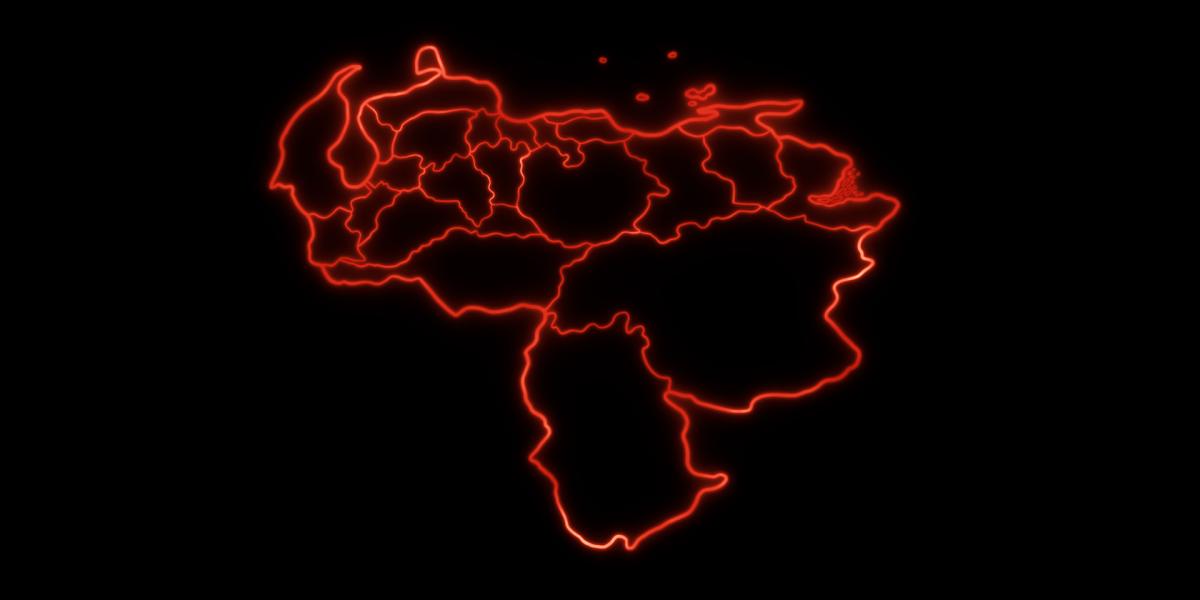
Early Saturday morning, after months of military buildup, strikes on boats, and verbal threats, US forces entered Venezuela on President Trump’s orders and captured President Nicolás Maduro.
A few dozen Venezuelan soldiers and civilians were reportedly killed in the bombings carried out to cover the American soldiers who flew in to grab the Venezuelan leader.
Maduro has since been flown to New York City, where he will stand trial for violating numerous American laws against gun possession and for his alleged involvement in a conspiracy to smuggle cocaine.
After some initial skepticism from Republican lawmakers about the constitutionality of the capture, Secretary of State Marco Rubio came out and clarified that the administration did not consider this an act of war or a military operation but rather a law enforcement endeavor with military cover—so concerns about the president’s power to unilaterally wage war were therefore irrelevant.
But, the soundness of that legal distinction aside, at a press conference the day after the operation, Trump said in the aftermath of Maduro’s capture, the US government would now “run Venezuela”—suggesting geopolitical motivations that go far beyond a simple execution of an arrest warrant.
Indeed, despite the administration’s attempt to frame this entire episode as a way to address America’s drug overdose crisis, this operation is actually the culmination of a long pressure campaign by a coalition of industry and ideological interest groups who wanted Washington to carry out a regime change in Venezuela for different reasons.
That coalition includes energy companies that want to protect and, better yet, expand their access to oil deposits in the region and have taxpayers help them make up for the losses they suffered when Venezuela nationalized its oil supply. There are also a lot of Latin American emigrants who want the US government to overthrow the regimes they fled, weapons companies and “national security” officials who want to protect their revenue and jobs as Trump tries to wind down the war in Ukraine, and GOP strategists who want to “look tough” before the upcoming midterms, among others.
Progress was made toward all these ends for these groups when Trump launched this operation over the weekend. But there are also a lot of unknowns about what comes next.
Trump and his acolytes were quick to dismiss concerns that this could turn into another endless nation-building exercise by acting like this was a successful regime change that’s already done. But the regime hasn’t changed.
After Maduro’s capture, his right-hand man and Minister of the Interior, Diosdado Cabello, was on state TV calling on Venezuelans to resist American aggression. Defense Minister Vladimir Padrino Lopez announced that he had activated and mobilized all of Venezuela’s military capabilities. And Maduro’s Vice President Delcy Rodriguez—who was sworn in as acting president on Monday—made a defiant appearance on state TV in the hours after the American operation, saying Venezuela will “never be the colony of any empire,” and that Maduro remained the country’s legitimate president.
The Trump administration has, notably, shrugged this off—appearing to treat, especially Rodriguez’s comments, as domestic signaling necessary to keep the regime in line. Trump also threw cold water on the accession of opposition leader Maria Corina Machado, who was widely expected to be installed as president if the US pursued regime change in Venezuela, saying she did not have the domestic support or respect needed to take power.
There’s some speculation that this snub is the result of Machado accepting the Nobel Peace Prize that Trump has long coveted. And while that may be a partial factor, it’s beginning to look more like a potential deal was struck between Rodriguez and her brother—who heads the national assembly—and the Trump administration.
The Rodriguez siblings are one of many groups sharing and vying for power within the Venezuelan regime. And while they are entrenched in the “Chavista” establishment, they’ve also shown themselves to be more flexible and less ideological than many of their compatriots. It is still early, but it appears like the siblings may have agreed to allow Maduro to be taken—potentially going as far as to issue a stand-down order to the military—in order to remain in power.
If true, Trump in turn got to enjoy the optics of capturing and embarrassing a geopolitical rival while gaining some serious leverage over the remaining Venezuelan regime. That may seem like a major political win. But even if this is true and there has been an effort by both sides behind the scenes to keep everything stable, this is still a very risky situation. The removal of Maduro was, in the scheme of things, the easy part.
Because remember, there are a lot of groups on both sides that all want different things. If it becomes clear that Trump is willing to work with the current Venezuelan regime in exchange for oil access and some miscellaneous concessions, that will enrage the displaced emigrant communities that want socialist regimes like Venezuela and Cuba toppled, and for the US to help bring back the political setup that had preceded them.
But if Trump ramps up the pressure to try and force the regime into making a serious departure from the Maduro days—as he’s currently blustering a lot about doing—that risks fracturing the Venezuelan regime. The ruling coalition has, to a large degree, been unified around opposition to the “imperialists” in Washington, DC. If a couple of people at the top of the government suddenly start acting as de facto puppets of those same “imperialists” in Washington, DC, it is far from a given that everyone will go along with that.
Even if that doesn’t take the form of a palace coup that deposes the pliant parties and turns the Venezuelan regime as a whole back into a unified enemy of the US, a sizable break within the Venezuelan military, militias, or “collectives”—pro-regime armed gangs—could quickly break into a large, decentralized, and well-armed insurgency that would be a lot harder to put down than a centralized conventional force.
Venezuela does not have the kind of sectarian, tribal, or religious divides that helped turn Washington’s nation-building attempts in the Middle East into decades-long nightmares. But, as Joseph Addington noted in The American Conservative, a genuine attempt to restructure Venezuela to the administration’s liking could quickly run into the powerful drug cartels with their major power bases in the region and significant penetration of both the Venezuelan government and military. These groups have the money, weaponry, and supply lines to keep an insurgency fighting in Venezuela for a long time, and the incentive to do so.
Trump’s assumption so far seems to be that if he continues to threaten Venezuelan leadership with further military action, he can force them to turn their enforcement mechanisms against any resistant groups or insurgencies. But, again, even if it’s done with a gun to the head, that kind of acting on behalf of the American government is the very thing likely to fuel resistance in the first place. It creates a Catch-22.
And, if the pliant regime either fails or turns back against the US, Trump would have to choose between backing off then and losing face or making good on his threats and ordering troops in to carry out a new nation-building project that is already unpopular with the American people.
And again, this is all assuming the president has successfully worked out some back-room, pro-stability deal with members of the Venezuelan regime and won’t have to send troops in to enforce his demands to begin with.
All of that is to say that just because the Trump administration successfully orchestrated Maduro’s capture does not mean they have succeeded in carrying out a regime change. If they really try to—or try to threaten the current regime into making the changes that would have been brought about by a regime change—there is a real risk that it could devolve into the exact kind of forever war Trump and his cabinet have been so dismissive of these last couple days where, at best, a sizeable sum of taxpayer dollars are spent to bankroll a Venezuelan-led counterinsurgency and, at worst, American troops have to go fight and die in yet another unnecessary nation-building war.
But, for the sake of argument, let’s assume none of that happens. Let’s assume the Venezuelan regime bends to Trump’s will, grants every one of his demands, and that the entire government falls completely in line and puts down any resistance without even needing US support. Even if that is somehow the way this plays out, this is still a path the American people should oppose.
Because, once again, this is all being carried out to benefit a few well-connected groups with a lot of influence over the president—not the American people as a whole.
The claim that taking out the Venezuelan regime would help solve the drug overdose crisis was a lie from the beginning—a fake excuse used to justify the escalation, not an actual motivation for it. Oil companies are right to be upset that they suffered losses after the Venezuelan government nationalized its oil supply back in the 1970s. That doesn’t mean they get to force already-struggling American taxpayers to help them recuperate those losses decades later.
The same goes for opponents of Latin American regimes. Of course, everyone is justified in opposing the tyrannical aspects of their governments. The world would be a better place if more people did. But no group of political dissidents has the right to force another population to bankroll the overthrow of their political enemies and establishment of their preferred government.
All of this might have been palatable if the American people were thriving and everyone had plenty of disposable income to tap into. But this country is in the middle of an escalating affordability crisis. We cannot afford to keep spending even more of our money to benefit well-connected groups because they’re good at lobbying.
It’s also worth noting that the presence of other powers like China in Latin America poses no imminent threat to the safety or economic security of Americans. Also, the hostility between the US government and “rival” powers like China and Russia are greatly aggravated by Washington’s fixation on being the dominant power in their near-abroads—not the irrational obsession with hurting Americans for no reason that our leaders like to ascribe to them. Americans could be made a lot safer in that regard if Washington stopped unnecessarily stoking those hostilities in the South China Sea and Eastern Europe.
And that speaks to a broader point that is so important to keep in mind amidst all these new developments with Venezuela: that the primary factor at the core of so many of our societal problems—including most that Trump himself ran on—is the attempt by the American political class to maintain a global empire, with all the economic, moral, security, and cultural decay that brings.
This country is on a bad economic trajectory, in large part because of the inflationist permanent wartime economy that we’re forced to live under to make something as absurdly expensive as a global empire seem financially possible. As economists like Guido Hülsmann and Jeff Degner have pointed out, that economic setup is extremely damaging to the cultural health of the country.
But so is the constant drive towards war, the abandonment of basic moral norms to bolster military dominance, and the almost unhuman tendency to see mass violence—not as a horror that should only ever be pursued as an absolute last resort—but as a lucrative way to enrich related industries, grab more and more control over the domestic and foreign populations, and prop up any foreign group or country that’s willing to pay enough.
Thankfully, it seems that many Americans have finally begun to wake up to this—especially in the wake of the disastrous wars in Iraq and Afghanistan. That is a good thing. Public awareness is a necessary first step if we’re ever going to truly shift to a better path—which is why the people benefiting from this setup work so hard to propagandize the population into accepting it.
But while those of us who oppose this entire, awful imperial project often focus on disastrous, long, bloody, expensive wars like Vietnam, Iraq, and Afghanistan, it’s important to keep in mind that the short “successful” wars and military interventions are also responsible for bringing about this mess. Because they help delude the population into thinking that this ever-expanding, unsustainable, societal decay-inducing global empire is actually good and workable.
In other words, in the wake of a horrifying war like Vietnam you don’t get the 2003 invasion of Iraq or the twenty year quagmire in Afghanistan without “quick wins” like Reagan’s invasion of Grenada, Bush Sr.’s regime change in Panama, or the “dominant victory” over Iraq in 1991—which Bush celebrated for having “kicked Vietnam syndrome, once and for all.”
That is another risk of Trump’s intervention in Venezuela. Even if it “goes well” and the region stabilizes in some way that Washington, DC prefers without requiring an abnormal amount of tax dollars, that seemingly positive outcome could be used to mislead more voters, commentators, and politicians into thinking that regime change and nation-building are actually safe and worthwhile policies after all.
That is by no means a reason to hope for a disastrous war. Nobody, on any side, should want that, and everyone should do whatever they can to avoid that.
But if we’re somehow able to navigate this precarious moment without another endless war breaking out, it is imperative that we prevent a good outcome from being used to push us even further down this terrible path we so desperately need to depart from.