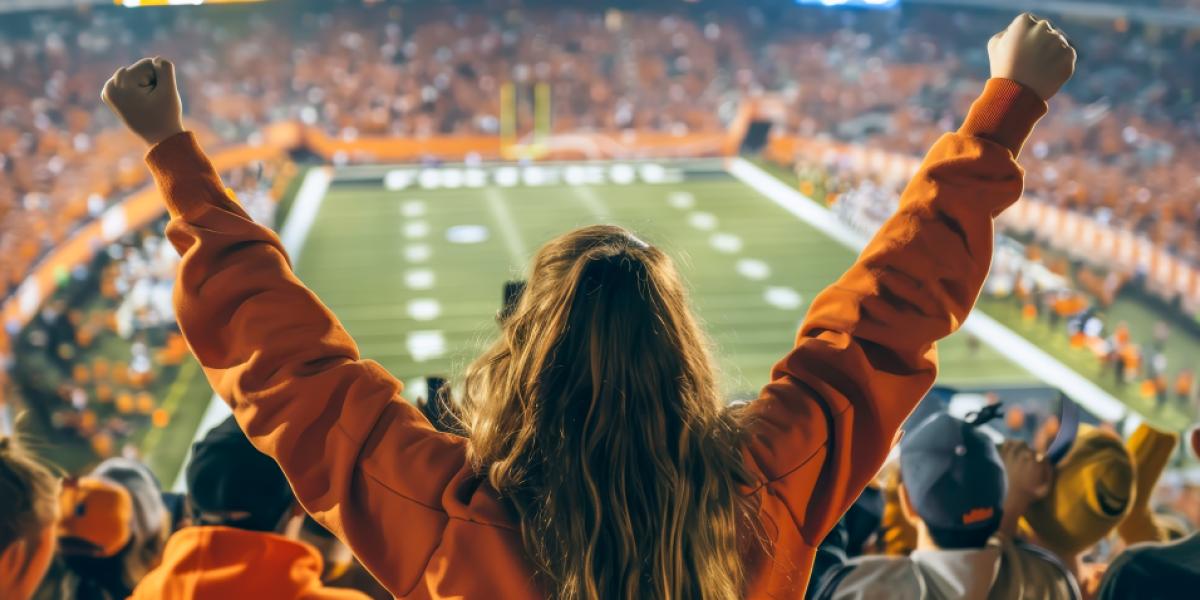
The photo says it all, with fans of the University of Mississippi giving their former coach, Lane Kiffin, the one-finger salute as he boarded a private jet to take him to his new job in Baton Rouge, where he will coach the Louisiana State University Tigers football team. With LSU offering Kiffin a seven-year, $91 million package, plus the resources LSU has to build championship football programs, one might understand why Kiffin bolted to Baton Rouge.
Of course, the Kiffin drama, as juicy as it was, hardly was the only big story in college football this past season. Coach firings led the way, including the respected James Franklin getting the axe at Penn State after 13 years, Kentucky canning its winningest coach, Mark Stoops, LSU firing Brian Kelly, and Florida finally parting ways with Billy Napier.
One reason these firings were considered big news was that LSU, Florida, and Penn State are “blue bloods” of college football, and with the firings came large buyouts that already are likely to stress these programs. Yet, LSU was willing to pay its $53 million buyout to Kelly even as it turned around and made a huge offer to Kiffin.
These eye-popping numbers have increasingly become the norm at the top levels of the sport. Since 2005, the salaries of top coaches have increased over 400-500 percent by programs seeking to gain a competitive edge.
YearAvg Top 5 SalaryAvg Top 10 SalaryAvg Top 25 Salary2005$2.15 million$2.03 million$1.43 million2015$5.73 million$4.49 million$4.40 million2025$11.93 million$11.09 million$9.72 millionPercent Increase 2005-25445 percent increase446 percent increase580 percent increaseInflation adjusted238 percent increase233 percent increase314 percent increase
While the burning of large sums of money this year seems like pure madness, there are rational explanations as to why these college programs are willing to shell out this kind of money for their sports programs, and especially football. College football revenue has increased by roughly 300 percent since 2005, driven by increasingly lucrative television contracts from media giants such as Disney, CBS, and Fox. With new television deals has come increased realignment of athletic conferences, creating a culture of fear of an uncompetitive program being left behind during the next round of negotiations, as what happened to Oregon State and Washington State when the PAC 10 collapsed from their own mismanagement.
An additional reason is explained by additional incentives to academic institutions in what we might call the Nick Saban Effect—when enrollment at the University of Alabama grew by more than 50 percent during his tenure there. Tuition payments went up dramatically as the portion of out-of-state students increased to where about half of the undergraduate student body came from outside Alabama. In other words, whatever Alabama paid Nick Saban was overwhelmed by the financial payday the university received by having a championship football program.
But there is another reason we are seeing vast sums of money spent not only for coaches but for the relatively-new Name, Image, and Likeness (NIL) dollars being funneled to athletes. In fact, one of the reasons that Kiffin agreed to coach LSU was that he was promised $25 million for NIL, which can buy some very good athletes. (Lest one think the female collegiate athletes are ignored, some are making some tidy sums on their own).
There is a darker side to the influx of money into collegiate sports, as sports betting laws are relaxed and online betting is easily made available, with billions of dollars now flowing into that sector, both into professional and collegiate sports. Whatever legal restrictions there might have been on gambling, not to mention the reduction of social pressures against betting, now are in the wind and questions about how gambling affects the “integrity” of sports are now front-and-center. Jenny Vrentas writes in The New York Times:
In-game betting raises issues beyond the realm of problem gambling by creating the potential for bets on discrete moments that might be susceptible to manipulation. Major League Baseball is investigating two Cleveland Guardians pitchers in connection with suspicious wagering activity on individual pitches in their games. (The M.L.B. players’ union declined to comment on the players’ behalf.)
Even league officials, like the M.L.B. commissioner, Rob Manfred, have raised concerns about game integrity when it comes to live bets. He told reporters this year that certain kinds of microbets might be “unnecessary and particularly vulnerable.” The N.F.L. has also worked to disallow certain live bets, such as the first play of the game or if a kicker will miss a field goal.
Vrentas continues:
Concerns about addiction and game integrity have bubbled up in state-level discussions of sports gambling. In the Minnesota Legislature, Jordan Rasmusson, a Republican senator, pushed to include a ban on in-game betting in a bill that was considered last year. He cited a 2018 peer-reviewed study from Australia that found that 78 percent of sports bettors who bet on microevents met the criteria for problem gambling, compared with 29 percent among sports bettors who did not bet on microevents. The results suggest that this type of gambling can amplify harms for people who are struggling.
Behind all of this is the long regime of easy money that comes from the policies at the Federal Reserve System. The Fed’s spigot of easy money and credit have fueled the conditions for financialization that contributed to the astronomical revenue increases witnessed in sports programming. The low interest environment paralleling the rapid increase in coaching salaries allowed companies such as Disney to significantly increase its debt to capture a coveted monopoly on SEC programming. Further, the demand for a piece of the college athletic pie, coupled with athletic department necessity to finance their competitive arms race, have led to investment firms seeking direct deals with American universities.
While it is possible these investments prove profitable over the long run as the media landscape continues to transition towards capturing streaming audiences, it is clear the size and scale of these investments has been assisted by an era of accommodating monetary policy. Of course, the financial resources provided by traditional boosters and donors are additional benefactors of the same financialized environment.
This is the precise environment that has resulted in the salaries of college football’s top coaches rising at the same rates of America’s top tech CEOs.
But what happens, however, if the forces that have propelled the sports gold rush turn? In 2008, the financial crisis resulted in significant cuts to a large number of athletic departments. Additionally, recessions directly impact the financial ability for fans to spend money on their favorite pastime, which would impact the ticket revenue being packaged to investing firms. The growing costs of streaming deals have driven increasing prices for streaming services, forcing consumers to make increasingly difficult decisions.
At the very least, college athletics have increasingly become an environment of the “haves and have nots,” resulting in the collapse of traditional rivalries. The increasingly professional—or, perhaps, venal—nature of the college athlete risks alienating the very appeal of collegiate athletics.
No doubt, college sports—and especially football—will continue to provide much on-field and off-field drama. But when the economy falls into recession—as it surely will do soon enough—one doubts that boosters and fans will be able to pony up the vast sums of money they now are directing toward their favorite collegiate teams.













-1024x683.jpg "Strait Outta Hormuz: Getting the Iran Oil Story Straight")