The United States’ national debt now totals roughly $38.7 trillion, exceeding $355,000 per taxpayer. Such figures invite scrutiny of the government programs driving chronic budget deficits. According to the Peter G. Peterson Foundation, “one of the largest drivers of that rising debt is federal spending on major healthcare programs, such as Medicare and Medicaid. Federal healthcare spending is expected to increase by 73 percent over the next ten years,” but many rarely take the time to consider a major underlying reason: federal spending is driving unsustainable federal deficits by distorting agricultural, dietary, and healthcare policy.
Federal subsidies deserve closer scrutiny for the role they may play in reinforcing a self-perpetuating cycle of fiscal and public-health strain. In simplified form, the dynamic works as follows.
Agricultural subsidies help shape food markets in ways that make ultra‑processed foods consistently cheaper than whole, minimally-processed alternatives. Federal nutrition assistance programs, including SNAP, then channel taxpayer dollars into a food environment where the most affordable options are often the least nutritious. Over time, the resulting rise in diet‑related chronic disease shifts costs onto publicly-funded healthcare programs, particularly Medicaid, which absorbs a growing share of treatment expenses for metabolic and chronic diseases.
These policies, which subsidize unhealthy food production, finance its consumption, and underwrite the downstream health consequences, contribute to growth in federal spending. Since the federal spending is financed through persistent deficits and monetary expansion, the result is increased inflationary pressure.
Agricultural Policy: Corn, Soybeans, Grains, Etc.
The United States agricultural policy is determined each year by the Congress in the so-called “Farm Bill.” According to the Cato Institute, major federal support and subsidies began in the 1930s. “Most direct subsidies are for large producers of corn, soybeans, wheat, cotton, and rice—not for livestock producers or fruit and vegetable growers.” From both a domestic policy and national security perspective, the federal government has a national interest in protecting domestic food producers to provide sufficient food for the citizenry and export food to international markets. The problem becomes when those subsidized products are not essential to human dietary health.
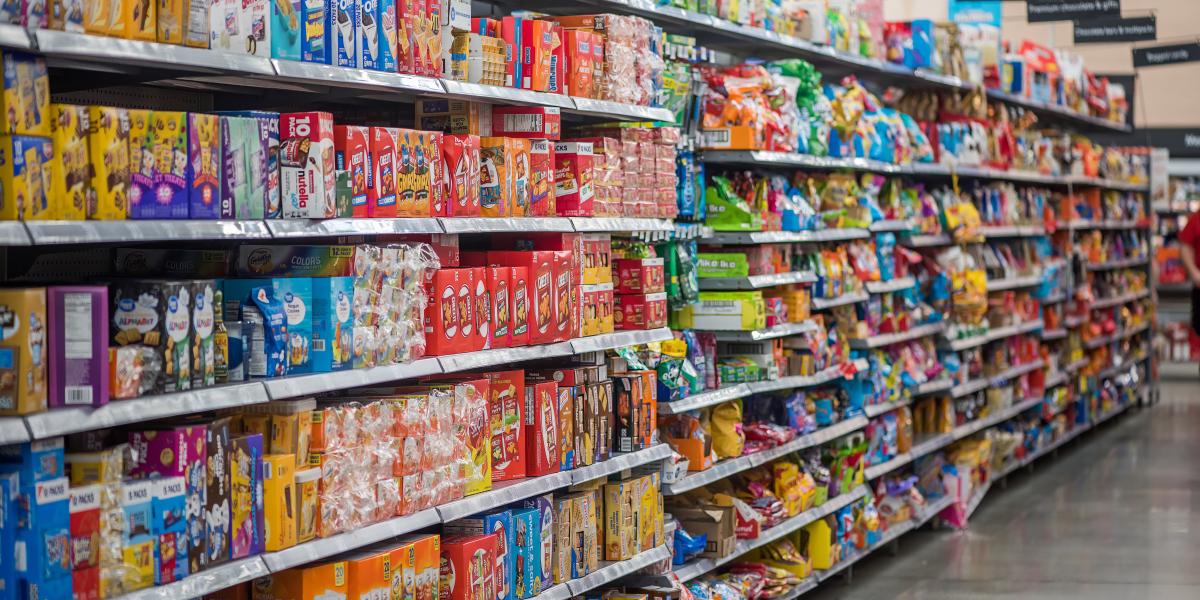
The subsidized commodity crops such as corn, soybeans, and wheat have become ubiquitous in the American diet. Because these crops are artificially inexpensive, manufacturers may be inclined to leverage the crops or derivatives to produce ingredients, such as corn syrup, seed oils, and chemical additives. Food producers are inclined to leverage the cheaper ingredients to formulate food products that will be appealing to the consumer due to their lower cost but also shelf stable. In addition to cheaper commodity crops and their derivatives, food producers may use fillers or other ingredients to enhance the taste, appearance, or shelf life of their products.
For the consumer, cheaper food means more income to spend on other necessities or even luxury products. However, these ultra-processed foods may be depleted of essential nutrients and minerals that are stripped during the production of the food product. A 2024 British Medical Journal (BMJ) meta-analysis found that consumption of ultra-processed foods is associated with a higher risk of death from any cause and is tied to thirty-two health outcomes, including cancer, heart disease, and metabolic disorders.
According to that 2024 BMJ meta-analysis, there are several factors in play:
“Alterations in the food matrix during intensive processing, also known as dietary reconstitution, may affect digestion, nutrient absorption, and feelings of satiety.”“Emerging evidence in humans shows links between exposure to additives, including non-sugar sweeteners, emulsifiers, colorants, and nitrates/nitrites, and detrimental health outcomes.”“A growing body of data shows instances of exposure to combinations of multiple additives, which may have potential ‘cocktail effects’ with greater implications for human health than exposure to a single additive.”“Ultra-processed foods can contain contaminants with health implications that migrate from packaging materials.”
Together, these four factors may contribute to the negative health outcomes associated with ultra-processed foods that are derived from subsidized commodity crops.
SNAP: Junk Food and Sodas
The Supplemental Nutrition Assistance Program (SNAP) is administered by the states but is managed by the United States Department of Agriculture (USDA), which is funded by the Farm Bill. SNAP is intended to supply nutrition to low-income, vulnerable individuals. According to USDA, approximately 20 percent of the annual SNAP budget is spent by recipients on junk food, candy, dessert, and soda. Contributors at The Hill presented a notable statistic: 9.3 percent of all SNAP dollars are used on sugar-sweetened beverages. The contributors estimate that the SNAP subsidy “drives 20 to 25 percent of U.S. revenues for Coca-Cola and PepsiCo.”
Over the past several decades, a primary point of critique from Republican policymakers regarding SNAP has been the proposal that recipients should be required to work at least 80 hours per month to maintain eligibility. Beyond debates concerning work requirements, few elected officials (outside of former Minnesota Republican Governor Tim Pawlenty) have sought to address broader systemic issues, such as allowing SNAP funds to be used for the purchase of junk food and soda.
In February 2025, Senator Mike Lee of Utah introduced a bill to stop SNAP funds being used for unhealthy foods and sodas. Since this move, several states have enacted restrictions that prevent SNAP funds from being used on sugary drinks and candy, which is undoubtedly a step in the right direction. The federal government should not be providing taxpayer dollars to subsidize the purchase of products that do not advance the mission of the SNAP Program, which is to provide “food benefits to low-income families to supplement their grocery budget so they can afford the nutritious food essential to health.”
Healthcare Spending and Chronic Diseases
As discussed earlier, the agricultural policy of the United States subsidizes a variety of commodity crops that have been used to reduce the cost of the food supply. In turn, the food manufacturers have looked for ways to keep food prices low, while also keeping consumers coming back for their products. Unfortunately, the diet of the average American has been filled with low-quality, nutrient-deficient food products. Low-income families face greater risks due to the widespread availability of inexpensive, highly-processed foods. Numerous studies link poor diets (diets depleted of nutrient-dense foods) to metabolic and chronic diseases.
For example, a study by Tufts University found that 85 percent of all healthcare spending relates to managing metabolic and chronic diseases; according to the study, the federal government spends $383.6 billion per year to treat these conditions. Per the Centers for Disease Control and Prevention (“CDC”), “ninety percent of the nation’s $4.9 trillion in annual health care expenditures are for people with chronic and mental health conditions.” The CDC further outlines spending by disease: $233.3 billion per year on heart disease and stroke, $413 billion in 2022 on diagnosed diabetes, $173 billion per year on obesity, estimated $360 billion on Alzheimer’s disease in 2024, and 25 percent ($95.7 billion) of Medicare spending goes to chronic kidney disease.
Inflation and Excessive Healthcare Spending
Given that chronic diseases make up more than 90 percent of Medicare expenses and over 80 percent of Medicaid costs, tackling their root causes with preventative care is something we simply cannot ignore. It is fiscally unsustainable and irresponsible to continue allowing these federal spending programs to grow exponentially without any serious plan to address the chronic disease epidemic.
Unfortunately, too few politicians are laser-focused on addressing the chronic disease epidemic. Many, if not most, Democrats consistently voice their concerns around access to health care while Republicans focus on the costs of healthcare while ignoring access. Neither political party has addressed or acknowledged the main failure of the healthcare system, which is that costs have continued to rise dramatically, and yet chronic disease outcomes continue to worsen.
Policymakers must unite to invest in prevention and evaluate the broader systemic failures of federal spending programs. Starting with agricultural policy, the federal government must evaluate the impacts of commodity crop subsidies and consider how they play a role in the chronic disease epidemic. Policymakers should reconsider allowing taxpayer funds (SNAP) to be used to subsidize the consumption of junk food, candy, and ultra-processed foods. Finally, federal policymakers must consider the unsustainable trajectory of Medicare and Medicaid and broader healthcare spending. None of these issues can be siloed since they all feed into the same potential fate: the long-term fiscal instability of the federal government and a population that is too chronically ill to manage its way out of the situation.