No Result
View All Result
  • Login
Tuesday, May 5, 2026
FeeOnlyNews.com
  • Home
  • Business
  • Financial Planning
  • Personal Finance
  • Investing
  • Money
  • Economy
  • Markets
  • Stocks
  • Trading
  • Home
  • Business
  • Financial Planning
  • Personal Finance
  • Investing
  • Money
  • Economy
  • Markets
  • Stocks
  • Trading
No Result
View All Result
FeeOnlyNews.com
No Result
View All Result
Home Economy

An Intuition Test – Econlib

by FeeOnlyNews.com
7 months ago
in Economy
Reading Time: 4 mins read
A A
0
An Intuition Test – Econlib
Share on FacebookShare on TwitterShare on LInkedIn


The conclusions we reach about the world are, to a large extent, influenced by our underlying intuitions. Various writers have discussed how our immediate sense of how the world works has a huge influence on how our worldviews develop. 

Thomas Sowell’s A Conflict of Visions posits that there are fundamentally different “visions” about the world that drive the differing worldviews we see. Following Joseph Schumpeter, Sowell defined a vision as a “pre-analytical cognitive act”—a sense of how things are prior to deliberate consideration. People who naturally hold what he called the constrained vision (or, in later works, the tragic vision) have very different reactions to the world from those who hold what he called the unconstrained vision (or the utopian vision). 

Knowing someone’s intuitive framework could explain a lot about how they evaluate different questions of public policy. One’s initial reaction to hearing about  “click-to-cancel” regulation seems like a useful way to gauge overall instincts regarding regulation.

Some businesses make it very easy to sign up for services, and very time-consuming to stop paying. The easiest example is fitness centers. I once had a membership at a gym where you could sign up for a membership online in about thirty seconds, without ever setting foot in the facility. But canceling a membership required first a notification through the website or app, then coming in person to the facility with a handwritten statement declaring your desire to end your membership, and then your membership would be canceled after the end of the next billing cycle.

I’ve seen some people speculate that this is how Planet Fitness stays in business while only charging $10 a month for a membership. They make it easy for people to join in a moment of inspiration (I’m sure New Year’s resolutions cause a jump in membership), and they make it a hassle to close your membership. Because the membership is so inexpensive, it’s also easy to overlook. People can go years before they finally jump through the hoops to cancel an unused membership. 

The click-to-cancel rule would prohibit these arrangements. Under such a regulation, if the business provides a way to join with low transaction costs, they must provide a way to cancel with equally low transaction costs.

Here are three reactions people might have after hearing about this regulation:

I’ll call the first reaction a classical welfare economics perspective. To the textbook welfare economist, economic policy should improve economic outcomes by streamlining and optimizing economic arrangements. Negative externalities should be taxed. Positive externalities should be subsidized. Transaction costs should be minimized because they often prevent efficient outcomes. These kinds of contracts, it is argued, create unnecessary transaction costs. Therefore, a click-to-cancel rule would have the effect of lowering transaction costs, which in turn will tend to bring about more efficient outcomes. Thus, this regulation would be welfare-enhancing. Seems like a good idea. But it’s not so simple. 

Martin Gurri expressed concern with this optimization mindset in his book The Revolt of the Public:

Our species tends to think in terms of narrowly defined problems, and usually pays little attention to the most important feature of those problems: the wider context in which they are embedded. When we think we are solving the problem, we are in fact disrupting the context. Most consequences will then be unintended.

The second reaction is more cautious. It is inspired by the type of thinking often associated with Hayekian economics, but is also in the work of economists like Vernon Smith. This mindset sees the economy not as an optimization problem but as an unfathomably complex ecosystem. We can know general conditions that allow the ecosystem to grow and thrive, like property rights and freedom of contract. But attempting a targeted intervention to bring about a specific result is a bit like trying to eliminate a pest from an ecosystem by introducing a new predator. You’re not simply adjusting a static variable with no further effects. You’re interacting with an adaptive ecosystem. 

The Hayekian perspective encourages those who share it to point out that there’s always been an option for gyms to compete against other gyms by making it easy to cancel a membership. If customers want it and entrepreneurs could provide it, but that arrangement isn’t offered, it reveals something. We can interpret this as a sign that this seemingly obvious problem-and-solution combination isn’t as simple as it appears. Here’s where the caution comes in: If things are more complicated, tread lightly. 

The third reaction is a harder-libertarian take based on freedom of association and the associated freedom of contract. This reaction is one against interfering with a private agreement. As long as the terms for signing up and leaving are clearly stated in the contract without fraud, and people willingly sign, then that is that. Whether or not it would be welfare-enhancing to forbid these arrangements is beside the point. Nobody has any right to try to force a change in the terms of that contract, or to tell people they can’t draw up and sign such contracts if they so choose. End of story.

Which of these reactions, dear reader, most closely describes your initial impulse regarding the click-to-cancel rule?


As an Amazon Associate, Econlib earns from qualifying purchases.


Source link

Tags: EconlibIntuitiontest
ShareTweetShare
Previous Post

B2B Resale’s Role in Tackling E-Waste

Next Post

Top 7 Trends Shaping the Lightweight Rooftop Solar PV Market

Related Posts

Coffee Break: Armed Madhouse – Endangered Warships

Coffee Break: Armed Madhouse – Endangered Warships

by FeeOnlyNews.com
May 5, 2026
0

The vulnerability of surface ships to aerial attack was established decisively during the Second World War, when aircraft rendered even...

Remembering the Costs of War

Remembering the Costs of War

by FeeOnlyNews.com
May 5, 2026
0

April marks the time when the guns of war began to fall silent across the South in 1865, after four...

Links 5/5/2026 | naked capitalism

Links 5/5/2026 | naked capitalism

by FeeOnlyNews.com
May 5, 2026
0

Buried electrical pathways across the US reveal new clues about Earth’s interior and power grid risks Phys.org Darkness Can Move...

The War On Crypto Was Always About Control

The War On Crypto Was Always About Control

by FeeOnlyNews.com
May 5, 2026
0

The U.S. Treasury has now frozen $344 million in cryptocurrency tied to Iran, according to Treasury Secretary Scott Bessent, who...

Europe’s Inflation Spiral Is Fueling The Depression Into 2028

Europe’s Inflation Spiral Is Fueling The Depression Into 2028

by FeeOnlyNews.com
May 5, 2026
0

Eurozone inflation is accelerating again at the worst possible moment for Europe. Consumer prices rose 3% in April compared to...

Abundance Bro Seth London’s Caper Is Top Notch Dark Money Scheme

Abundance Bro Seth London’s Caper Is Top Notch Dark Money Scheme

by FeeOnlyNews.com
May 4, 2026
0

Venture capitalist and Abundance bro Seth London’s ambitious dark money scheme employing powerful consultants Lis Smith is best of class,...

Next Post
How to protect your social media accounts from fraud

How to protect your social media accounts from fraud

AI investment boom may lead to bust, but not likely systemic crisis, IMF chief economist says

AI investment boom may lead to bust, but not likely systemic crisis, IMF chief economist says

  • Trending
  • Comments
  • Latest
The 27 Largest US Funding Rounds of March 2024 – AlleyWatch

The 27 Largest US Funding Rounds of March 2024 – AlleyWatch

April 17, 2026
Wells Fargo Transfer Partners: What to Know

Wells Fargo Transfer Partners: What to Know

April 16, 2026
Week 14: A Peek Into This Past Week + What I’m Reading, Listening to, and Watching!

Week 14: A Peek Into This Past Week + What I’m Reading, Listening to, and Watching!

April 6, 2026
The 16 Largest Global Startup Funding Rounds of March 2026 – AlleyWatch

The 16 Largest Global Startup Funding Rounds of March 2026 – AlleyWatch

April 21, 2026
The Justice Department Indicts the Ministry of Love

The Justice Department Indicts the Ministry of Love

May 2, 2026
LPL’s Mariner Advisor Network deal fuels already hot year for RIA M&A

LPL’s Mariner Advisor Network deal fuels already hot year for RIA M&A

April 16, 2026
CLARITY Act: US Senator Expects Trump To Sign Major Crypto Bill By July 4

CLARITY Act: US Senator Expects Trump To Sign Major Crypto Bill By July 4

0
9 Stealthy Ways to Prepare for a Career Change After 50 (Without Tipping Off Your Boss)

9 Stealthy Ways to Prepare for a Career Change After 50 (Without Tipping Off Your Boss)

0
TASE readying for big wave of IPOs this month

TASE readying for big wave of IPOs this month

0
Coffee Break: Armed Madhouse – Endangered Warships

Coffee Break: Armed Madhouse – Endangered Warships

0
Alarm bells raised over fintech firm’s bank purchase

Alarm bells raised over fintech firm’s bank purchase

0
Anthropic CEO warns ‘moment of danger’ as Mythos exposes vulnerabilities

Anthropic CEO warns ‘moment of danger’ as Mythos exposes vulnerabilities

0
CLARITY Act: US Senator Expects Trump To Sign Major Crypto Bill By July 4

CLARITY Act: US Senator Expects Trump To Sign Major Crypto Bill By July 4

May 5, 2026
Anthropic CEO warns ‘moment of danger’ as Mythos exposes vulnerabilities

Anthropic CEO warns ‘moment of danger’ as Mythos exposes vulnerabilities

May 5, 2026
Florida Senior Resource: SHINE Counselors Help Compare Medicare Plans—Saving Some Enrollees Hundreds Each Year

Florida Senior Resource: SHINE Counselors Help Compare Medicare Plans—Saving Some Enrollees Hundreds Each Year

May 5, 2026
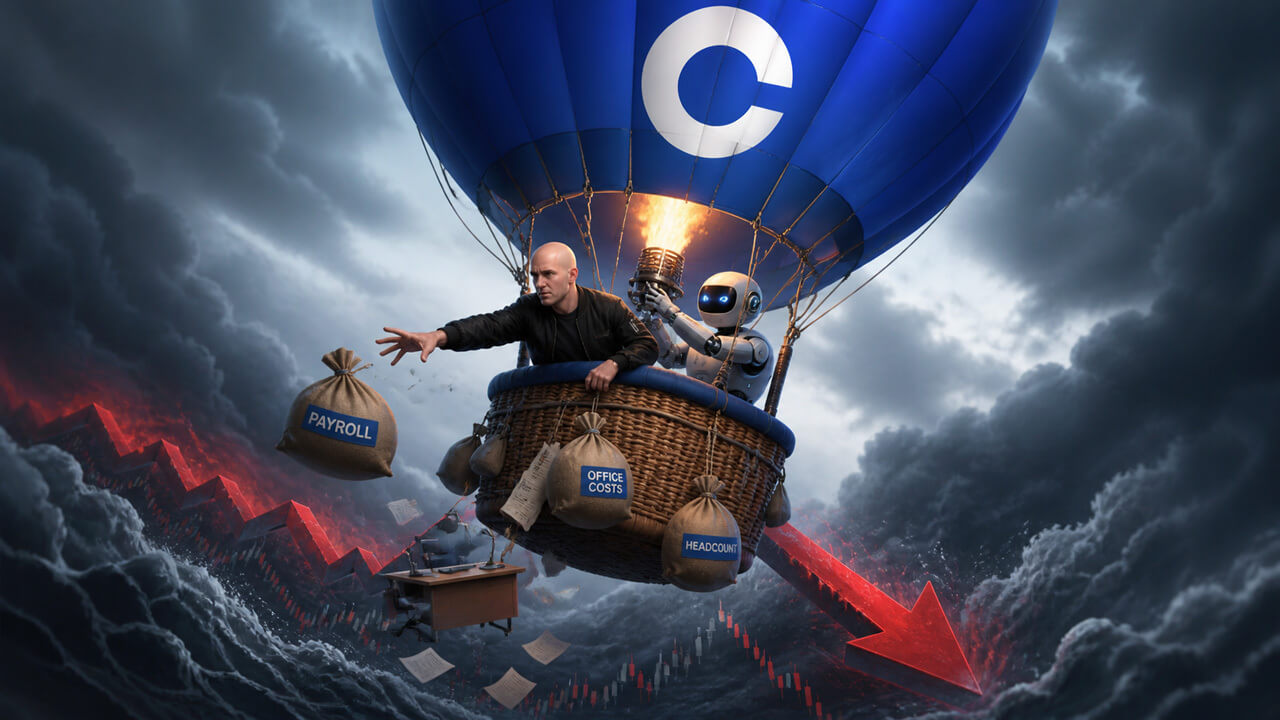
Coinbase cuts 14% of staff as Armstrong ties cost reset to AI and market volatility

Coinbase cuts 14% of staff as Armstrong ties cost reset to AI and market volatility

May 5, 2026
Americans are giving less. July 4th can be a day to change that

Americans are giving less. July 4th can be a day to change that

May 5, 2026
Coffee Break: Armed Madhouse – Endangered Warships

Coffee Break: Armed Madhouse – Endangered Warships

May 5, 2026
FeeOnlyNews.com

Get the latest news and follow the coverage of Business & Financial News, Stock Market Updates, Analysis, and more from the trusted sources.

CATEGORIES

  • Business
  • Cryptocurrency
  • Economy
  • Financial Planning
  • Investing
  • Market Analysis
  • Markets
  • Money
  • Personal Finance
  • Startups
  • Stock Market
  • Trading

LATEST UPDATES

  • CLARITY Act: US Senator Expects Trump To Sign Major Crypto Bill By July 4
  • Anthropic CEO warns ‘moment of danger’ as Mythos exposes vulnerabilities
  • Florida Senior Resource: SHINE Counselors Help Compare Medicare Plans—Saving Some Enrollees Hundreds Each Year
  • Our Great Privacy Policy
  • Terms of Use, Legal Notices & Disclaimers
  • About Us
  • Contact Us

Copyright © 2022-2024 All Rights Reserved
See articles for original source and related links to external sites.

Welcome Back!

Sign In with Facebook
Sign In with Google
Sign In with Linked In
OR

Login to your account below

Forgotten Password?

Retrieve your password

Please enter your username or email address to reset your password.

Log In
No Result
View All Result
  • Home
  • Business
  • Financial Planning
  • Personal Finance
  • Investing
  • Money
  • Economy
  • Markets
  • Stocks
  • Trading

Copyright © 2022-2024 All Rights Reserved
See articles for original source and related links to external sites.