Yves here. The Trump Administration is again implementing Lambert’s second rule of neoliberalism, “Go die!” here with health policy revisions which will worse already too-often poor care levels for the elderly. Readers likely know through family and friends the disgraceful level of service in most American nursing homes, due in large measure to understaffing. That in turn due to lousy pay for these jobs.
Requiring higher minimum levels of various types of employees to residents would pressure nursing homes to provide sufficiently high wages to attract more workers. Instead, the Trump Administration is rolling back already shabby staffing minimums based on the bogus industry claim that the jobs cannot be filled, as opposed to not at the lousy compensation levels they have gotten away with providing.
A similar disgrace is home health care workers, who are to become exempt from fair labor standards. From my brief time hiring home health aides through agencies, their pay and training were poor. So Trump by making these generally unappealing roles even worse will again worsen care for meaningful numbers of the aged.
We’ve mentioned the last indignity, that of Medicare requiring prior authorization for more treatments, refereed by AI.
By Paula Span. Originally published at KFF Health News
Month after month, Patricia Hunter and other members of the Nursing Home Reform Coalition logged onto video calls with congressional representatives, seeking support for a proposed federal rule setting minimum staff levels for nursing homes.
Finally, after decades of advocacy, the Biden administration in 2023 tackled the problem of perennial understaffing of long-term care facilities. Officials backed a Medicare regulation that would mandate at least 3.48 hours of care from nurses and aides per resident, per day, and would require a registered nurse on-site 24 hours a day, seven days a week.
The mandated hours were lower than supporters hoped for, said Hunter, who directs Washington state’s long-term care ombudsman program. But “I’m a pragmatic person, so I thought, this is a good start,” she said. “It would be helpful, for enforcement, to have a federal law.”
In 2024, when the Centers for Medicare & Medicaid Services adopted the standards, advocates celebrated. But industry lawsuits soon blocked most of the rule, with two federal district courts finding that Medicare had exceeded its regulatory authority.
And after the 2024 elections, Hunter said, “I was concerned about the changing of the guard.” Her concerns proved well founded.
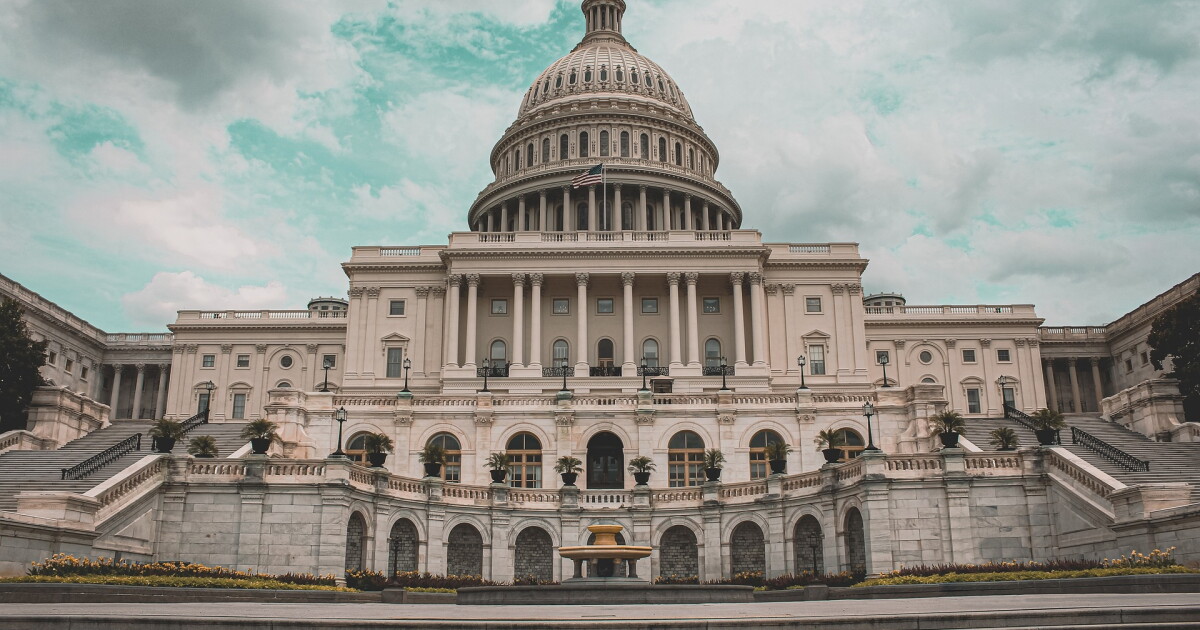
In July, as part of Republicans’ One Big Beautiful Bill Act, Congress prohibited Medicare from implementing the staffing standards before 2034. Last month, CMS repealed the standards altogether. They never took effect.
“It was devastating,” Hunter said.
As with environmental law and consumer protections, the Trump administration’s enthusiasm for deregulation has undone long-sought rules to improve care for the aged. And it has introduced a Medicare experiment for prior authorizations, now getting underway in six states, that has alarmed advocates, congressional Democrats, and a good number of older Americans.
Taken together, the moves will affect many of the facilities and workers providing care and introduce complications in health coverage in several states.
On the nursing home front, “it’s clear CMS has no interest in ensuring adequate staffing,” said Sam Brooks, the director of public policy for the National Consumer Voice for Quality Long-Term Care.
“They’re repealing a regulation that could have saved 13,000 lives a year,” he added, citing an analysis by University of Pennsylvania researchers.
Industry groups argued that nursing homes, with high rates of staff turnover, were already struggling to fill vacancies.
The staffing mandate “was requiring nursing homes to hire an additional 100,000 caregivers that simply don’t exist,” said Holly Harmon, a senior vice president at the American Health Care Association.
The organization had brought one of the suits that largely vacated the rule. “Facilities would have been forced to limit admissions or downsize to comply with the requirements, or close altogether,” Harmon said.
For supporters, the action is now likely to shift to updating requirements in 35 states, along with the District of Columbia, that have already established some nursing home staff standards, and to developing them in those that haven’t.
Rules for Home Help
A second rescinded regulation, this one more unexpected, brought about upheaval in July, when the Labor Department announced a return to a policy excluding home care workers from the federal Fair Labor Standards Act.
Some history: Dating back to the New Deal, the FLSA mandated that workers receive the federal minimum wage (currently $7.25 an hour) and overtime pay. It exempted most “domestic service workers” until 1975, when a new Labor Department regulation included them — with the exception of home care workers.
“There was a misinterpretation of home care work as being casual, nonprofessional, non-skilled,” the equivalent of teenage babysitting, said Kezia Scales, a vice president at PHI, a national research and advocacy organization. “Just someone popping into your mother’s house now and then and keeping her company.”
For almost 40 years, workers and their supporters lobbied to change the rule, seeing it as a contributor to the low wages and meager benefits of a swiftly growing workforce, one made up primarily of women and minority groups, with many immigrants.
In 2013, the Labor Department responded with a rule that brought home care workers under the labor act, entitled to minimum wage, time and a half for overtime work, and payment for travel time between clients.
After industry lawsuits failed to overturn it, “everything settled down,” Scales said. “It was in place successfully for a decade.”
Home care workers brought hundreds of compliance complaints annually. In 87% of them, the Labor Department found violations of the labor act, according to a 2020 Government Accountability Office report.
Since 2013, home care agencies have paid about $158 million in back wages, PHI has calculated.
Then in July, the Labor Department abruptly announced that it would return to the 1975 regulations and stop enforcing the 2013 rule, which it said “had negative effects on the ground” and hindered consumer access to care.
The agencies employing most home care workers, primarily funded through Medicaid, would agree. “Many workers never got any benefit from this,” said Damon Terzaghi, a vice president at the National Alliance for Care at Home.
“States made a lot of moves to essentially absolve themselves of any responsibility,” he said. A 2020 federal report, for example, found that 16 states had capped Medicaid-covered home care hours at 40, thus averting overtime payment.
The alliance, which estimates that the number of impacted agencies and businesses has declined by 30% since 2013, supported the rescission. Scales, who hopes for congressional action, called it “a shocking step backward.”
Where they concur is that the United States has never really committed to sufficiently funding long-term care at home. With the July legislation setting the stage for a $914 billion cut to Medicaid over the coming decade, that seems unlikely to change anytime soon.
Medicare’s AI Referee
Beyond rolling back policies for care of the aged, the Trump administration has established a pilot program to introduce one to traditional Medicare: prior authorization, using artificial intelligence and machine learning technologies.
Touting it as a boon to taxpayers, Medicare calls it WISeR — Wasteful and Inappropriate Service Reduction.
Prior authorization, in which private insurers review proposed treatments before agreeing to pay for them, is widely used in Medicare Advantage plans despite its unpopularity with patients, doctors, and health care organizations. It has rarely been used in traditional Medicare.
This month, however, WISeR debuts in six states (Arizona, New Jersey, Ohio, Oklahoma, Texas, Washington) in a six-year trial to determine whether review by tech companies can reduce costs and improve efficiency, while maintaining or improving quality of care.
Initially, WISeR targets 17 items and services that CMS said “historically have had a higher risk of waste, fraud and abuse.” The list includes knee arthroscopy for arthritis, electrical nerve stimulation devices for several conditions, and treatment for impotence.
The pilot program excludes emergency services and inpatient hospital care, or care where delay poses “a substantial risk.” Algorithmic denials will trigger review by “an appropriately licensed human clinician.” The tech companies get “a share of averted expenditures.”
“It injects some of the worst of Medicare Advantage into traditional Medicare,” said David Lipschutz, co-director of the Center for Medicare Advocacy. The six vendors that approve or reject treatments “have a financial stake in the outcomes,” he said, and therefore “an incentive to deny care.”
Moreover, the CMS Innovation Center overseeing the pilot could theoretically bypass Congress and expand prior authorization to include more medical services in more states.
The agency did not respond to questions about what kind of human clinicians would review denials, except to say that they would have “relevant experience” and that tech companies would be “financially penalized for inappropriate denials, high appeal rates or poor performance.”
It plans an “independent, federally funded evaluation” and will release public reports annually.
Democrats in Congress have introduced bills in both houses to repeal WISeR. “We should be reducing red tape in Medicare, not creating new hurdles that second-guess health care providers,” said Rep. Suzan DelBene of Washington, one of the bill’s sponsors.
For now, though, WISeR has opened for business, receiving prior authorization requests through its electronic portals.