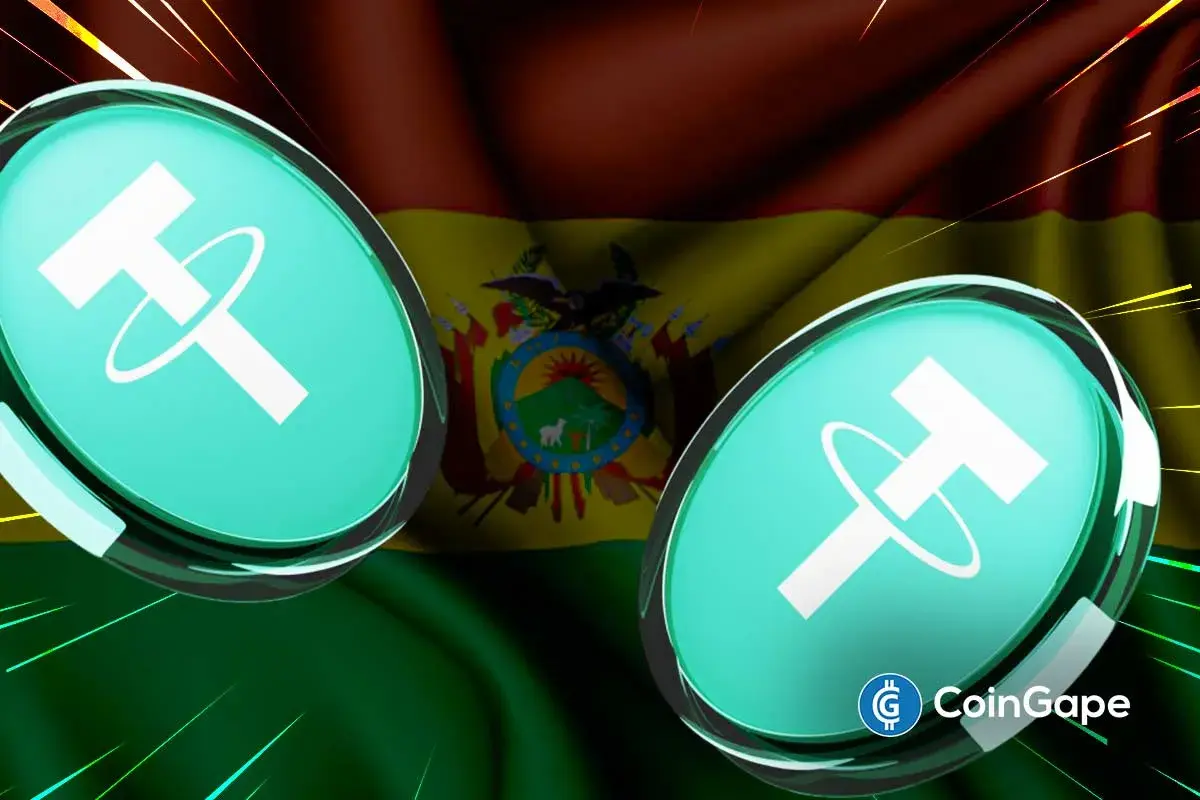
Bolivia is considering making Bolivia USDT an official part of its national payment system, circulating the Tether stablecoin alongside the U.S. dollar and the boliviano. The move signals a dramatic policy shift as the country battles a prolonged foreign-currency shortage. Local banks Banco Unión and Banco FIE are already offering USDT-related services, suggesting the groundwork for wider adoption is firmly in place.
Bolivia’s Dollar Crisis Fuels the Case for USDT
Bolivia has been under severe foreign currency pressures for the past few years. With the reduction in gas production and exports, dollar reserves have also been depleted, and businesses and importers are short of hard currency.
The first formal move by the government was in March 2025 when the state energy company YPFB was authorized to accept crypto payments for fuel imports during the severe dollar crisis.
Adoption of the USDT in Bolivia had penetrated further into daily use by June 2025. CEO of Tether Paolo Ardoino posted images of retail stores in Bolivia selling various consumer goods, including dairy products and chocolate, for USDT.
Crypto analyst CryptoPatel summed it up on X: “When your currency fails, bring in the stable one.”
When your currency fails, bring in the stable one
— Crypto Patel (@CryptoPatel) July 13, 2026
The large number of USDT users in Bolivian retail stores demonstrated that, rather than regulation, economic necessity was driving people to opt for the digital dollar over the boliviano.
Banks Already Onboard, What Official Status Would Mean
Banco Unión and Banco FIE already offer services related to the USDT in Bolivia; therefore, the banking infrastructure is already well established.
Official circulation status would regularize the situation as it exists in practice, thus making remittance more rapid, transaction costs lower, and providing a tracking alternative to the black-market dollar trade.
That credibility argument is reinforced by Tether’s own push for institutional trust: in March 2026, the company engaged KPMG to conduct a full audit of its $185 billion USDT reserves.
The goal is to move beyond years of debate over its reserve support and make a statement about its efforts to construct transparency that is suitable for exactly that type of sovereign-level integration.
The strategic significance of Tether’s potential move is great for Bolivia. This would be the first Latin American nation to officially add USDT as a payment option at the same time as fiat currencies.
That focus is sharpening; Tether recently wound down its aUSDT product to concentrate resources on core USDT, underlining how central the flagship stablecoin is to its global expansion.
Other emerging-market economies with similar dollar shortages, such as sub-Saharan Africa and parts of Southeast Asia, will be closely observing Bolivia’s experiment, analysts note.
DATA POINT NEEDED: USDT total market cap and circulating supply figure for context on adoption scale
There is still a big question about regulatory clarity. There are no formal terms of integration confirmed by the Central Bank of Bolivia, nor is there any legislative framework confirmed.
But the government’s desire for this change seems greater than it has ever been in the country’s brief but fast-evolving crypto history.
See our picks for newly launched cryptos worth watching this month.