No Result
View All Result
  • Login
Thursday, April 30, 2026
FeeOnlyNews.com
  • Home
  • Business
  • Financial Planning
  • Personal Finance
  • Investing
  • Money
  • Economy
  • Markets
  • Stocks
  • Trading
  • Home
  • Business
  • Financial Planning
  • Personal Finance
  • Investing
  • Money
  • Economy
  • Markets
  • Stocks
  • Trading
No Result
View All Result
FeeOnlyNews.com
No Result
View All Result
Home Business

The shadow fleet and illegal oil are still moving through the Strait of Hormuz

by FeeOnlyNews.com
2 months ago
in Business
Reading Time: 5 mins read
A A
0
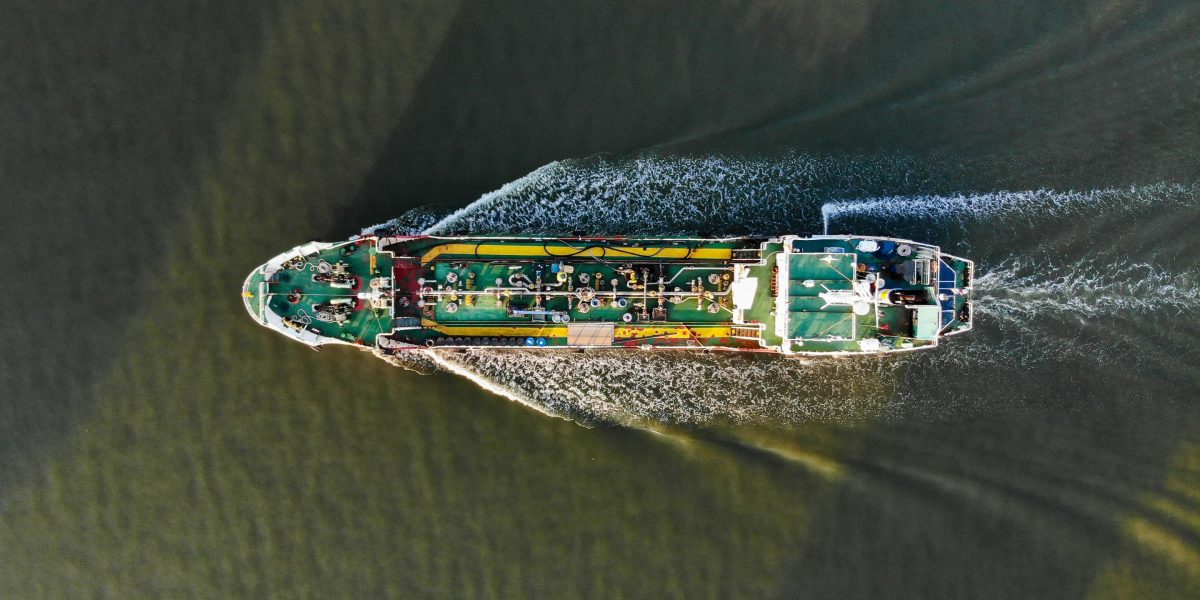
The shadow fleet and illegal oil are still moving through the Strait of Hormuz
Share on FacebookShare on TwitterShare on LInkedIn


Iran has threatened to destroy any ships, including oil tankers, that pass through the strait from the oil depots of the Persian Gulf to the Arabian Sea and the rest of the world. Companies that insure ships against the risks of traveling in war zones are deciding whether to issue coverage on an individual-ship basis. The international body that sets many shipping regulations has told ships’ crews that they have the right to refuse to sail into the area.

As of March 6, more than 400 tankers were stranded in the Persian Gulf, without permission from their owners to move.

But some vessels are still transiting the strait. Most of the ships still moving are those that operate outside the rules.

In maritime circles, these vessels are called the “shadow fleet.” They are vessels that ignore international restrictions on trade with certain countries, violate anti-pollution regulations, smuggle unauthorized goods or don’t want their cargo or activities too closely monitored.

They exist, even in a world filled with electronic tracking, because the world’s oceans aren’t governed the same way the land is. On land, armed personnel closely monitor carefully delineated borders, seeking to force everyone to follow clear rules. But at sea, regulation is almost the opposite. The system that governs international shipping is, at its foundation, voluntary.

The tracking of ships is voluntary. The International Convention for the Safety of Life at Sea – signed by 167 countries – requires almost every commercial vessel to carry a radio transponder that broadcasts the ship’s identity, position, speed and heading to port authorities, coast guards and commercial tracking networks.

That international agreement, which is enforced by individual countries, requires ships to leave the transponders on and active. But there is no physical mechanism preventing a crew from switching it off or broadcasting a false position.

When a vessel turns off its transponder and goes dark, it doesn’t trigger an alarm at some global maritime headquarters. There is no such headquarters. The ship simply disappears from the map. Every map.

National jurisdiction is a matter of preference, not law. Every vessel sails under the flag of a nation, and that nation is theoretically responsible for regulating and inspecting it. But in practice, a ship’s registration in a particular country is a commercial transaction. Many law-abiding shipping companies make this business decision, but this system leaves an opening for those who seek to skirt the rules.

A ship owned by a shell company in the United Arab Emirates can register under the flag of Cameroon, Palau or Liberia, or any country that may lack the resources or the incentive to conduct real inspections. Even landlocked Mongolia has a registry of oceangoing ships flying its flag.

When a vessel comes under scrutiny from port inspectors or coast guards, it can simply reregister under a different flag. Some registries even offer online registration. If the new registration is fraudulent or the registry doesn’t actually exist, the vessel effectively becomes stateless.

Then there is insurance, which is the closest thing the maritime system has to a real enforcement mechanism. Mainstream insurers, mostly based in London, require vessels to meet safety standards, carry proper documentation and comply with international trade sanctions. A ship without insurance coverage cannot easily enter major ports or secure cargo contracts with reputable firms. Those restrictions are precisely what froze so many law-abiding ships in the Persian Gulf when war broke out.

But companies can avoid those rules, too. Two-thirds of ships carrying Russian oil – the trade of which is restricted by the U.S. and other countries – reportedly have “unknown” insurance providers, meaning nobody knows whom to call to cover the cleanup costs after a spill or collision. The enforcement mechanism works until ship owners realize they can just opt out of it entirely, using less reputable ports or transferring oil from ship to ship out at sea.

The results of this voluntary system can be surreal. In December 2025, the United States seized a sanctioned tanker called the Skipper, which was flying the flag of Guyana – even though that country had never registered it. The vessel was, in legal terms, stateless, sailing under the authority of no nation on Earth.

Another vessel, the Arcusat, went further. Investigative reporting found that it had changed its International Maritime Organization identification number, a unique seven-digit code assigned permanently to every ship. It is the maritime equivalent of scraping the VIN off a car.

Now layer these techniques together. An entity purchases an aging tanker that would otherwise be scrapped. It registers the ship through a shell company, pays for a flag of convenience, carries opaque insurance and switches off its transponder when approaching sensitive waters.

It loads sanctioned oil through a ship-to-ship transfer on the open ocean and delivers its cargo to a buyer who asks no questions. If the vessel attracts attention, it changes its name, reregisters under a different flag and starts over.

According to maritime intelligence firm Windward, approximately 1,100 dark fleet vessels have been identified globally, representing roughly 17% to 18% of all tankers carrying liquid cargo, which is primarily oil.

The dark fleet did not emerge because the maritime system is broken. It emerged because the system is built on voluntary participation, all theoretically ensured by market forces.

For decades, the system worked not because it forced compliance but rather because opting out was more costly than opting in.

What changed is that international sanctions made compliance ruinously expensive and politically disastrous for some countries. A system built on voluntary participation, it turned out, could be voluntarily left.

If your national economy depends on oil exports, and the compliance system is preventing those exports, you build a parallel system. Iran began doing so in 2018, after sanctions were reimposed in the context of negotiations over its nuclear development. Russia dramatically expanded that system in 2022 as restrictions hit in the wake of its invasion of Ukraine.

Now, with the Strait of Hormuz effectively closed to aboveboard maritime trade, the only vessels still moving are the ones that ignore the rules.

But the existence of the dark fleet doesn’t mean that the rules of the sea have failed. Rather, it reveals what kind of rules they always were. In my view, if much of the oil that keeps moving in a crisis is illegal, that sends a message to those still playing by the rules: Opting out may be a viable option. Evidence that this is occurring is already mounting. Ships have been reported turning off their AIS to confuse tracking, and more companies may choose to follow the lead of Greek firm Dynacom, in running the strait despite the risks.

The opinions and views expressed are those of the author alone and do not necessarily represent those of the Department of the Navy or the U.S. Naval War College, nor do they necessarily reflect the opinions and beliefs of Fortune.


Source link

Tags: fleetHormuzIllegalmovingoilshadowStrait
ShareTweetShare
Previous Post

Lower Mortgage review 2026

Next Post

Needham and Roth Raise Price Targets on SiTime Corporation (SITM)

Related Posts

Cloud revenue is now 18% of Alphabet’s business. Is Google’s identity as a search company changing?

Cloud revenue is now 18% of Alphabet’s business. Is Google’s identity as a search company changing?

by FeeOnlyNews.com
April 29, 2026
0

Ever since Google was founded in 1998, search has been the core of the company’s identity. For much of that...

Global Market Today: US stock futures gain on tech earnings; Asian shares fall

Global Market Today: US stock futures gain on tech earnings; Asian shares fall

by FeeOnlyNews.com
April 29, 2026
0

US equity-index futures advanced, lifted by late-session gains in tech giants, as the artificial intelligence trade remained a key driver...

Meta just bumped its 2026 capex forecast up to as much as 5 billion—and investors flinched

Meta just bumped its 2026 capex forecast up to as much as $145 billion—and investors flinched

by FeeOnlyNews.com
April 29, 2026
0

Meta Platforms is splashing some serious cash on AI infrastructure, and investors have flinched.  The company reported first quarter 2026...

Google parent Alphabet’s cloud unit beats quarterly revenue estimates on strong AI demand

Google parent Alphabet’s cloud unit beats quarterly revenue estimates on strong AI demand

by FeeOnlyNews.com
April 29, 2026
0

Alphabet topped Wall Street estimates for quarterly revenue growth at its cloud computing unit on Wednesday, driven by sustained enterprise...

Trackers will be added to emergency vehicles at LaGuardia following deadly March collision

Trackers will be added to emergency vehicles at LaGuardia following deadly March collision

by FeeOnlyNews.com
April 29, 2026
0

Transponders that might have helped pinpoint the location of a fire truck that collided with a landing Air Canada jet...

Emma Grede, who helped found the  billion Skims empire, rejects ‘celebrity CEO’ label: ‘I’m a CEO who’s done so well you know my name’

Emma Grede, who helped found the $5 billion Skims empire, rejects ‘celebrity CEO’ label: ‘I’m a CEO who’s done so well you know my name’

by FeeOnlyNews.com
April 29, 2026
0

Emma Grede may be best known for being a founding partner for some of the Kardashian family’s biggest brands, including...

Next Post
Needham and Roth Raise Price Targets on SiTime Corporation (SITM)

Needham and Roth Raise Price Targets on SiTime Corporation (SITM)

How Journey Strategic Wealth plans to stay independent under Hightower

How Journey Strategic Wealth plans to stay independent under Hightower

  • Trending
  • Comments
  • Latest
Wells Fargo Transfer Partners: What to Know

Wells Fargo Transfer Partners: What to Know

April 16, 2026
Week 14: A Peek Into This Past Week + What I’m Reading, Listening to, and Watching!

Week 14: A Peek Into This Past Week + What I’m Reading, Listening to, and Watching!

April 6, 2026
The 16 Largest Global Startup Funding Rounds of March 2026 – AlleyWatch

The 16 Largest Global Startup Funding Rounds of March 2026 – AlleyWatch

April 21, 2026
The 27 Largest US Funding Rounds of March 2024 – AlleyWatch

The 27 Largest US Funding Rounds of March 2024 – AlleyWatch

April 17, 2026
LPL’s Mariner Advisor Network deal fuels already hot year for RIA M&A

LPL’s Mariner Advisor Network deal fuels already hot year for RIA M&A

April 16, 2026
Royal Caribbean, Bank of America Launching New Credit Cards

Royal Caribbean, Bank of America Launching New Credit Cards

March 31, 2026
Top 5 – Savings Plans with High Returns in 2026

Top 5 – Savings Plans with High Returns in 2026

0
Summer Women’s Skirts as low as  at Walmart!

Summer Women’s Skirts as low as $12 at Walmart!

0
The Hidden Cost of Being Your Own Boss Nobody Talks About

The Hidden Cost of Being Your Own Boss Nobody Talks About

0
Connected & Concerned Cybersecurity & Data Protection in Kenya Report

Connected & Concerned Cybersecurity & Data Protection in Kenya Report

0
Carpenter Technology Q3 2026: .77 EPS Tops Estimates — Deep Dive

Carpenter Technology Q3 2026: $2.77 EPS Tops Estimates — Deep Dive

0
Cloud revenue is now 18% of Alphabet’s business. Is Google’s identity as a search company changing?

Cloud revenue is now 18% of Alphabet’s business. Is Google’s identity as a search company changing?

0
Top 5 – Savings Plans with High Returns in 2026

Top 5 – Savings Plans with High Returns in 2026

April 30, 2026
Cloud revenue is now 18% of Alphabet’s business. Is Google’s identity as a search company changing?

Cloud revenue is now 18% of Alphabet’s business. Is Google’s identity as a search company changing?

April 29, 2026
Global Market Today: US stock futures gain on tech earnings; Asian shares fall

Global Market Today: US stock futures gain on tech earnings; Asian shares fall

April 29, 2026
Bitcoin Long-to-Short Ratio Shows Pro Traders Cautious Over Fed, Inflation

Bitcoin Long-to-Short Ratio Shows Pro Traders Cautious Over Fed, Inflation

April 29, 2026
276 Arrested in Connection with ‘Scam Centers’ Targeting Americans

276 Arrested in Connection with ‘Scam Centers’ Targeting Americans

April 29, 2026
Meta just bumped its 2026 capex forecast up to as much as 5 billion—and investors flinched

Meta just bumped its 2026 capex forecast up to as much as $145 billion—and investors flinched

April 29, 2026
FeeOnlyNews.com

Get the latest news and follow the coverage of Business & Financial News, Stock Market Updates, Analysis, and more from the trusted sources.

CATEGORIES

  • Business
  • Cryptocurrency
  • Economy
  • Financial Planning
  • Investing
  • Market Analysis
  • Markets
  • Money
  • Personal Finance
  • Startups
  • Stock Market
  • Trading

LATEST UPDATES

  • Top 5 – Savings Plans with High Returns in 2026
  • Cloud revenue is now 18% of Alphabet’s business. Is Google’s identity as a search company changing?
  • Global Market Today: US stock futures gain on tech earnings; Asian shares fall
  • Our Great Privacy Policy
  • Terms of Use, Legal Notices & Disclaimers
  • About Us
  • Contact Us

Copyright © 2022-2024 All Rights Reserved
See articles for original source and related links to external sites.

Welcome Back!

Sign In with Facebook
Sign In with Google
Sign In with Linked In
OR

Login to your account below

Forgotten Password?

Retrieve your password

Please enter your username or email address to reset your password.

Log In
No Result
View All Result
  • Home
  • Business
  • Financial Planning
  • Personal Finance
  • Investing
  • Money
  • Economy
  • Markets
  • Stocks
  • Trading

Copyright © 2022-2024 All Rights Reserved
See articles for original source and related links to external sites.