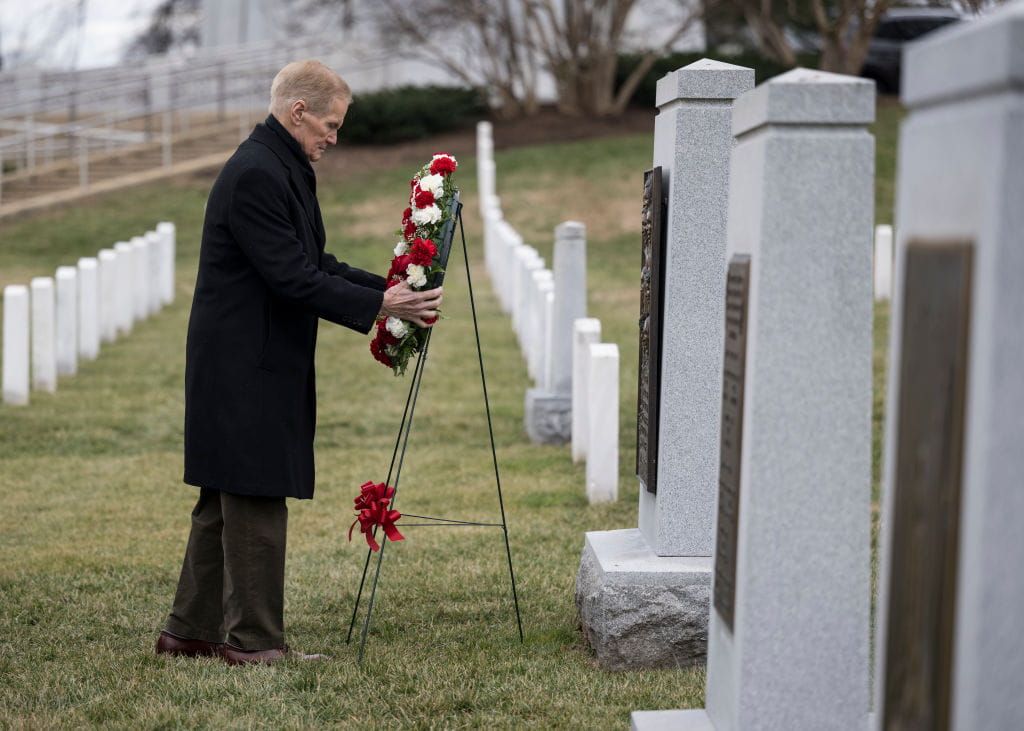
With Congress’ passage of the Uniform Monday Holiday Act in 1968, what had been Decoration Day officially became Memorial Day, taking full effect in 1971. Additionally, with the passage of the legislation, the day set aside to remember those fallen in defense of America was moved from May 30 to the last Monday in May. Though Memorial Day had been an alternative name for the holiday since the late 1880s, it became more common after World War I as a way of remembering those who gave “the last full measure of devotion.”
Memorial Day Name Change Made Sense
The name change was a logical and understandable move by Congress to set aside one day to honor the ultimate sacrifice of US military service members who served in all of America’s armed conflicts and wars. Nonetheless, the name Decoration Day evoked the image of decorating the graves of the fallen with flowers and American flags. However, the important historical significance of the earliest such remembrances was lost.
The Zinn Education Project recounts that during the final year of the Civil War, Confederate soldiers converted a Charleston, South Carolina, horse track named the Washington Race Course and Jockey Club into an outdoor prison camp. Captured Union soldiers were kept in deplorable conditions at the racetrack. Some 257 prisoners died in the prison camp and were buried in a mass grave. When the Civil War ended, twenty-eight black workmen “went to the site, re-buried the Union dead properly and built a high fence around the cemetery,” the Zinn Education Project publication explained.
Records show that on May 1, 1865, a parade was formed and marched to the Charleston cemetery. Again from Zinn: “At 9 a.m. on May 1, the procession stepped off, led by three thousand black schoolchildren carrying armloads of roses and singing ‘John Brown’s Body.’ The children were followed by several hundred black women with baskets of flowers, wreaths and crosses.” Graves were decorated with flowers. It was the first such commemoration.
There were speeches dedicating the cemetery to the fallen and singing, and afterwards the “crowd dispersed into the infield and did what many of us do on Memorial Day: they enjoyed picnics, listened to [more] speeches, and watched soldiers drill… The war was over, and Decoration Day had been founded by African Americans in a ritual of remembrance and consecration.” Though the event is not considered the official first commemoration of those fallen in America’s battles, it certainly embodies the spirit of what we celebrate as Memorial Day.
As a nationally recognized holiday, Decoration Day was born when, on May 5, 1868, General John A. Logan, the commander-in-chief of the Grand Army of the Republic (GAR), designated May 30 as the official date for commemorating America’s fallen. The GAR was a highly respected and influential organization made up of over half a million Union Army veterans. As the National Endowment for the Humanities observed: “Because of the availability of flowers, ceremonies honoring the dead were held in spring but were not restricted to any particular date.”
Decoration Day Date Established by Proclamation
Logan’s official proclamation established a date for the day of remembrance. It reads: “The 30th day of May 1868 is designated for the purpose of strewing with flowers or otherwise decorating the graves of comrades who died in defense of their country during the last rebellion and whose bodies now lie in almost every city, village, and hamlet churchyard in the land.”
Today, we celebrate another Memorial Day; it’s a time to recapture the image of decorating grave sites and to redecorate our lives with the values the fallen fought and died for. President Ronald Reagan captured this sentiment when he issued a proclamation, “A Prayer for Peace on Memorial Day 1988.” He said: “As we decorate their graves with a fervent prayer and a pledge of true allegiance to the cause of liberty, peace, and country… To keep faith with our hallowed dead, let us be sure, and very sure, today and every day of our lives, that we keep their cause, their hope, their prayer, forever our country’s own.”
President Reagan’s words are timeless and should encourage Americans to live the values for which so many died to preserve.
~
The views expressed are those of the author and not of any other affiliate.