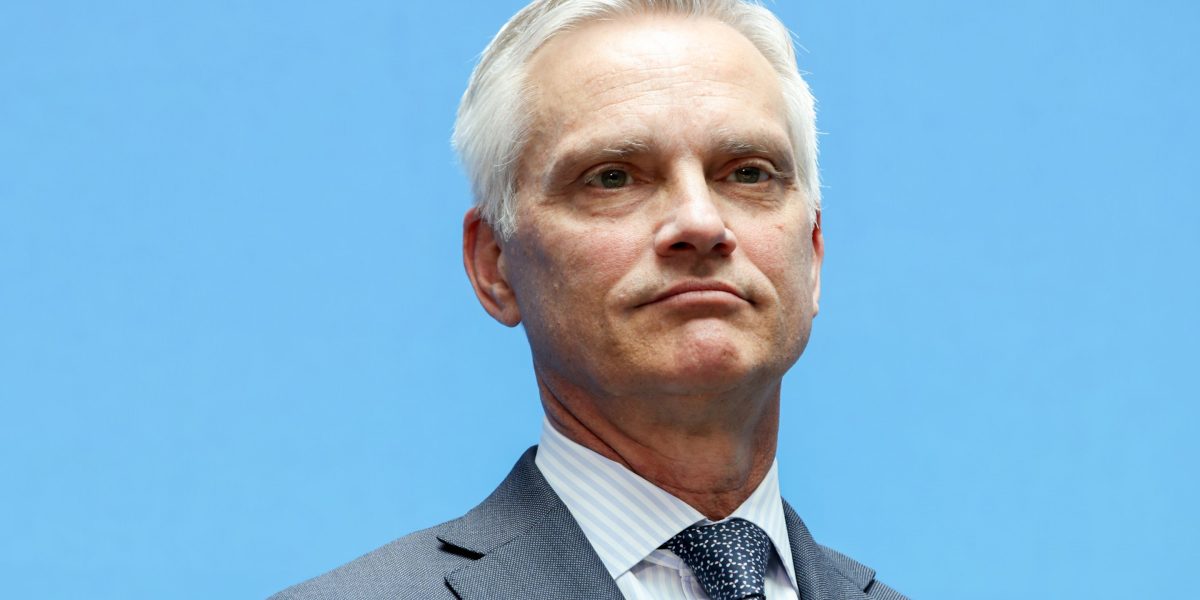
American Airlines CEO Robert Isom on Thursday became the latest, and most consequential “no” on the rumored American-United merger.
In an interview with CNBC Thursday shortly after the company reported first-quarter earnings, Isom called the merger a “non-starter from the get-go.”
“At the end of the day, there’s no way to view that as anything but anti-competitive,” he said. He added the deal would be “bad for customers, ultimately bad for American Airlines, bad for our team.”
Rejection of the deal came swiftly from all sides shortly after United CEO Scott Kirby reportedly pitched the idea to a Trump administration official. But President Donald Trump was one of the first to kill it. While he has appeared more open to big deals than his predecessors—he played an active role in the $81 billion Paramount-Warner Bros. Discovery merger—he said in an interview with CNBC on Tuesday “I don’t like having them merge.” So, too, did a bipartisan pair of legislators. Sen. Elizabeth Warren (D-Mass.) and Sen. Mike Lee (R-Ariz.) warned the deal would cause harm to consumers.
Isom declined to mention whether or not United made a formal inquiry to American. But last Friday, American issued a statement saying that it is “not engaged with or interested in any discussions regarding a merger with United Airlines.”
United and American Airlines didn’t immediately respond to Fortune’s request for comment.
Why the Iran war is fueling merger chatter
One issue potentially driving consolidation chatter is rising fuel costs. Jet fuel prices have spiked from $100 a barrel pre-war levels to nearly $200 a barrel, spelling trouble for even the larger carriers. Now, United on Wednesday said the airline may have to raise prices by 15% to 20%. And German carrier Lufthansa just slashed 20,000 flights as the European market endures some of the most brutal conditions amid the ongoing energy crisis. Those price shocks have contributed to much of the discussion around consolidation.
“Is there room for some mergers in the aviation industry? Yeah, I think there is,” transportation secretary Sean Duffy told CNBC earlier this month. Delta CEO Ed Bastian echoed that sentiment.
“Over my career, I’ve seen many periods of disruption in this industry,” he said on the Delta earnings call last week. “Time and again, high fuel prices have been the most powerful catalyst for change, separating the winners and forcing weaker players to rationalize, consolidate or be eliminated.” Delta posted revenue of $14.2 billion for the first quarter, up 9% year over year, slightly above expectations. But the company said its fuel bill would be $2 billion higher than anticipated thanks to the spike in costs.
The Big Four, which include American, Delta, United, and Southwest, already account for 75% of the domestic market share. If the two airlines were to merge, American and United would encompass nearly 40% of U.S. domestic capacity, according to airline data firm OAG. Any deal of that nature would have faced obvious antitrust hurdles, according to experts.
“Fewer choices mean higher ticket prices, more fees, and fewer options for anyone who wants to get from point A to point B,” Ganesh Sitaraman, legal scholar and author of Why Flying Is Miserable: And How to Fix it, told Reuters.
Customers would also face a shortage of certain key flight routes. The merger would force the combined airline to sell off operations on an estimated 289 routes where the two airlines are currently the only, or one of only two, airlines flying, Tom Fitzgerald, airline analyst at TD Cowen, told CNBC last week.
There have been other attempted carrier deals over the past few years, several of which the Biden administration shut down. The Biden administration sued to block a potential $3.8 billion JetBlue-Spirit merger, successfully preventing the deal after a federal judge sided with the Biden administration.In an unexpected turn, Trump is reportedly nearing a $500 million rescue plan for Spirit Airlines. The deal, which hasn’t yet been confirmed, would hand the government warrants to purchase Spirit stock, potentially giving taxpayers a stake in the company should it financially recover.