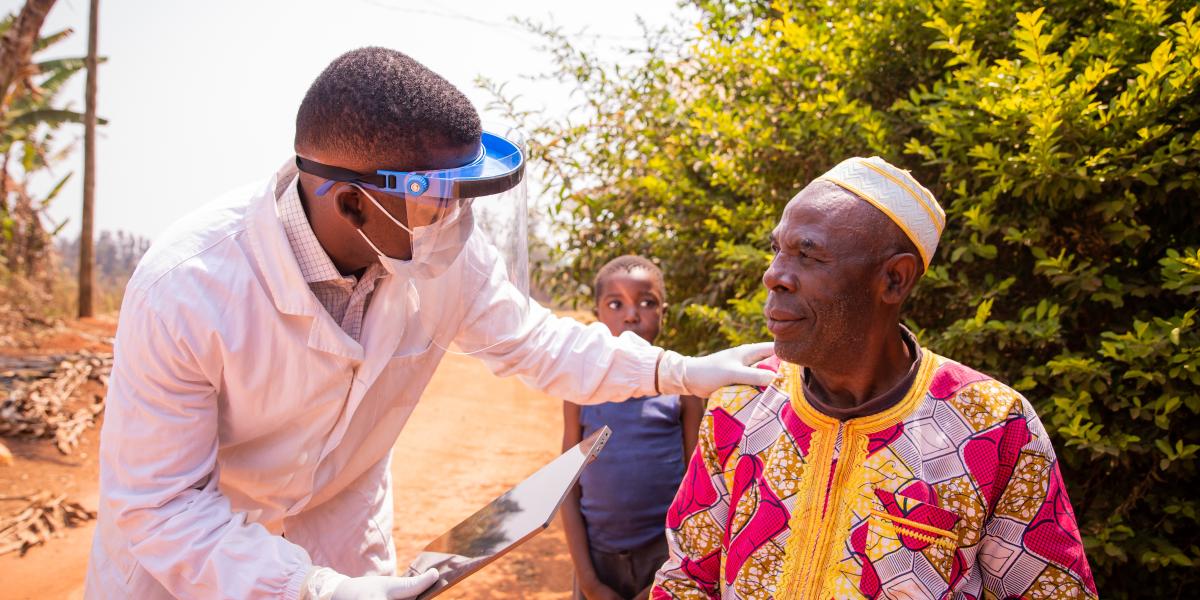
As the WHO warns of a 30 percent drop in external health aid to low-income countries, Rwanda’s community-based Mutuelle de Santé expanded its coverage to cover brain surgery and kidney transplants. Yet even as the model proves itself, Zimbabweans are still choosing funeral insurance—68 percent of all life insurance revenue flows into funeral products—because death remains more affordable than care.
That tells us something important: poor people make rational choices. They choose burial societies because they deliver value. They would presumably choose health mutual aid societies for the same reason—if the state would get out of the way.
The American Precedent
Before Medicaid and employer-based insurance, mutual aid societies covered millions of Americans. Ethnic, religious, and trade-based lodges pooled small contributions to cover healthcare and funerals. Lodges contracted physicians for flat annual fees—doctors bid against each other for these contracts, driving costs down. This system served immigrants, racial minorities, and informal workers who had no access to institutional employment or corporate insurance.
It worked until lobbying from established medical interests helped replace it, seeking to eliminate competing provider networks, pressured state legislatures to redefine lodge-contracted physicians as “unethical” or “substandard.” Quality control became a cudgel for monopolization. The lodge system wasn’t defrauded; it was outlawed.
Why State Systems Fail the Poor
State-sponsored healthcare assumes poor people cannot make rational decisions about their own care. But rural African communities disprove that daily. They join burial societies despite deep poverty because to them it is their neighbor, their church mate. They don’t ask you to fill out a form. They come to your home and comfort you.
The state denies the dignity of agency when it replaces these voluntary associations with bureaucratic welfare programs. And it does so at enormous cost—costs that developing nations simply cannot bear.
Critics point out that fraternal societies excluded the chronically ill or charged them higher rates. This is true. But modern systems do the exact same thing through prior authorization, formulary exclusions, step therapy, and network restrictions. The fraternal system was honest about it. It required medical exams, it had moral codes, it charged higher rates for higher risk. It was a voluntary club where everyone knew the rules going in.
The modern system replaced honest, transparent exclusion at the point of entry with opaque, bureaucratic exclusion at the point of care. It is dishonest, expensive, and no more inclusive.
The real challenge is adverse selection—the risk that only sick people join, driving premiums up and healthy members out. Mutual societies have solved this for centuries. They bundled health coverage with burial benefits, making membership attractive even to the healthy. They used community-based enrollment drives that sign up entire demographics, spreading risk across broad pools. They impose waiting periods for pre-existing conditions—just as private insurers do, but transparently, not through bureaucratic denial. The difference is honesty: members know the rules upfront and choose to participate.
The Moral Case Against State Healthcare
Beyond the practical failures lies a deeper ethical problem: coercion.
Taxes are not voluntary. They are extracted under threat of fines, imprisonment, or worse. When governments fund healthcare through taxation, they are taking property from some to give to others. This is not charity, it is theft.
Charity is virtuous because it is voluntary. When you give freely, you demonstrate genuine compassion. When the state takes forcibly, it demonstrates only power. The poor deserve better than coercive redistribution disguised as compassion.
In developing nations, this moral failure is compounded by practical failure. State healthcare systems are underfunded, corrupt, and inaccessible. Yet the poor are not helpless. They choose mutual aid—not because they are forced to, but because it delivers value.
The Market Mechanism
The fraternal system worked because it was a genuine market. Memberships gave communities collective bargaining power to negotiate with providers. Costs were openly known before any transaction. Lodges competed fiercely for members, driving quality up and prices down.
Today’s system—whether single-payer, state-subsidized, or regulated private insurance—erases price signals. It replaces negotiation and competition with administered rates and captive markets. Without transparent costs or the risk of losing members to rivals, neither patients nor providers have incentives to contain spending. The result is relentless cost inflation.
What This Means for the Global South
Developing nations face a crisis that mirrors pre-state America. Most of the population works in the informal economy. Employer-based insurance is irrelevant. State-run systems are underfunded, corrupt, and inaccessible. Commercial insurance targets only the wealthy elite.
Mutual aid schemes are the only systems that consistently reach the informal sector. They operate where the state cannot go—in villages, churches, marketplaces, and community halls. They build on existing social networks: churches, women’s groups, burial societies, cooperatives. They don’t need to “build trust” from scratch—they already have it.
State welfare treats people as passive recipients. Fraternal healthcare treats them as members—with rights, responsibilities, and agency. That is dignity.
Evidence on the Ground
In India, cardiac surgeon Dr. Devi Shetty, conceptualized a system that harnessed the vast population of farmers in Karnataka state. By leveraging economies of scale, advanced surgeries were made available to farmers for roughly $2 per year in subscription fees. Launched in 2003, the Yeshasvini Co-operative Farmers Health Care Scheme allowed rural cooperative members to access cashless surgical and outpatient care through a massive network of private and state hospitals. His model proves that mutual purchasing power can unlock world-class care at pennies on the dollar.
Members of Senegal’s Benkan Health Mutual have lower out-of-pocket expenses than non-members and are more likely to seek care for chronic conditions. The mutual now covers families across 12 districts for as little as 3500 CFA francs per year (~$6 USD). Members access local clinics with zero out-of-pocket costs at the point of service.
Rwanda integrated community-based health insurance into its national system without destroying its community character. Mutuelle de Santé now covers 91 percent of Rwanda’s population. The model has reduced catastrophic health spending of household income since 2010. CBHI now achieves high coverage rates while preserving local control and voluntary participation. It is a proof-of-concept that mutual aid and universal access need not be enemies.
In Zimbabwe, the Insurance Commission reports that burial societies now control majority of all insurance revenue. Members pay as little as $1/month and receive funeral coverage, food assistance, and grief counseling.
The “poorest of the poor” choose these voluntarily over formal state or commercial options. This growth reflects deliberate choice, not desperation.
A Libertarian Agenda for Global Health
States and global aid organizations should shift from subsidizing crumbling state-funded systems to creating environments where mutual aid societies can flourish. In many countries, these schemes are either illegal or burdened by regulations designed for commercial insurers. Remove these barriers. Let people organize.
The fraternal system worked because it was a free market. Let communities bargain. Let mutual health schemes compete. Let prices reflect reality. Don’t replace the market with bureaucracy.
Above all, policymakers must recognize that poor people are not helpless; they make calculated choices. They join burial societies because they deliver value. They would join health mutual aid societies for the same reason—if the state would get out of the way.
Conclusion: Ubuntu and Dignity
There is no conflict between fraternal healthcare and universal coverage. The historical and modern evidence shows that mutual aid is the most effective, affordable, and dignified path to healthcare for the developing world.
The alternative—state-run welfare—is expensive, inefficient, and disrespectful of human agency. It denies people the dignity of making their own choices about their own health.
The path forward is not to build more hospitals or hire more bureaucrats. It is to recognize the institutions already serving the poor—and get out of their way. Governments should rescind licensing, incorporation, and insurance regulations designed specifically to protect commercial insurers and established medical monopolies from mutual aid societies. The evidence is clear, the model works. The only missing ingredient is political will.
As one Zimbabwean burial society member put it: “We wanted dignity in death. Now we are striving for it in life.” That is the promise of fraternal healthcare: dignity, agency, and solidarity—built not by bureaucrats, but by free people choosing to help one another.
In Africa, this is called Ubuntu: “I am because we are.” But Ubuntu is not coercive. It is voluntary solidarity—neighbors helping neighbors because they choose to, not because a bureaucrat commands it. State welfare is not Ubuntu. It is the theft of one person’s labor to fund another’s entitlement. True Ubuntu is mutual aid: free people choosing to help one another.
That is a solution worth fighting for. That is dignity worth defending. That is freedom worth preserving.