Chip industry stocks are red-hot on global stock markets with the SOXX semiconductor index up 169% over the past year. Israeli chipmaker Tower Semiconductor Ltd. (Nasdaq: TSEM; TASE:TSEM) has far outperformed that with the share price rising 590% on Wall Street over the past year from $40 to $278, giving a market cap of $33 billion.
On the Tel Aviv Stock Exchange (TASE) the return is much lower at 490% because of the strengthening of the shekel against the dollar, giving a market cap of NIS 94 billion. This week on the TASE, Tower recorded a symbolic achievement by surpassing the market cap of Bank Hapoalim (TASE: POLI), and the chipmaker looks likely to soon also surpass Bank Leumi (TASE: LUMI). Tower is currently the fourth most valuable Israeli company after Teva Pharmaceutical Industries Ltd. (NYSE: TEVA; TASE: TEVA), Elbit Systems Ltd. (Nasdaq: ESLT; TASE:ESLT) and Leumi.
Leapfrogging Hapoalim closes a circle for Tower. Twenty years ago, the bank was one of the largest creditors of the company, which at the time was suffering major liquidity difficulties. Russell Ellwanger was appointed Tower CEO in 2005, and one of the biggest challenges he faced was a huge debt to Israel’s banks – over $500 million in debt that the company had taken out to build Fab 2, its second chip manufacturing site in Migdal HaEmek. The problem was that Tower was burning cash so that it was unable to meet the terms of the debt.
In 2006-2008, the banks agreed a debt settlement, converting 30% of the debt ($158 million) into convertible capital notes, postponed the payment of the principal and reduced the long-term interest rate. Tower’s controlling shareholder at the time, Idan Ofer’s Israel Corp, pledged to inject $100 million into the company as part of the move.
Ellwanger himself previously told “Globes,” “In 2005, the company had a large debt that was due in 2007. But The company had a negative cash flow and burned about $180 million every year, and with that it was very difficult to repay debts. So we refinanced the debt when the two banks, Hapoalim and Leumi, exchanged part of it for convertible capital notes and distributed the rest (each of the banks converted about $100 million in capital notes). I believed with all my heart that in order to get the company back on track we needed to make an acquisition (of US company Jazz company) and I couldn’t do that without them refinancing my debt.”
RELATED ARTICLES
Tower jumps on $1.3b silicon photonics contracts
“Tower is priced as a growth company”
Tower soars to record on AI infrastructure agreements
When asked why Leumi and Hapoalim agreed to the debt settlement, Ellwanger replied, “I wrote to the banks that I needed this settlement to make the acquisition. At the time, the head of Hapoalim’s business division was Zion Keinan, and the head of Leumi’s business division was Rakefet Roussak-Aminoach. We had a meeting and one of the two, and it wasn’t Rakefet, told me something like ‘We read the letter, and we’ll have to do it on different terms.’ My answer was that I could either be stupid or a liar. I’m certainly not a liar, and I don’t think I’m stupid, so what I wrote is what’s really needed to get the company back on its feet. I added that I need to close the deal with Jazz’s board of directors tomorrow. So if that doesn’t happen, I’ll have to give you the keys to my office.”
The issue of the capital notes held by the banks accompanied Tower for several years and weighed on the stock, due to the fear of dilution (following the conversion of the capital notes into shares). Ultimately, with the company’s continued improvement, it repaid its entire debt to banks in Israel a decade ago, in 2016, after raising bonds.
On the investors’ radar
Several years ago, Intel signed a deal to buy Tower for $5.4 billion. After the deadline for completing the deal passed in the summer of 2023, the deal expired and was canceled. The stock wavered for a while, but its chart shows that from mid-2025, Tower was on the investors’ radar and the stock started to soar, so that today its value is more than 6 times higher than what it was supposed to receive in the Intel deal.
One of the reasons for the huge surge is because Tower has become a major player in AI. The chipmaker develops components for data centers based on its Silicon Photonics platform, and a few months ago announced a major solution to the power consumption barrier, which improves efficiency of AI chips and servers. Tower also has a collaboration with chip giant Nvidia.
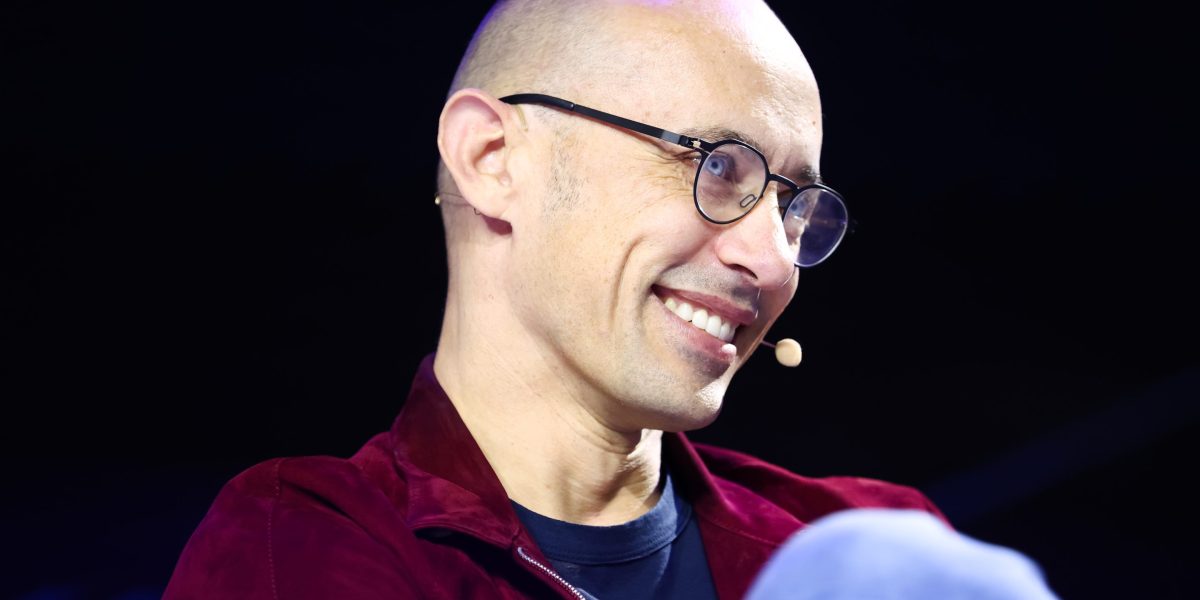
When Ellwanger took over as CEO in 2005, he was one of the company’s biggest believers, while others were very skeptical, given past disappointments. He promised at the time that Tower would reach $1 billion in revenue and be profitable within 10 years – a promise that was fulfilled. In an interview with Globes about two months ago, Ellwanger was asked whether at the time he thought Tower could become one of the largest companies on the TASE. He replied: “I didn’t think it would happen, but I also didn’t think it wouldn’t – it just wasn’t the main thing that occupied me. It’s not that I didn’t believe it could be among the top five in Tel Aviv, but the company was at the time running a large loss and had a negative operating cash flow, so we had to address those issues first. It took it ten years to reach $1 billion in revenue and profit as I stated when I arrived, and it took a very aggressive plan to get there – it was in really bad shape.”
The analysts are positive about the stock
Ellwanger was also asked at the time whether Tower’s market cap was justified (it has since added another $11 billion to its market cap). He said, “We have a significant market share in the optical communications sector, so it is possible that touching on AI gives us a high value relative to other companies.” He continued, “The financial model justifies it in my opinion, considering the fact that our net profit target for 2028 is $750 million (the revenue target for that year is $2.8 billion).”
Last month, Tower published strong results for the first quarter of 2026 with growth of 15% from the corresponding quarter. It also announced significant contracts signed with customers in the silicon photonics sector, worth $1.3 billion for 2027.
What is expected for the stock in the future? According “The Wall Street Journal,” six analysts cover Tower’s stock, of which five are positive and one is neutral. Their average price target reflects a premium of about 13% on the current share price on Nasdaq.
Published by Globes, Israel business news – en.globes.co.il – on June 18, 2026.
© Copyright of Globes Publisher Itonut (1983) Ltd., 2026.