Hyperliquid’s rapid growth has drawn a warning from Britain’s financial regulator, adding a consumer-protection concern to a platform increasingly watched by Wall Street and traditional market operators.
The Financial Conduct Authority (FCA) placed Hyperliquid and the Hyper Foundation on its warning list, saying the firm may be providing or promoting financial services in the UK without authorization.
In a May 21 notice, the financial regulator stated:
“You should avoid dealing with this firm and beware of scams.”
The regulator listed the Hyper Foundation website, the Hyperliquid trading app, and the project’s social media channels under its unauthorized firm details.
It also warned that users would not have access to the Financial Ombudsman Service if they wanted to complain and would not be covered by the Financial Services Compensation Scheme if they lost money.
The notice comes as Hyperliquid expands beyond crypto-native trading into markets that increasingly overlap with traditional finance.
Hyperliquid is a decentralized, non-custodial derivatives exchange that allows users to trade perpetual futures, contracts that offer leveraged exposure without expiration dates.
Over the past year, the platform has become a major part of offshore crypto trading because it allows traders to keep positions open indefinitely while speculating on price movements.
In the UK, crypto derivatives have faced tighter limits since the FCA banned their sale to retail consumers in 2021. The country also expanded financial promotion rules to crypto assets in 2023, requiring firms marketing to UK users to meet stricter standards.
Considering this, Kyle Samani, chairman of Solana treasury company Forward Industries, described the FCA action as the “first of many,” signaling that some investors expect Hyperliquid’s growth to attract more regulatory attention as the platform moves closer to markets watched by traditional finance.
Traditional exchanges bring the fight to Washington
The UK warning came as Hyperliquid was already facing scrutiny from some of the largest operators in US derivatives markets.
Last month, executives from CME Group and Intercontinental Exchange raised concerns with the Commodity Futures Trading Commission (CFTC) over Hyperliquid’s expanding perpetual futures marketplace.
They warned that the platform could pose risks to traditional commodities markets, particularly oil. Their concerns center on whether a decentralized trading venue with limited identity checks could allow traders to manipulate prices, coordinate around market-sensitive information, or evade sanctions.
Furthermore, CME and ICE warned that activity on Hyperliquid could affect global oil benchmarks if state-backed entities or sanctioned actors used the platform to gain exposure outside traditional oversight.
This pushback shows how Hyperliquid’s growth has widened the debate over decentralized finance.
For years, most DeFi platforms competed mainly for crypto liquidity. Hyperliquid’s HIP-3 markets have moved that model closer to traditional finance by allowing synthetic exposure to stocks, commodities, and private companies.
Notably, Hyperliquid said real-world asset open interest on the platform reached a record $3 billion, with HIP-3 setting a new open-interest record each month since its launch in October 2025.
The platform runs continuously, giving traders access to leveraged markets at any hour, including when traditional exchanges are closed.
That structure has helped attract traders seeking to react immediately to earnings, geopolitical developments, policy announcements, and macroeconomic data that can move oil, equities, and private-market sentiment outside standard trading hours.
For CME and ICE, the same structure raises market-integrity concerns. Both exchanges operate under regulatory frameworks that include approved contracts, clearing requirements, surveillance systems, margin rules, and customer-protection standards.
Hyperliquid offers a different model built around public blockchain records, open access, and fewer conventional gatekeepers.
The dispute also carries a commercial edge. If liquidity in commodities, stock indexes, and other traditional assets shifts toward on-chain venues, incumbent exchanges could face pressure from platforms offering lower costs, faster product launches, and round-the-clock trading.
CFTC opens a regulated path for perpetual futures
Despite these concerns from the traditional financial giants, the US regulatory backdrop has been shifting as officials begin creating approved channels for perpetual futures, the product category at the center of Hyperliquid’s growth.
Last month, the CFTC approved Kalshi’s Bitcoin perpetual futures contract for listing on a registered derivatives venue.
The agency also issued policy guidance on perpetual derivatives and 24-hour trading, while staff provided interpretive guidance and no-action relief tied to Coinbase’s access to certain Deribit perpetual products through an affiliate.
The actions show that US regulators are willing to bring perpetual futures into regulated markets when they are offered through approved venues and subject to existing oversight.
That shift is important for Hyperliquid because perpetual futures remain central to its exchange activity and to the wider offshore crypto derivatives market.
It also changes the competitive landscape. Regulated firms such as Kalshi and Coinbase now have clearer routes to serve US customers through recognized market infrastructure.
Hyperliquid remains outside that framework and blocks US residents from direct access.
Still, the Hyperliquid Policy Center welcomed the CFTC’s actions, saying they marked a long-overdue acknowledgment that perpetual derivatives can support price discovery and risk management.
The group said years of regulatory uncertainty had pushed the market offshore and weakened US competitiveness in global derivatives.
The organization also pushed back against claims that Hyperliquid’s structure makes misconduct easier. It said the platform publishes a complete on-chain record of every transaction in real time, creating a transparent environment for surveillance, detection, and investigation by regulators and law enforcement.
“Hyperliquid offers enhanced market transparency,” the group said, adding that continuous trading improves price discovery because markets move whether legacy exchanges are open or closed.
The response reflects the main argument from Hyperliquid’s supporters: onchain markets can offer a more open and efficient structure, with public records replacing parts of the reporting and surveillance systems used by traditional exchanges.
Former Boston Fed President Eric Rosengren has pointed to a broader move toward lower-cost, 24-hour trading of financial assets.
He said liquidity is moving toward decentralized exchanges and away from more expensive centralized venues, echoing Hyperliquid’s appeal to professional traders seeking speed, access, and lower friction.
According to him:
“Hyperliquid has an active market for many commodities, stocks, pre-ipo stocks, as well as crypto. The gold, silver, and oil markets have been active on weekends given the administration’s tendency to make announcements over the weekend. 24-7 exchanges means 24-7 trading.”
Hyperliquid faces difficult paths from here
Market observers noted that the regulatory pressure leaves Hyperliquid with a harder question of how much of its current model can survive if the platform wants deeper access to regulated markets.
Derek Edwards, managing partner of venture capital firm Collab Currency, said Hyperliquid is a “killer product,” but faces several constraints if it wants to reach US users and institutions more directly.
He outlined five possible paths for the firm, which include remaining offshore, building a regulated US wrapper, decentralizing further under market-structure legislation, centralizing into a more conventional corporate exchange, or lobbying for a bespoke regulatory framework.
However, none of these paths offers an easy route.
According to Edwards, remaining offshore would allow Hyperliquid to preserve its current product and continue serving global crypto traders. It would also leave US institutional demand to regulated firms that can offer perpetual futures through approved venues.
Meanwhile, a regulated US wrapper could give Hyperliquid a way into the world’s largest capital market, but that structure would likely require separate customer funds, narrower product listings, and a compliance framework distinct from the global platform.
However, US futures rules would make it difficult to mix domestic customer collateral with offshore protocol margin, while approved products would probably focus on deeper, more liquid contracts rather than Hyperliquid’s broader range of markets.
Edwards noted that this approach could also complicate HYPE’s economics. If revenue from a regulated corporate venue flowed into token buybacks, burns, or assistance-fund mechanics, regulators could examine whether token holders were participating in the profits of an operating business.
That would bring additional securities-law questions around the token.
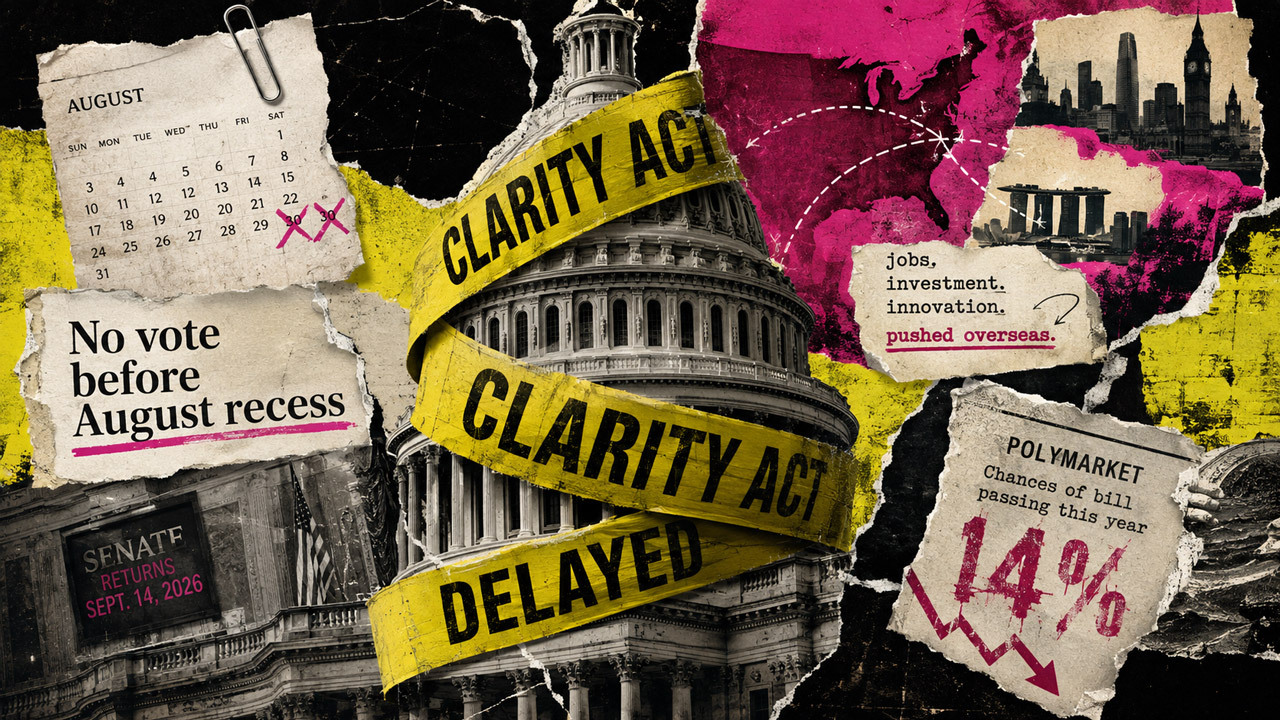
Meanwhile, a deeper decentralization push could help Hyperliquid address some token-classification issues under proposed market-structure legislation such as the CLARITY Act.
That path would likely require broader validator participation, more decentralized listings, reduced emergency discretion, and slower governance-led upgrades.
Those changes would carry a strategic cost. Much of Hyperliquid’s growth has come from fast product decisions, tight execution, and the ability to launch markets quickly. More decentralized governance could strengthen the regulatory argument while reducing the speed at which the platform gains market share.
However, a more centralized structure would give regulators a clearer corporate counterparty, but it could weaken the network thesis around HYPE as a token tied to protocol activity.
Lastly, lobbying for a tailored framework may offer another route as the CFTC becomes more open to perpetual futures and 24-hour trading, though that process could take time and still leave unresolved questions around token classification and derivatives rules.