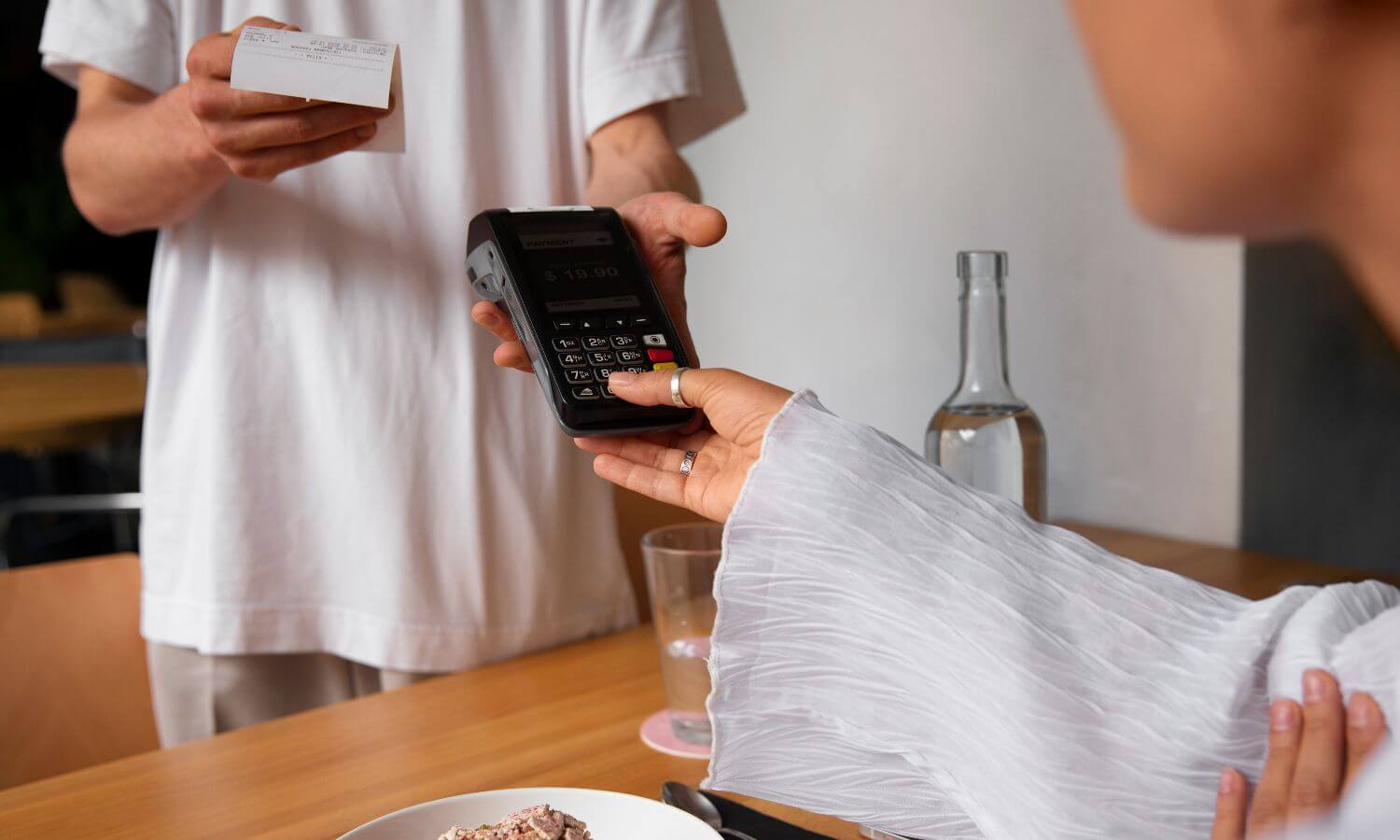
Things like tipping: when to do it, how much to leave, and whether you are expected to tip at all. Those awkward payment-terminal moments are not just about money. They sit at the intersection of personal finance, cultural norms, social pressure, and emotion, which is why they can feel especially stressful for newcomers.
I still remember struggling to understand Canadian coins. I would stand at counters with change in my hand while a lineup formed behind me, eventually giving up and handing cashiers a zip-top bag of coins so they could pull out what they needed.
But the coins were harmless; tipping was entirely different.
My first Canadian tipping panic
In July 2011, my now-wife and I flew in from Dubai to Ottawa to spend time with her parents and enjoy the Canadian summer. It was Canada Day and the city was busy with celebrations. We ended up at a patio eating chicken wings and drinking beer. When the bill arrived, I encountered two things at once: sales tax and tipping. The taxes alone startled me. Then came the tip.
This was before today’s sleek touch-screen terminals. We had paper bills and basic card machines, but the anxiety was the same. I remember staring at the receipt, trying to gauge what the “right” amount would be because I did not want to seem cheap, but I also did not want to be the clueless tourist wildly over-tipping.
Earning, saving and spending in Canada: A guide for new immigrants
The problem was that I came into the situation carrying conflicting cultural experiences around money and service. I was born in India, where service charges are often included, raised in the Middle East, where tipping is appreciated but less obligatory, and studied in the U.K., where, as a broke student, tipping was mostly aspirational.
In my panic, I made what I thought was a safe and reasonably generous choice: 10%.
Moments later, our lovely server approached the table and gently asked whether they had done something wrong or if there was something they could improve.

X
I was horrified. The wings were fantastic, the beer was cold, and the service was excellent. That awkward interaction turned into my first real lesson in Canadian tipping culture and, strangely enough, it was probably the first uniquely Canadian personal finance lesson I learned before even moving to the country.
Fifteen years later, the irony is that many Canadians now seem just as confused and frustrated by tipping culture as newcomers are.
Canadians are reaching a tipping point
According to a March 2026 H&R Block Canada study, 67% of Canadians believe it is time to abolish tipping in favour of a service-included pricing model.
More than 4 in 10 Canadians say they actively avoid businesses known for aggressive digital tip prompts, while nearly 90% resent being asked to tip in situations where they feel it is unnecessary, such as self-serve counters and fast-food outlets.
There is even language for the phenomenon: tip creep, tip fatigue, and tipflation.
Default tip suggestions have steadily climbed over the years, with many payment terminals now starting at 18% or 20%, even in situations where little or no service interaction takes place.
And while Canadians may disagree on the specifics, there is clearly a growing discomfort around the idea that consumers are increasingly subsidizing wages. I would rather pay more upfront for food and services and eliminate the ambiguity altogether. Put the real price on the menu and let everyone understand the actual cost of the experience.
But ultimately, who cares what I think? The point is not whether tipping itself is good or bad, but that these systems carry invisible expectations that are incredibly difficult to decode when you are new to a country and still trying to understand how people think about money, service, and generosity.