Quick note: Subscribe to the forthcoming Fortune Gulf Brief. Every Tuesday, this new newsletter will deliver clear-eyed, authoritative intelligence on the deals, decisions, policies, and power shifts shaping one of the world’s most consequential regions, written for the people who need to act on it.Sign up here.
THE MARKETS
Investors are really enjoying the wall of worry
S&P 500 futures were up 0.21% this morning. The index was up 0.58% yesterday—another record high at 7,444.25.
In Europe, the Stoxx 600 was up 0.21% in early trading and the U.K.’s FTSE 100 was up 0.14% before lunch.
Asia: South Korea’s KOSPI was up 1.75%. Japan’s Nikkei 225 was down 0.98%. India’s Nifty 50 was up 1.36%. China’s CSI 300 was down 1.68%.
Brent crude sank to $106 per barrel this morning.
Bitcoin slipped to $79.7K.
Traders no longer believe Warsh can do what Trump wants
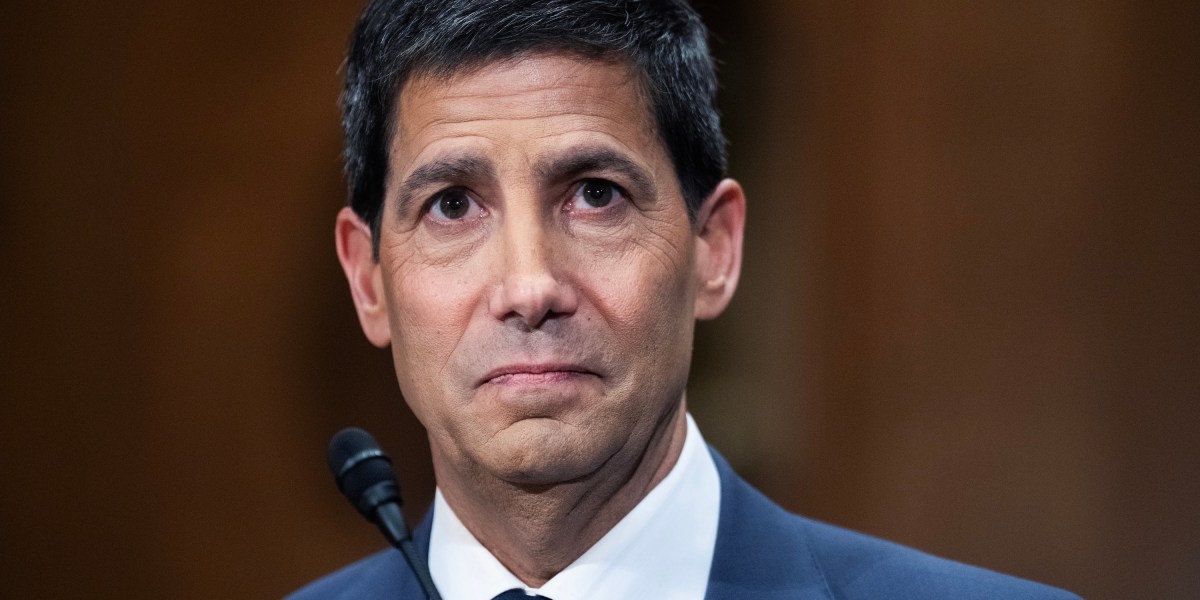
It’s not if, but when. That’s what Wall Street—and the markets—are saying about Kevin Warsh hiking interest rates.
Until a few weeks ago, and certainly prior to the war with Iran, investors had priced in the U.S. Federal Reserve delivering a schedule of interest rate cuts over the next year. After this week’s inflation reports, all of that is now off the table.
The Consumer Price Index (the main inflation gauge) for April came in at 3.8%, and the Producer Price Index (inflation in wholesale prices) came in at 6%—both above expectations.
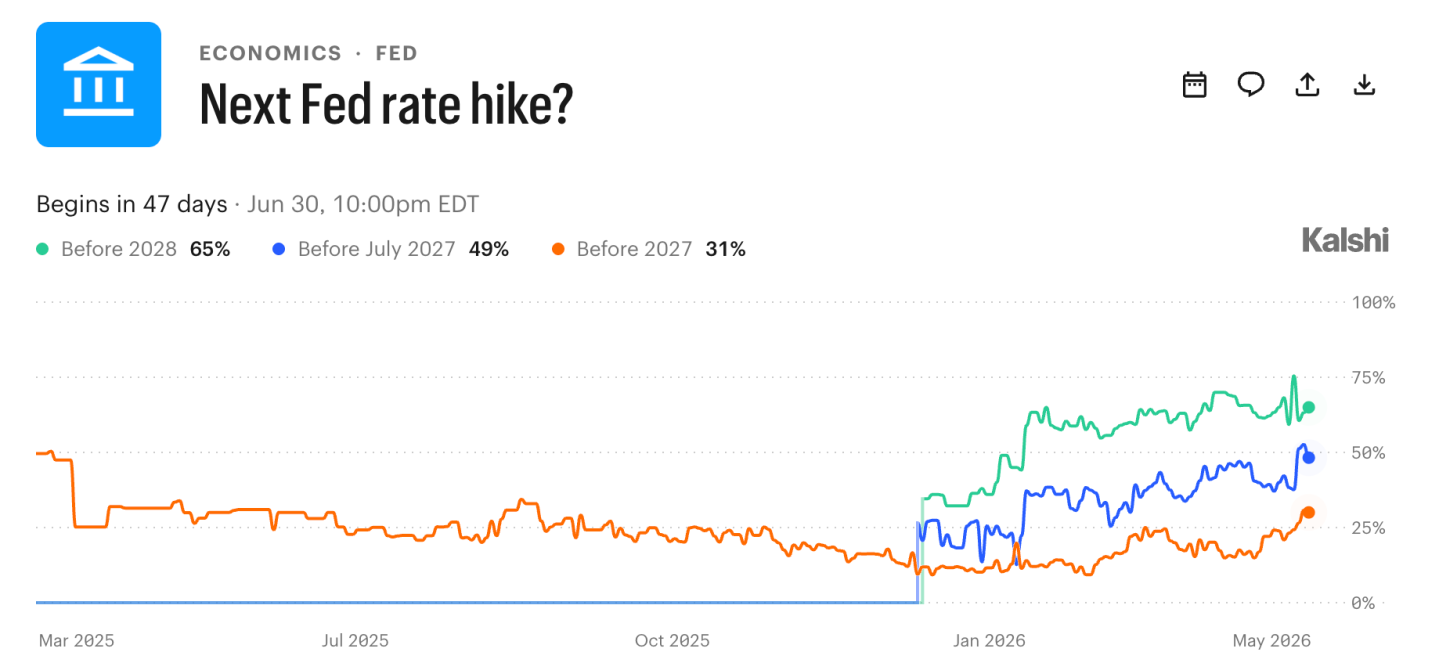
The highly reliable Fed Funds Futures market—where speculators bet on future interest rates—shows that traders believe it’s a near-certainty that the Fed will stay on hold until September. After that, dissenting bets tilt toward a rate hike. Prediction market Kalshi has 31% of bettors saying there will be a hike by the end of the year.
On Wednesday, the risk premium on 30-year U.S. bonds rose above 5% for the first time since 2007. Investors think interest will rise in the future, in other words.
Notes from economists at a range of investment platforms reviewed by Fortune show that analysts now think the next move is hold-or-hike. Almost no one thinks new Fed chairman Warsh can implement a cut as his first move. The unanswered question in this scenario will be, how much patience will President Trump display if Warsh can’t deliver?
ONE BIG THING
They’re stealing the water
In the first week of May, two data center developments, one in Arizona and another in Georgia, were caught taking public water without authorization. In both cases, data center developers consumed water they were prohibited from taking in communities experiencing water stress, and in both cases it was the residents who discovered it. When residents complained of low water pressure, they unknowingly tipped off regulators to an escalating conflict over data center water use in areas fraught with depleting water supplies, Fortune’s Catherina Gioino reports.
In 2023, U.S. data centers directly consumed 17.4 billion gallons of water. That is projected to rise to between 38 and 73 billion gallons by 2028, according to the EPA. In Texas alone, a study estimated data centers would use up to 399 billion gallons by 2030—or the equivalent of drawing down Lake Mead, the largest reservoir in the country, by more than 16 feet in a single year.
The fighting is so fierce that Google even funded a city’s lawsuit against a local newspaper that tried to obtain water-usage figures through a public records request, arguing the data was a trade secret.
CRISIS, WHAT CRISIS?
The jet fuel shortage is a myth, this CEO says
There is no jet fuel shortage, according to Greg Raiff, CEO of private jet services company Elevate Jet. The Strait of Hormuz may be closed, locking away more than 20% of the world’s supply of jet fuel. But Raiff hasn’t seen a lack of jet fuel. “Those stories are largely politically driven by governmental authorities who are trying to pressure an end to the war, and no better way to get people out than tell them that they can’t get to their summer holiday,” he told Fortune.
“Aviation is up this year in terms of total demand, total hours flown, total volume of arrivals and departures, on a global basis,” he says. According to ESGauge, the analytics firm, 48.8% of S&P 500 companies now allow their CEOs to have private use of the corporate jet, up from just 6% in 2021.
“We are in no risk of running out of jet fuel anytime soon,” Raiff said.
So why are commercial airlines cancelling thousands of seats across the globe? Because airlines want to weasel out of running their less lucrative routes, he says. To keep their “slots” at airports, airlines have to contractually commit to running a minimum number of flights on certain routes. Normally that is no problem. But with the price of jet fuel double what it was before the war, suddenly some of those routes aren’t profitable. So the airlines have successfully declared “force majeure,” allowing them to cut their unprofitable flights while keeping their slots, he argues.
MORE FROM FORTUNE
Boeing lost China. Trump—and 500 jets—may be about to win it back – Shawn Tully
Fervo becomes clean energy’s biggest-ever IPO with $10B valuation—powered by the earth’s heat and AI’s hunger – Jordan Blum
Top economist says $39 trillion national debt leaves government worse prepared for recession than ever – Eva Roytburg
The crypto industry’s Clarity Act hits a critical juncture: Where things stand going into Senate markup – Jack Kubinec
Job-hopping is now the fastest path to becoming a CEO—and company loyalty may actually hold you back – Tristan Bove
Steve Jobs had a ‘beer test’ he used for interviews at Apple—if he didn’t want to drink with you, you didn’t get the job – Orianna Rosa Royle
CHART OF THE DAY
CEOs are blaming AI for layoffs. The data says they’re not telling the truth.
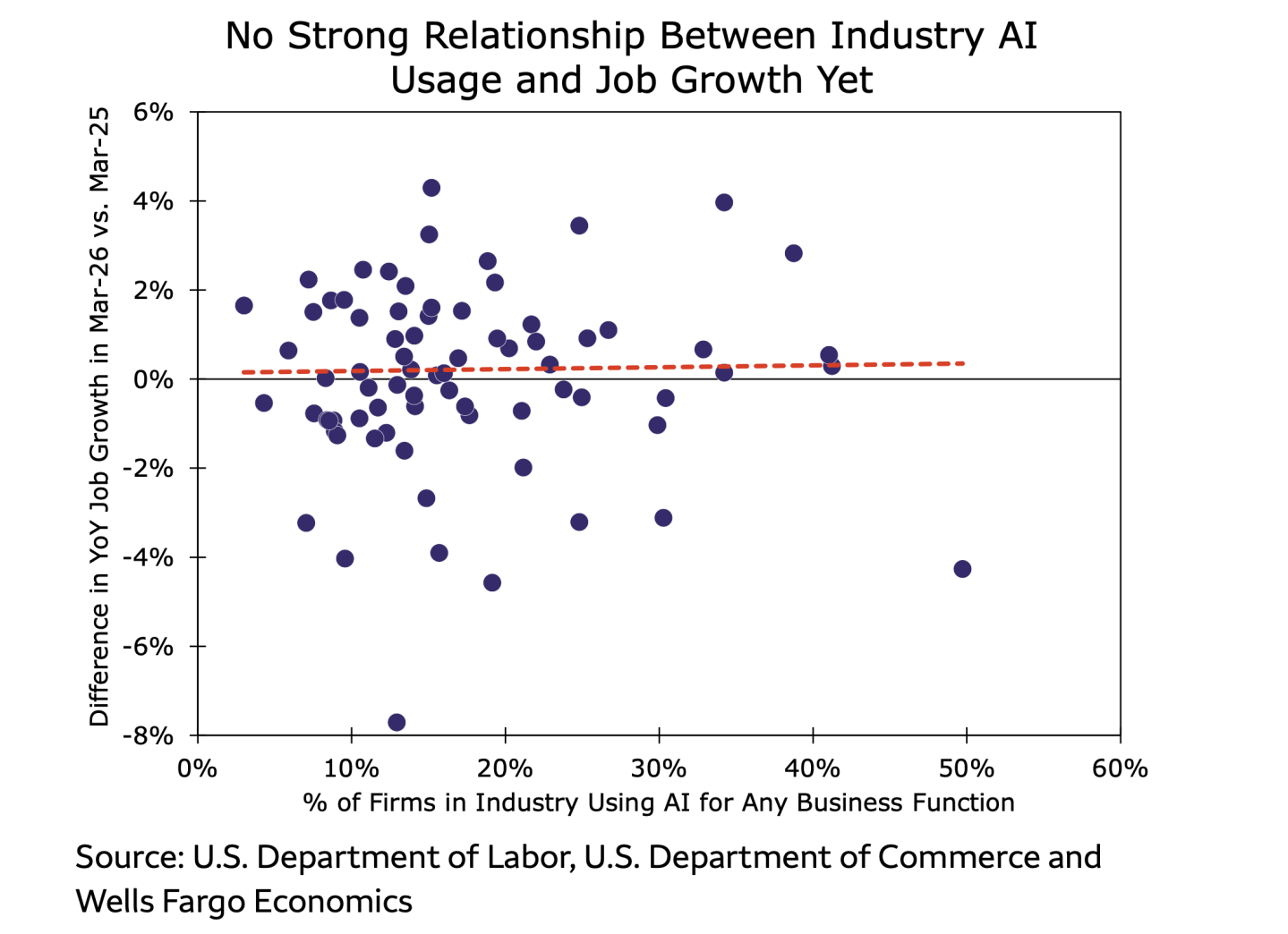
There’s an anxious debate about how many workers’ jobs might be replaced by AI. There is some evidence that job losses are occurring in industries sensitive to AI, such as software. But Ohsung Kwon and his team at Wells Fargo crunched the numbers to see whether job losses were occurring in industries that have heavily adopted AI. Turns out, there is no relationship between the two. “Beyond the talk, there is no statistical evidence that AI is broadly disrupting the labor market,” he said in a recent note. “We believe companies are citing AI more as an excuse to right-size, rather than actually replacing workers.”
NUMBER OF THE DAY
24%
The rise of the price of coffee in the U.S. since January of last year. “Since U.S. President Trump took office, coffee prices have risen 24%, beef over 19%, gasoline over 19%, and vegetables 10.5%. These are price increases that consumers notice and remember,” UBS’s Paul Donovan noted recently. Trump has placed tariffs on coffee imports even though the U.S. does not, and cannot, grow its own coffee.
THE FRONT PAGES TODAY
Self-report fraud and walk free, New York prosecutors tell Wall Street – FT
Five takeaways from the Trump-Xi summit in Beijing so far – CNBC
Hedge Funds Are Making a Killing in the ‘Golden Age’ of AI Hardware – WSJ
Ship Taken in Gulf of Oman and Heading to Iran, UK Navy Says – Bloomberg
China changed spelling of Marco Rubio’s name to avoid implementing sanctions ahead of Trump-Xi meeting – NY Post
ONE MORE THING
The man who spent 8 years building Google Sheets made a clone with AI in less than a week
Zach Lloyd was a principal engineer at Google before leaving to found Warp, an AI agent development platform. “Recently, my team built a working clone of Google Sheets in a few days,” he said in a column for Fortune. “I spent nearly eight years at Google … growing Sheets from a five-person experiment to hundreds of millions of users. Building it took years, dozens of exceptionally talented engineers, and the kind of resources that were only available to the world’s biggest companies.”
“Watching a small team spin up something functionally comparable in less than a week was, to put it mildly, clarifying.”