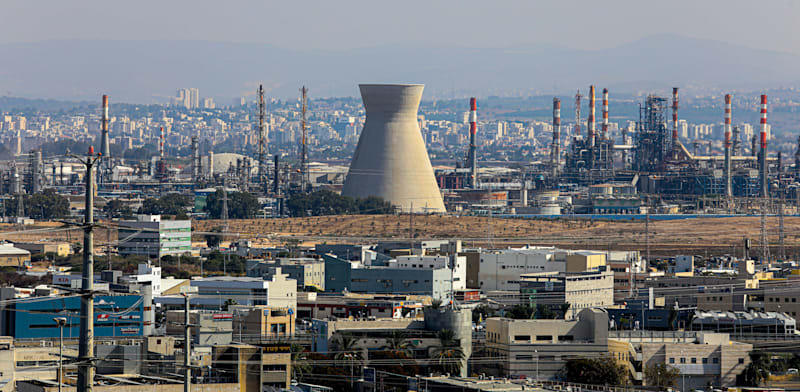
The Strait of Hormuz crisis is exposing an unpleasant truth: the global economy is still very dependent on oil, while Israel is even more dependent on oil than the OECD average, even though it does not have diplomatic relations with most of the oil producers in the region. Only in recent years, due to the development of local offshore natural gas reserves, has Israel moved towards the average. Yet, there is still a long way to go. Transport in Israel consumes major amounts of oil, and in times of war Israel is forced to turn off the gas pipelines and consume diesel instead.
The Yom Kippur War changed the trend
1973 was the year when the power of oil in the global economy came to the fore, and for good reason. Oil intensity is the amount of oil consumed relative to global GDP. That year, it peaked, when a full barrel of oil was needed to produce $1,000 of GDP. In 2019, for comparison, less than half a barrel was needed for this (43%).
Moreover, the rise in oil prices is a factor that accelerates inflation. And the impact on the capital market is also easy to see.
So why do we see a decline from 1973? Because that’s when Egypt and Syria invaded Israel with the aim of taking the territories they had conquered in the Six-Day War. But Israel managed to repel them, also due to an intensive airlift of US military aid. The Arab oil-exporting countries decided to ‘punish’ the West and declared an oil embargo. This caused a dramatic economic crisis in the US and led to the realization that the energy situation need to change.
The Arab countries that are part of the global oil cartel OPEC also discovered that precisely when they sell less oil, the price rises so much that their profits actually increase. This led to the price of oil remaining relatively high, even more than a decade later.
This has led to a wave of technological developments designed to optimize the use of oil and fuel and produce renewable energy sources, and natural gas has also taken a more significant place in the mix. Yet, in recent years there has been stagnation in decreasing dependence on oil.
Bank Leumi research economist Or Azran says that what has changed today is that, “Dependence on Hormuz focuses mainly on Asia. That is where a significant portion of the world’s largest oil consumers are concentrated, such as China, India, Japan, and South Korea. China will import more from Russia, and the others from the US, but that won’t necessarily be enough. “The supply problems are now mainly affecting them, but of course the global price mechanism affects all countries. Still, the West is less dependent on oil than it was in the past. In 2012 the US began to increase production and turned from a net importer to a net exporter.”
RELATED ARTICLES
ENI drops out of Ratio gas exploration consortium
IEC signs huge gas supply MoU with Tamar partners
Main oil consumption in Israel is fuel and cooking gas
On Israel Azran says, “There was an understanding, also following the Yom Kippur War, that the dependence on oil was too acute. This initially led to the halt in electricity production from oil (which at the time was still imported from Iran) and a shift to coal, and then to gas and renewables. In Israel, oil prices have less of an impact on inflation. The price of electricity here is not greatly affected by the price of oil but is set by long-term gas contracts.”
Yet precisely during the war the gas rigs are mostly shut down, and the Israeli electricity sector consumes diesel, which is our emergency fuel. Furthermore, not all energy is electric: a significant portion of the energy we consume comes in the form of fuels, for vehicles, trucks and aircraft.
Even in normal times, efforts are needed to diversify import sources, including relying on the oil pipeline leading from Azerbaijan through Turkey. When fuel price rise, as is happening today, consumers must pay for it at gas stations and in the prices of all products. LPG (cooking gas) is also used to prepare food and heat homes. In recent years, the rate of oil consumption has stayed unchanged.
Ministry of Energy and Infrastructures head of the sustainable energy division Ron Eifer says, “The Ministry of Energy has a stated goal of reducing dependence on imported fuels. Fortunately, the electricity sector uses almost no petroleum distillates, most natural gas contracts are not linked to the price of oil. After we ended the electricity sector’s dependence on petroleum distillates, we aim to reduce dependence on other sectors of the energy sector. Firstly, because of the volatility of petroleum distillate prices, which we are also seeing now. Secondly, in emergency situations we do not want to rely on imported fuels that also depend on port closures and refinery operations. Thirdly, for environmental reasons and reducing greenhouse gas emissions.”
Eifer explains most of use of petroleum products in Israel is in the transport sector mainly from cars as well as trucks, buses, port cranes and aircarft. “Consumption has stayed unchanged in recent years, because on the one hand there are more vehicles, but on the other hand the new vehicles are generally also more fuel efficient,” he says.
The solution, in his view, is a switch to electric transport. “We are in a perfect position for this. We are a small country, with relatively cheap electricity and expensive fuel. The price difference per kilometer between an electric vehicle and a gasoline vehicle is one of the highest in the world.”
He points out that in 2024, about 25% of new vehicles were electric. There are no final figures yet, but this rate will likely be lower in 2025, partly due to tax changes. He stresses, “Now the challenge is to reach additional groups of people, such as those who live in apartments and park on the street, which is the hardest nut to crack. Therefore, public charging infrastructure needs to be set up. As far as buses are concerned, about 30% of city buses are already powered by electricity, but almost none of intercity buses. Technology is also advancing in trucks, and we already see quite a few electric trucks on Israeli roads. Israeli industry, which used to consume much oil, has already largely switched to electricity and natural gas.”
The solution: Renewable and nuclear energy
Still, much of Israel’s relative immunity to oil shocks comes from the fact that the electricity produced in the country comes mainly from natural gas. And what will happen the day after? MIND Israel, a national security research group, published a policy paper last October that suggests that due to the depletion of gas reserves in the future, “There is a critical need for a diverse energy mix that provides a response to the full range of the economy’s different needs.”
MIND’s researchers divide this effort into two stages. Firstly a dramatic acceleration in deployment of solar energy combined with storage. MIND believes a much more ambitious target of 45% of Israel’s electricity consumption should be renewable by 2035, compared with only 35% today. The second stage is long-term, and requires building civilian nuclear reactors, despite Israel’s failure to sign the Nuclear Non-Proliferation Treaty. One option would be to lease land to the US, which would build the necessary facilities.
The great advantage of nuclear energy is its reliability and stability compared with renewable energy alternatives, and it is also almost non-polluting. However, it is considered expensive due to the enormous investment capital costs.
Bank of Israel researcher Lior Gallo also points to nuclear energy as a source of energy independence for Israel: “A second energy crisis in a few years is accelerating a global process of multiple suppliers and technological diversification.”
He believes we will soon see a big increase in investment in technology for small modular nuclear reactors (SMRs). He points to the nuclear energy summit held this month in Paris with the participation of 40 countries, where EU Commissioner Ursula von der Leyen said that in the 1990s, 33% of Europe’s electricity was produced from nuclear energy, and today it is only 15%. “The decline in nuclear was a choice. In retrospect, I believe it was a strategic mistake for Europe to turn its back on a reliable, affordable, low-emissions source of electricity,” she said, hinting at a change in direction.
Gallo says, “The real question is what will happen when gas reserves begin to decline from the 2040s. Increased technological investments should advance the commercial maturity of SMR technologies and cut costs through learning effects and serial production. These developments improve the economic viability of nuclear compared with the past for the whole world and for Israel in particular.”
Others prefer a more “conventional” use of renewable energies, such as Galit Cohen, director of Israel activities at the Jewish Climate Trust, a member of the Coalition for Regional Security and former director general of the Ministry for Environmental Protection. “China is already starting to reduce its coal consumption (of which it consumes more than the rest of the world combined) in favor of a transition to renewables and electric vehicles. This is, of course, to reduce their dependence on oil from the Middle East. When necessary, they do it,” she says.
Cohen adds, “We need to build solar energy panels on the roofs and facades of buildings.” These small projects currently require significant subsidies, but in her opinion, “We need to look at it not only in terms of how much it costs per kWh, but also in terms of energy security and resilience.” In any case, ground-based solar energy fields, as well as dual use of agricultural land with electricity production above the crops, are becoming more and more economical as time by.
Due to the dependence on oil that the Strait of Hormuz crisis exposes, winds of change are blowing in the international energy market. Pini Cohen, chairman of the Noy Foundation and chairman of the board of directors of MIND Israel, says, “The war with Iran is not just an event that temporarily raises the price of oil, it is another link in the process in which the world is changing the economic principle of the energy market. In such a world, we estimate that we will see an acceleration of the creation of alternative energy sources and investment in decentralized local infrastructures alongside integration into supply chains that are immune to disruption.” From his point of view, Israel should be a part of this too. It is possible that, like 1973, 2026 will be the next turning point in the global trend of shifting away from oil.
Published by Globes, Israel business news – en.globes.co.il – on March 22, 2026.
© Copyright of Globes Publisher Itonut (1983) Ltd., 2026.